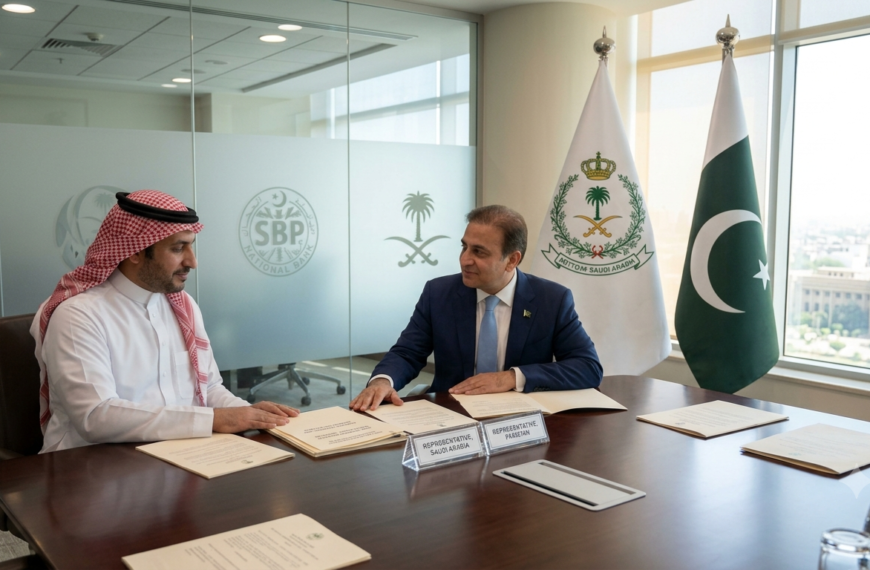
Pakistan’s financial landscape is on the brink of a structural transformation. In a landmark announcement, the Deputy Governor of the State Bank of Pakistan (SBP), Saleem Ullah, confirmed that all new government borrowing will fully transition to Shariah-compliant financing starting January 1, 2028.
This decision marks a pivotal moment in the nation’s economic evolution, aligning public debt management with domestic judicial mandates and constitutional requirements to eliminate interest (Riba) from the economy.
The Legal Mandate Behind the Shift
The drive toward a Shariah-compliant financial sector is rooted in a landmark ruling by Pakistan’s Federal Shariat Court (FSC). The court directed the federal and provincial governments to eliminate Riba from the financial ecosystem by December 31, 2027.
To meet this legal deadline, the Ministry of Finance and the SBP have established a comprehensive post-2027 roadmap. The plan outlines a structured transition to prevent economic disruption while systematically converting conventional public debt into Islamic financial instruments.
       [ FSC Ruling (End-2027 Deadline) ]
                       │
                       ▼
       [ Ministry of Finance Strategy ]
                       │
                       ▼
 ┌───────────────────────────────────────────┐
 │ 1. Amend ~40 financial laws               │
 │ 2. All NEW domestic borrowing → Islamic   │
 │ 3. Conventional debt honors until maturity│
 └───────────────────────────────────────────┘
                       │
                       ▼
   [ January 1, 2028: Full Shift Commences ]
Key Pillars of the Transition Strategy
- Phased Conversion of Domestic Debt: From January 1, 2028, the government will cease issuing conventional interest-bearing securities (such as Pakistan Investment Bonds and Market Treasury Bills). Instead, all new domestic debt will be raised through Islamic instruments, predominantly Sukuk (Islamic bonds).
- Honor Legacy Contracts: Existing conventional loans will not be prematurely converted or defaulted on. They will remain valid until their scheduled maturity dates. As these conventional instruments mature, they will be replaced entirely with Shariah-compliant options rather than rolled over into conventional arrangements.
- External Financing Alignment: The federal government plans to seek international borrowing through Islamic modes wherever feasible, expanding the use of sovereign international Sukuk and bilateral Islamic trade facilities.
- Legal and Regulatory Overhaul: To support a fully Islamic banking ecosystem, the SBP and the Ministry of Finance are working to amend approximately 40 financial laws and statutory frameworks before the end-2027 deadline.
The Growth of Islamic Banking in Pakistan
Pakistan’s transition toward a Riba-free financial system is supported by rapid growth within its commercial Islamic banking sector over the past decade. The SBP revealed significant market penetration figures that illustrate strong public demand for Shariah-compliant solutions.
| Metric | Share in Banking Sector |
|---|---|
| Islamic Bank Deposits | 29% of total bank deposits |
| Islamic Financing | 40% of total banking sector financing |
This substantial market share provides a solid foundation for the government’s transition plan. Commercial banks already possess the infrastructure, liquidity pools, and operational mechanisms necessary to absorb increased demand for Shariah-compliant government securities.
According to SBP leadership, all domestic banking institutions are expected to offer services strictly based on Shariah principles starting January 1, 2028.
Fiscal Realities & Economic Challenges
While the commitment to a Shariah-compliant debt model reflects a constitutional requirement, economic analysts and religious scholars alike emphasize the broader macroeconomic context in which this transition is occurring.
Speaking at the Karachi event, former Chairman of the Ruet-e-Hilal Committee, Mufti Muneeb-ur-Rehman, highlighted the severe structural headwinds facing Pakistan’s economy. He urged policy makers to address core fiscal bottlenecks that constrain growth regardless of debt structure:
“Pakistan’s economy remains under severe pressure, with a large portion of federal revenues consumed by provincial transfers and conventional debt servicing, leaving minimal fiscal space for development.”
Key Structural Challenges to Address
- Independent Power Producers (IPPs): High capacity payments and structural inefficiencies in the power sector continue to drive up sovereign debt burdens and circular debt.
- Fiscal Debt Servicing Costs: Debt service obligations absorb a majority of federal tax collections, heavily limiting investments in infrastructure, healthcare, and education.
- Sukuk Asset Availability: Islamic debt financing relies on asset-backed or asset-based structures (such as roads, airports, or real estate). Converting large volumes of public debt into Sukuk requires identifying eligible, unencumbered state-owned assets to underlying the financing contracts.
What Lies Ahead: Path to 2028
The journey between now and December 31, 2027, will require synchronized action across multiple institutions, including the State Bank of Pakistan, the Ministry of Finance, legal authorities, and commercial banks.
Key Milestones on the Horizon
- Legislative Reforms: Passing amendments across nearly 40 laws to update banking regulations, tax treatments, and financial contracts for Shariah compliance.
- Asset Mapping for Sovereign Sukuk: Identifying and auditing public assets to support large-scale domestic and international Sukuk issuances.
- Banking Sector Standardization: Uniformly training banking workforce and standardizing Shariah governance models across all retail and corporate institutions.
- Managing Liquidity Transitions: Ensuring smooth liquidity flows between conventional treasury desks and Islamic banking windows as legacy bonds mature.
Pakistan’s transition to a fully Shariah-compliant public debt system marks an ambitious economic restructuring. If executed effectively, it could redefine the national financial landscape and establish a template for sovereign debt management in Islamic financial markets worldwide.

 By
By