

Income Tax Return Filing Deadline Extended to October 15
Income tax return filing deadline in Pakistan extended to October 15, 2026. Check FBR’s latest update, late filing costs and key details for taxpayers.

By News Desk · Verified Pakistan News Desk
Published · Updated · 6 min read
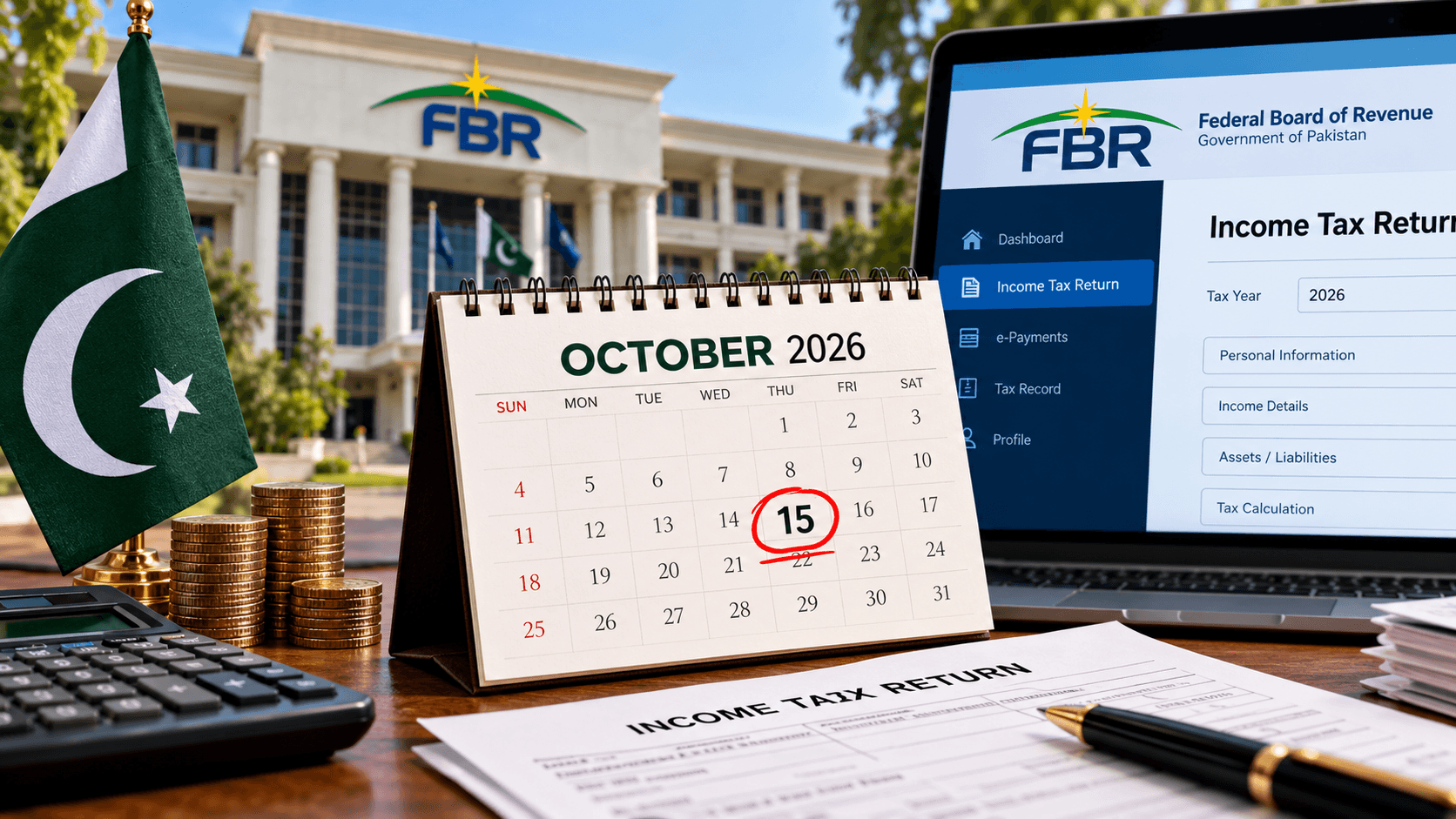
Pakistan’s Federal Board of Revenue (FBR) has extended the income tax return filing deadline for Tax Year 2026, giving eligible taxpayers until October 15, 2026, to submit their returns.
The previous deadline was September 30, 2026. The latest decision gives taxpayers an additional 15 days to complete the filing process and submit their income tax returns.
The extension is important for individuals, businesses and other taxpayers who were struggling to complete their returns before the original deadline.
According to the announcement, the decision was taken after requests were received from different trade bodies and tax bar associations seeking additional time for taxpayers.
Income Tax Return Filing Deadline Extended by 15 Days
The income tax return filing deadline has now been moved from September 30 to October 15, 2026.
This means taxpayers covered by the September 30 deadline now have another two weeks to prepare and submit their returns.
The development came after days of uncertainty over whether FBR would provide additional time.
Earlier on September 30, FBR had warned taxpayers about a document circulating on social media that claimed the deadline had already been extended to October 15.
At that time, FBR described that particular circular as fake and clarified that no such circular had been issued.
Later in the day, however, FBR formally announced an extension, providing taxpayers with additional time until October 15.
This distinction is important because the earlier document circulating online was not an authentic FBR notification, even though the authority later made a separate decision to extend the deadline.
Why Was the Tax Return Deadline Extended?
Tax professionals, trade organizations and business groups had been calling for an extension in the filing deadline.
Various organizations said taxpayers and professionals needed additional time to complete the filing process.
There had also been complaints from some tax practitioners regarding difficulties associated with the filing process and the IRIS system during the busy period before the deadline.
With a large number of taxpayers attempting to complete their returns close to September 30, calls for an extension became stronger.
The new October 15 deadline gives taxpayers additional time, but people who are required to file should avoid waiting until the final hours.
Submitting a return early can reduce the risk of last-minute problems, including missing documents, incorrect information or technical difficulties.
Taxpayers Should Provide Accurate Information
The additional time should also be used to review the information entered in income tax returns.
Taxpayers need to make sure that income, assets, liabilities and other required information is entered correctly.
Providing inaccurate or incomplete information may create problems later, particularly if there are differences between the information declared in a return and records available to tax authorities.
People filing their own returns should carefully review the details before final submission.
Those with complicated income, business transactions, multiple assets or other tax matters may consider getting professional tax advice where necessary.
The extension should therefore not simply be viewed as extra time to delay filing. It provides an opportunity to complete the process properly.
Late Filing Can Carry Financial Consequences
Taxpayers should also pay attention to the rules that apply after the filing deadline.
Recent changes have made late filing potentially more expensive for different categories of taxpayers.
Under changes reported following the Finance Act 2026-27, the amount associated with returning to the Active Taxpayers List has increased significantly for certain categories.
For individuals, the relevant amount has increased from Rs1,000 to Rs25,000. For an Association of Persons (AOP), it has increased from Rs10,000 to Rs50,000, while the amount for companies has risen from Rs20,000 to Rs100,000.
These changes make timely compliance more important for taxpayers who want to maintain their tax status and avoid additional costs.
Tax rules can differ depending on the taxpayer’s circumstances, so individuals and businesses should check the applicable FBR rules before making tax-related decisions.
What Should Taxpayers Do Before October 15?
Taxpayers who have not yet submitted their returns should use the extended period to gather the required information.
This may include income records, bank information, details of assets and liabilities, business records and other documents relevant to the return.
People should also check whether their information from previous tax years is consistent with the details being submitted for Tax Year 2026.
Leaving everything until October 15 could create unnecessary pressure.
Even with an extension, heavy traffic close to the deadline can make online filing more stressful. Completing the return several days earlier gives taxpayers time to correct errors if anything goes wrong.
Taxpayers should also rely on official FBR announcements rather than screenshots or unofficial circulars circulating through social media.
The confusion on September 30 showed why checking information from credible sources is important.
What Was the Original Deadline?
The normal income tax return filing deadline for individuals and Associations of Persons is September 30, according to FBR’s published due-date information.
For Tax Year 2026, taxpayers covered by the September 30 deadline have now received additional time until October 15, 2026.
The extension therefore provides immediate relief to people who were unable to complete the filing process before the end of September.
However, taxpayers should treat October 15 as the new deadline and complete their returns as soon as possible instead of assuming another extension will automatically be announced.
Any future change would require a fresh announcement from the tax authority.
FBR Filing Deadline: What Happens Next?
The focus will now shift to taxpayers completing their pending returns during the extended period.
For people who already have their financial information ready, filing early may be the simplest approach.
Those who still need documents should use the extra days to collect them and check their declarations carefully.
The extension provides valuable breathing room, but accurate and timely filing remains important.
Taxpayers should continue checking official FBR updates for any further instructions relating to Tax Year 2026.
For now, the key date is clear: taxpayers who were required to file their income tax returns by September 30 have been given until October 15, 2026.
External Fact-Checking Sources: Federal Board of Revenue (FBR) — official tax authority of Pakistan Associated Press of Pakistan (APP) — September 30, 2026 deadline extension report Geo News — September 30, 2026 FBR deadline update
What happens next for national
We will keep this page updated as the story develops rather than publishing a near-duplicate at a new address. Follow National for related coverage.
Get the Verified Brief
One email each morning with the stories we checked overnight.
Spotted an error? Read our corrections policy and tell the newsroom.