
Pakistan Fuel Subsidy 2026: Rs. 2,000 Monthly Relief, Eligibility, Registration and Petrol Token Guide
Pakistan Fuel Subsidy 2026 offers up to Rs. 2,000 monthly relief for eligible motorcycle and rickshaw users. Check 800cc car benefits, tokens and registration.

By News Desk · Verified Pakistan News Desk
Published · Updated · 22 min read
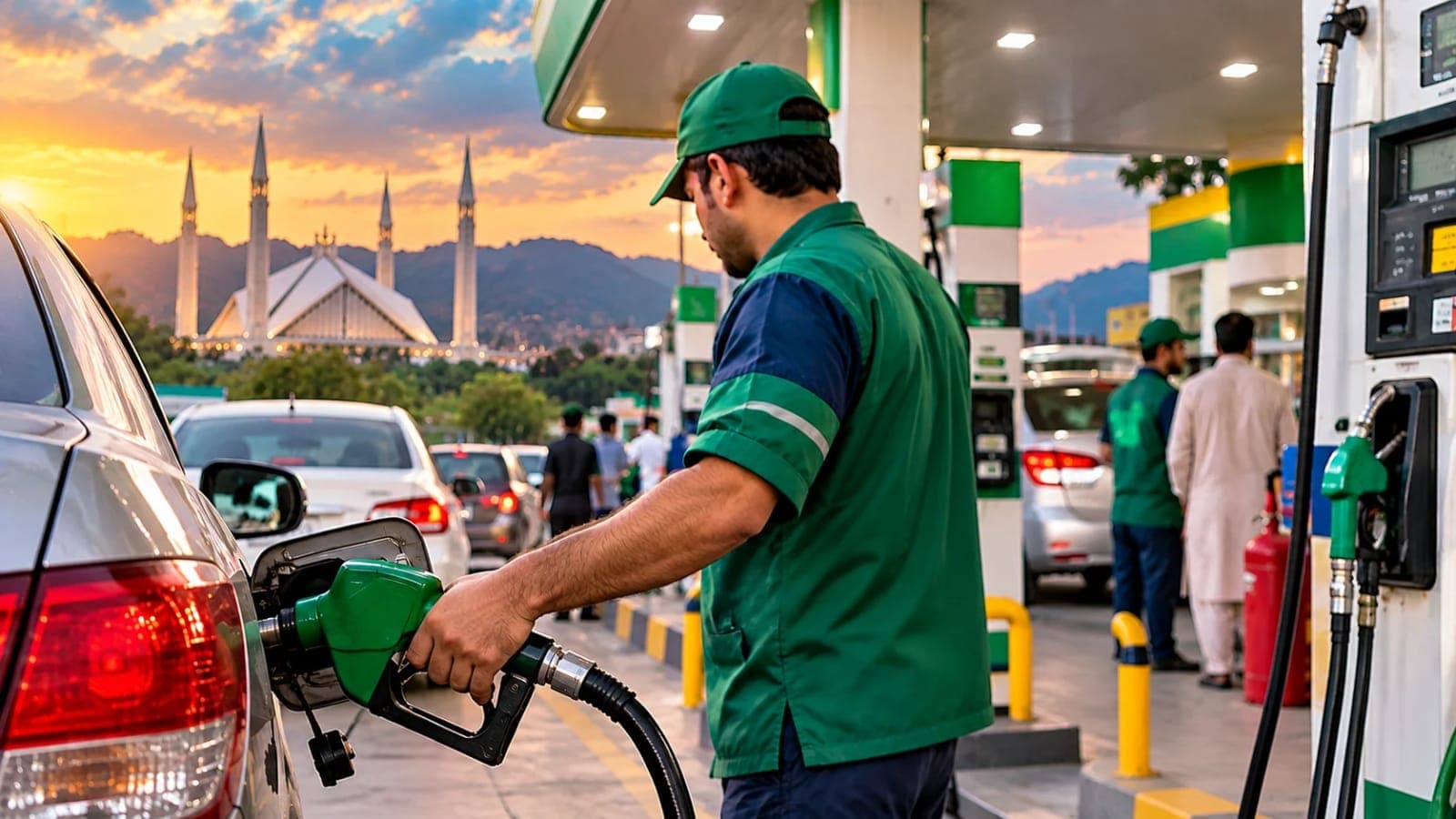
Pakistan's federal government has expanded its special fuel relief programme to help eligible motorcycle riders, rickshaw operators and small-car owners manage the financial burden of rising petrol prices.
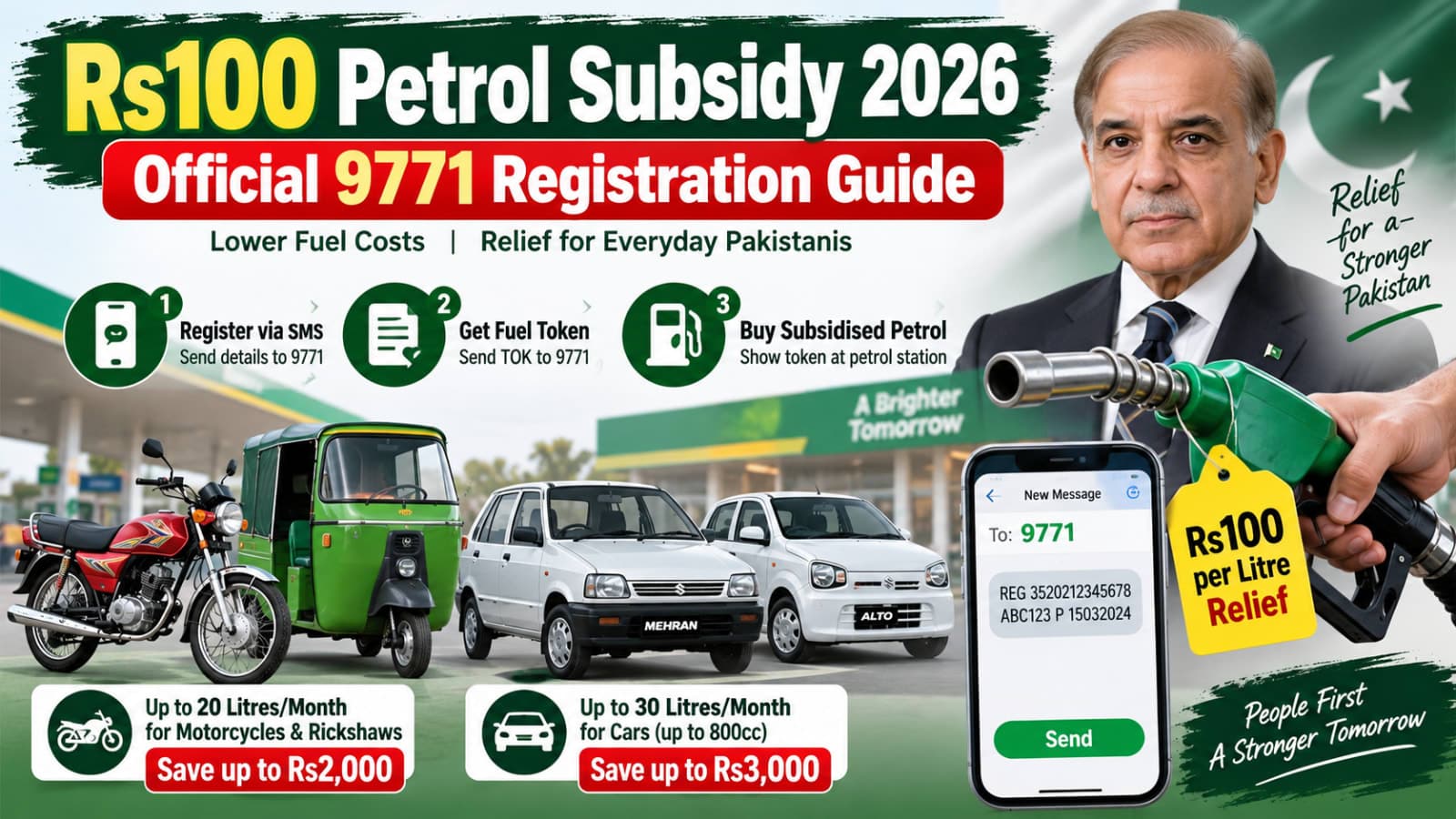
Under the Prime Minister's Special Fuel Relief Scheme, eligible motorcycle and rickshaw users can receive a petrol discount worth up to Rs. 2,000 per month.
Owners of qualifying cars with engine capacities of up to 800cc can receive a discount worth up to Rs. 3,000 per month under a separate usage arrangement.
The programme operates through a digital token system designed to verify eligible vehicles and provide discounts at participating petrol stations.
On October 9, 2026, Prime Minister Shehbaz Sharif announced that more than 10 million people had benefited from the scheme.
He also said the government had allocated Rs. 75 billion to support the programme.
According to the latest official figures, more than 21.7 million digital tokens had been issued, with approximately 19.4 million redeemed.
The figures suggest substantial use of the scheme since its introduction in September.
However, not every Pakistani citizen automatically qualifies.
Eligibility depends on the vehicle category, registration records and other applicable scheme requirements.
The relief is also not necessarily a direct cash payment into a beneficiary's bank account. It is primarily provided through discounts on qualifying petrol purchases.
Pakistan Fuel Subsidy 2026: Latest Government Update
The Prime Minister's Special Fuel Relief Scheme was introduced in September 2026 amid sharply rising petroleum prices.
The programme is designed to reduce fuel costs for selected categories of vehicle owners.
The government has used a digital registration and token mechanism to administer the relief.
Latest Scheme Overview
| Detail | Information |
|---|---|
| Scheme | Prime Minister's Special Fuel Relief Scheme |
| Launch period | September 2026 |
| Motorcycle and rickshaw benefit | Up to Rs. 2,000 per month |
| Small-car benefit | Up to Rs. 3,000 per month |
| Eligible small cars | Engine capacity up to 800cc |
| Motorcycle/rickshaw token | Rs. 500 weekly |
| Small-car discount | Rs. 100 per litre |
| Small-car allowance | 10 litres every 10 days |
| Government allocation | Rs. 75 billion |
| Beneficiaries reported October 9 | More than 10 million |
| Tokens issued | More than 21.7 million |
| Tokens redeemed | Approximately 19.4 million |
These are the reported programme parameters as of October 10, 2026.
Individual eligibility and token availability must be confirmed through the official system.
Why Did the Government Launch the Fuel Subsidy?
Pakistan experienced substantial increases in petroleum prices during 2026.
Higher fuel costs created additional pressure on households and people who depend on motorcycles, rickshaws and small cars for daily transport.
The government introduced targeted assistance rather than applying the same discount to every litre of fuel sold nationwide.
Why Target Motorcycle Riders?
Motorcycles are widely used for commuting and everyday travel.
Many riders rely on them to reach workplaces, educational institutions and markets.
A fuel discount can provide some relief when petrol prices rise sharply.
Why Include Rickshaw Drivers?
Rickshaw operators often depend on their vehicles to earn daily income.
Higher petrol costs can reduce the amount they take home after operating expenses.
Targeted relief may help offset part of that pressure.
Why Include Small Cars?
The scheme also covers eligible vehicles with engine capacities of up to 800cc.
This creates a separate benefit category for certain small-car owners.
However, owning a small car does not automatically establish eligibility unless the vehicle meets the programme's requirements.
Who Is Eligible for the Pakistan Fuel Subsidy 2026?
The programme focuses on eligible owners and users of specified vehicle categories.
These include motorcycles, rickshaws, Qingqi rickshaws and cars with engine capacities of up to 800cc.
Vehicle registration and verification are important parts of the system.
Eligible Vehicle Categories
| Vehicle category | Reported relief |
|---|---|
| Motorcycles | Up to Rs. 500 weekly |
| Auto-rickshaws | Up to Rs. 500 weekly |
| Qingqi rickshaws | Up to Rs. 500 weekly |
| Other eligible two- and three-wheelers | Subject to scheme rules |
| Cars up to 800cc | Rs. 100 per litre, within monthly limits |
The government has expanded some eligibility provisions after receiving public feedback.
Are All Motorcycles Eligible?
Not automatically.
A motorcycle must satisfy the applicable verification and registration conditions.
Older vehicles may qualify under the expanded age limit, but their records must still be recognised by the scheme.
Are Cars Above 800cc Eligible?
The announced small-car category covers vehicles with engine capacities of up to 800cc.
The programme does not establish the same benefit for larger cars.
How Much Subsidy Do Motorcycle Owners Receive?
Eligible motorcycle riders can receive a discount worth Rs. 500 per week.
The programme allows four weekly tokens per month.
This creates a maximum monthly relief value of Rs. 2,000.
Motorcycle Subsidy Calculation
| Period | Maximum discount |
|---|---|
| One week | Rs. 500 |
| Two weeks | Rs. 1,000 |
| Three weeks | Rs. 1,500 |
| Four weeks | Rs. 2,000 |
These figures describe the maximum available benefit under the reported token arrangement.
They do not guarantee that every registered individual has redeemed the full amount.
Is Rs. 2,000 Paid in Cash?
The scheme primarily provides relief through discounted fuel purchases.
The weekly token is used to obtain the benefit at a petrol station.
It should not be described as a universal Rs. 2,000 cash transfer.
How Does the Rickshaw Petrol Subsidy Work?
Eligible auto-rickshaw and Qingqi rickshaw users are included in the weekly token arrangement.
They can receive a discount worth Rs. 500 per week, up to four times per month.
Why Was the Weekly Token Introduced?
The government initially described relief based on a discount of Rs. 100 per litre.
However, feedback showed that some motorcycle and rickshaw users purchased less than five litres of petrol at a time.
A minimum five-litre purchase requirement made it difficult for those users to access the full benefit.
The government therefore introduced a weekly Rs. 500 token arrangement.
Can a Rickshaw Driver Buy Less Than Five Litres?
Yes.
Under the revised mechanism, the minimum five-litre purchase requirement was removed for the relevant two- and three-wheeler categories.
Eligible users can redeem the weekly token against a petrol purchase without having to buy five litres in one transaction.
Is There a Service Charge?
The government directed that the full value of the Rs. 500 token be passed to the consumer.
Petrol stations should not deduct a separate service charge from that benefit.
What Is the Petrol Subsidy for 800cc Cars?
Owners of qualifying cars with engine capacities of up to 800cc can receive a discount of Rs. 100 per litre.
The benefit applies to a maximum of ten litres every ten days.
The arrangement provides three eligible ten-litre periods per month.
Small-Car Subsidy Calculation
| Period | Maximum eligible petrol | Maximum discount |
|---|---|---|
| First 10 days | 10 litres | Rs. 1,000 |
| Second 10 days | 10 litres | Rs. 1,000 |
| Third 10 days | 10 litres | Rs. 1,000 |
| Monthly maximum | 30 litres | Rs. 3,000 |
The calculation assumes that the eligible user purchases the full permitted quantity.
Does the Discount Apply to All Petrol Purchased?
No.
The discount applies only within the specified allowance.
Petrol purchased beyond the qualifying limit is subject to the applicable normal price.
Is Every 800cc Car Automatically Registered?
No.
The vehicle must satisfy the programme's verification requirements.
Owners should check the status of their vehicle through official channels.
What Is the Difference Between Rs. 2,000 and Rs. 3,000 Relief?
The two amounts relate to different vehicle categories.
Motorcycle and rickshaw users can receive up to Rs. 2,000 per month through four weekly tokens.
Qualifying small-car owners can receive up to Rs. 3,000 per month through the ten-litre-per-ten-day arrangement.
Why Are the Amounts Different?
The government designed separate mechanisms for different categories of vehicles.
The motorcycle and rickshaw system focuses on a fixed weekly discount.
The small-car system calculates the benefit using eligible litres of petrol.
Can Someone Claim Both Benefits?
A person should not assume that owning more than one vehicle allows them to combine benefits without restriction.
The applicable identity and vehicle verification rules determine entitlement.
Anyone with multiple vehicles should confirm the official conditions rather than attempting duplicate claims.
How Does the Digital Petrol Token System Work?
The scheme uses digital tokens to verify and deliver fuel discounts.
Eligible users receive token information through the approved system.
The token is then checked at a participating petrol station.
Step 1: Vehicle Verification
The system uses available registration and identity records to determine whether the vehicle falls within the scheme.
Step 2: Token Issuance
A qualifying beneficiary receives a token according to the relevant vehicle category and benefit period.
Step 3: Petrol Purchase
The beneficiary visits a participating petrol station and follows the token redemption procedure.
Step 4: Token Verification
The petrol station verifies the token through the approved system.
Step 5: Discount Application
The eligible discount is applied to the qualifying fuel purchase.
Step 6: Transaction Record
The system records the redemption to prevent the same token from being used repeatedly.
The exact user interface and verification steps may differ according to official implementation arrangements.
How to Register for the Pakistan Fuel Subsidy 2026
The government began registration when the scheme was introduced in September.
Official communication described an SMS-based registration and verification system supported by government databases.
The Prime Minister subsequently directed that the registration SMS service be free for eligible citizens.
However, the official sources reviewed do not establish one universal public SMS number or registration website that can safely be reproduced for every applicant.
Step 1: Check Your Vehicle Details
Make sure the vehicle is registered correctly and that its information is up to date.
Step 2: Follow Official Registration Instructions
Use only registration instructions issued by the government or authorised programme representatives.
Step 3: Complete Identity Verification
Provide the information required through the approved system.
Step 4: Wait for Eligibility Confirmation
Registration does not necessarily mean immediate approval.
The system may need to verify vehicle and identity records.
Step 5: Receive and Redeem Your Token
Once approved, follow the official instructions to obtain the fuel discount.
Important Registration Warning
Do not send CNIC numbers, passwords, verification codes or payment details to an SMS number or website circulating only through social media.
Use verified government announcements to confirm the correct registration method.
Is the Fuel Subsidy Registration SMS Free?
The Prime Minister directed that the registration SMS service be made completely free for eligible citizens.
This measure was intended to reduce barriers to accessing the programme.
Why Does Free Registration Matter?
Even a small registration charge can discourage people from applying.
Removing that charge helps make the process more accessible.
Should Applicants Pay an Agent?
No unofficial payment should be assumed necessary.
Individuals claiming they can guarantee registration or tokens in exchange for money may be attempting fraud.
Applicants should use authorised procedures.
Can Owners of Older Motorcycles Apply?
The government expanded the age limit for eligible two- and three-wheeled vehicles.
The revised provision covers motorcycles and relevant rickshaws up to 20 years old, subject to the programme's conditions.
What Was the Previous Age Limit?
The earlier limit was 15 years.
Following public feedback, it was increased to 20 years.
Does Every 20-Year-Old Motorcycle Qualify?
Not necessarily.
The vehicle must still satisfy the relevant verification requirements.
The expanded age limit does not override other eligibility conditions.
Why Was the Rule Changed?
Older motorcycles and rickshaws are commonly used by people who may need fuel assistance.
The revision was intended to widen access to the programme.
What If a Motorcycle Is Not Registered in the Current User's Name?
Vehicle ownership records can affect verification.
A person using a motorcycle registered to someone else may face difficulty if the system requires the registered owner's information.
What Should Such Users Do?
They should seek guidance through the official programme support system and relevant vehicle registration authority.
Can a User Enter Someone Else's CNIC?
Applicants should not use another person's identity information without lawful authorisation.
False or inconsistent details can create verification problems.
Does the Scheme Automatically Transfer With a Vehicle?
The reviewed official announcements do not establish a universal automatic transfer procedure.
Users should confirm the current rules.
How Many People Have Benefited From the Scheme?
The government reported substantial growth in programme usage during its first weeks.
On October 1, the Prime Minister's Office reported that more than 7.5 million people had benefited.
By October 9, the Prime Minister said the number had exceeded 10 million.
Progress Reported by the Government
| Reporting date | Beneficiaries |
|---|---|
| October 1, 2026 | More than 7.5 million |
| October 9, 2026 | More than 10 million |
These are official government-reported figures.
They should not be confused with the number of people receiving the maximum monthly benefit.
What About Digital Tokens?
On October 9, the Prime Minister reported that more than 21.7 million tokens had been issued.
Approximately 19.4 million had been redeemed.
The number of tokens is higher than the number of beneficiaries because eligible users may receive multiple tokens over time.
How Much Money Has the Government Allocated?
The Prime Minister said the government had allocated Rs. 75 billion for the fuel relief programme.
This allocation is intended to support eligible beneficiaries.
Does Rs. 75 Billion Mean All Funds Have Been Spent?
No.
An allocation identifies an amount designated for a programme.
It does not necessarily mean the entire amount has already been disbursed.
How Can Spending Be Verified?
Actual expenditure would need to be established through official financial reporting and programme records.
Token issuance and redemption figures help show usage but do not by themselves provide a complete audited spending statement.
Why Does the Budget Matter?
Targeted fuel subsidies involve public expenditure.
The government must balance relief for consumers with broader budgetary commitments.
Transparent reporting helps the public understand how funds are being used.
Are All Petrol Pumps Participating?
The government has stated that the scheme is operating nationwide and that petrol pumps are facilitating eligible beneficiaries.
Implementation has been reported across 129 districts.
However, users may still encounter technical or operational problems at individual locations.
What If a Petrol Pump Refuses a Valid Token?
The beneficiary should ask for an explanation and use the official complaint or support mechanism.
They should retain relevant transaction information where possible.
Can Pumps Deduct a Fee?
For the weekly Rs. 500 token arrangement, the government directed that no service charge be deducted from the token's value.
What If Internet Connectivity Is Unavailable?
The government directed authorities to establish alternative arrangements for stations in areas with limited or no internet connectivity.
This was intended to prevent eligible beneficiaries from being excluded because of their location.
Is the Scheme Available in AJK and Gilgit-Baltistan?
The government announced that the programme would extend beyond Islamabad to the rest of the country, including Azad Jammu and Kashmir and Gilgit-Baltistan.
The national rollout followed the initial launch arrangements in September.
What About Remote Rural Areas?
Officials were directed to address connectivity problems in remote regions.
The objective was to make the benefit accessible even where digital infrastructure is limited.
Does Nationwide Coverage Guarantee Instant Service?
No.
Implementation difficulties can still arise.
Users should rely on current official guidance when experiencing registration or redemption problems.
What If a Petrol Token Is Not Received?
A missing token can result from several possible issues.
These may include incomplete registration, unverified vehicle details or technical delays.
However, the exact reason cannot be determined without checking the official system.
Check Registration Status
Confirm whether the application has been accepted.
Verify Vehicle Records
Ensure that the vehicle details are accurate.
Use the Official Help Service
The government has established a round-the-clock call centre to assist citizens and petrol station owners.
Applicants should obtain the current contact details from an authorised government announcement.
Avoid Repeated Unofficial Applications
Submitting personal information through multiple unverified platforms may increase the risk of fraud.
What If a Token Does Not Work at a Petrol Pump?
A failed token redemption should be investigated through the authorised support mechanism.
The user should not assume that the benefit has been permanently cancelled.
Possible Issues
A token may have expired, already been redeemed or failed verification.
A technical problem may also affect processing.
These are possible explanations, not a diagnosis of any individual case.
What Information Should Be Kept?
Users should retain the relevant token reference, date, station details and any transaction record.
They should avoid publicly sharing sensitive verification information.
Does the Subsidy Reduce the Official Petrol Price?
No.
The government-notified petrol price remains the general retail rate.
Eligible users receive a targeted discount on qualifying purchases.
Example for a Motorcycle User
Suppose a qualifying petrol purchase would normally cost Rs. 1,500.
If a valid Rs. 500 token is fully applied, the beneficiary's effective payment would be Rs. 1,000.
This is an illustrative calculation.
Actual transactions must follow the official token rules.
Example for an 800cc Car Owner
Suppose a qualifying car owner purchases ten eligible litres.
At a discount of Rs. 100 per litre, the total benefit is Rs. 1,000.
Any additional petrol beyond the eligible quantity is not covered by that token.
How Does the Scheme Affect Daily Commuters?
People who use motorcycles for daily travel may find the weekly discount helpful.
However, the benefit is limited.
Fuel consumption above the qualifying allowance remains an expense for the user.
Workers
Employees travelling long distances may still face significant monthly fuel costs.
The subsidy can offset only part of those expenses.
Students
Students using eligible motorcycles may benefit if they meet the registration conditions.
However, eligibility is not based solely on student status.
Delivery Riders
Delivery workers using motorcycles may qualify under the same applicable vehicle rules.
The scheme does not establish a separate unlimited allowance for delivery work.
Can Rickshaw Drivers Reduce Passenger Fares Because of the Subsidy?
The subsidy may reduce part of an eligible driver's fuel expense.
However, it does not automatically require every rickshaw fare to fall.
Transport fares depend on fuel, maintenance, distance, demand and local arrangements.
Is the Subsidy Enough to Cover All Fuel Costs?
No.
The maximum weekly benefit is Rs. 500 for the relevant category.
A driver who purchases more fuel must pay the normal price for consumption outside the benefit.
Why the Programme Still Matters
For eligible drivers, a predictable discount can provide some relief during a period of high fuel prices.
Its impact depends on actual fuel usage.
Is the Fuel Subsidy Linked to the IMF?
Pakistan's economic policies and subsidy arrangements are subject to broader fiscal considerations.
The government has also been engaged with the International Monetary Fund.
However, the existence of an IMF programme does not mean every targeted subsidy is automatically prohibited.
Why Targeted Subsidies Are Different
A universal subsidy lowers prices for everyone, including higher-income consumers.
A targeted scheme limits support to specified beneficiaries.
Targeting can reduce the fiscal cost compared with an unrestricted price reduction.
Does IMF Pressure Mean the Scheme Will End?
No such automatic conclusion follows.
The programme's future depends on government decisions, fiscal conditions and applicable policy commitments.
Any cancellation or modification would need to be confirmed through official announcements.
What Is the Role of the IT Ministry?
The fuel relief programme relies on digital verification and token systems.
Federal IT Minister Shaza Fatima Khawaja has been recognised for her role in supporting implementation.
On October 9, Prime Minister Shehbaz Sharif announced an award for the minister and shields for other officials and teams involved.
Why Is Technology Important?
Digital verification can help connect eligibility records with actual fuel purchases.
It may also reduce duplicate claims and improve transaction tracking.
Does Technology Eliminate Every Problem?
No.
Database errors, connectivity difficulties and user-support challenges can still occur.
Effective implementation requires both reliable technology and accessible assistance.
How Can the Government Prevent Subsidy Misuse?
Targeted benefits require safeguards.
The token system is intended to link relief with eligible users and transactions.
Identity Verification
Accurate identity and vehicle records can help prevent duplicate or fraudulent claims.
Token Limits
Weekly and ten-day limits restrict the amount of relief available in each period.
Transaction Monitoring
Redemption records can help identify unusual activity.
Complaint Handling
Accessible support channels can help legitimate beneficiaries resolve problems.
However, the effectiveness of these safeguards must be assessed through operational evidence.
How Can Citizens Avoid Fuel Subsidy Scams?
Government relief schemes can attract fraudulent messages.
Scammers may create fake registration websites or impersonate officials.
Warning Signs
Be cautious if someone demands an advance payment to release a token.
Avoid links that request banking passwords or verification codes.
Do not trust a message simply because it uses government logos.
What Should Citizens Do?
Verify registration instructions through recognised government communications.
Use authorised support channels.
Never share one-time passwords with strangers.
Is an SMS Always Genuine?
No.
Fraudulent messages can imitate official communications.
The sender, instructions and destination should be checked carefully.
Will the Rs. 2,000 Subsidy Continue Every Month?
The reported mechanism allows up to four weekly tokens per month for eligible two- and three-wheeler users.
However, the reviewed official announcements do not establish an unconditional permanent entitlement for every future month.
Can the Government Change the Scheme?
Yes.
Public assistance programmes can be modified through official decisions.
Eligibility, funding and operational rules may change.
What Should Beneficiaries Monitor?
Users should watch for government announcements about continuation, revised limits and registration requirements.
They should not rely on outdated social media instructions.
What Should Applicants Do Today?
Eligible vehicle users who have not registered should first confirm the current official procedure.
They should ensure that their vehicle records are correct and avoid unofficial agents.
People already receiving tokens should understand their category's usage limits.
Final Checklist
- Confirm that the vehicle belongs to an eligible category.
- Check the vehicle's registration information.
- Use the current official registration method.
- Do not pay unofficial registration agents.
- Verify the token before purchasing petrol.
- Understand the weekly or ten-day limit.
- Keep relevant transaction records.
- Use the official support service if problems arise.
- Protect CNIC and financial information.
Conclusion
Pakistan Fuel Subsidy 2026 is a targeted government programme intended to reduce petrol expenses for eligible motorcycle riders, rickshaw users and owners of cars with engine capacities of up to 800cc.
Under the revised arrangements, qualifying motorcycle and rickshaw users can receive four weekly tokens worth Rs. 500 each, providing up to Rs. 2,000 monthly relief.
Eligible small-car owners can receive Rs. 100 per litre on up to 30 litres per month, equivalent to a maximum benefit of Rs. 3,000.
On October 9, the Prime Minister reported that more than 10 million people had benefited from the scheme.
The government also reported issuing more than 21.7 million digital tokens and redeeming approximately 19.4 million.
The programme offers limited but potentially useful support during a period of high fuel prices.
However, eligibility is not automatic, and the benefit should not be confused with an unrestricted cash payment.
Citizens should use official registration and verification channels, understand their vehicle category's limits and avoid fraudulent subsidy messages.
Frequently Asked Questions
1. How much petrol subsidy do motorcycle owners receive in 2026?
Eligible motorcycle users can receive Rs. 500 per week through four weekly tokens, providing a maximum benefit of Rs. 2,000 per month.
2. How much relief is available for 800cc cars?
Eligible owners of cars up to 800cc can receive a Rs. 100-per-litre discount on ten litres every ten days, equivalent to a maximum of Rs. 3,000 monthly.
3. Can owners of 20-year-old motorcycles apply?
The government expanded the relevant vehicle age limit from 15 to 20 years, subject to the remaining registration and verification requirements.
4. Is the Rs. 2,000 fuel subsidy deposited into a bank account?
The reported scheme primarily provides relief through digital tokens redeemed for discounted petrol. It is not a universal direct cash transfer.
5. How can citizens register for the fuel subsidy?
Citizens should follow the government's current official registration and SMS verification instructions. They should avoid unverified websites or numbers claiming to provide guaranteed registration.
Editorial Disclaimer: This guide reflects official government announcements available through October 10, 2026. Eligibility, registration procedures, token limits and programme duration may change. Citizens should confirm current instructions through authorised government channels before sharing personal information.
What happens next for business
We will keep this page updated as the story develops rather than publishing a near-duplicate at a new address. Follow Business for related coverage.
Get the Verified Brief
One email each morning with the stories we checked overnight.
Spotted an error? Read our corrections policy and tell the newsroom.