
Amazon Satellites Lost as Vulcan Rocket Fails After Launch
Forty Amazon satellites were lost on Sunday when a Vulcan rocket failed ten minutes after launch, in ULA's first outright mission failure in 20 years.

By Suleman Mirza · Reporter
Published · Updated · 3 min read
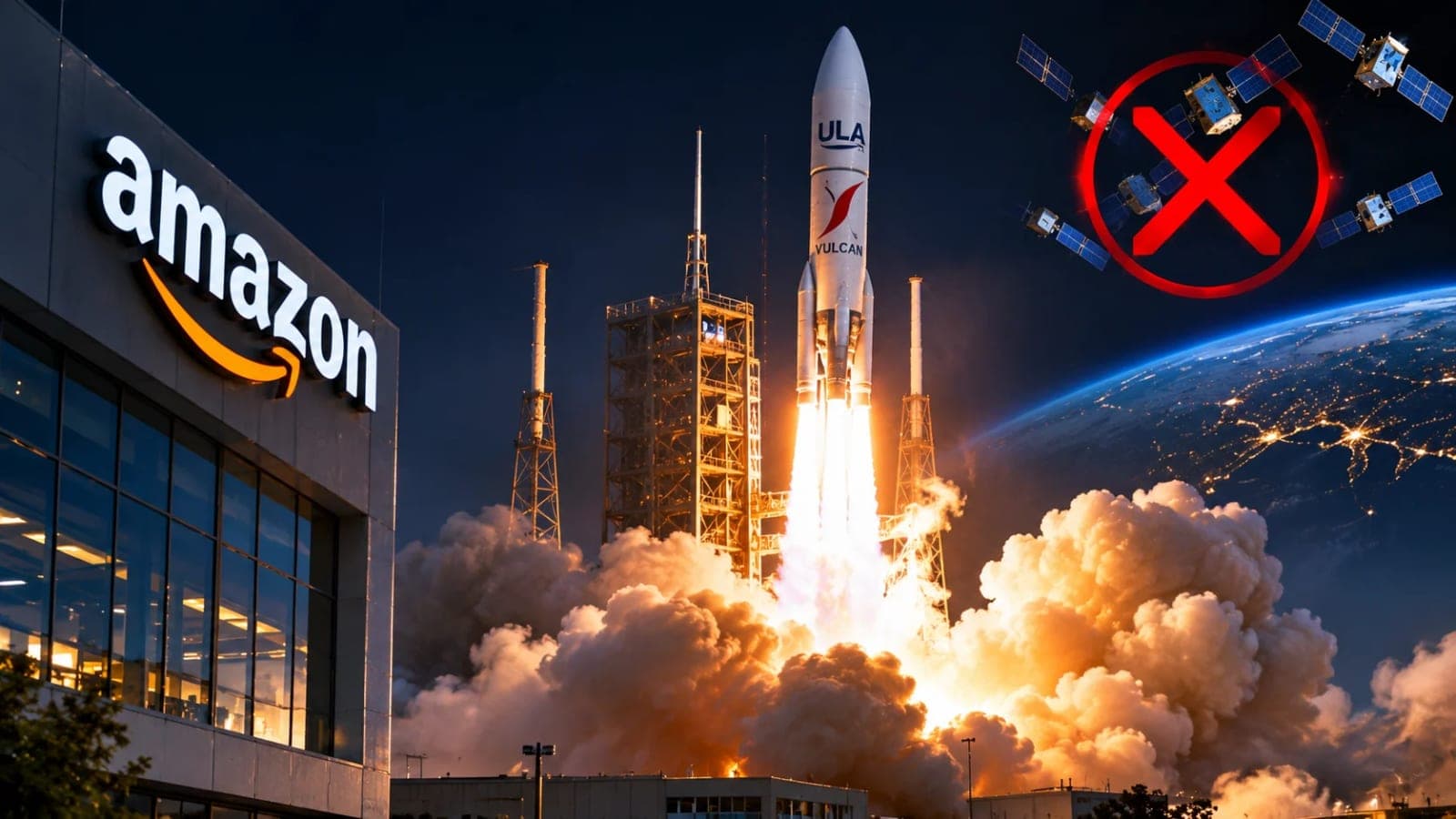
Forty Amazon satellites were lost on Sunday when a United Launch Alliance Vulcan rocket failed about ten minutes after liftoff from Cape Canaveral in Florida.
The rocket lifted off from Space Launch Complex 41 at 12:40 in the afternoon Eastern time. About ten minutes into the flight, during the burn of its Centaur upper stage, the vehicle suffered an anomaly and failed to deliver the Amazon satellites to orbit, ULA confirmed in a statement about 50 minutes after launch.
A first failure in 20 years for ULA
The loss is the first outright mission failure in the 20-year history of ULA, the joint venture of Boeing and Lockheed Martin. It is a heavy blow because this flight was Vulcan's return to the air after a nine-month grounding.
Vulcan had been grounded since 12 February 2026, when a solid rocket booster nozzle failed during a national security mission. Sunday's flight, called Vulcan Leo 1, was the rocket's first mission for Amazon and the largest single batch of Amazon satellites ever launched at once.
What Amazon Leo is trying to build
Amazon Leo, formerly known as Project Kuiper, is Amazon's satellite internet network, built to compete with SpaceX's Starlink. The full constellation is planned at more than 3,200 satellites in low Earth orbit.
Amazon has about 396 satellites in orbit so far, while Starlink operates more than 11,100. Amazon needs 578 satellites in orbit for its initial regional service, and it has booked 38 Vulcan launches as part of its push to close the gap. Losing 40 Amazon satellites in one failure slows that climb.
Deadlines are pressing on Amazon
US regulators have set Amazon a deadline of 30 July 2029 to deploy half of its constellation. The company won conditional relief in June 2026 from an earlier milestone, but the schedule still leaves little room for long groundings.
ULA said it will work with Amazon and other organisations to find the cause of the failure, determine corrective actions and return to flight as quickly as possible. It has not yet said what went wrong.
What happens next
Amazon said on Sunday that it believes ULA will learn from the failure and deliver on its long-term launch plans. The next batch of Amazon satellites is due to fly on an Ariane 6 rocket from French Guiana on 23 November, carrying 36 spacecraft.
Until the investigation reports, every Vulcan flight is in doubt, and Amazon satellites will depend on other rockets to keep the constellation growing.
Frequently asked questions
Q: What happened to the Amazon satellites on Sunday? A: The Vulcan rocket carrying 40 Amazon satellites suffered an anomaly about ten minutes after launch and failed to reach orbit, so all 40 spacecraft were lost.
Q: How many Amazon satellites are in orbit now? A: Amazon has about 396 satellites in orbit, against a planned constellation of more than 3,200 Amazon satellites for the Leo network.
Q: What is Amazon Leo? A: Amazon Leo, formerly Project Kuiper, is Amazon's satellite internet service. The Amazon satellites network is being built to compete with SpaceX's Starlink.
Q: How far behind Starlink is Amazon? A: Starlink operates more than 11,100 satellites, while Amazon satellites in orbit number only about 396, so Amazon is years behind in the race.
Q: When is the next Amazon satellite launch? A: An Ariane 6 rocket is scheduled to carry 36 Amazon satellites from French Guiana on 23 November, while the Vulcan failure is investigated.
What happens next for tech
We will keep this page updated as the story develops rather than publishing a near-duplicate at a new address. Follow Tech for related coverage.
Get the Verified Brief
One email each morning with the stories we checked overnight.
Spotted an error? Read our corrections policy and tell the newsroom.