
SpaceX Starship Catch Makes History: 5 Key Facts Confirmed
The SpaceX Starship catch is the first time a spaceship returning from orbit has been grabbed mid-air, and it brings fully reusable rockets a big step closer.

By Suleman Mirza · Reporter
Published · Updated · 5 min read
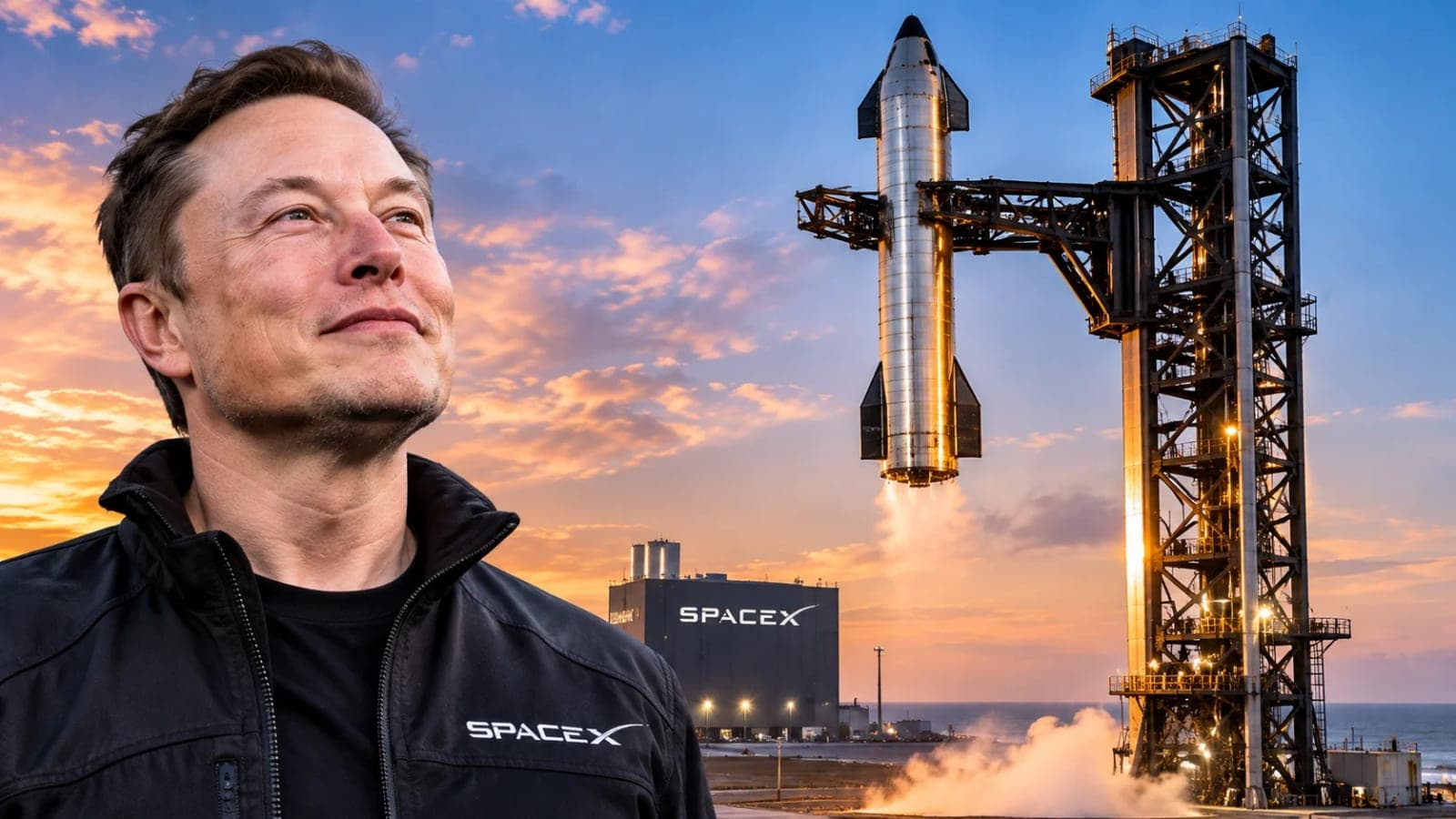
The SpaceX Starship catch made history on Saturday, when a spaceship returning from orbit was grabbed in mid-air for the first time ever. Elon Musk's SpaceX caught the upper stage of its giant Starship rocket with huge mechanical arms at its Starbase site in Texas, after a flight of about 22 hours around Earth.
The catch is a major step toward fully reusable rockets. If both parts of Starship can fly, come home and fly again with little repair work, space travel becomes far cheaper, and missions to the Moon and Mars become far easier to plan.
How the SpaceX Starship catch worked
Flight 15 lifted off from Starbase, near the border with Mexico, on Friday evening. The 124 metre tall rocket, the largest and most powerful ever built, carried its upper stage, known as Ship 42, into orbit.
In orbit, the ship released 26 new Starlink internet satellites. It then circled Earth 14 times at about 260 kilometres up, travelling at around 17,000 miles per hour.
On Saturday afternoon, the ship came home. It survived the fierce heat of re-entry, appeared through thick cloud, turned itself upright and dropped slowly toward its own launch tower. The tower's two mechanical arms, nicknamed chopsticks, closed around it and held it in the air while its engines shut down. Space.com timed the catch at 4:20 pm Eastern time on Saturday. The SpaceX Starship catch closed a mission that lasted about 22 hours from liftoff to landing.
Musk celebrated the moment on X, writing that he had hugged Ship 42 on its return and that it looks great. SpaceX commentator Dan Huot called the catch the holy grail of spaceflight.
Why the catch was so hard
SpaceX had caught the Super Heavy booster, the lower half of the rocket, three times before, starting in October 2024. Catching the ship is far harder, because it comes back from orbit, not from a short hop.
The ship flies much higher and much faster than the booster, and it must survive re-entry heat before steering itself to one exact point in the sky above its own launch pad. The tower arms grip just two small pins on the hull, so the margin for error is tiny.
What happened to the booster
SpaceX had planned a double catch, with both the booster and the ship returning to the tower. The booster part of the plan failed on Friday.
The booster cut its return burn short after a low fuel reading. Its guidance system judged that it was out of position, called off the tower approach and steered the booster to the Gulf of Mexico, where it was lost. SpaceX says it is still looking for the cause.
Why the SpaceX Starship catch matters
Catching the ship proves that both halves of Starship can come back to the tower they left from. Bringing hardware straight home, instead of fishing it from the sea or landing it on legs, is the key to quick inspection, refuelling and another flight.
For NASA, the SpaceX Starship catch is a big moment too. NASA is paying billions of dollars for Starship to land astronauts on the Moon later this decade, as part of its Artemis programme. NASA Administrator Jared Isaacman called the catch almost magic, and said it brings the Moon one step closer.
Cheaper reusable rockets also help Starlink, the satellite internet network. Each Starship flight can carry a large batch of satellites, and this flight placed 26 of the newest Starlink V3 satellites in orbit.
What happens next
SpaceX expects to start launching Starships from Florida's Kennedy Space Centre within the next few months. More test flights will follow, and the company still has to prove in-orbit refuelling, which Moon and Mars missions will need.
The SpaceX Starship catch does not finish the job, but it removes the biggest doubt about the design. A rocket that can go to orbit and be caught on its way home is now a proven idea, not just a plan.
SpaceX Starship catch: questions answered
Q: When did SpaceX catch Starship?
A: The SpaceX Starship catch happened on Saturday 14 November 2026, about 22 hours after Flight 15 lifted off on Friday 13 November.
Q: What is Mechazilla?
A: Mechazilla is the nickname for SpaceX's launch tower at Starbase in Texas. Its two giant mechanical arms, called chopsticks, catch returning rocket stages in mid-air instead of letting them land on legs.
Q: Has SpaceX caught a rocket before?
A: Yes. SpaceX first caught a Super Heavy booster in October 2024 and has done it three times. This was the first time it caught the upper stage, the ship, returning from orbit.
Q: What happened to the booster on Flight 15?
A: The booster missed its catch. A low fuel reading cut its return burn short, the guidance system called off the tower approach, and the booster was diverted to the Gulf of Mexico, where it was lost.
Q: Why does the catch matter for the Moon?
A: NASA plans to use Starship as the lander that carries astronauts to the Moon under its Artemis programme. A reusable Starship makes those missions cheaper and more frequent.
Q: How many satellites did the flight carry?
A: Ship 42 deployed 26 Starlink V3 internet satellites while in orbit, before starting its journey home.
What happens next for tech
We will keep this page updated as the story develops rather than publishing a near-duplicate at a new address. Follow Tech for related coverage.
Get the Verified Brief
One email each morning with the stories we checked overnight.
Spotted an error? Read our corrections policy and tell the newsroom.