

Breast Cancer Awareness in Pakistan: From Public Messages to Timely Care
Pakistan's leaders call for earlier breast cancer detection and care. Learn the symptoms, why prompt evaluation matters and what the 2026 statement says.

By News Desk · Verified Pakistan News Desk
Published · Updated · 10 min read
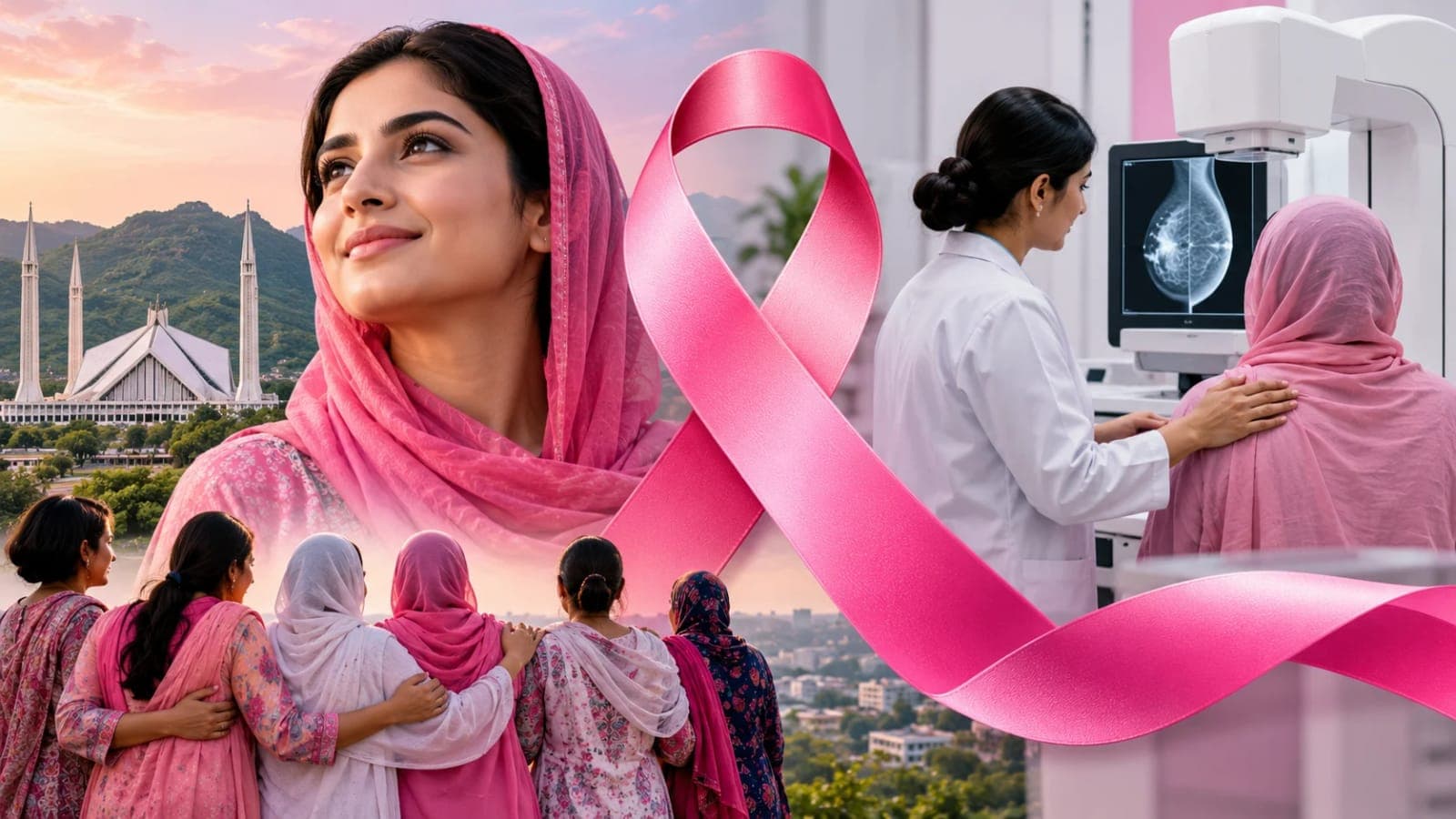
President Asif Ali Zardari and Prime Minister Shehbaz Sharif have used Breast Cancer Awareness Day on 19 October to urge greater attention to detection, treatment and care for women. In separate messages reported by Radio Pakistan, they acknowledged the pressure breast cancer places on families. The president encouraged women to seek medical advice when they notice a change or have a concern, while the prime minister said a comprehensive strategy had been developed to promote early detection and treatment.
The public message has a practical centre: a breast change deserves timely medical assessment. Most breast lumps are not cancer, according to the World Health Organization, but nobody can reliably settle the question from a headline or a photograph. WHO says people with an abnormal lump should seek medical care even when it is painless.
Awareness is useful when it leads to a clear route from noticing a symptom to seeing a clinician, receiving an appropriate diagnosis and, when needed, completing treatment. This guide explains the October statements and the evidence-based basics without guessing at a person's diagnosis or announcing a new service that has not been described.
What Pakistan's leaders said on 19 October
Radio Pakistan reported that the president and prime minister stressed awareness, detection, treatment and care for women affected by breast cancer. They said the disease touches thousands of families in Pakistan and brings emotional and social pressures as well as medical needs.
President Zardari framed the day as a reminder to pay attention to health and seek appropriate medical advice when a change is noticed. Prime Minister Sharif said a comprehensive strategy had been developed to promote early detection and treatment. He also expressed a commitment to timely, quality care regardless of a woman's location or financial circumstances.
These statements convey priorities and commitments. The brief report does not detail a new screening timetable, eligibility rules, funding amounts, clinic list or start date. People seeking a service should confirm what is available locally with a healthcare provider or relevant health department.
Why the distinction matters
An awareness message can prompt action today. A promised strategy needs implementation details before readers can rely on it for a particular appointment or benefit. It would be misleading to tell a patient that every district already has a new facility merely because leaders have set out an ambition to improve access.
At the same time, the absence of a detailed programme in this report should not discourage anyone from seeking help for a symptom. Clinical assessment is an immediate issue, separate from whether a new national initiative has been fully documented.
Symptoms that deserve a medical conversation
WHO lists several possible signs of breast cancer: a lump or thickening, a change in a breast's size or appearance, dimpling or other skin changes, changes around the nipple, and abnormal or bloody nipple discharge. A lump may not hurt. The organization specifically advises medical attention for an abnormal lump even without pain.
Symptoms can have causes other than cancer. That is why an examination and, when appropriate, tests are needed. Reassurance based solely on a lump being painless, or fear based solely on any change, can both lead people away from a sound decision.
People may first notice a change while dressing or bathing, or a clinician may identify it during a consultation. There is no requirement to describe it perfectly before asking for help. Being able to say when it appeared, whether it is changing and whether there are associated symptoms can make the appointment more useful.
What to do after noticing a change
Arrange an appointment with a qualified clinician rather than waiting for a symptom to become painful. Mention any breast or underarm change, skin or nipple change, and relevant family history. A clinician can assess the finding and explain whether examination, imaging or further testing is appropriate.
Keep a record of what was noticed and any recommended follow-up. If a suggested test or referral is difficult to obtain, tell the clinician about the barrier and ask what options are available. The aim is to complete an appropriate evaluation, not to diagnose oneself online.
Early diagnosis and screening are related but different
WHO separates early detection into two approaches. Early diagnosis involves recognizing symptoms, seeking medical advice, receiving timely evaluation and moving to treatment when needed. Screening uses mammography in people without symptoms to look for changes before signs become noticeable.
This difference matters for a person who already has a symptom. A routine future screening invitation is not a substitute for discussing a new lump or discharge now. Conversely, a person without symptoms may still wish to ask a clinician about screening appropriate to their age, risk and available services.
WHO describes mammography screening programmes as usually involving women aged 50 to 69, but that is a general public-health description, not a personalized rule for every Pakistani reader. Individual decisions may differ because of health history, family history and clinical guidance. Ask a qualified professional about the appropriate path for you.
Why speed matters without panic
WHO says mortality falls when breast cancer is detected and treated early. A prompt consultation gives clinicians a chance to investigate a concern before avoidable delays accumulate. It does not mean every symptom is cancer, and it does not mean a patient has failed if access to care has been difficult.
The useful response is practical: notice the concern, seek assessment, keep appointments and ask what the next step means. Family and friends can help with travel, childcare and reminders if the patient wants support. Respecting her privacy and choices is part of that care.
Risk, family history and common misunderstandings
WHO identifies female sex and increasing age as major risk factors. It also discusses factors such as family history, reproductive history and previous radiation exposure. Crucially, many women who develop breast cancer do not have a known family history. No family history is therefore not a reason to dismiss a new symptom.
Breast cancer can also occur in men, although WHO estimates that only about 0.5 to 1 percent of cases do. Anyone with a concerning breast change should seek clinical advice. Public messages focused on women reflect the much larger burden among women but should not erase other patients.
Another misunderstanding is that a lump must hurt to matter. WHO says a lump or thickening is often painless. Nor is a single symptom enough to make a diagnosis. A trained clinician may need imaging and a tissue sample to determine what a finding is.
A family member's role
Support can make it easier to attend appointments and understand information, especially when the patient is anxious or travelling a long distance. The patient should remain at the centre of decisions about what to share and which support she wants. Encouragement works better than blame.
If a family history is relevant, sharing accurate details with a clinician can help assess risk. It should not be converted into an assumption that everyone in the family has cancer or that a person without such history is safe from it.
What treatment can involve
WHO says treatment depends on the cancer's type and extent. Options can include surgery, radiation and medicines such as hormone therapy, chemotherapy or targeted treatments. The right combination varies from person to person and is determined after appropriate diagnosis and specialist assessment.
Treatment may take time and involve more than one professional. WHO describes multidisciplinary teams that can include oncology, imaging, pathology, rehabilitation and supportive care. Completing recommended treatment can matter for outcomes, but patients also need clear explanations and support to manage practical barriers and side effects.
An article cannot choose a medicine, test or operation for an individual. Someone with a diagnosis should ask their treating team what the findings mean, what options are available, what benefits and risks apply, and how to obtain follow-up care. A second clinical opinion may be worth discussing if important questions remain.
Care beyond the initial diagnosis
Cancer can affect work, family routines, mental health and finances. Supportive care may be needed alongside medical treatment. The leaders' messages recognized the social and emotional pressure on families, a reminder that access is more than a scanner or a drug.
WHO also stresses rehabilitation and palliative care as parts of comprehensive care when appropriate. Palliative care can address symptoms and quality of life; it should not be confused with giving up on a person. The precise plan belongs with the patient and her healthcare team.
Access across Pakistan
The prime minister's commitment concerning geography and financial circumstances points to a real implementation question: can a person move from first concern to evaluation and treatment without being lost between facilities? Reliable referral routes, trained professionals and affordable services all affect that journey.
The Radio Pakistan report does not give a district-by-district service directory or details of the strategy the prime minister mentioned. Readers should avoid assuming a new entitlement based on the statement alone. Local hospitals, health departments and qualified clinicians can provide current information about available care and referral arrangements.
Public accountability will require more detail. A published plan could set out how detection, diagnostic testing, referral, treatment and patient support are connected; how remote areas are served; and how progress is measured. Such details would help turn a national message into a practical route for patients.
Awareness should lead somewhere
Posters and speeches can start conversations. Their value rises when someone who notices a change can find a clinician, receive a timely test when indicated and continue care. WHO's global approach emphasizes health promotion, timely diagnosis and comprehensive management together.
Families, workplaces and communities can make help-seeking easier by treating breast health concerns seriously and without stigma. Medical decisions should still rest on an individual assessment. No social campaign can replace an examination for a person with symptoms.
Frequently asked questions
What did Pakistan's president and prime minister say about breast cancer?
On 19 October 2026, they urged greater awareness, detection, treatment and care. President Zardari encouraged medical advice for health concerns, while Prime Minister Sharif said a strategy had been developed to promote early detection and treatment.
Does a painless lump need attention?
Yes. WHO says breast lumps can be painless and advises seeking medical care for an abnormal lump even if it does not hurt. Many lumps are not cancer, but a clinician should assess the finding.
Is screening the same as checking a symptom?
No. Screening looks for disease in people without apparent symptoms. A new lump or other change calls for a clinical evaluation rather than waiting for routine screening.
Does no family history mean there is no risk?
No. WHO says most women diagnosed with breast cancer do not have a known family history. Discuss a concerning change with a clinician regardless of family history.
Has the government announced exact new screening sites or eligibility?
The cited 19 October report does not provide those details. It reports the prime minister's statement that a comprehensive strategy has been developed. Check with relevant health authorities and local providers for current services.
Conclusion
Pakistan's Breast Cancer Awareness Day statements place attention on timely detection and care, including the barriers created by distance and cost. For an individual, the immediate step is to seek qualified medical advice about a new breast change, even if it is painless. For public policy, the next step is clear information on how the announced strategy will connect awareness with diagnosis, treatment and continued support.
What happens next for national
We will keep this page updated as the story develops rather than publishing a near-duplicate at a new address. Follow National for related coverage.
Get the Verified Brief
One email each morning with the stories we checked overnight.
Spotted an error? Read our corrections policy and tell the newsroom.