

Chinese man reportedly died after drinking 1.5 litres of Coca-Cola in 10 minutes
Chinese man Coca-Cola case resurfaces online after a 22-year-old reportedly died following rapid consumption of 1.5 litres of the soft drink.

By News Desk · Verified Pakistan News Desk
Published · 6 min read
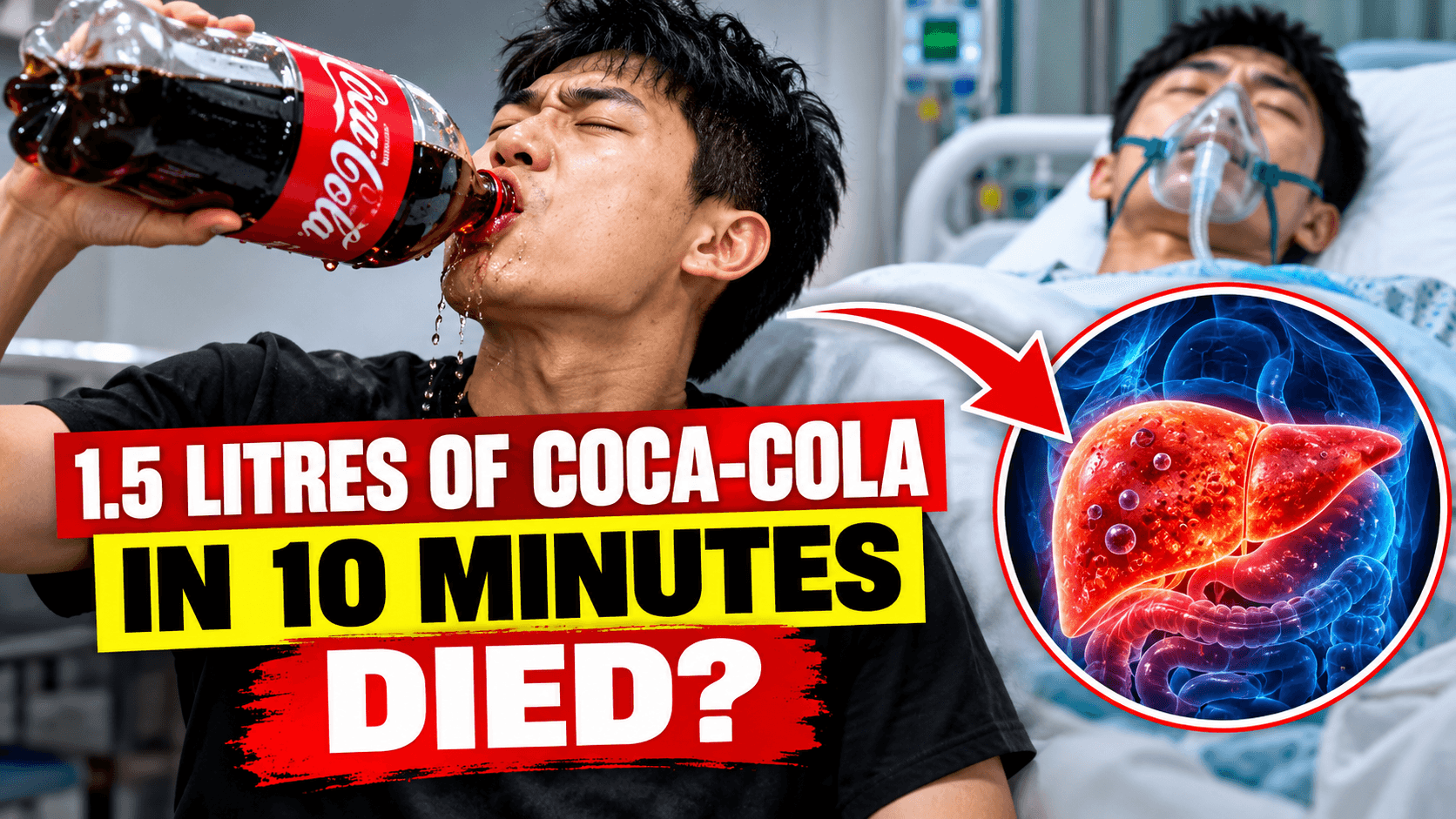
A strange medical case involving a Chinese man who reportedly died after drinking 1.5 litres of Coca-Cola in just 10 minutes has resurfaced online, bringing fresh attention to an incident originally reported several years ago.
The case involved a young man in Beijing who reportedly consumed a large bottle of the carbonated drink very quickly during hot weather. Hours later, he developed severe abdominal pain and swelling and was taken to hospital.
Although the story is again circulating on social media, it is important to note that this is not a new incident. The case dates back to 2021 and was documented in a medical publication.
What happened after the man drank 1.5 litres of Coca-Cola?
According to reports about the case, the man was 22 years old and was treated at Beijing Chaoyang Hospital.
He reportedly told doctors that he had consumed around 1.5 litres of Coca-Cola within approximately 10 minutes because he wanted to cool down during hot weather.
For several hours after drinking it, the situation apparently did not require hospital treatment. However, around six hours later, he began suffering from severe abdominal pain and noticeable swelling.
That prompted him to seek medical attention.
Doctors examining the patient reportedly found several worrying signs. His heart rate was elevated, his blood pressure was low, and he was breathing rapidly.
Further medical examinations revealed a much more serious problem inside his body.
Doctors discovered an unusual gas buildup
CT scans reportedly showed an abnormal presence of gas in the wall of the man's intestines as well as in his portal vein.
The portal vein plays an important role in carrying blood from parts of the digestive system to the liver.
The condition involving gas within the intestinal wall is known as pneumatosis intestinalis.
Doctors treating the patient believed the gas buildup was connected with hepatic ischemia, a serious condition in which the liver does not receive enough blood and oxygen.
Hepatic ischemia is sometimes referred to as "shock liver."
The medical team attempted to remove gas from the patient's digestive system and reportedly provided treatment intended to protect his liver and stabilise his condition.
Unfortunately, his health continued to deteriorate.
Blood tests taken around 12 hours later reportedly showed serious liver damage. Despite medical treatment, the patient died approximately 18 hours after being admitted.
Did drinking Coca-Cola actually cause his death?
This is where the story needs some context.
The case attracted worldwide attention because of the reported connection between the rapid consumption of Coca-Cola and the man's condition. However, not every medical expert was convinced that drinking 1.5 litres of Coca-Cola alone could explain such a rare and severe outcome.
Professor Nathan Davies, a biochemist at University College London, questioned whether consuming that amount of an ordinary carbonated soft drink could itself be fatal.
He suggested that another medical problem, such as a bacterial infection, could potentially have contributed to the abnormal gas buildup.
Certain bacteria can produce gas inside tissues, which may provide another possible explanation for findings such as pneumatosis.
Therefore, the case should not be interpreted as evidence that drinking a 1.5-litre bottle of Coca-Cola will normally cause the same outcome.
It was an extremely unusual medical case, and questions about the precise cause remained.
Why has the old Coca-Cola case resurfaced?
Unusual stories often return to social media years after they first make headlines.
The Chinese man and Coca-Cola case is especially likely to attract attention because the circumstances sound extraordinary. A widely consumed drink, a very short period of consumption and a fatal medical emergency make the story highly shareable.
When older reports are reposted without their original publication date, however, readers can easily assume that an incident happened recently.
In this case, the medical report dates back to 2021.
The incident has now returned to online discussions, but the resurfacing of the story does not mean another identical case has recently occurred.
What is hepatic ischemia?
Hepatic ischemia occurs when blood and oxygen reaching the liver are significantly reduced.
The liver requires a continuous blood supply to function normally. A major reduction in that supply can damage liver cells very quickly.
In the Beijing case, doctors reported abnormal gas in the portal vein alongside evidence of liver injury.
The unusual combination was one reason the case gained attention within medical circles as well as mainstream media.
Hepatic ischemia can occur in seriously ill patients for several reasons, including severe low blood pressure and problems affecting circulation.
That is also why establishing the exact chain of events in a rare individual case can be complicated.
Can drinking carbonated beverages quickly cause discomfort?
Rapidly consuming a large amount of any carbonated beverage can cause significant bloating and digestive discomfort.
Carbonated drinks contain dissolved carbon dioxide. Once consumed, some of that gas can be released inside the digestive system, which is why people commonly experience burping or a feeling of fullness after drinking fizzy beverages.
Drinking a very large quantity quickly can make those symptoms more uncomfortable.
However, the extraordinary outcome reported in the Beijing case should not be treated as a normal consequence of drinking Coca-Cola or another carbonated beverage.
Millions of people consume carbonated drinks, while cases involving complications of this severity are exceptionally unusual.
A rare case, not a new incident
The renewed attention surrounding the Chinese man who reportedly died after drinking 1.5 litres of Coca-Cola in 10 minutes highlights how old stories can suddenly become viral again.
The original case involved a 22-year-old patient treated in Beijing in 2021 after developing severe abdominal symptoms several hours after rapidly consuming the drink.
Doctors documented gas in his intestinal wall and portal vein along with severe liver injury. His condition deteriorated despite treatment, and he later died.
At the same time, outside experts questioned whether Coca-Cola itself was enough to explain the death and suggested that another underlying medical issue could have played a role.
For readers encountering the story today, the key point is simple: the incident is real in the sense that a medical case was reported, but it is an old and highly unusual case, and the exact role played by the soft drink remains subject to debate.
External Fact-Checking Sources:
Times of India — Resurfaced report on the 2021 case
Clinics and Research in Hepatology and Gastroenterology — Original medical case, “Cola-caused inflated liver”
PubMed — Research discussing carbonated beverages and the gastrointestinal system
What happens next for global
We will keep this page updated as the story develops rather than publishing a near-duplicate at a new address. Follow Global for related coverage.
Get the Verified Brief
One email each morning with the stories we checked overnight.
Spotted an error? Read our corrections policy and tell the newsroom.