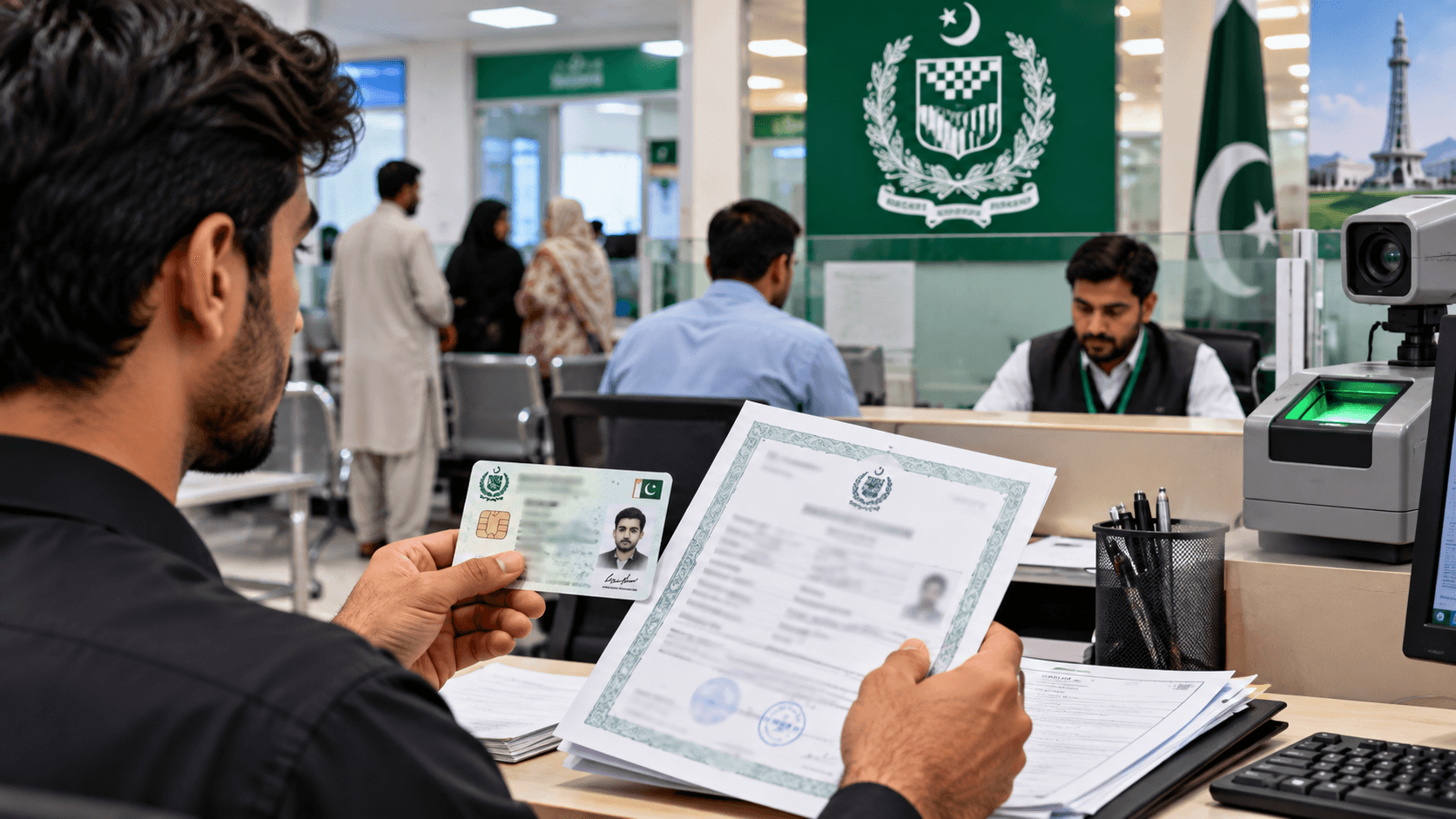

How to Verify a Pakistani University Degree Online Through HEC
HEC degree verification explained in 10 simple steps. Learn how to check a Pakistani university degree, recognition and attestation online through HEC.

By News Desk · Verified Pakistan News Desk
Published · 8 min read
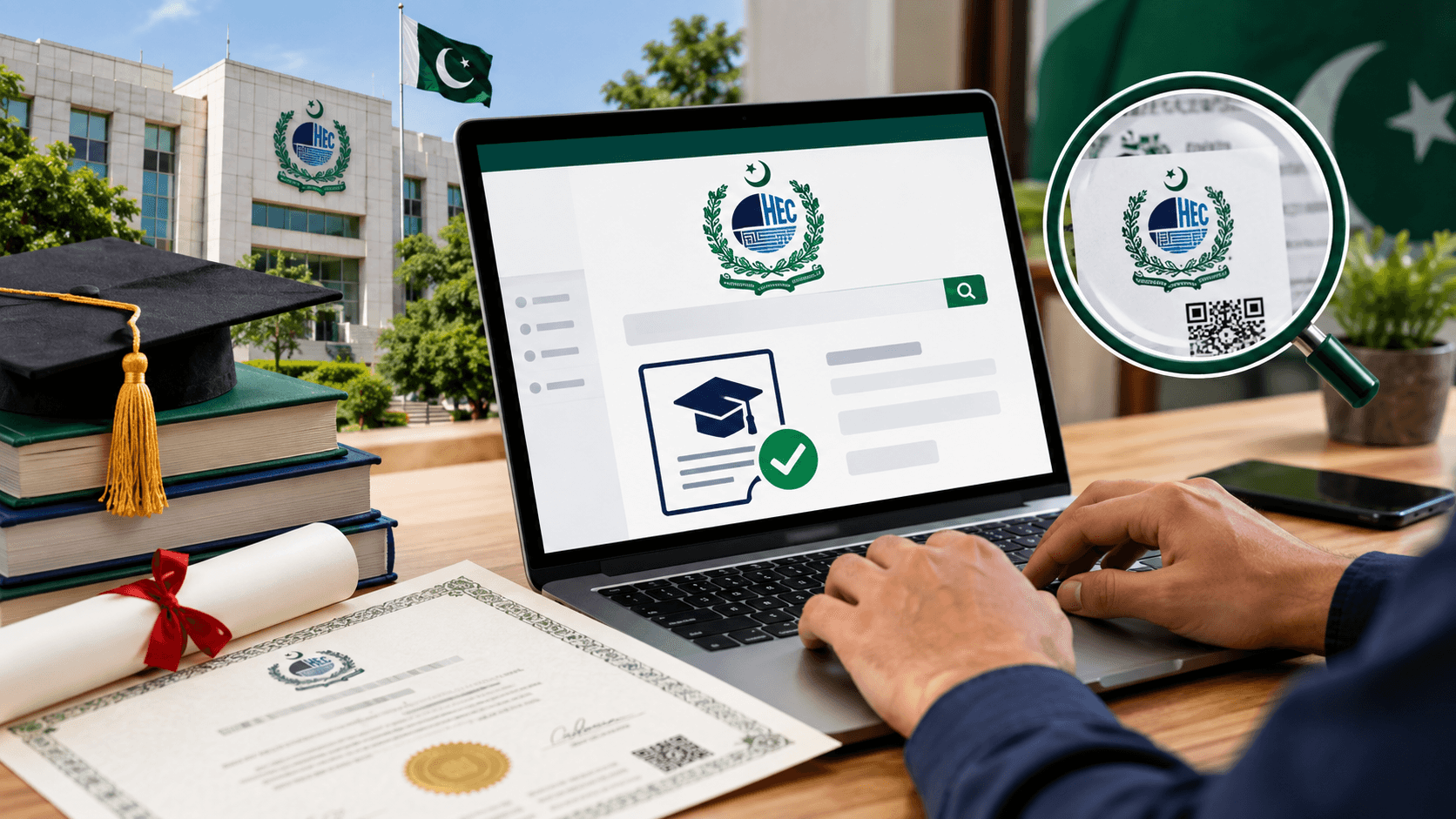
Verifying a university degree in Pakistan is important when applying for a job, pursuing higher education, moving abroad, or submitting academic documents to an employer. Fortunately, the Higher Education Commission (HEC) provides online services that make it easier to check whether a university and degree programme are recognized and to obtain formal HEC attestation.
If you want to verify a Pakistani university degree online through HEC, you should first understand that there are two slightly different checks. You can confirm whether the university, campus, and qualification are recognized by HEC, while formal verification of an individual's academic document is handled through HEC's Degree Attestation System.
This guide explains the process step by step.
How HEC Degree Verification Works in Pakistan
HEC maintains official records of recognized higher education institutions and qualifications in Pakistan.
The Pakistan Qualification Register (PQR), for example, contains information about qualifications and institutions recognized or accredited by HEC. HEC states that qualifications not listed in the PQR are not recognized by the Commission.
For an individual's degree, HEC's current Degree Attestation System follows a verification process involving both HEC and the university that awarded the qualification.
According to HEC, the process includes submission of an online application, scrutiny by HEC, verification by the relevant university or Higher Education Institution (HEI), and issuance of an e-Attestation Certificate after successful completion.
1. Check Whether the University Is Recognized by HEC
Before checking a particular degree programme, confirm that the university and the campus that issued the qualification are recognized.
This matters because recognition isn't simply about seeing a university's name on a degree. The campus where the student studied should also be authorized or recognized.
HEC publishes a list of recognized campuses of public and private universities and Degree Awarding Institutions.
When checking a qualification, look carefully at:
- University name
- Campus location
- Degree-awarding institution
- Department
- Degree programme
- Study period or session
Don't assume that every campus using the name of a recognized university automatically has the same recognition status.
2. Check the Degree Programme in the Pakistan Qualification Register
The next step is to check the qualification through HEC's Pakistan Qualification Register.
The PQR is designed as a centralized record of recognized higher qualifications and the institutions authorized to offer them. It provides information such as the qualification title, institution, programme and qualification level.
This check can be particularly useful before taking admission to a university.
HEC has advised prospective students to check relevant programme information before admission. In a September 2025 announcement concerning MS/MPhil and PhD programmes, HEC warned that admission to a programme that isn't properly listed may create problems with degree attestation later.
So, don't check only the university's name. Check the actual programme as well.
3. Use the Official HEC E-Services Portal
For formal degree attestation and verification processing, use HEC's official e-services system.
HEC says its official online services portal is:
https://eservices.hec.gov.pk
HEC has also warned users about fake websites impersonating its services and advises applicants to use only its official portal. Never enter your CNIC, password, OTP, or banking details on an unofficial website claiming to provide HEC verification.
New applicants can create an account, while existing users can sign in with their credentials.
After logging in, select the Degree Attestation service from the dashboard.
4. Enter Your Personal and Academic Details
The application asks for personal and educational information.
Applicants may need to provide details including their name, father's name, date of birth, address, degree title, institution, campus, academic session and registration or roll number.
Be careful while entering these details.
HEC specifically advises applicants to ensure that personal information on the CNIC and educational documents is consistent. Incorrect information can cause delays or prevent the application from moving forward.
Your degree title should also be entered accurately rather than using a similar programme name.
5. Upload the Required Documents
The next stage is document upload.
According to HEC's current instructions, applicants are required to upload clear and readable scanned copies of their CNIC and relevant academic documents.
Depending on the application, these may include:
- CNIC front and back
- Degree
- Transcript or Detailed Marks Certificate
- Provisional Certificate
- HEC Equivalence Certificate, where applicable
- Other supporting documents requested for a particular qualification
HEC advises applicants to upload clear and legible documents. Documents containing alterations, overwriting or erasures may not be accepted for attestation.
Check every uploaded file before submitting the application.
6. Submit the Application for HEC Scrutiny
After completing the information and uploading the documents, review everything carefully and submit the application.
HEC performs an initial scrutiny of the application.
This review can include checking personal information, required documents, consistency between CNIC and academic records, university and campus details, and other applicable requirements.
If HEC finds missing or incorrect information, the application can be returned with instructions for correction.
Applicants should therefore keep checking their HEC dashboard instead of assuming that submission means the process has been completed.
7. University Verification of the Degree
This is one of the most important parts of formal HEC degree verification.
If the application passes HEC's initial scrutiny, HEC forwards the case to the concerned university or Higher Education Institution.
The university then checks the applicant's academic credentials against its official records and sends its verification decision back to HEC.
This provides a stronger verification process than simply checking a scanned degree online.
It helps establish whether the academic document corresponds with the records held by the institution that issued it.
8. Pay the HEC Attestation Fee
HEC's current system uses online payment through 1-Link/1-Bill.
As of HEC's currently published instructions, the attestation fee is Rs. 3,000 per document. The system generates a consumer number that can be used to make the payment through an available online banking channel.
After payment, applicants must verify the payment through their HEC account.
Because fees and procedures can change, always check the latest amount shown on the official portal before paying.
9. Track Your HEC Application Online
You don't need to guess what is happening with your application.
HEC allows applicants to track their case through their e-services dashboard. Applicants may also receive updates through SMS and email during different stages of the process.
If HEC raises a deficiency or requests a revision, open the application, read the comments carefully, correct the problem and resubmit it.
Simply creating an application isn't enough. Make sure its status shows that it has actually been submitted rather than remaining saved or pending.
10. Download the HEC e-Attestation Certificate
Once the concerned university verifies the academic credentials and HEC completes its final review, an e-Attestation Certificate can be issued for eligible documents.
HEC says applicants are informed through SMS and email when the certificate has been issued. It can then be downloaded from the applicant's HEC online account.
This electronic process is particularly useful for graduates who need authenticated academic documents for employment, education, immigration or other official purposes.
Can Employers Verify a Pakistani Degree Online?
Employers can use HEC's public information to check whether a university, campus or qualification is recognized.
HEC also maintains a Degree Verification Status page linked through its official website.
However, checking whether a university or programme is recognized isn't the same thing as independently proving that a particular person genuinely earned that qualification.
For formal authentication of an individual's academic document, the HEC attestation and university verification process provides a more appropriate route.
What If Your Degree Programme Isn't Showing?
Sometimes an applicant may find the university but can't locate the exact campus, department or degree title.
Don't select an unrelated qualification simply to complete the application.
HEC explains that universities have PQR focal persons responsible for adding missing information such as programmes, campuses, departments and sessions to the PQR database. If the correct entry can't be found after checking relevant programme names, applicants are advised to contact their university's PQR focal person.
This is especially important because degree titles can sometimes appear under slightly different nomenclature.
Common Mistakes to Avoid
One common mistake is relying on unofficial websites that claim they can verify an HEC degree instantly. HEC has specifically warned the public about fraudulent websites and calls pretending to provide attestation or verification services.
Another mistake is checking only the university while ignoring the campus and programme.
Applicants should also avoid uploading blurry scans, entering a different degree title, leaving discrepancies between CNIC and academic records, or forgetting to verify their payment.
Taking a few extra minutes to review the application can save considerable time later.
Final Words
Learning how to verify a Pakistani university degree online through HEC is useful for students, graduates and employers.
Start by checking whether the university and campus are recognized. Then confirm the programme through HEC's Pakistan Qualification Register where applicable. For formal verification and attestation of an individual's degree, use the official HEC e-services portal and follow the Degree Attestation System.
Most importantly, use only official HEC services. A professional-looking website isn't proof that it belongs to HEC.
Official Fact-Checking Sources
Higher Education Commission Pakistan — Degree Attestation System https://www.hec.gov.pk/english/services/students/DAS/Pages/Degree-Attestation.aspx
HEC — Pakistan Qualification Register https://www.hec.gov.pk/english/services/universities/pqr/
HEC — Recognized Campuses https://www.hec.gov.pk/english/universities/Pages/DAIs/HEC-recognized-Campuses.aspx
Official HEC E-Services Portal https://eservices.hec.gov.pk/
What happens next for national
We will keep this page updated as the story develops rather than publishing a near-duplicate at a new address. Follow National for related coverage.
Get the Verified Brief
One email each morning with the stories we checked overnight.
Spotted an error? Read our corrections policy and tell the newsroom.