
How to Apply for a Schengen Visa from Pakistan: 9 Key Steps
Learn how to apply for a Schengen visa from Pakistan with 9 key steps covering documents, fees, appointments, biometrics, processing time and approval tips.

By News Desk · Verified Pakistan News Desk
Published · Updated · 9 min read
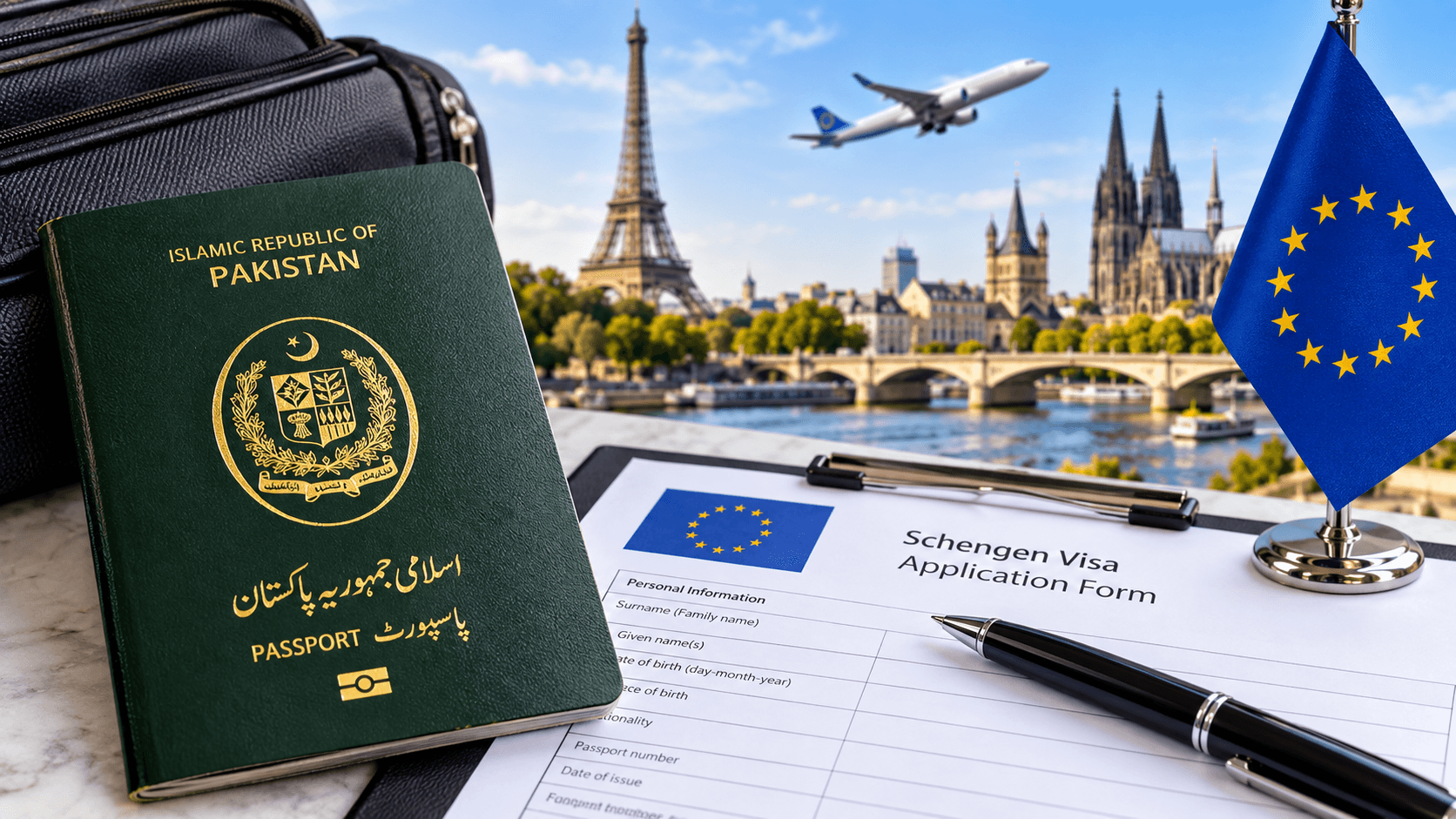
If Europe is on your travel list, understanding how to apply for a Schengen visa from Pakistan is the first big step. The process may look complicated at first, especially when you start hearing about embassy appointments, bank statements, travel insurance and biometrics. Once you break it down, though, it becomes much easier to manage.
Pakistani citizens generally need a Schengen visa for short visits to countries within the Schengen Area. A short-stay Schengen visa normally allows visits of up to 90 days within a 180-day period.
Whether you're travelling for tourism, visiting relatives or making a short business trip, careful preparation matters. Here's a practical step-by-step guide for applicants in Pakistan.
How to Apply for a Schengen Visa from Pakistan in 2026
The application isn't simply about filling in a form and buying a ticket. You need to identify the correct country, prepare supporting documents, secure an appointment and show that your travel plans and finances make sense.
Most importantly, don't choose an embassy simply because you think its visa might be easier to obtain. Your application needs to go to the appropriate Schengen country's consulate or its authorised application channel.
1. Choose the Correct Schengen Country
Start by looking closely at your itinerary.
As a general rule, you should apply to the country that is the main destination of your trip. If you're visiting several Schengen countries for equal lengths of time, the application generally goes to the country you'll enter first.
For example, imagine you're planning a 12-day holiday with seven days in Germany and five days in France. Germany would normally be your main destination.
Your hotel bookings, itinerary, flight reservation and visa application should tell the same story. Contradictory travel plans can create unnecessary questions about your application.
2. Check the Visa Type You Need
For a holiday, you'll normally be looking at a short-stay Schengen visa for tourism.
Other short-stay purposes can include business trips, family or friend visits, medical travel and certain cultural or sporting activities.
Be careful not to confuse a Schengen short-stay visa with a national long-stay visa. If you're moving to a European country for long-term work, study or family reunification, a national visa may be required instead.
3. Check the Official Application Procedure in Pakistan
This is where applicants need to pay particular attention.
The procedure isn't identical for every Schengen country. Depending on your destination, applications may be handled by an embassy, consulate or authorised external service provider.
Germany, for example, provides its own appointment guidance for applicants in Pakistan. Its official information also warns applicants about fraudulent agents claiming they can provide faster appointments.
France has its own Pakistan-specific process through France-Visas, with applications examined by the French Embassy in Islamabad.
So, before paying anyone or preparing your file, check the official website of the embassy or consulate responsible for your destination.
Also Read: How to Get Azerbaijan Visa for Pakistanis: 7 Easy Steps
4. Prepare Your Schengen Visa Documents
Documents are the heart of your application.
The exact checklist depends on the country and purpose of travel, but standard requirements generally include a valid passport, completed application form, compliant photograph, travel medical insurance and supporting evidence explaining your trip.
You'll normally also need evidence of accommodation, sufficient financial means and reasons showing your intention to return home after the visit.
For Pakistani applicants, supporting documents may include employment records, business documents, bank statements, sponsorship evidence or other papers relevant to personal circumstances.
Don't add random documents just to make your file look bigger. A clear and consistent application is more useful than a thick folder filled with paperwork that doesn't support your case.
Also Read: MOFA Document Attestation in Pakistan: 7 Key Steps
5. Check Your Passport Before Applying
Don't leave your passport check until appointment day.
Under the general Schengen rules, your passport should remain valid for at least three months after your planned departure from the Schengen Area.
France's official Pakistan guidance likewise tells applicants to make sure their passport expiry extends at least three months beyond the end of the requested visa period.
If your passport is close to expiry, dealing with that issue before the visa application can save you a major headache later.
6. Book Your Schengen Visa Appointment
Once your documents are taking shape, follow the appointment procedure given by the relevant embassy or authorised visa centre.
Appointment availability can become a problem during busy travel seasons, so don't wait until the last minute.
EU guidance states that applications should generally be submitted at least 15 days before the intended journey and no earlier than six months before travelling.
That six-month window gives you room to prepare early.
Germany's mission in Pakistan, for instance, says its short-stay visa processing usually takes around 14 calendar days but can take longer, particularly during peak periods.
7. Pay the Schengen Visa Fee
The standard Schengen visa fee is currently €90 for adults and €45 for children aged 6 to 12, although exemptions or reductions can apply to certain applicants.
Applicants using an external visa service centre may also have to pay a separate service charge.
Because payment procedures and local-currency amounts can vary, check the relevant embassy or authorised service provider shortly before your appointment instead of relying on an old PKR figure found online.
8. Submit Biometrics and Attend Your Appointment
At the appointment, you'll submit your application and supporting documents. Fingerprints are generally collected as part of the Schengen application process, subject to exemptions.
Country-specific rules can differ in practice. France, for example, states that biometric data consisting of a photograph and fingerprints is required for visa applicants over 12 in its Pakistan application procedure.
During an interview, keep your answers simple and consistent with your documents.
You should be able to explain where you're going, why you're travelling, how long you'll stay, who is paying for the trip and why you'll return to Pakistan.
There's no need to memorise fancy answers. Know your own travel plan.
9. Wait for the Visa Decision
The normal processing period under general Schengen guidance is 15 days. A case can take up to 45 days where more detailed examination or additional documents are required.
Individual missions may provide their own expected timelines. France, for example, advises applicants in Pakistan to allow at least 15 to 20 days for a short-stay application after the embassy interview and to account separately for the time needed to obtain an appointment.
For that reason, avoid building your entire holiday around receiving a decision at the last possible moment.
How Much Bank Balance Is Required for a Schengen Visa from Pakistan?
This is one of the first questions many Pakistani applicants ask, but there isn't one universal bank-balance figure that guarantees a Schengen visa.
Your financial evidence should make sense for your destination, length of stay, accommodation, transport and overall travel plan. The consulate needs evidence that you have sufficient means to support yourself during the trip.
For instance, the finances expected for a short five-day trip won't necessarily look the same as those for a three-week European holiday.
A healthy-looking balance alone doesn't tell the full story either. Your financial documents should fit naturally with your employment, income, business activity or sponsorship situation.
Do You Need Travel Insurance?
Yes. Medical travel insurance is part of the standard Schengen visa documentation.
EU guidance requires insurance covering emergency medical treatment, hospitalisation and repatriation, including repatriation in the event of death.
Don't simply buy the cheapest policy you see online. Check the requirements of the country handling your application and make sure the policy is acceptable for your intended travel period.
Common Schengen Visa Mistakes Pakistani Applicants Should Avoid
A few avoidable mistakes can weaken an otherwise straightforward application.
Submitting inconsistent travel dates is one. Providing unclear financial evidence is another. Applicants should also avoid selecting the wrong embassy, submitting an incomplete checklist, giving information in an interview that conflicts with the application, or trusting agents who promise guaranteed visas or special appointment access.
No legitimate agent can guarantee that your visa will be approved.
Germany's missions in Pakistan specifically warn that agencies or consultants cannot improve an applicant's chances of success or provide earlier appointments simply because they're agents.
Can a Schengen Visa Be Rejected?
Yes. Submission of a complete application doesn't guarantee approval.
If a Schengen visa application is refused, the applicant should receive information explaining the reason for the refusal and how an appeal can be submitted.
Instead of immediately filing another application with the same weaknesses, read the refusal reason carefully. If you apply again, address the problem with relevant evidence.
Final Checklist Before You Apply
Before submitting your application, check that you've chosen the correct Schengen country, completed the correct visa form, prepared a valid passport and photographs, arranged acceptable travel medical insurance, provided accommodation and itinerary evidence, and included appropriate financial and personal supporting documents.
Then compare everything once more with the latest checklist published by the embassy or authorised application centre handling your case.
Final Thoughts
Learning how to apply for a Schengen visa from Pakistan becomes much easier when you treat the process as a series of small steps rather than one huge task.
Start early, apply to the correct country and keep your documents consistent with your actual circumstances. More paperwork doesn't automatically mean a stronger application; relevant and credible evidence matters more.
Visa procedures, appointment systems, fees and document requirements can change. Before submitting anything, verify the latest instructions directly with the relevant Schengen country's official visa authority.
Official Sources
European Commission — Applying for a Schengen Visa
German Missions in Pakistan — Short-Term Schengen Visa Information
France-Visas — Visa Applications from Pakistan
European Union Delegation to Pakistan — Travel and Study Information
What happens next for global
We will keep this page updated as the story develops rather than publishing a near-duplicate at a new address. Follow Global for related coverage.
Get the Verified Brief
One email each morning with the stories we checked overnight.
Spotted an error? Read our corrections policy and tell the newsroom.