
Pakistan China Open Green Channel at Khunjerab Border
Khunjerab green channel trade will give listed farm and allied products priority customs processing at Sost, cutting delays for perishable goods crossing the border.

By News Desk · Verified Pakistan News Desk
Published · Updated · 5 min read
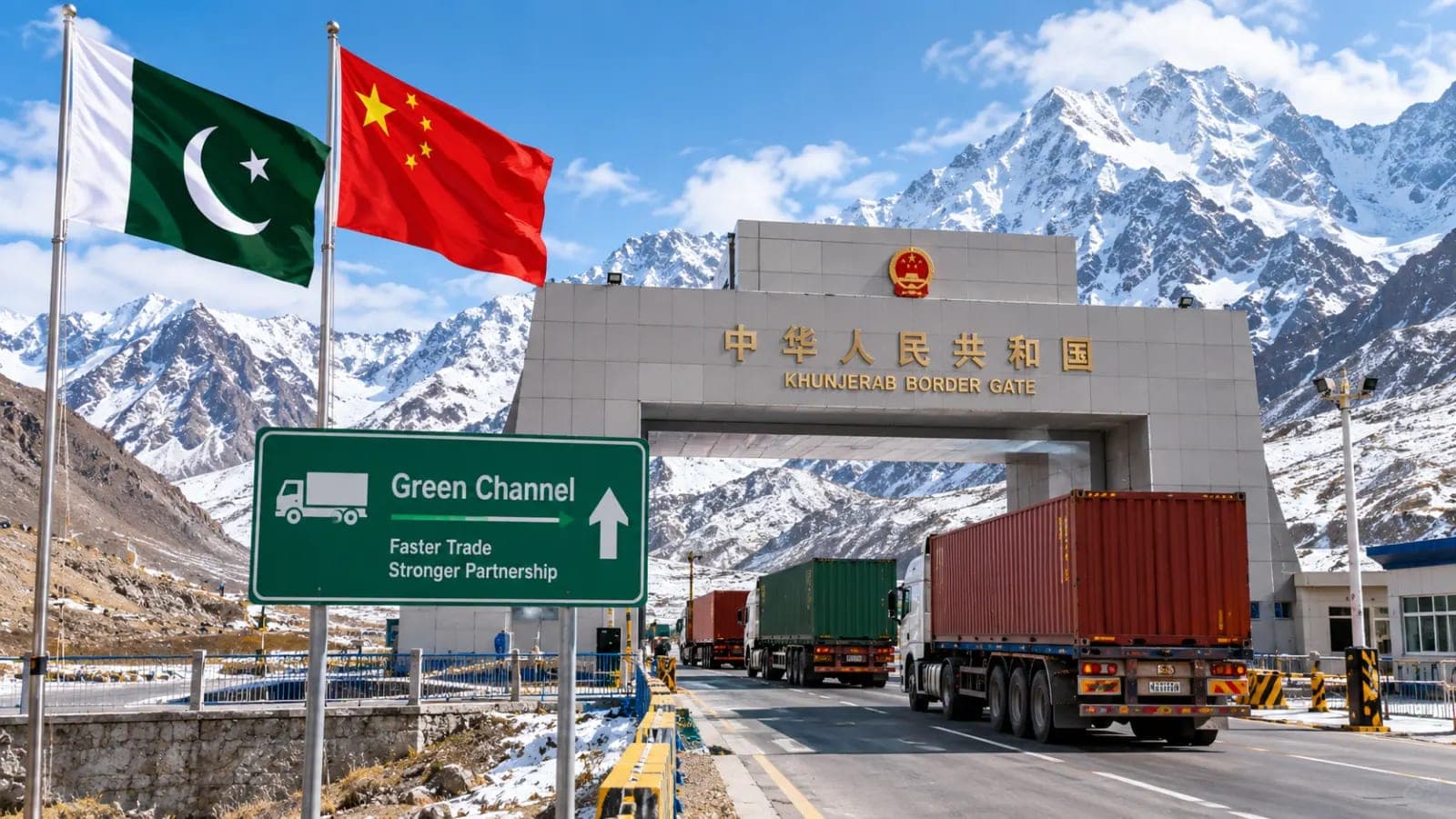
Khunjerab green channel trade has taken a concrete step forward, after Pakistan and China agreed to run a dedicated customs lane for farm and allied goods at the Sost-Khunjerab border. The agreement was signed online between the customs administrations of the two countries at the Federal Board of Revenue on Thursday 29 October 2026.
The new arrangement targets one of the oldest problems in border trade: delay. Fresh produce and other perishable goods lose value every hour they wait at a crossing. A green channel is meant to move eligible consignments through faster, while customs controls still apply.
Under the deal, consignments on an agreed list of agricultural and allied products will receive priority processing and examination. Risk-based customs controls will remain in place, so the faster lane is not a free pass. It is a way of sorting listed goods more quickly.
Perishable consignments will get priority handling, with the aim of minimising delays that can damage quality. For farmers and exporters in the north, that detail matters as much as the agreement itself, because a truckload of fruit or vegetables cannot wait the way dry goods can.
Khunjerab green channel trade: what was agreed
Khunjerab green channel trade covers an agreed list of agricultural and allied products moving through the Sost-Khunjerab crossing. The two customs administrations will share more information and exchange risk alerts, so problems can be flagged early rather than discovered at the border.
That sharing matters because officers on both sides will work from the same risk picture, so consignments are less likely to be stopped twice for the same questions.
The Pakistani delegation was led by Member Customs (Operations) Syed Shakeel Shah. The Chinese delegation was headed by Li Qinghua, deputy head of Urumqi Customs and director of Tashkurgan Customs.
The Pakistani side also included the chief collector of customs for Peshawar and the collector of customs for Gilgit-Baltistan. Representatives of the Department of Plant Protection, the National Agri-Trade and Food Safety Authority, Pakistan Single Window and the Ministry of Commerce took part, along with the commercial counsellor at Pakistan's embassy in China.
Why the Sost crossing matters for northern trade
The Sost-Khunjerab crossing links Gilgit-Baltistan with China's Xinjiang region through the Khunjerab Pass, which sits at around 15,500 feet. For Khunjerab green channel trade, it carries special weight for northern communities, where market access is limited by geography.
Under the 1985 border protocol, the crossing traditionally remains open from April to November. Heavy winter snowfall can disrupt movement outside that window, so the trading season is short and every working week counts.
In the 2025-26 financial year, Pakistan Customs collected a record Rs14.93 billion in revenue from imports from China through Sost Dry Port. Goods worth Rs2.8 billion were exported to China and Central Asian countries through the same crossing.
Those figures show the crossing already handles serious volumes, with imports far ahead of exports through Sost.
What the green channel could change for farmers
For growers and small exporters, the promise of Khunjerab green channel trade is simple: less time standing at the border, and less spoilage on the way to market. Priority examination should mean listed consignments are checked first, rather than joining the same queue as everything else.
Faster clearance under Khunjerab green channel trade could also help traders plan better. If border time becomes more predictable, exporters can book transport, cold storage and buyers with more confidence.
The deal could encourage more farm trade through the northern route, if traders who avoided it over delays reconsider.
But the agreement alone does not guarantee higher exports. Its impact will depend on implementation at the crossing, the product list, and day-to-day coordination between the two customs administrations.
No start date for the channel, no trade volume target and no tariff change has been announced in the available reporting. The product list itself has not been published either. Until traders know exactly which goods qualify, they cannot plan shipments around the channel with certainty.
What to watch next
The first test will be on the ground at Sost: whether Khunjerab green channel trade genuinely moves listed consignments faster, and whether perishable goods get the priority handling promised. Traders will judge it by waiting times, not by signing ceremonies.
For now, the direction is clear: Pakistan and China have agreed to make one of their toughest border crossings work faster for farm goods, and the months ahead will show whether that promise reaches farmers.
Frequently Asked Questions
What is the Khunjerab green channel?
Khunjerab green channel trade is a customs arrangement at the Sost-Khunjerab border, giving an agreed list of agricultural and allied products priority processing and examination, with risk-based controls remaining.
Who signed the agreement?
The agreement was signed online between the customs administrations of Pakistan and China at the Federal Board of Revenue on 29 October 2026. Pakistan's delegation was led by Member Customs (Operations) Syed Shakeel Shah, and China's by Li Qinghua of Urumqi and Tashkurgan Customs.
Which goods will use the green channel?
Under Khunjerab green channel trade, an agreed list of agricultural and allied products will qualify, with perishable consignments getting priority handling. The exact list has not been published, so traders should wait for official detail.
How much trade already passes through Sost?
In 2025-26, Pakistan Customs collected a record Rs14.93 billion in revenue from imports from China through Sost Dry Port. Goods worth Rs2.8 billion were exported to China and Central Asian countries through the crossing in the same period.
When does the Khunjerab crossing operate?
Under the 1985 border protocol, the crossing traditionally remains open from April to November. Heavy winter snowfall can disrupt movement, which makes the short trading season and faster clearance especially important for northern traders.
What happens next for business
We will keep this page updated as the story develops rather than publishing a near-duplicate at a new address. Follow Business for related coverage.
Get the Verified Brief
One email each morning with the stories we checked overnight.
Spotted an error? Read our corrections policy and tell the newsroom.