
Saudi Arabia to Store Crude Oil Under the Sea in Singapore
Saudi crude oil Singapore storage will begin at Jurong Rock Caverns in the second half of 2027, in a joint plan aimed at supply security.

By News Desk · Verified Pakistan News Desk
Published · 5 min read
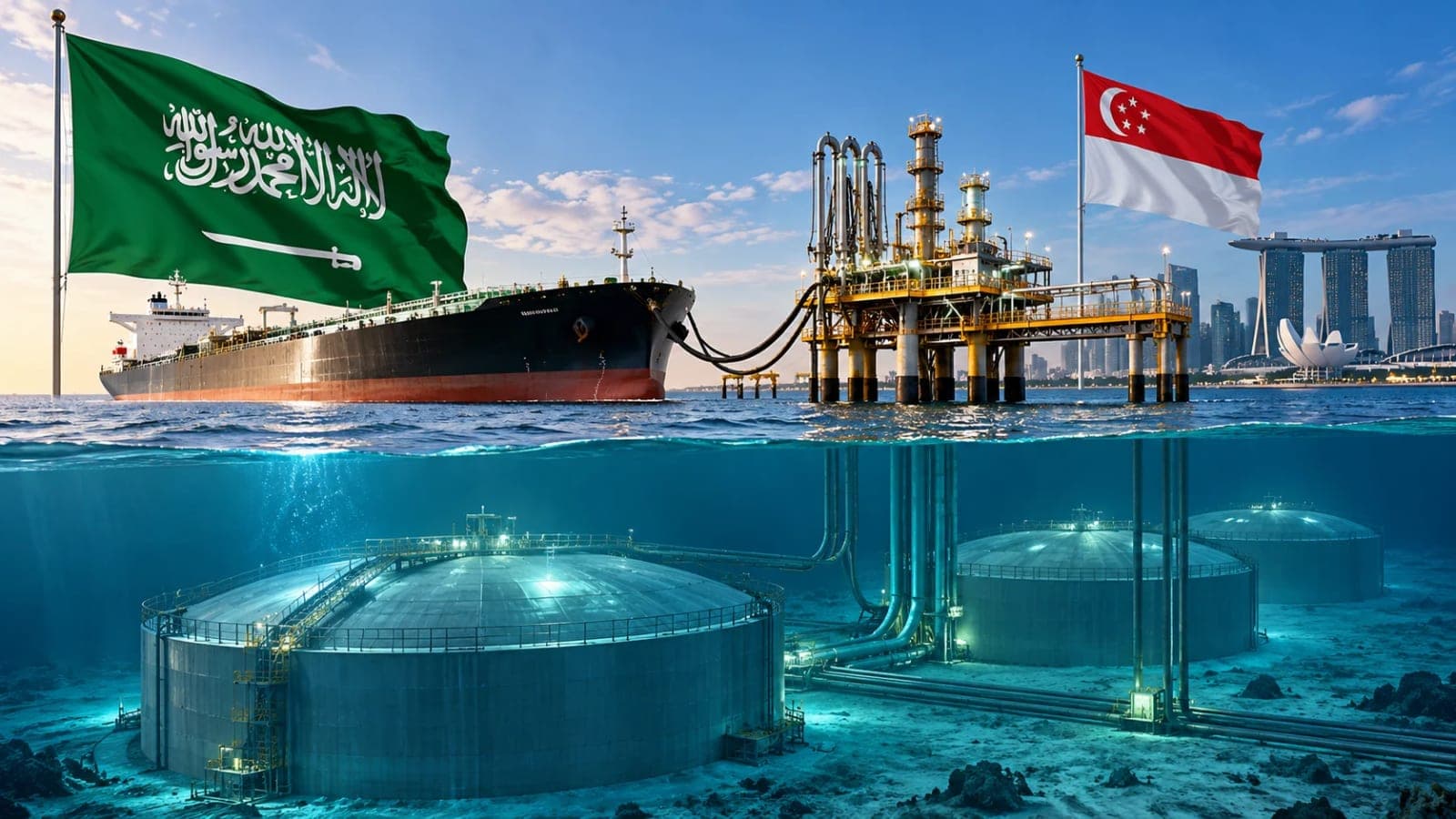
Singapore and Saudi Arabia have announced a joint plan that would see Saudi crude oil Singapore storage take place deep underground on Jurong Island from the second half of 2027. The announcement marks a new step in energy cooperation between the two countries.
The Saudi crude oil Singapore plan was announced on Monday 26 October 2026 during the Singapore International Energy Week conference. Singapore's Minister for Energy, Trade and Industry, Tan See Leng, shared the news with delegates at the event.
Under the plan, crude oil from Saudi Arabia would be held at the Jurong Rock Caverns. The site is not yet storing Saudi crude, and the arrangement still depends on commercial talks that have yet to be completed.
Saudi crude oil Singapore plan: how the deal was announced
Saudi Aramco signed a memorandum of understanding with Singapore's Energy Market Authority, known as EMA, and JTC Corporation on 26 October. The memorandum sets out the intent to work together on the storage plan.
Commercial negotiations are expected to continue over the coming months. Officials said the aim is to conclude those talks within a few months, though no final commercial agreement has been announced so far.
The size of the Saudi allocation has not been disclosed. Readers should therefore not assume a fixed volume, because no figure for the Saudi share of the caverns has been made public.
Saudi Energy Minister Prince Abdulaziz bin Salman said the Saudi crude oil Singapore plan would bring supply closer to key Asian markets. He linked the move to the need for a more resilient supply chain in Southeast Asia.
Inside the Jurong Rock Caverns
The Jurong Rock Caverns sit on Jurong Island, off the southwestern coast of Singapore. They are located about 150 metres below ground, making them one of the more unusual oil storage sites in the region.
The facility has a total capacity of 1.47 million cubic metres. That is equal to about 9 million barrels of liquid hydrocarbons, including crude oil and condensates.
Officials in Singapore have said the Saudi crude oil Singapore plan would also contribute to the city state's energy security. In the event of a supply disruption, having crude stored closer to home could help Singapore respond more quickly.
Why the timing matters for Asia
The announcement comes after a period of serious concern about oil supply routes. Shipments through the Strait of Hormuz were disrupted during the US-Israeli war with Iran, raising fears across energy importing countries.
The Strait of Hormuz is a narrow waterway through which a large share of the world's seaborne oil passes. Any disruption there can quickly affect prices and availability in Asia.
Before the conflict, Asia sourced about two-thirds of its crude imports from the Middle East. That heavy reliance helps explain why buyers in the region pay close attention to supply security.
Storing crude nearer to Asian buyers is one way to shorten the distance between supply and demand. If shipments are delayed, stored volumes in the region could act as a buffer while normal flows resume.
A familiar model for Saudi Aramco
Saudi Aramco already stores crude in other parts of Asia under similar arrangements. The Singapore plan follows that pattern, rather than creating an entirely new type of deal.
In Japan, Aramco stores crude in Okinawa. Capacity there was expanded to 8.2 million barrels in September 2017. Under that arrangement, the local government has priority access to the stored crude in the event of a shortage.
In South Korea, Aramco stores crude at Ulsan, with a capacity of 5.3 million barrels. That facility also reflects the company's long standing effort to keep supply close to major Asian customers.
For Asian refiners, the practical benefit is straightforward. Crude that is already in the region can be delivered faster than crude that must still travel from the Gulf.
What happens next
The next stage for Saudi crude oil Singapore is commercial negotiation. Aramco, EMA and JTC Corporation will need to agree on terms before any Saudi crude is placed in the caverns.
No start date beyond the second half of 2027 has been given. That timetable also depends on the talks reaching a successful conclusion.
Singapore is also working on a wider plan to strengthen its energy supply. It plans to raise liquefied natural gas storage and supply capacity by 50 percent by 2030, through a second terminal.
For now, the Saudi plan remains an intent, backed by a memorandum of understanding. It is a significant signal of closer energy ties, but it is not yet a finished commercial deal.
Frequently Asked Questions
When will Saudi crude oil Singapore storage begin?
Storage is planned to begin in the second half of 2027. It has not started yet, and it depends on commercial negotiations being concluded first.
Where will the crude oil be stored?
The crude oil will be stored at the Jurong Rock Caverns on Jurong Island in Singapore. The caverns are about 150 metres below ground.
How much oil can the Jurong Rock Caverns hold?
The facility has a total capacity of 1.47 million cubic metres, or about 9 million barrels of liquid hydrocarbons. The Saudi allocation within that total has not been disclosed.
Why are Saudi Arabia and Singapore pursuing this plan?
The stated purpose of the Saudi crude oil Singapore plan is to enhance the resilience of the Saudi crude supply chain in Southeast Asia. It is also meant to contribute to Singapore's energy security in case of supply disruptions.
Has Saudi Aramco done this kind of storage deal before?
Yes. Aramco already stores crude in Japan, at Okinawa, and in South Korea, at Ulsan. Those arrangements also aim to keep supply close to Asian buyers.
What happens next for business
We will keep this page updated as the story develops rather than publishing a near-duplicate at a new address. Follow Business for related coverage.
Get the Verified Brief
One email each morning with the stories we checked overnight.
Spotted an error? Read our corrections policy and tell the newsroom.