
How to Show Proof of Funds for a Malaysia Tourist Visa from Pakistan
Malaysia tourist visa proof of funds explained for Pakistanis, including bank statements, balance guidance, documents and key application tips.

By News Desk · Verified Pakistan News Desk
Published · Updated · 8 min read
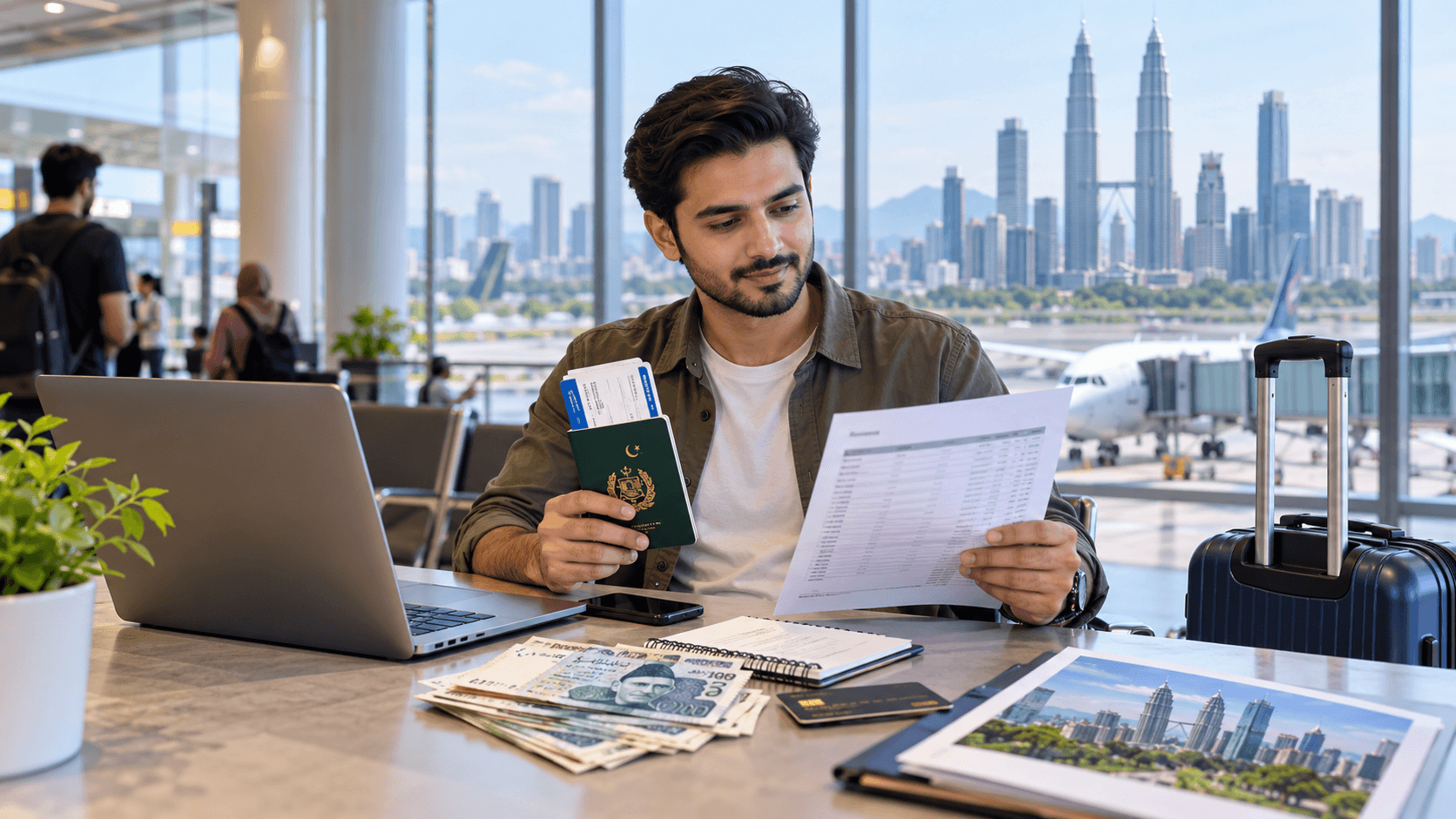
Pakistani travellers planning a holiday in Malaysia normally need a visa before travelling. For many applicants, one of the most confusing parts of the application is showing enough financial evidence to prove that they can afford their trip.
Malaysia tourist visa proof of funds usually means providing reliable financial documents, such as a bank statement, that show you can reasonably pay for your flights, accommodation, food, transport and other expenses during your stay.
According to Malaysia’s official eVISA guidance, applicants may be asked to submit supporting documents including a bank statement. The same guidance also lists documents such as a return ticket and proof of paid accommodation.
Here’s how Pakistani applicants can prepare their financial documents properly and avoid common mistakes.
What Is Malaysia Tourist Visa Proof of Funds?
Proof of funds is evidence showing that you have enough money available to support yourself while visiting Malaysia.
It helps immigration authorities understand whether your financial position matches your travel plans.
For example, someone travelling to Kuala Lumpur for five days will normally have different expenses from someone planning a three-week trip covering Kuala Lumpur, Langkawi and Penang.
Your financial documents should therefore make sense when compared with:
- Length of your trip
- Hotel expenses
- Return flight booking
- Daily food expenses
- Local transport
- Tourist activities
- Shopping and personal expenses
Malaysia's official eVISA information specifically mentions bank statements among the supporting documents that applicants may need to provide.
Is There a Minimum Bank Balance for a Malaysia Tourist Visa?
There doesn't appear to be an official fixed minimum bank balance published by Malaysian Immigration specifically for Pakistani tourist visa applicants.
This is important because you may see travel agents or social media pages quoting figures such as Rs. 300,000, Rs. 500,000 or even Rs. 1 million.
These figures shouldn't automatically be treated as official government requirements.
Instead, your available funds should reasonably cover the cost of your proposed journey.
A person travelling for a short and modest holiday may not need the same financial strength as someone booking expensive hotels and staying for several weeks.
Your overall financial profile matters more than simply depositing a large amount before submitting the application.
1. Provide a Recent Personal Bank Statement
A personal bank statement is one of the clearest ways to demonstrate financial capability.
Use an active account that genuinely belongs to you and regularly receives or holds your money.
Your statement should clearly show details such as:
- Account holder's name
- Bank name
- Account details
- Transaction history
- Current or closing balance
Some Malaysian diplomatic missions specifically request recent bank statements covering several months. However, applicants from Pakistan should follow the exact document checklist shown by the official Malaysian eVISA system when submitting their application.
Avoid relying on an outdated checklist from a travel agent when the official portal gives different instructions.
2. Maintain a Natural Transaction History
A healthy bank statement isn't simply one showing a large closing balance.
The transaction pattern also matters.
For example, if your account normally holds Rs. 80,000 and suddenly receives Rs. 800,000 shortly before your visa application, the unexplained transaction may raise questions.
There can be completely legitimate reasons for large deposits, including:
- Salary payments
- Business income
- Sale of an asset
- Freelance payments
- Investment withdrawals
- Family support
If there is an unusual large transaction, keep supporting evidence available where possible.
The aim isn't to make your bank account look artificially wealthy. Your documents should provide a believable picture of how you will finance your journey.
3. Match Your Bank Balance With Your Travel Plan
Your financial position should make sense alongside your itinerary.
Suppose you've booked a seven-day Malaysia trip. Your documents may include return flights, hotel reservations and your planned activities.
Your available money should reasonably cover expenses that haven't already been paid.
If your hotel has already been paid for, keep the confirmation or receipt.
Malaysia's official eVISA guidance lists proof of paid accommodation and a confirmed return ticket among documents that may be required.
A simple and realistic itinerary can therefore make your application easier to understand.
4. Don't Borrow Money Just to Inflate Your Statement
One mistake some applicants make is temporarily borrowing a large amount and placing it into their bank account immediately before applying.
This can create an unnatural financial record.
A consistent balance with genuine transactions generally provides a clearer financial picture than a sudden unexplained deposit.
If someone else will genuinely pay for your trip, don't try to hide that fact. Provide appropriate sponsorship evidence if requested and explain the financial arrangement honestly.
5. Keep Proof of Your Income
Your bank statement becomes stronger when it can be connected with a genuine source of income.
A salaried applicant may keep documents such as:
- Employment letter
- Salary slips
- Employment ID
- Salary account statement
A business owner may keep:
- Business registration
- Business bank records
- Tax documents
- Business invoices
Freelancers may have:
- Client invoices
- Payment platform records
- Contracts
- Bank records showing regular client payments
These documents may not all be mandatory in every case, but they can be useful if additional supporting evidence is requested.
Malaysia's eVISA terms make clear that applications are assessed individually and authorities may request additional information during processing.
6. Upload Clear and Readable Documents
Don't overlook document quality.
Your statement should be readable when opened by the visa officer. Avoid uploading blurred photographs, badly cropped screenshots or files where important account details are missing.
The official eVISA terms warn that supporting documents that are unclear, blurred or unreadable may create problems with an application.
Download an official statement from your internet banking service or obtain one from your bank where possible.
Before uploading it, check every page yourself.
7. Keep Financial Evidence Available When Travelling
Getting an eVISA doesn't necessarily mean you should leave your supporting documents at home.
Malaysia's official eVISA guidance says travellers may need to present documents at Malaysian entry checkpoints, including a valid passport, eVISA, return ticket, proof of paid accommodation and supporting documents such as a bank statement.
Keeping digital and printed copies of important documents can therefore be useful.
Your passport should also meet the validity requirement stated by Malaysian authorities. The official eVISA guidance says the passport biodata page submitted with an application should show validity of more than six months from the travel date.
Can Pakistani Citizens Apply for a Malaysia Tourist Visa Online?
Yes.
Pakistan is among the countries whose citizens require a visa to enter Malaysia.
The High Commission of Malaysia in Islamabad states that Malaysia tourist visa applications can be made online through the official Malaysian eVISA website. It currently lists a processing time of approximately 2 to 10 working days.
Applicants should apply through the official portal rather than unofficial websites that may look similar.
Processing time can vary, so it's sensible to apply before your intended travel date rather than leaving the application until the last moment.
Common Proof of Funds Mistakes to Avoid
A few simple mistakes can weaken an otherwise straightforward visa application.
Avoid submitting:
- Someone else's bank statement without explanation
- Edited or manipulated bank statements
- Unreadable screenshots
- Statements with unexplained last-minute deposits
- Documents showing a name that doesn't match your application
- An unrealistic travel budget
- Fake hotel or flight documents
Providing false documents can put the entire visa application at risk.
Visa approval is never guaranteed simply because an applicant has a particular amount of money. Malaysia's eVISA terms state that applications are considered individually and receiving an application does not guarantee that a visa will be issued.
Final Checklist Before Applying
Before submitting your Malaysia tourist visa application from Pakistan, check that your financial documents tell a clear and consistent story.
Your bank statement should belong to you, show genuine activity and contain enough funds to reasonably support your planned trip.
Your return ticket, accommodation arrangements, travel dates and financial position should also make sense together.
Most importantly, don't rely on claims that Malaysia requires every Pakistani applicant to maintain one specific bank balance. No such universal minimum was published in the official Malaysian sources reviewed for this guide.
Follow the latest checklist displayed on the official Malaysia eVISA portal because document requirements can change or additional documents may be requested for an individual application.
External Fact-Checking Sources:
1. Immigration Department of Malaysia – Visa Requirement by Country https://www.imi.gov.my/index.php/en/main-services/visa/visa-requirement-by-country/
2. Official Malaysia eVISA Portal https://malaysiavisa.imi.gov.my/
3. High Commission of Malaysia, Islamabad – Visa Requirements https://www.kln.gov.my/web/pak_islamabad/requirement_foreigner
Last Updated: September 28, 2026
What happens next for travel
We will keep this page updated as the story develops rather than publishing a near-duplicate at a new address. Follow Travel for related coverage.
Get the Verified Brief
One email each morning with the stories we checked overnight.
Spotted an error? Read our corrections policy and tell the newsroom.