Germany Student Visa After a Study Gap: Documents and Interview Preparation
Germany student visa after a study gap explained with key documents, financial requirements, gap justification and practical interview preparation tips.

By News Desk · Verified Pakistan News Desk
Published · Updated · 8 min read
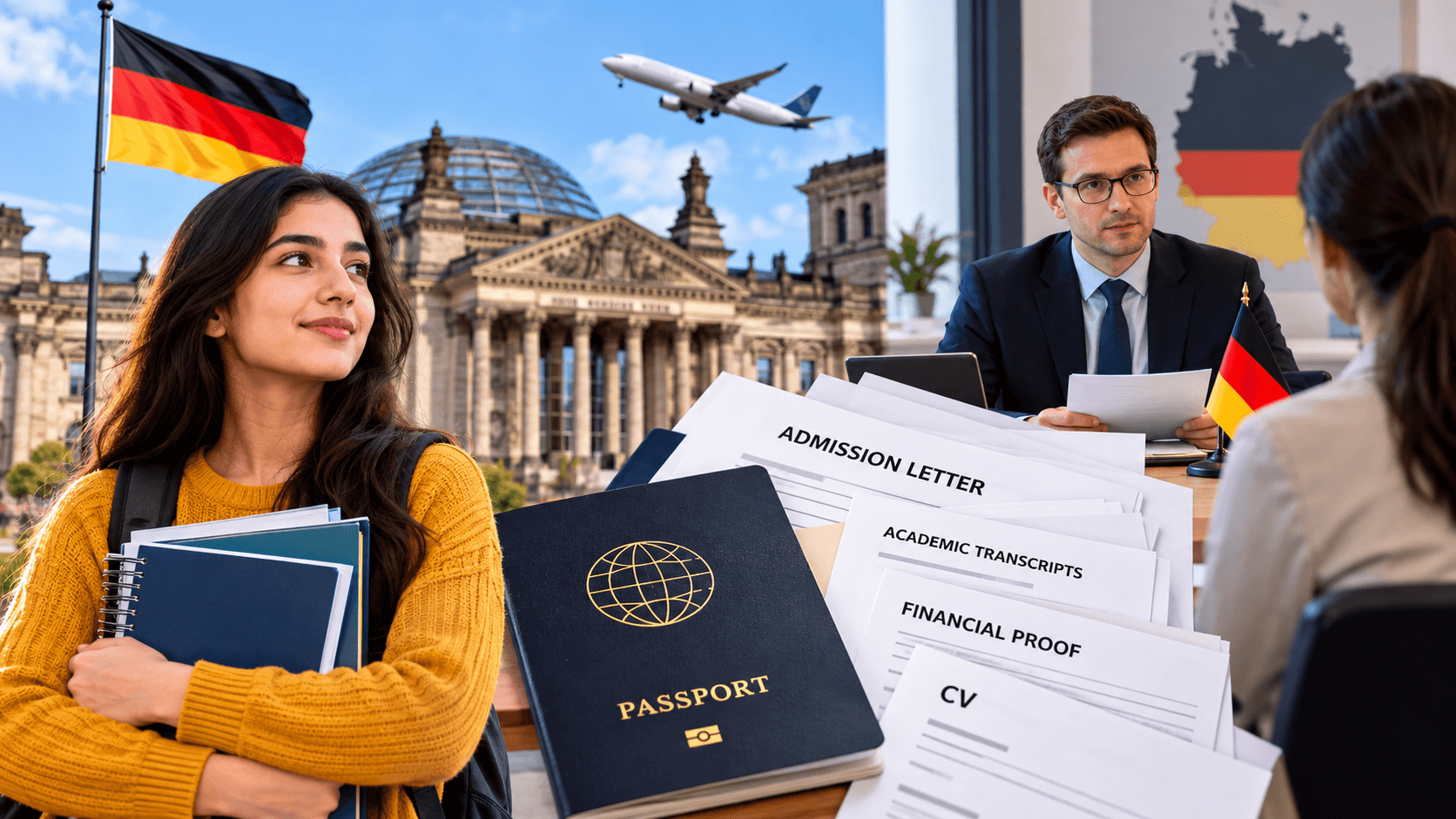
A study gap can make students nervous when planning higher education abroad, especially when a visa interview is involved. The good news is that having time between your previous qualification and your next degree does not automatically prevent you from applying for a Germany student visa after a study gap.
What matters is how clearly you can explain your academic journey, what you did during the gap, why you have chosen your new course, and how the degree fits your future plans.
For Pakistani applicants, careful documentation is particularly important. German missions in Pakistan currently process student visa applications through the Consular Services Portal, where applicants upload their documents for initial screening before the next steps are communicated.
This guide explains the documents you should prepare and how to approach questions about a study gap.
Can You Get a Germany Student Visa After a Study Gap?
Yes, having a gap in your education does not by itself mean that your German student visa application will be rejected.
A gap may happen for many ordinary reasons. You may have worked after graduation, prepared for competitive exams, completed professional training, learned a language, supported a family business, worked as a freelancer, or simply taken time to decide on your academic direction.
The important part is consistency.
Your CV, educational records, employment documents and answers during the visa process should tell the same story. Avoid creating activities simply to fill empty periods. An unexplained gap is usually harder to understand than a genuine gap with a straightforward explanation.
Germany Student Visa After a Study Gap: Key Documents
Start with the standard documents required for your student visa category.
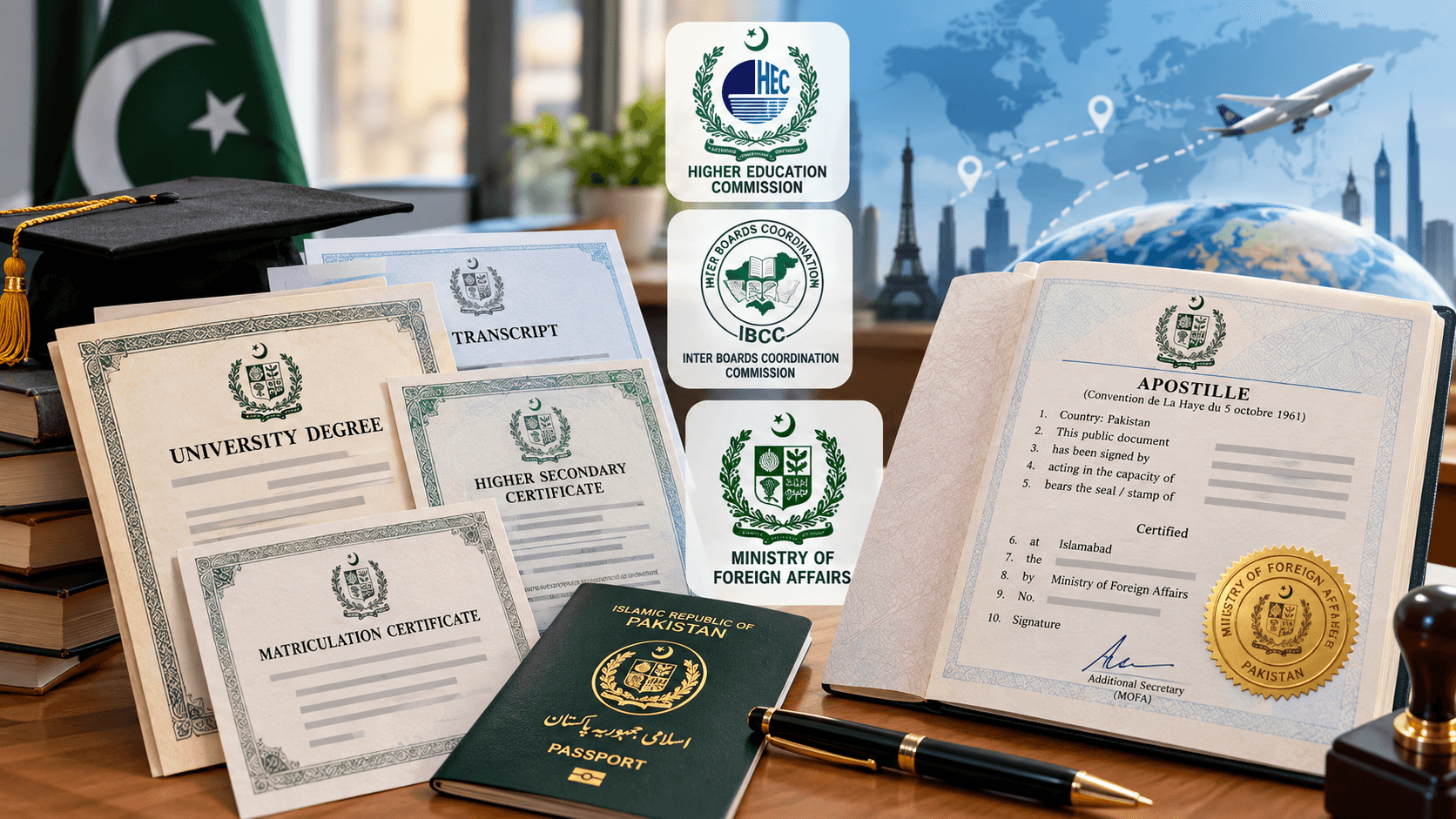
The German Missions in Pakistan specifically state that previous degree certificates, transcripts and proof of tuition-fee payment, where applicable, are mandatory documents even if the online system happens to display some of them as optional.
Depending on your individual application and the instructions shown in the Consular Services Portal, documents may include:
- Valid passport and required identity documents
- Completed visa application information
- University admission letter
- Previous academic certificates
- Degree transcripts
- Proof of language proficiency where required
- Curriculum vitae
- Proof of sufficient financial resources
- Tuition-fee payment evidence, if applicable
- Enrollment or late-arrival confirmation where applicable
- Other documents requested for your particular case
Always follow the current checklist generated for your application rather than relying entirely on an old checklist found online.
Documents That Can Explain Your Study Gap
This is where applicants with a longer gap should pay extra attention.
Suppose you completed your bachelor's degree in 2021 and are applying for a master's programme several years later. Your documents should make it reasonably easy to understand what happened during those years.
If you were employed, keep employment or experience certificates. If you completed professional courses, keep certificates and transcripts. If you worked independently, legitimate contracts, invoices, portfolio records or other evidence may help establish your professional history.
The German student visa guidance for Pakistan requires documentation covering an applicant's academic and professional career, including previous employment certificates where applicable.
The aim isn't to produce a mountain of unnecessary paperwork. It's to create a clear timeline.
Write a Clear and Honest Study Gap Explanation
A good gap explanation doesn't need to sound dramatic.
Imagine that you graduated in computer science and then spent three years working as a software developer. You're now applying for a master's in data science.
That timeline can actually be quite logical.
You could explain that professional experience exposed you to data-driven projects, encouraged you to develop specialist skills and eventually led you toward postgraduate study.
The same principle applies to other situations.
If you prepared for examinations, explain that. If you developed professional skills, mention those skills. If personal circumstances affected your studies, explain only as much as necessary and focus on how you are now prepared to resume education.
Most importantly, don't invent jobs or certificates to make the gap look better.
Show Why Your New Course Makes Sense
A strong application isn't only about explaining the past. You also need to explain the next step.
Study the programme before your visa appointment.
Know the course name, university, major modules, duration and language of instruction. More importantly, understand why that programme makes sense after your previous education or professional experience.
For example, someone with a bachelor's degree in electrical engineering and several years of work in industrial automation may have a logical reason for pursuing a master's related to embedded systems or automation.
A completely unrelated programme may require a more detailed explanation of why you're changing direction.
Your answer should sound natural rather than memorised.
Prepare Your Financial Documents Carefully
Financial preparation is another major part of a German student visa application.
Germany's official portal states that students can demonstrate financial resources through methods such as a blocked account, scholarship or declaration of commitment. For 2026, the official minimum stated for a student blocked account is €11,904.
The German Missions in Pakistan also list the annual blocked-account requirement as €11,904, equivalent to €992 per month.
Because financial requirements can change, check the official amount again when you're actually preparing your application rather than relying on an older blog post.
How to Prepare for Study Gap Interview Questions
Don't prepare for your visa appointment by memorising long speeches. Instead, prepare short and accurate answers about your academic and professional timeline.
You should be comfortable answering questions such as:
Why was there a gap after your previous degree?
Explain exactly what you were doing and connect it with supporting evidence where possible.
Why have you decided to study again now?
Show what changed. Perhaps professional experience revealed a skills gap, or your career direction now requires advanced academic knowledge.
Why did you choose this particular programme?
Mention specific academic reasons instead of saying only that Germany has good universities.
How is the programme connected to your previous studies or work?
Explain the connection using real examples from your background.
Why did you choose this university?
Know what attracted you to the programme itself, such as its curriculum, specialization, research area or academic structure.
Don't Hide Employment During the Gap
One common mistake is treating employment as something that needs to be hidden.
Relevant professional experience can help explain why several years passed between two degrees. If you've been working, include genuine employment information in your CV and provide supporting documents where requested.
Your dates should also match.
For example, if your CV says you worked for a company from January 2022 until March 2025, an experience letter shouldn't show completely different dates without an explanation.
Small inconsistencies can create unnecessary questions.
Keep Your CV Chronological and Easy to Read
Your CV is particularly useful when you have a study gap because it gives the visa officer a quick view of your timeline.
List your education, employment, internships, relevant training and other meaningful activities with accurate dates.
Don't overload it with decorative graphics.
A clean CV that makes your educational and professional history easy to follow is more useful than an attractive design that hides important dates.
Check Your Admission and Language Requirements
A German study visa generally requires admission to a recognised higher education institution and proof that you can finance your stay. Depending on the programme, proof of appropriate language ability may also be necessary. Germany's official skilled immigration portal notes that some programmes require language proficiency, commonly around B2, although the actual requirement depends on the programme and circumstances.
Follow your university's admission conditions and the requirements displayed for your visa application.
Don't assume every German university or programme has identical language rules.
Apply With Complete Documents
Incomplete paperwork can slow things down.
The German Missions in Pakistan explicitly warn that incomplete applications lead to delays. Applicants currently upload documents through the Consular Services Portal and receive further instructions after the initial screening.
Student visa processing can also take several weeks and, in individual cases, even months because the relevant German foreigners authority may need to be involved.
For that reason, waiting until the last moment can create problems even when your academic profile is otherwise strong.
Final Thoughts
Applying for a Germany student visa after a study gap is mainly about presenting a coherent and well-documented academic story.
Don't become obsessed with the number of gap years alone. Instead, make sure you can explain what you did during that period, why you're returning to education, why you've selected your particular programme and how it connects with your longer-term academic or professional plans.
Prepare genuine supporting documents, understand your university programme and keep your answers consistent with your application.
A study gap is simply one part of your timeline. What matters is whether the overall application makes sense and satisfies the current visa requirements.
Official Fact-Checking Sources
German Missions in Pakistan — Student Visa information and Consular Services Portal requirements.
German Missions in Pakistan — Official information on financing a stay, including blocked accounts, scholarships and declarations of commitment.
Make it in Germany — Official federal information on study visa requirements and the €11,904 financial requirement for 2026.
German Federal Foreign Office — Official information about proving sufficient financing for a student visa.
What happens next for global
We will keep this page updated as the story develops rather than publishing a near-duplicate at a new address. Follow Global for related coverage.
Get the Verified Brief
One email each morning with the stories we checked overnight.
Spotted an error? Read our corrections policy and tell the newsroom.