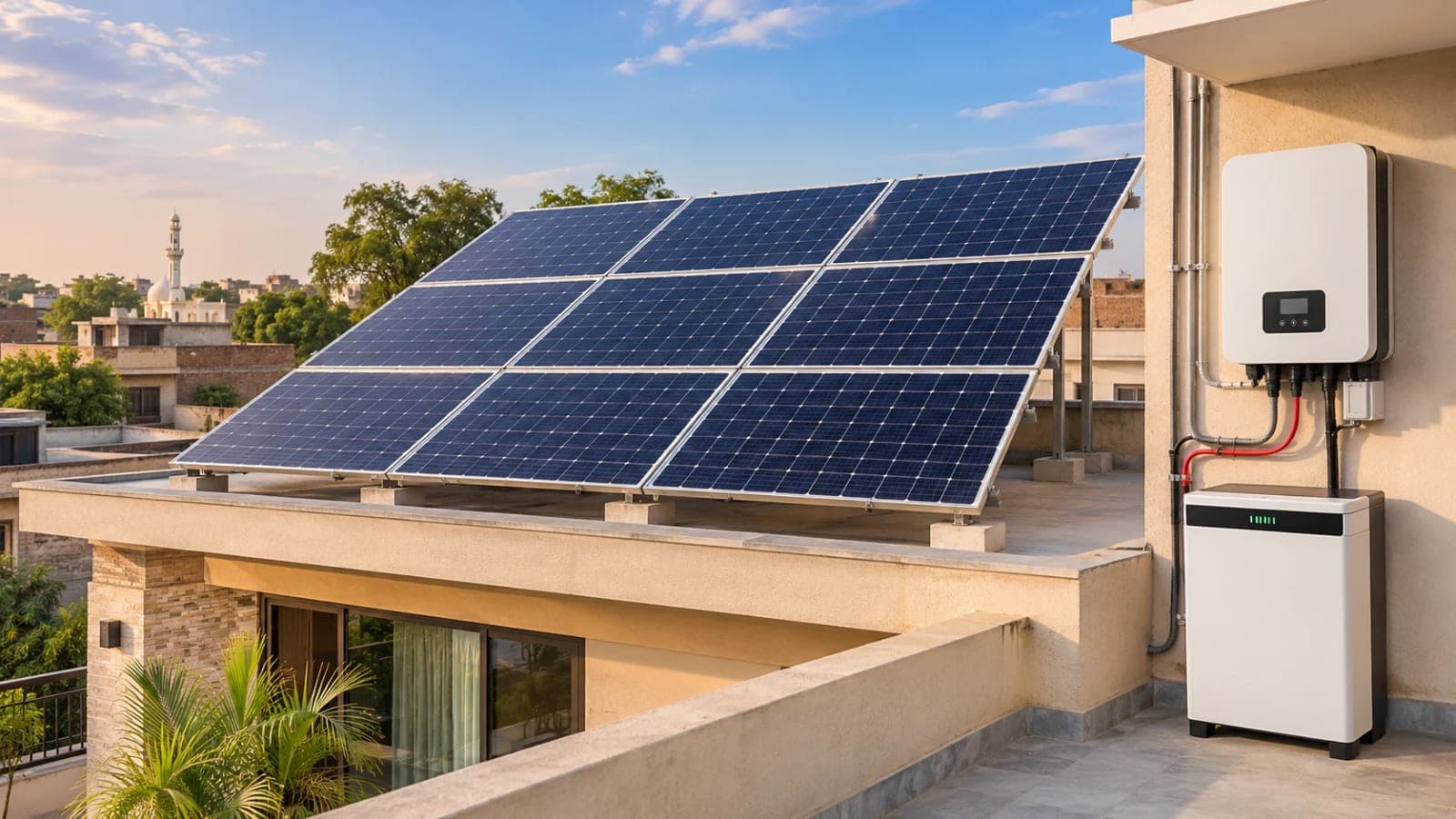

Net Metering in Pakistan Is Now Net Billing: What Solar Users Pay
Net metering in Pakistan ended for new solar connections in February 2026. Net billing pays far less for exported units. Here is what changed.

By Suleman Mirza · Reporter
Published · Updated · 4 min read
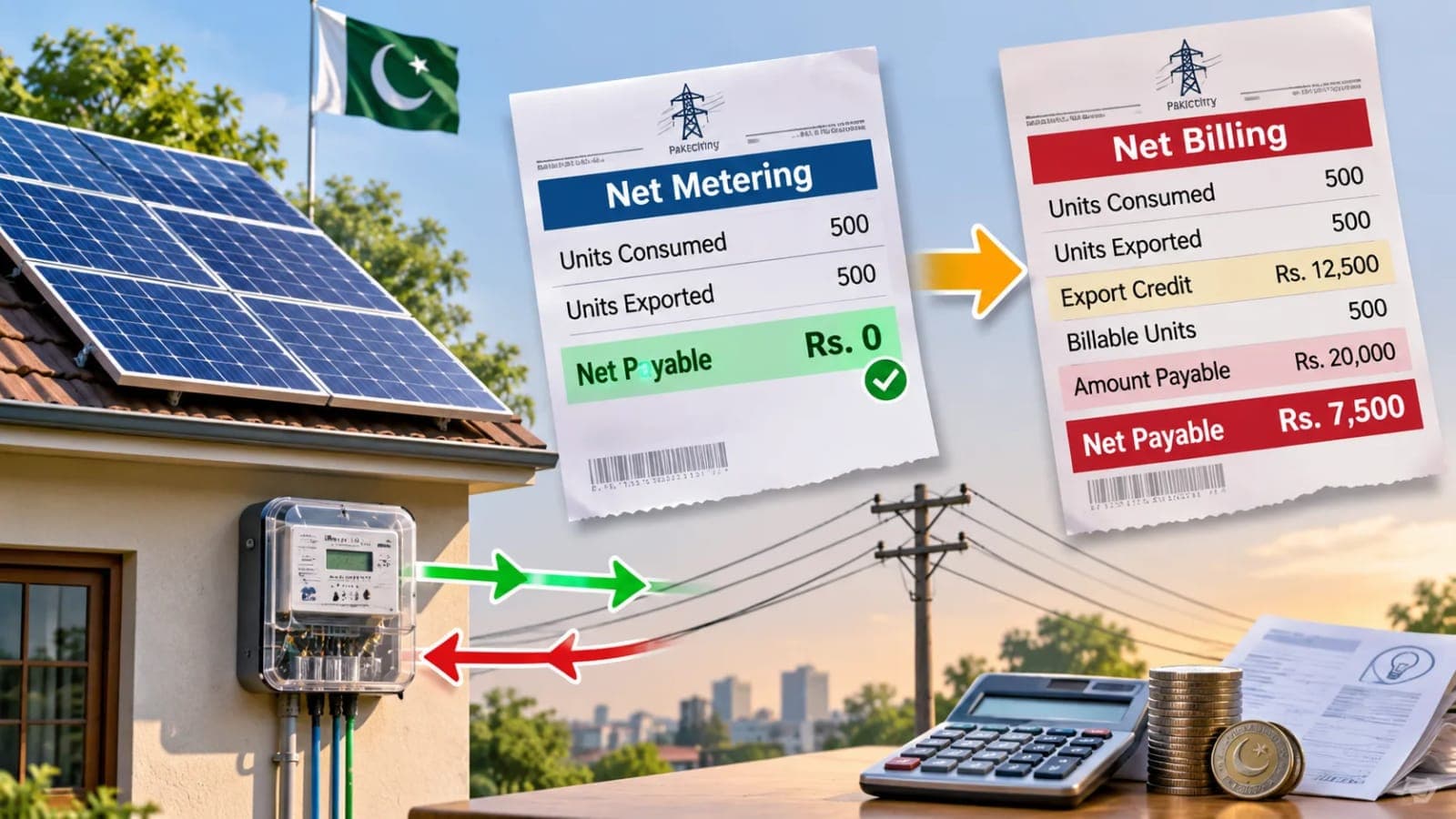
Net metering in Pakistan is the phrase everyone still searches for, but since February 2026 it is no longer what a new solar customer gets. NEPRA's new regulations ended the old one for one arrangement for new connections and replaced it with net billing, a system that pays far less for the electricity you send to the grid.
If you are planning a solar system, this change matters more than the panel price. It decides how your bill is calculated, how big a system you should buy, and how fast the system pays for itself. This guide explains both systems in plain words.
How net metering in Pakistan used to work
Under net metering, your meter ran in both directions. Every unit you exported to the grid cancelled out one unit you imported from it. If your panels sent 300 units out in a month and you drew 500 units in, you were billed for 200.
That one for one swap made big systems attractive. Families oversized their panels, exported heavily on sunny afternoons, and drew the credit back at night. Some high generation homes brought their bills close to zero.
What net billing does instead
Net billing separates the two directions. Units you import are charged at your full normal tariff, the same rate any customer pays. Units you export are bought from you at a much lower rate, reported at around Rs 11 per unit in current market coverage, and that credit is set against your bill.
So the same 300 exported units that once wiped out 300 imported units now earn a credit worth a fraction of that. The solar system still saves serious money, but the saving now comes mostly from the units you use yourself while the sun is shining.
Who the change applies to
The February 2026 regulations apply to new solar connections. Households that already had net metering in Pakistan keep running under their existing arrangements for the term of their agreements, under the transition reporting around the new rules.
That split is why your neighbour with a two year old system and a family installing today can compare bills and get completely different results from similar rooftops. The panels are the same. The billing rules are not.
How to apply for a new solar connection
The process still runs through your distribution company: LESCO, IESCO, K-Electric, FESCO, MEPCO or whichever DISCO serves your area. You apply with a system installed by an installer certified by the Alternative Energy Development Board.
The DISCO inspects the installation, installs a bidirectional meter that records imports and exports separately, and your billing then starts under net billing. Timelines vary by company and by workload, so apply early and keep your paperwork complete.
What the change means for your buying decision
Size the system to your own daytime use, not to the roof. Under net billing, a panel producing units you cannot use earns about Rs 11 a unit, while a panel producing units you would otherwise have bought saves you the full tariff on every one.
This is also why batteries make more sense than they did under the old rules. Storing your own solar power for the evening now beats exporting it cheaply and buying it back dear. Our system cost guide prices hybrid setups with batteries, and our panel price guide tracks the rates you will be quoted.
More solar guides on Verified Pakistan
Solar Panel Price in Pakistan: Latest Per Watt Rates for November 2026
5kW Solar System Price in Pakistan: On-Grid, Hybrid and Battery Costs
Questions about net metering in Pakistan
Q: Has net metering been banned in Pakistan? A: No. It has been replaced by net billing for new connections since February 2026. Existing net metering customers continue under their current arrangements.
Q: What rate do I get for units I export now? A: Under net billing, exported units are credited at a much lower rate than your tariff, reported at around Rs 11 per unit, while imported units are charged at your full tariff.
Q: I already have net metering. Does my bill change? A: Under the transition reporting, existing agreements continue on their current terms. The new billing applies when you take a new connection.
Q: Can I still make money from solar under net billing? A: Yes, through savings rather than exports. Every unit you generate and use yourself is a unit you do not buy at full tariff, and most home systems still pay back in three to five years.
Q: Who installs the bidirectional meter? A: Your distribution company installs it after inspecting your system. Your AEDB certified installer handles the application paperwork with the DISCO.
What happens next for evs
We will keep this page updated as the story develops rather than publishing a near-duplicate at a new address. Follow EVS for related coverage.
Get the Verified Brief
One email each morning with the stories we checked overnight.
Spotted an error? Read our corrections policy and tell the newsroom.