
Personal Loan Rates Rise to 11.90 Percent in Latest Fed Data
Personal loan rates at US banks rose to 11.90 percent in the Federal Reserve's latest survey, the third straight quarterly increase for borrowers.

By Suleman Mirza · Reporter
Published · 3 min read
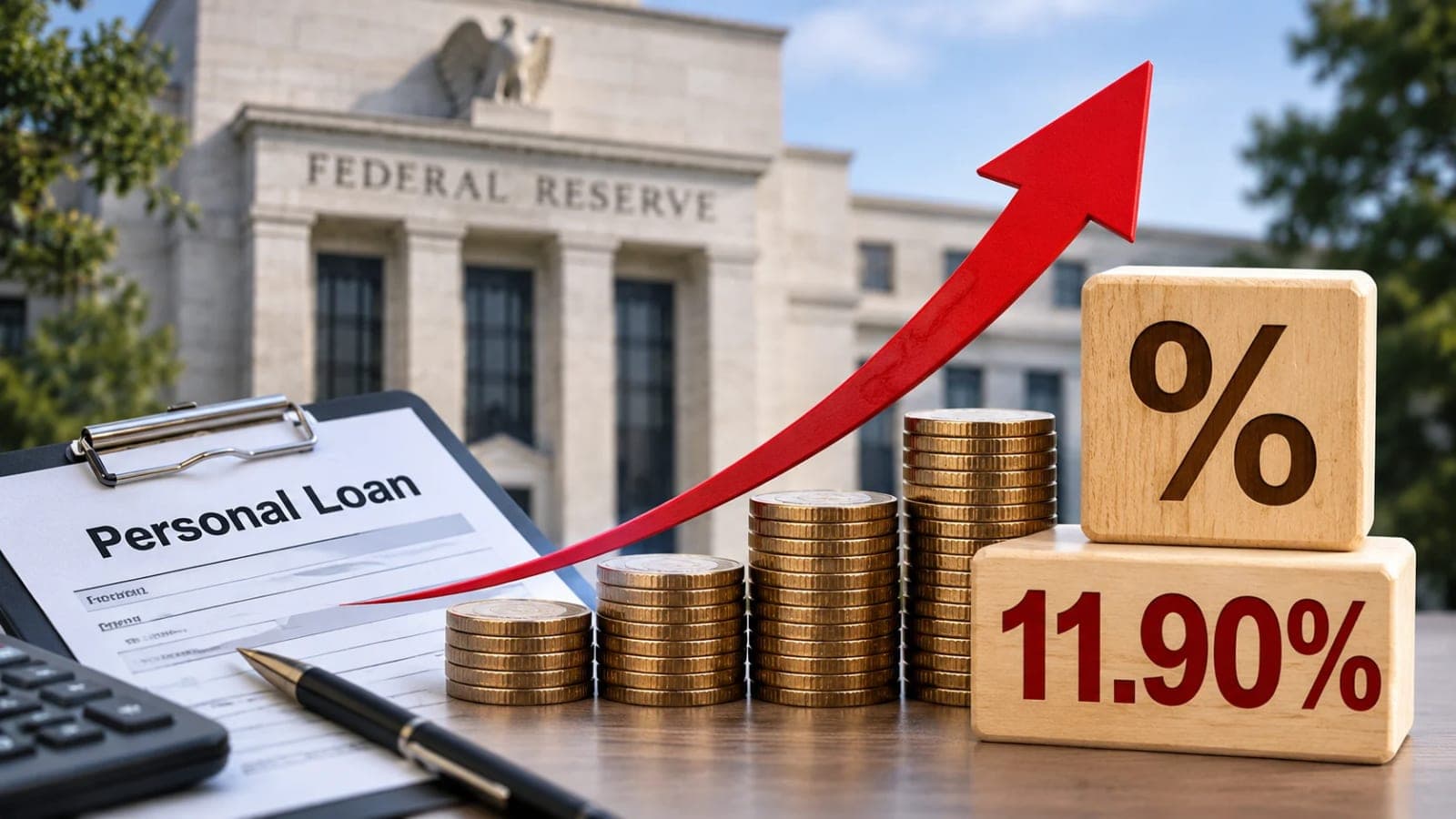
Personal loan rates at US commercial banks rose to an average of 11.90 percent in the Federal Reserve's latest quarterly survey, continuing a climb that began early this year.
The figure covers 24-month personal loans and comes from the Fed's G.19 consumer credit release, published on 6 November with data from the August survey. Personal loan rates were 11.36 percent in the February survey, so the cost of a bank personal loan has risen for three straight quarters.
Your credit score decides what you really pay
The bank average hides a wide spread. Marketplace data from LendingTree for the third quarter shows borrowers with excellent credit, a FICO score of 800 or above, received best offers averaging 13.13 percent APR, with all offers averaging 15.49 percent.
At the other end, borrowers with poor credit, below a 580 score, saw best offers of 28.85 percent and an average of 30.02 percent across all offers. In other words, personal loan rates for the weakest borrowers are now close to credit card territory.
Why rates keep climbing
The Fed's release reports the surveyed rate without explaining it, but the trend matches a year in which lenders have priced in higher funding costs and more caution on unsecured credit. A personal loan has no collateral behind it, so banks charge for the risk that some borrowers will not repay.
For anyone consolidating debt, the maths now matters more than the marketing. A two-point difference on personal loan rates over a two-year term changes the total repayment by hundreds of dollars on a typical loan.
How to get a lower rate
Borrowers who check their credit score first, fix errors on their credit report and compare several lenders usually do better than the average. Credit unions and existing bank relationships often beat marketplace headline rates for members with steady income.
The next Fed survey will show whether personal loan rates have peaked. Until then, the safest assumption for anyone planning a loan is that cheap unsecured money is not coming back soon.
Frequently asked questions
Q: What are personal loan rates in the US right now? A: The Federal Reserve survey puts average personal loan rates at 11.90 percent for a 24-month bank loan, based on the August 2026 survey published on 6 November.
Q: Why did personal loan rates rise again? A: Personal loan rates have risen for three straight quarters, from 11.36 percent in February to 11.90 percent, as lenders price in funding costs and unsecured credit risk.
Q: How do personal loan rates vary by credit score? A: LendingTree data shows excellent credit borrowers averaging best offers of 13.13 percent APR, while poor credit borrowers face about 28.85 percent, so personal loan rates depend heavily on the score.
Q: Where does the 11.90 percent figure come from? A: It is the Federal Reserve's G.19 consumer credit series for 24-month personal loan rates at commercial banks, surveyed quarterly.
Q: How can I lower the rate I am offered? A: Check your credit report for errors, compare several lenders including credit unions, and keep the term short. Each step can pull personal loan rates down from the headline offers.
What happens next for business
We will keep this page updated as the story develops rather than publishing a near-duplicate at a new address. Follow Business for related coverage.
Get the Verified Brief
One email each morning with the stories we checked overnight.
Spotted an error? Read our corrections policy and tell the newsroom.