
PM orders OMC tax recovery of Rs24.4 billion
PM Shehbaz Sharif has ordered indiscriminate OMC tax recovery after an audit found Rs24.4 billion in irregularities at oil companies' bonded warehouses.

By Suleman Mirza · Reporter
Published · Updated · 5 min read
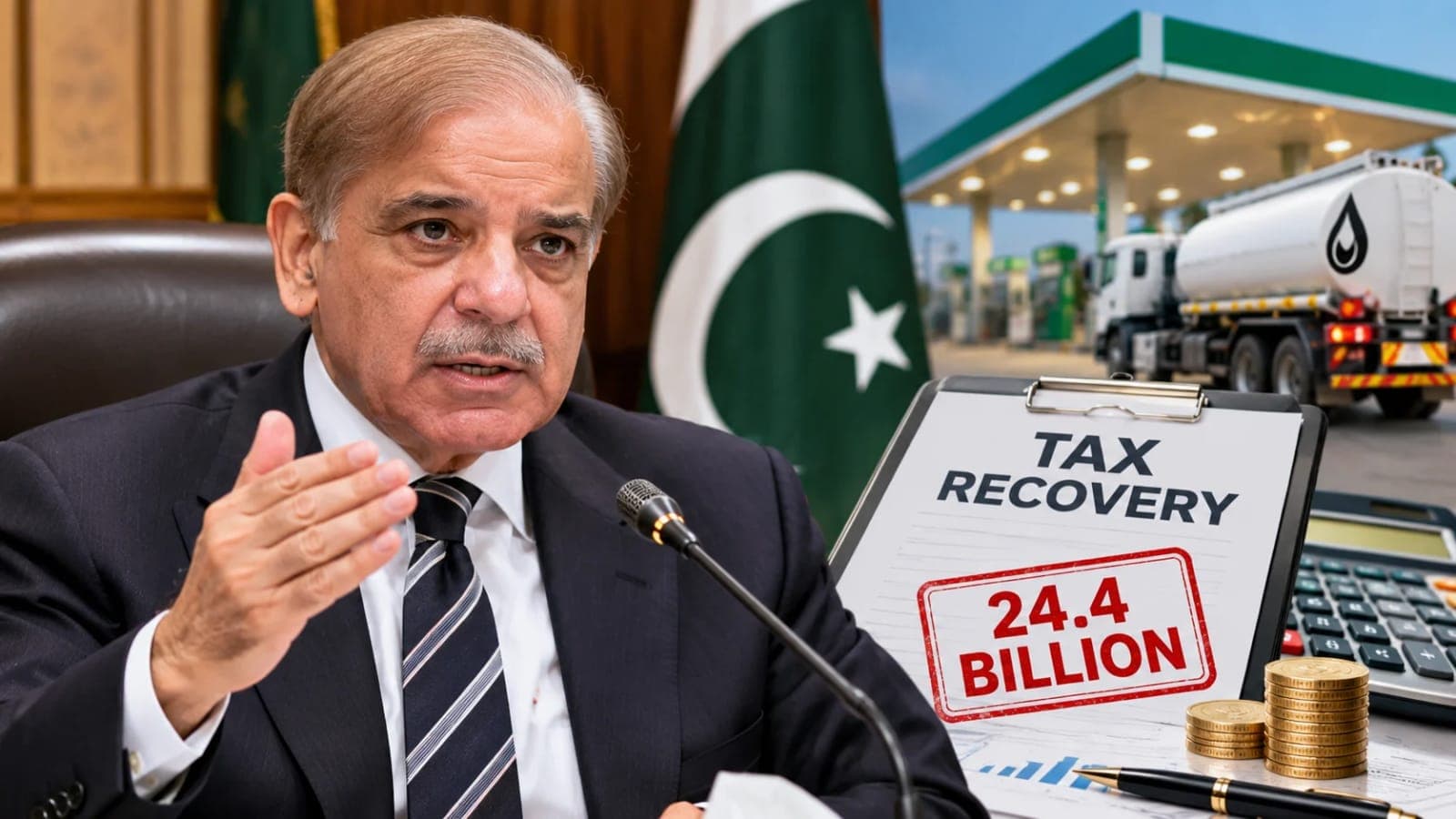
Prime Minister Shehbaz Sharif has ordered the Federal Board of Revenue to recover Rs24.4 billion from oil marketing companies, after an audit of their bonded warehouses found irregularities of that size. The OMC tax recovery order was given at a weekly FBR review meeting in Islamabad on Tuesday, 24 November, and the prime minister told officials to act without discrimination and hold those responsible accountable.
What the audit found at the bonded warehouses
A bonded warehouse is a storage facility where imported goods can be kept without paying duty and taxes until cleared for sale. The system helps honest businesses manage cash flow, but it only works if every litre leaving the warehouse is recorded and taxed. The audit ordered by the prime minister looked at these warehouses and found irregularities worth Rs24.4 billion, around 87 million dollars.
The meeting was told that recoveries are already being pursued through the legal process. The OMC tax recovery starts from this audit, and a wider third-party audit may add to the amount. That audit is planned for three financial years, July 2023 to June 2026, and it will cover 254 bonded warehouses, including 48 handling petroleum, oil and lubricant products.
How the OMC tax recovery will work
The prime minister directed the FBR to make sure the money is recovered and those responsible are held accountable. Recovery will go through legal proceedings, which means the FBR will raise formal demands and, where needed, take cases through the courts or tax tribunals. The Prime Minister's Office statement did not name individual oil marketing companies, and it gave no deadline for the recovery.
The prime minister told officials to act without discrimination, a signal that no company should be spared because of its size or connections. For the OMC tax recovery to carry weight, cases will have to move faster than the slow recoveries of the past, and the FBR will have to show money actually coming back, not only demands being issued.
The bigger picture: a Rs3.4 trillion sales tax gap
The OMC tax recovery is one part of a wider push to close the sales tax gap. Officials told the prime minister the sales tax collection gap has widened to Rs3.4 trillion, against about Rs2 trillion for income tax. That gap is why the government is reversing a 17-year-old decision. The two taxes were brought together in 2009, and the government has now decided to separate them again, with a dedicated member for sales tax and federal excise duty reporting directly to the FBR chairman.
The same reform sets up separate sales tax zones in Karachi, Lahore, Islamabad and Multan, the four major taxpayer units. Together these cities account for nearly 75 percent of the country's total sales tax collection. The zones become operational on 1 December, giving sales tax its own officers and its own follow-up instead of letting it sit inside the income tax machinery.
Cargo tracking, airport scanning and the Indus Collectorate
The meeting also reviewed a new cargo tracking system designed to check smuggling and stop losses in sales tax revenue. Consignments will be tracked digitally from loading to final delivery, bringing the whole process onto a single platform. It will include e-bilty, risk management, field enforcement and an analytics dashboard, with a steering committee of provincial representatives to oversee it.
At the airports, the prime minister called for faster customs clearance and immigration, and directed that smart scanning systems be made operational at all international airports at the earliest, sending baggage through green and red channels automatically.
On the enforcement side, the Indus Collectorate has started work at bridges along the River Indus. The unit has deployed 856 personnel and carried out 302 enforcement operations so far, seizing illegal goods worth Rs1.849 billion. The FBR is also improving data security at Pakistan Revenue Automation Ltd, and setting up an office at Korangi Industrial Estate in Karachi so industrialists can deal with the tax authorities closer to home.
What it means for ordinary people
If you drive a car or ride a bike, the first question is whether this will change what you pay at the pump. Officials have not said so. The OMC tax recovery is about tax that the audit says was already due on goods stored in bonded warehouses, not a new tax on fuel. Petrol is currently selling at Rs314 per litre and high speed diesel at Rs348, after the latest price revision on 26 November.
What the recovery does affect is the public purse. Rs24.4 billion is real money, and if it comes back it adds to the revenue the government needs. For readers who deal with the FBR themselves, the wider reforms may matter more: separate sales tax zones, a cargo tracking system and a Korangi office are all aimed at making tax dealings faster and less of a headache. If you are a filer, you can check the official guide to registering on the FBR's Iris portal and the latest deadline for filing returns.
Questions readers are asking
Will petrol prices go up because of this recovery? Nothing in the official statement links the recovery to pump prices. The OMC tax recovery concerns tax on goods in bonded warehouses, and officials have announced no change to fuel pricing because of it.
Which oil marketing companies are involved? The Prime Minister's Office statement did not name individual companies. The audit covered bonded warehouses run by oil marketing companies, and the FBR is pursuing recovery through legal proceedings.
When will the Rs24.4 billion be recovered? The OMC tax recovery has no announced deadline. Recoveries are being pursued through the legal process, which can take time if the cases are contested.
What is a bonded warehouse? It is a licensed storage facility where imported goods can be kept without paying duty and taxes until cleared. The tax becomes payable when the goods leave the warehouse for sale.
What happens next for business
We will keep this page updated as the story develops rather than publishing a near-duplicate at a new address. Follow Business for related coverage.
Get the Verified Brief
One email each morning with the stories we checked overnight.
Spotted an error? Read our corrections policy and tell the newsroom.