
Sana Mir's Early Cricket Career and Journey to Pakistan Women's Team
Sana Mir early cricket career began on the streets before her Pakistan debut. Explore her inspiring journey, early struggles, rise and national team success.

By News Desk · Verified Pakistan News Desk
Published · 7 min read
Sana Mir Early Cricket Career: From Street Cricket to Pakistan
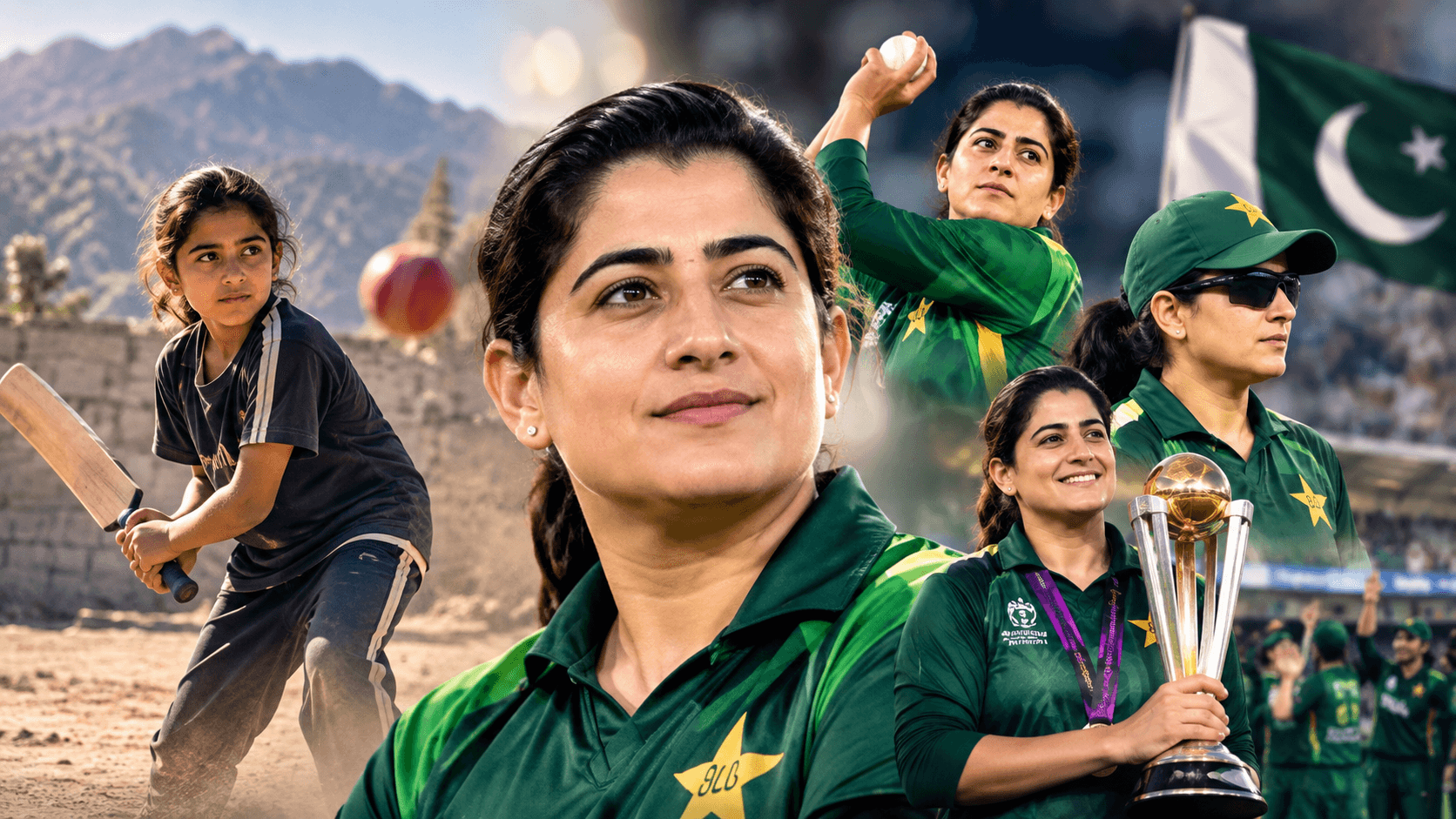
Sana Mir's early cricket career is a story of determination, patience and a deep love for the game. Long before she became one of the most recognizable faces of Pakistan women's cricket, Mir was a young girl playing cricket on the streets.
Born on January 5, 1986, in Abbottabad, Sana developed an interest in cricket at a very young age. According to the International Cricket Council (ICC), she started playing street cricket when she was just five years old.
At the time, opportunities for girls interested in cricket were limited in Pakistan. Women's cricket didn't enjoy anything close to the attention, facilities or support available to the men's game.
Still, Sana kept playing.
She regularly played alongside boys and gradually developed the skills and confidence needed to compete at a higher level. What began as childhood fun eventually turned into a serious ambition.
Playing Cricket When Opportunities Were Limited
Sana Mir's early cricket career developed during a very different period for women's sports in Pakistan.
There weren't many obvious pathways for a girl who wanted to become a professional cricketer. Sana herself later recalled that people questioned why she wanted to play cricket and told her that it wasn't a women's game.
Instead of walking away, she continued.
Playing street cricket gave her valuable experience. She had to compete, adapt and prove that she belonged on the field.
Her journey also reflected the wider challenges facing women's cricket in the country. Pakistan's women's team had only played its first ODI in 1997, so the sport was still establishing itself when Sana began pursuing cricket seriously.
That makes her rise particularly significant. She wasn't simply trying to earn a place in an established sporting system. She was developing as a player while women's cricket itself was growing in Pakistan.
From Pace Bowling to Off-Spin
Interestingly, the Sana Mir remembered by cricket fans wasn't exactly the bowler she initially planned to become.
She started as a pace bowler. However, a stress fracture eventually forced her to change her bowling style.
That setback turned into an important moment in her career.
Sana switched to off-spin, the bowling style that would eventually make her one of Pakistan's most successful international bowlers.
The change showed her ability to adapt. Instead of allowing an injury to end her ambitions, she found another way to compete.
Years later, that decision would help take her all the way to the top of the ICC women's ODI bowling rankings.
Breaking Into Pakistan Women's Cricket
The breakthrough came in 2005.
After years of playing and developing her game, Sana moved through trials and earned an opportunity with the Pakistan women's national setup.
Her official Women's ODI debut came against Sri Lanka at the National Stadium in Karachi on December 28, 2005, during the Women's Asia Cup.
She was 19 years old.
It was the beginning of an international journey that would last for around 15 years.
Getting into the national team was a major achievement, but Sana still had plenty to prove. Pakistan women's cricket was growing, and every international appearance offered players an opportunity to strengthen the team's standing.
Sana gradually established herself as an important all-round contributor.
Her off-spin became her biggest weapon, while her batting gave Pakistan another useful option lower in the order.
Growing Into a Leader
Sana's rise wasn't limited to individual performances.
Only a few years after entering international cricket, she was given one of the biggest responsibilities in Pakistani sport.
In 2009, at the age of 23, Sana Mir became captain of the Pakistan women's team.
The appointment represented a remarkable rise for someone who had joined the national side in late 2005.
Leadership became a major part of her cricketing identity. She would go on to captain Pakistan for several years and lead the country at major ICC tournaments.
One of her biggest early achievements as captain arrived at the 2010 Asian Games.
Pakistan won the women's cricket gold medal under Sana's leadership. Four years later, Pakistan repeated the achievement at the 2014 Asian Games, again with Sana playing a central role.
Those victories helped bring greater visibility to women's cricket back home.
Becoming One of Pakistan's Leading Cricketers
What started on the streets eventually became an extraordinary international career.
Sana represented Pakistan in more than 200 international matches across ODI and T20I cricket.
According to ICC career records, she finished her ODI career with 1,630 runs and 151 wickets from 120 matches. In T20 internationals, she took 89 wickets from 106 appearances.
She also became the first Pakistan woman to take 100 ODI wickets.
Then came another historic milestone.
In October 2018, Sana became the first Pakistani woman to reach No. 1 in the ICC women's ODI player rankings when she topped the bowling rankings.
For a player who grew up at a time when girls had few formal opportunities to play cricket, reaching the top of the international rankings carried special significance.
Changing Perceptions Around Women's Cricket
Sana Mir's early cricket career wasn't just about statistics.
Her generation helped change how women's cricket was viewed in Pakistan.
In an ICC interview published in 2019, Sana recalled how people questioned her decision to play when she started. Years later, she noticed a very different response, with families becoming proud of the women's national team and asking how their daughters could become cricketers.
That shift didn't happen because of one player alone, but Sana became one of its most visible symbols.
Her performances showed young Pakistani girls that international cricket wasn't an impossible dream.
She also used her public profile to speak about issues beyond the boundary, becoming an advocate for women in sport and greater opportunities for female athletes.
From Young Cricketer to ICC Hall of Famer
Sana eventually announced her retirement from international cricket in April 2020, ending a career that had begun in 2005.
Her influence, however, continued.
In 2025, she became the first Pakistani woman inducted into the ICC Cricket Hall of Fame.
It was a fitting recognition of a journey that had started with street cricket decades earlier.
From playing alongside boys as a child to representing Pakistan, captaining her country, winning Asian Games gold medals and reaching the top of the ICC rankings, Sana's career followed a path few could have imagined when she first picked up a cricket ball.
A Journey That Opened Doors
Sana Mir's early cricket career shows how far Pakistan women's cricket has travelled.
When she started, opportunities were scarce and doubts were common. She had to find places to play, compete with boys and continue despite people questioning whether cricket was suitable for women.
By the time her international career ended, she had become one of the most accomplished players Pakistan women's cricket had produced.
More importantly, girls growing up after her could see something Sana herself didn't have as a child: a visible pathway into professional cricket.
Her journey from the streets to the Pakistan women's team wasn't simply the beginning of a successful playing career. It became part of a much bigger story about the growth and recognition of women's cricket in Pakistan.
Fact-Checking Sources:
International Cricket Council (ICC) — Sana Mir Hall of Fame profile International Cricket Council (ICC) — “People would ask why I’m doing this” interview International Cricket Council (ICC) — Sana Mir retirement announcement International Cricket Council (ICC) — Sana Mir Hall of Fame induction coverage
What happens next for biography
We will keep this page updated as the story develops rather than publishing a near-duplicate at a new address. Follow Biography for related coverage.
Get the Verified Brief
One email each morning with the stories we checked overnight.
Spotted an error? Read our corrections policy and tell the newsroom.