
SBP Interest Rate 12%: What the October Hike Means for You
SBP interest rate rose to 12% on 26 October 2026 from 11.5%, as inflation stayed at 10.3% in September and energy prices stayed above $100 a barrel.

By News Desk · Verified Pakistan News Desk
Published · 5 min read
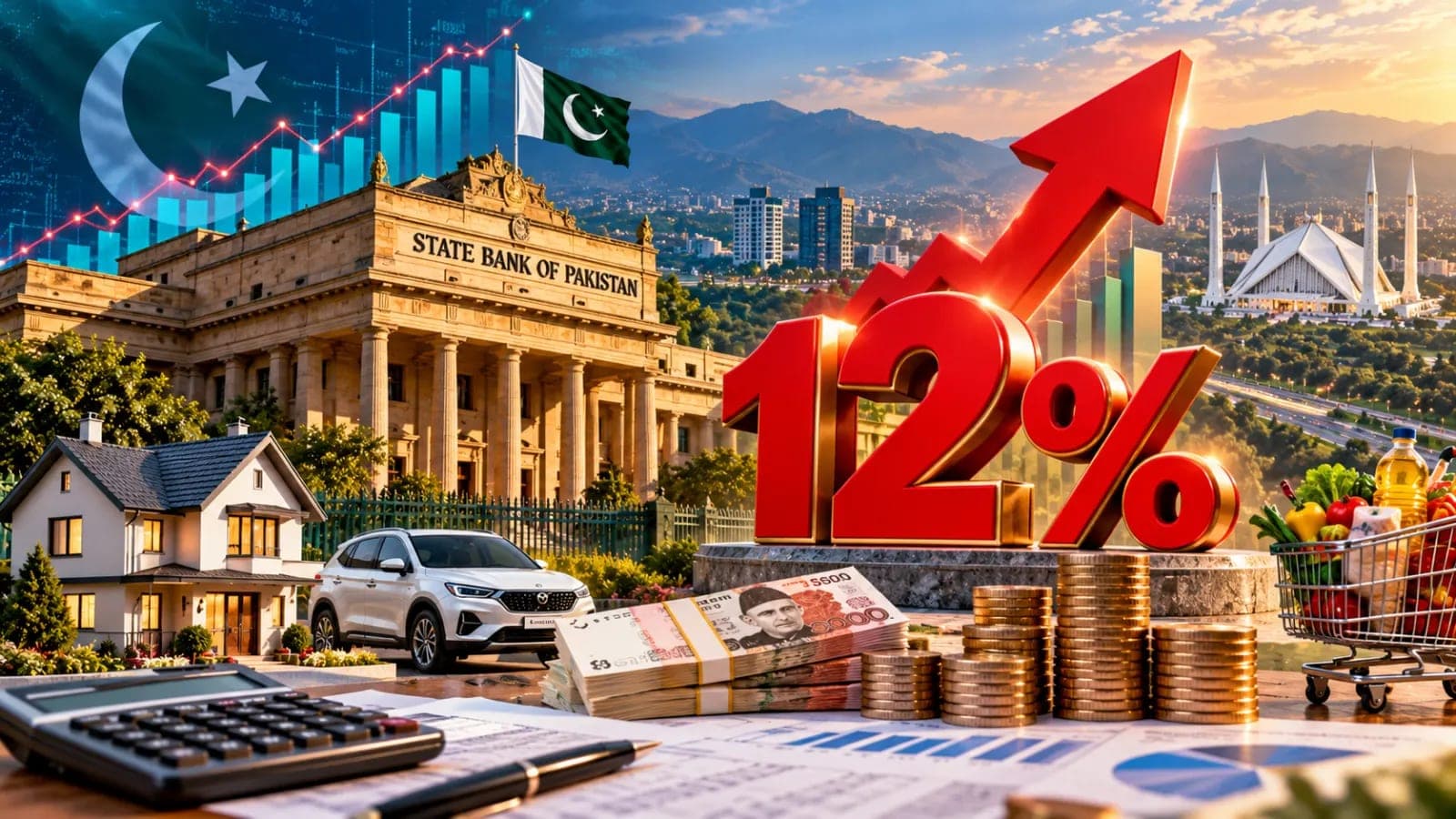
The SBP interest rate has risen to 12 percent, and the change will take effect from Tuesday, 27 October 2026. The State Bank of Pakistan announced the decision in Karachi on Monday, 26 October, after a meeting of its Monetary Policy Committee.
The increase is 50 basis points, which is the same as half a percentage point. It takes the policy rate from 11.5 percent to 12 percent. For most people, the headline number matters less than what it does to loans, savings and prices in the months ahead.
This article explains the decision in plain words, using the central bank figures. It is not financial advice, and it does not recommend borrowing, saving or investing in any particular product.
What the SBP interest rate decision was
The SBP interest rate decision was taken by a clear majority of the Monetary Policy Committee. Nine of its ten members voted for the increase of 50 basis points. The remaining member favoured a larger increase, which shows that the committee was not divided over the direction of the move.
The rate had been held at 11.5 percent for several months before this meeting. After a rise in April 2026, the committee left the rate unchanged at its meetings in June, July and September. The October decision therefore ends a run of holds, rather than following a series of recent increases.
State Bank Governor Jameel Ahmad announced the decision at a press conference in Karachi. He said conditions had changed since the committee last met in September, and that the outlook for inflation had worsened.
Why the rate was raised
The main reason given by the committee was the intensification of the Middle East conflict. It said there were low prospects of a near-term resolution, and that this was keeping global energy prices persistently high.
Petroleum prices have stayed above 100 dollars a barrel, according to the governor. Higher energy prices raise transport and production costs, and those costs can then feed into the prices of goods across the economy.
Domestic food prices were the second pressure mentioned by the central bank. Wheat prices have risen in the last two to three months, and higher food prices have added to inflation. The committee said these supply pressures were not fading as quickly as it had hoped.
Inflation is still above the target
Headline inflation, measured year on year, was 10.3 percent in September 2026. That was lower than 11.1 percent in August, so the pace of price rises did slow. It was still well above the central bank's medium-term target range of 5 percent to 7 percent.
Core inflation, which strips out some volatile items, was around 8.4 percent. That figure matters because it gives a sense of underlying price pressure, beyond a single month's food or fuel move. It was also above the target range.
What the central bank expects for the economy
The SBP interest rate decision came with a growth forecast for the current fiscal year, 2026-27. The central bank expects economic growth of between 3.5 percent and 4.5 percent. That range is unchanged in broad terms, even though the risks around inflation have risen.
On trade, exports are projected at 32.5 billion dollars for the fiscal year, while imports are projected at 71 billion dollars. Workers' remittances are expected to reach 45 billion dollars, revised up from 44 billion dollars after first-quarter remittances of 10.9 billion dollars.
Foreign exchange reserves were put at around 21.5 billion dollars. The current account deficit, which is the gap between what the country earns and spends with the rest of the world, is expected to stay within 0 percent to 1 percent of GDP.
What it could mean for loans and savings
For borrowers, the practical question is whether the SBP interest rate rise makes a loan more expensive. Loans linked to variable rates may become more expensive, depending on the terms of the loan and the rates charged by each bank. Fixed-rate loans will not change in the same way, because their rate is set for an agreed period.
For savers, the picture is mixed. Some savings products may offer better returns when the SBP interest rate rises, although the actual return depends on each bank's rates and account conditions. No specific bank has been named here as having changed its loan or deposit rate, because no such change is part of the central bank announcement.
The key point is to check your own loan or account terms, rather than assuming the SBP interest rate change applies in full at once. Banks set their own rates, and they may move at different speeds.
FAQs
What is the new SBP interest rate?
The SBP interest rate is now 12 percent, up from 11.5 percent. The increase of 50 basis points was announced on 26 October 2026 and takes effect from 27 October 2026.
Why did the State Bank raise the rate?
The committee cited the intensification of the Middle East conflict, energy prices above 100 dollars a barrel, rising domestic wheat prices, and higher food prices. It said the inflation outlook had worsened since September.
What is inflation in Pakistan now?
Headline year-on-year inflation was 10.3 percent in September 2026, down from 11.1 percent in August. It remains above the central bank's medium-term target range of 5 percent to 7 percent.
Will my loan become more expensive?
It depends on your loan terms and your bank. Loans linked to variable rates may become more expensive, while fixed-rate loans will not change in the same way. Check the terms of your own loan before assuming a change.
Is this article financial advice?
No. This article reports the central bank decision and explains it in general terms. It does not recommend any loan, savings product or investment, and readers should seek their own advice for personal decisions.
What happens next for business
We will keep this page updated as the story develops rather than publishing a near-duplicate at a new address. Follow Business for related coverage.
Get the Verified Brief
One email each morning with the stories we checked overnight.
Spotted an error? Read our corrections policy and tell the newsroom.