
How to Check Original Documents Before Buying a Used Car in Pakistan
Check used car documents Pakistan buyers should verify before purchase. Follow 9 key checks for ownership, registration, chassis, tax and transfer records.

By News Desk · Verified Pakistan News Desk
Published · Updated · 7 min read
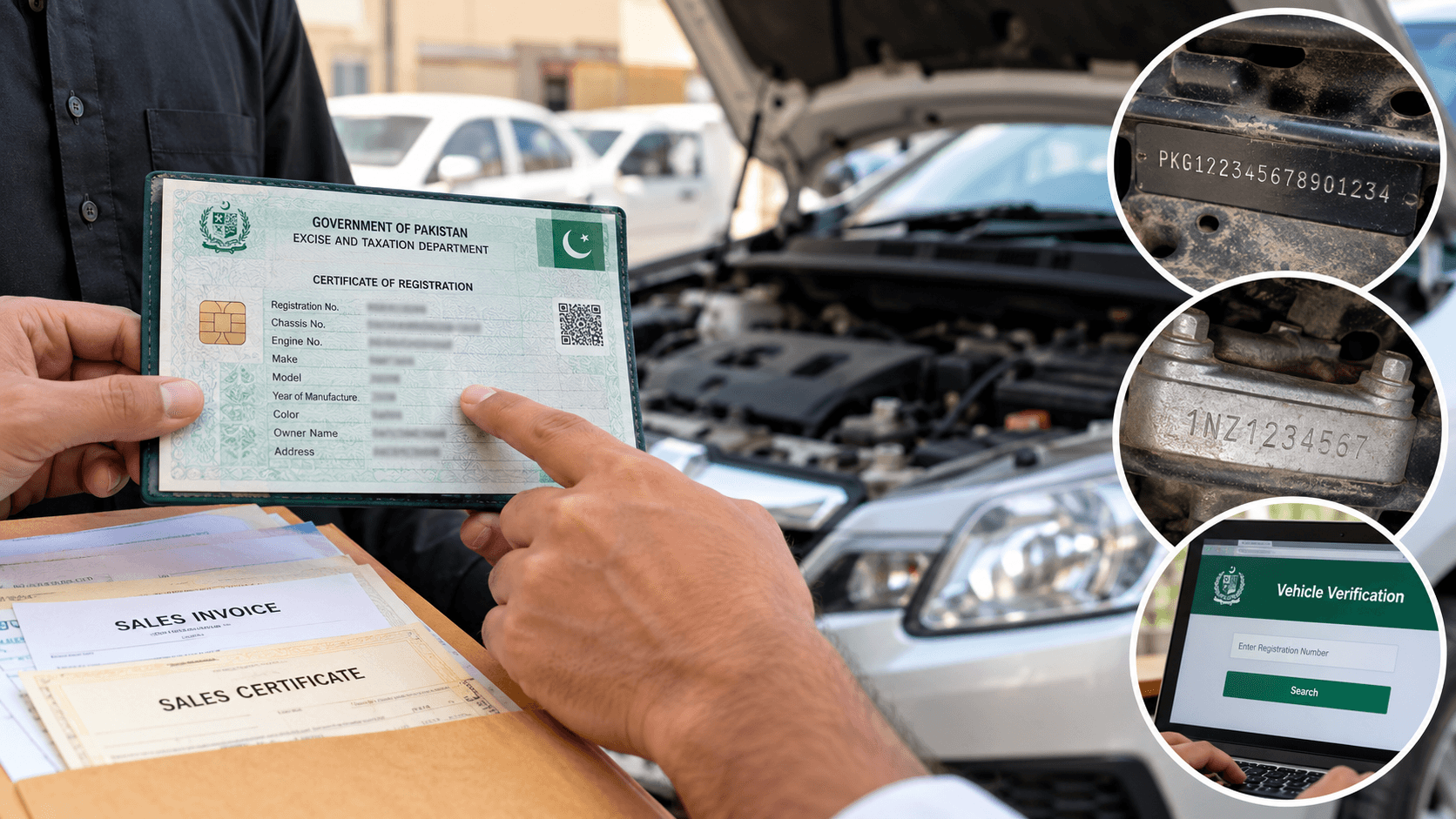
Buying a second-hand car can save a lot of money, but there's one part of the deal you shouldn't rush: checking the paperwork. A clean-looking car with a smooth engine can still become a headache if its ownership or registration documents aren't in order.
For anyone checking Used Car Documents Pakistan, simply looking at a registration card isn't enough. The details on the documents should match the vehicle, the seller and, most importantly, the official Excise record.
Here are nine important checks you should make before handing over your money.
1. Check the Original Registration Book or Smart Card
Start with the vehicle's original registration document. Depending on where and when the vehicle was registered, this may be a registration book or computerized smart card.
Don't rely on a photocopy, photograph or WhatsApp image. Ask the seller to show you the original document.
Carefully check the registration number, owner's name, make, model, engine number and chassis number. These details should correspond with the car you're considering.
Punjab Excise officially provides online verification of registered vehicles through its MTMIS service.
2. Match the Seller With the Registered Owner
This is one of the most important Used Car Documents Pakistan checks.
Ask the seller for their original CNIC and compare the name with the registered owner's details. If the person selling the car isn't the registered owner, don't simply accept an explanation such as "I'm selling it for my friend" or "the owner lives abroad."
Ask for proper documentation showing why that person is authorized to sell the vehicle.
Sindh Excise, for example, provides both registration-number vehicle verification and a CNIC-based vehicle verification facility through its official online services.
If the ownership trail isn't clear, it's safer to delay the deal until it can be properly verified.
3. Verify the Car Through the Official Excise Website
Never depend only on documents presented by the seller.
Check the registration number through the relevant provincial or territorial Excise department. Compare the online record with the physical vehicle and its documents.
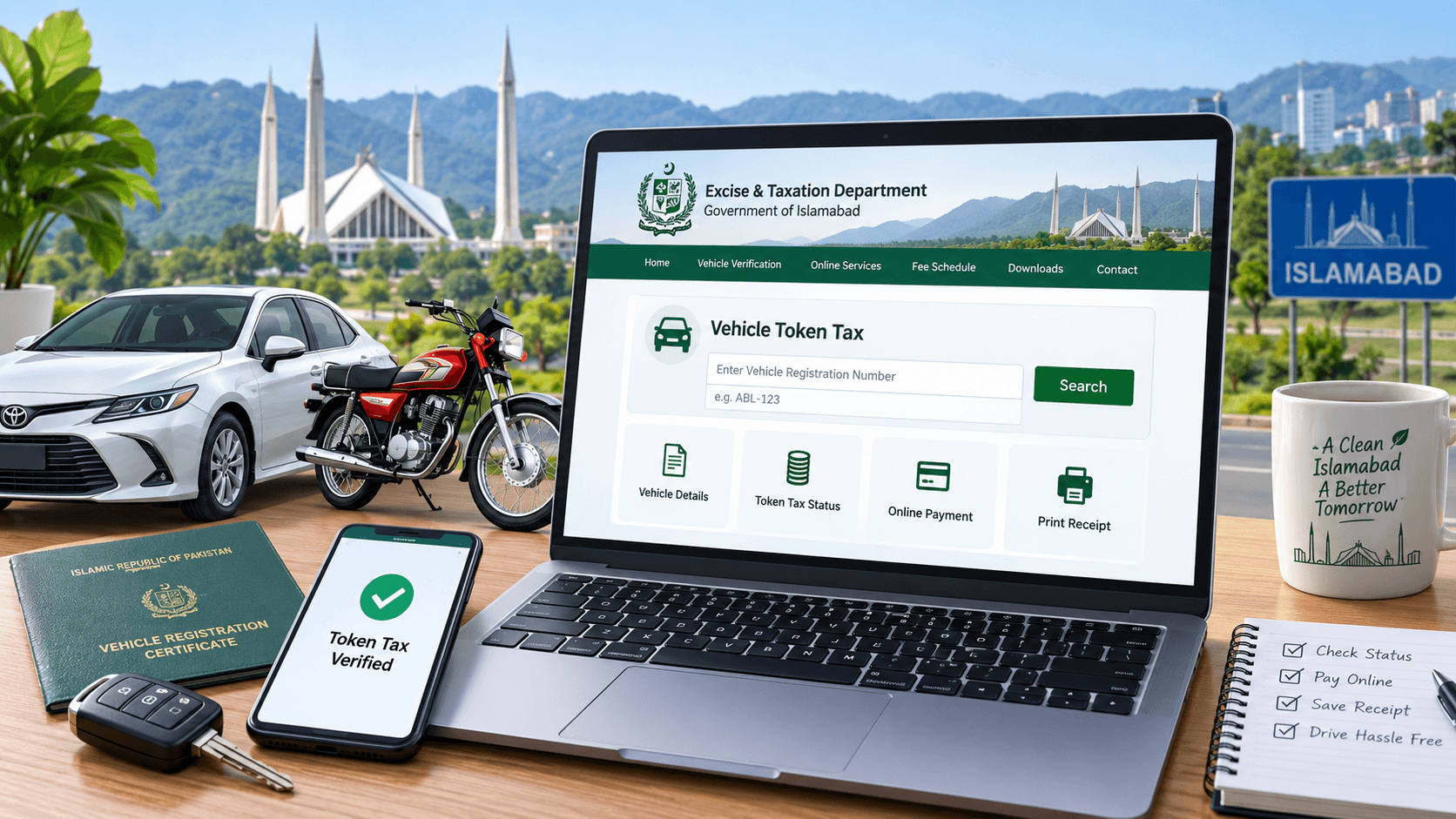
For Punjab-registered vehicles, the Punjab Excise website directs users to its official MTMIS verification system. Sindh Excise has its own online vehicle verification service, while Islamabad Excise provides a "Check Vehicle Detail" facility. Khyber Pakhtunkhwa Excise also lists Online Vehicle Info among its e-Citizen services.
Use official government portals rather than unknown vehicle-checking websites.
Islamabad Excise specifically warns users to rely on its official resources for department-related information.
4. Match the Chassis Number
The chassis number is a critical part of vehicle identification.
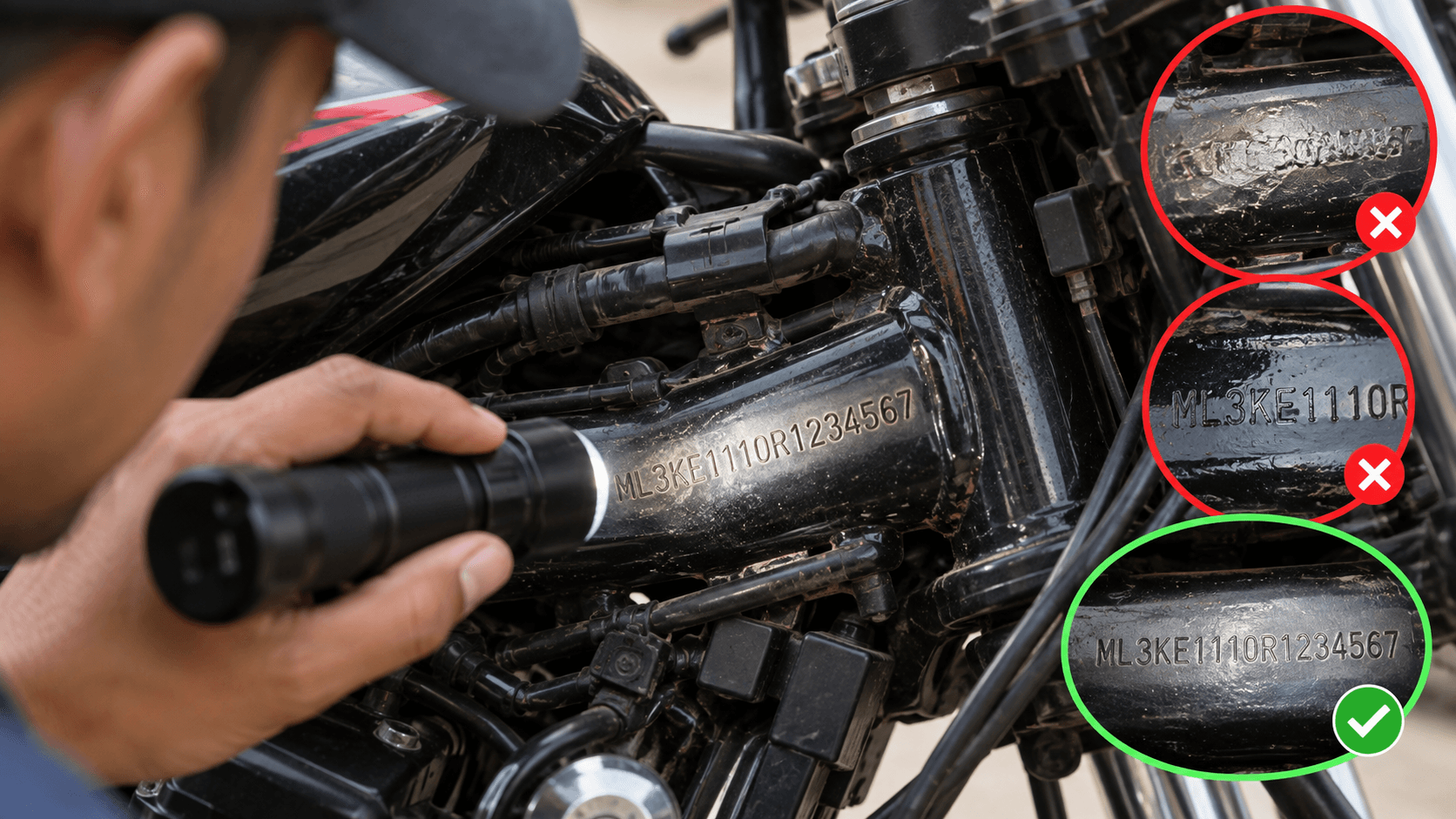
Find the chassis number physically stamped on the vehicle and compare it with the registration document and official Excise record.
Look closely at the stamped area. Unusual grinding marks, welding, damaged metal, inconsistent lettering or obvious alteration should be treated seriously.
Don't assume a matching number on a piece of paper proves everything. The number on the actual vehicle needs to match as well.
Punjab's electronic transfer process, for instance, can return details including the registration number, vehicle make, chassis number, current owner's name and tax position from the Excise database.
5. Check the Engine Number
Next, compare the engine number with the available registration record.
An engine may have legitimately been replaced during a vehicle's life, but such a change shouldn't simply be ignored. If the number doesn't match, ask the owner for the documents and official record associated with the engine change.
A mismatch without a satisfactory paper trail is a reason to stop and investigate further before paying anything.
This is especially important with older vehicles that may have undergone major mechanical work.
6. Check the Original Invoice and Sales Certificate
For locally manufactured vehicles, ask whether the original sales invoice and sales certificate are available, particularly when buying a relatively new car.
These documents can help establish the vehicle's original purchase history.
Punjab Excise lists the original sales certificate and original sales invoice among the documents required for registration of a locally manufactured vehicle.
An older car may have changed hands several times, so document availability can vary. Still, if the seller claims the car has a "complete original file," inspect what is actually included rather than accepting the phrase at face value.
7. Give Imported Cars Extra Attention
Buying an imported used car requires additional paperwork checks.
Punjab Excise lists documents such as import permission, the relevant Goods Declaration (GD), Bill of Lading and other supporting documents for registration scenarios involving imported vehicles.
If you're buying an imported vehicle, examine its available import documentation and make sure the identification details correspond with the car.
Don't treat a registration card alone as proof that every document presented with an imported vehicle is genuine.
Where anything looks inconsistent, verification with the relevant authorities before purchase is worth the extra effort.
8. Check Token Tax, Lease and Other Liabilities
A used car can come with financial or administrative complications if you don't check its status beforehand.
Review the vehicle's token tax position through the relevant official system where available.
Also ask whether the vehicle was financed through a bank or leasing company. If a financing interest still exists, make sure the necessary clearance or NOC has been obtained.
Islamabad Excise states that for a vehicle leased from a bank or leasing company, an NOC or transfer letter from the relevant institution is required for transfer.
Don't assume that possession of the car automatically means the seller has an unrestricted right to transfer it.
9. Complete the Ownership Transfer Properly
Here's where many buyers make an expensive mistake.
They pay for the vehicle, collect the keys and documents, and tell the seller they'll transfer ownership "later."
Avoid that arrangement.
Complete the official transfer procedure as soon as the transaction takes place and follow the biometric or identity-verification requirements applicable to the vehicle's registration jurisdiction.
Punjab Excise has an official ownership-transfer process, and its system verifies vehicle and application status during the transaction.
Until the official record reflects the new ownership, the transaction isn't as clean as it should be.
Warning Signs You Shouldn't Ignore
Even when a car looks like a bargain, slow down if the seller refuses to show original documents, won't provide proper identification, avoids official verification or keeps delaying the ownership transfer.
The same applies when the chassis or engine details don't match, documents appear altered, important paperwork is unexpectedly missing or the seller puts unusual pressure on you to make immediate payment.
A genuine deal should survive reasonable verification.
Should You Visit the Excise Office?
For a straightforward case, official online verification can provide useful initial information. However, an office visit may be sensible when records don't match, documents are unclear, the ownership history is complicated or the vehicle involves unusual registration circumstances.
Remember that online verification is one part of due diligence, not a substitute for examining the original paperwork and vehicle itself.
Final Checklist Before Making Payment
Before paying for a used car, make sure you've checked the original registration book or smart card, seller's identity, official Excise record, chassis number, engine number, tax position and available original file.
For imported cars, review the relevant import paperwork as well. For financed vehicles, confirm the required clearance from the bank or leasing company.
Finally, don't leave the ownership transfer hanging unnecessarily.
Checking Used Car Documents Pakistan properly might take a little extra time, but that's far easier than discovering a document, ownership or transfer problem after you've already paid millions of rupees for the vehicle.
A shiny exterior can be repaired and an engine can be serviced. A questionable ownership record is a different kind of problem altogether.
Official Fact-Checking Sources:
Punjab Excise & Taxation — Online vehicle verification, vehicle registration requirements and ownership-transfer information.
Sindh Excise, Taxation & Narcotics Control Department — Official online vehicle and CNIC-based verification services.
Islamabad Excise & Taxation Department — Official vehicle details, registration and ownership-transfer services.
Khyber Pakhtunkhwa Excise, Taxation & Narcotics Control Department — Official Online Vehicle Info service.
What happens next for auto
We will keep this page updated as the story develops rather than publishing a near-duplicate at a new address. Follow Auto for related coverage.
Get the Verified Brief
One email each morning with the stories we checked overnight.
Spotted an error? Read our corrections policy and tell the newsroom.