

Wyoming PhD Assistantship in Rangeland and Livestock Monitoring Explained
Wyoming PhD assistantship rangeland opportunity offers a fully funded PhD in rangeland ecology and watershed management, with fieldwork across Wyoming.

By News Desk · Verified Pakistan News Desk
Published · Updated · 5 min read
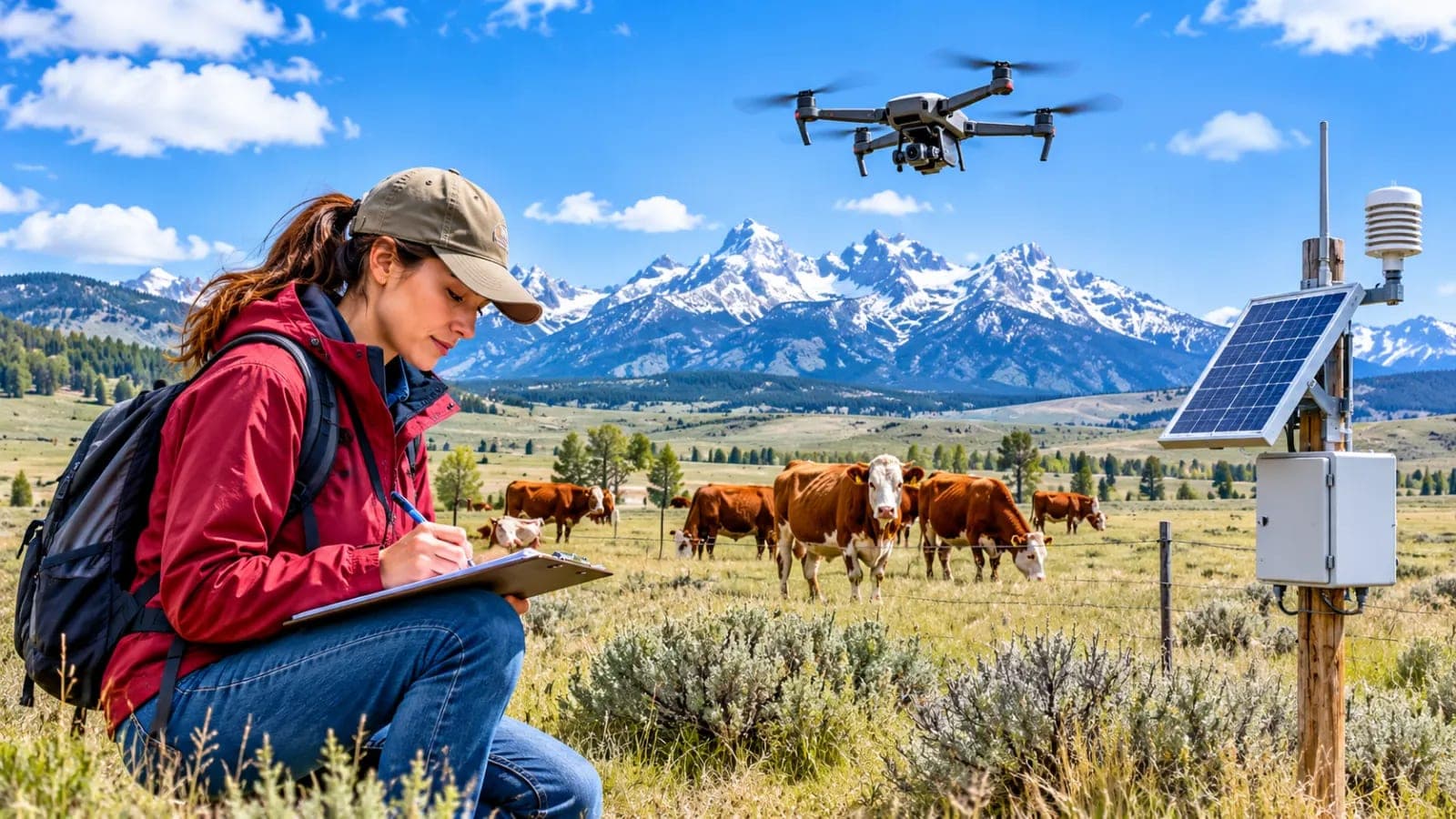
Wyoming PhD assistantship rangeland opportunity has opened at the University of Wyoming for a doctoral student interested in rangeland ecology and livestock monitoring. The role sits in the Department of Ecosystem Science and Management and is linked to the Rangeland Ecology and Watershed Management programme.
The successful candidate will lead a rangeland and livestock monitoring programme across Wyoming. The work is led by principal investigator Dr Nicki Nimlos, who runs the RangeLab research group at the university.
This is a research role with real field responsibility. The student will spend time with producers, researchers and other stakeholders, and will help turn field evidence into guidance that working landscapes can use.
Wyoming PhD assistantship rangeland: what the research involves
Wyoming PhD assistantship rangeland research covers vegetation, soil, grazing practices and livestock behaviour. The student will use traditional monitoring techniques alongside emerging methods, and will test how well different approaches capture change on the ground.
Fieldwork is central to the position. During the academic year the student will be based in Laramie, Wyoming. In summer, the work moves across Wyoming, with extensive fieldwork and overnight trips built into the season.
The programme works closely with livestock producers, because monitoring must be useful to the people who manage land every day, not only to researchers.
Outputs are expected in several forms: peer reviewed journals, Extension bulletins, and conference and stakeholder presentations.
Wyoming PhD assistantship rangeland funding and support
The assistantship is fully funded. It covers academic year and summer salary, tuition and fees, and health insurance at current university rates. That combination removes the main financial barrier that stops many students from starting a PhD.
Funding comes through a mix of research and teaching assistantships. The combined support is guaranteed for at least three years. Funding beyond year three depends on availability, so students should plan their research timeline with that limit in mind.
The listing snapshot gives a living allowance of 21,762 dollars per year. No higher stipend figure has been added here, because the listing does not support one. Applicants should confirm the current rate with the university before accepting an offer, since rates can change.
Who can apply for this PhD
Applicants need a bachelor degree or a master degree in a relevant field. Accepted areas include Rangeland Management, Ranch Management, Natural Resources, Botany, Ecology, Environmental Science, or a related field.
A competitive grade point average above 3.0 is expected, and the listing snapshot gives a GPA of 3.0. Students with strong field experience and clear research interests will stand out, even within a competitive pool.
English language requirements are set out clearly. Applicants need an IELTS score of 6.5, a PTE Academic score of 56, or a TOEFL iBT score of 76. These scores show the university expects students to read, write and present confidently in English.
Experience in rangeland monitoring, field data collection and statistical analysis is preferred. Strong communication and computational skills are also expected, along with the ability to work independently in the field.
Practical requirements matter too for this Wyoming PhD assistantship rangeland role. The student must meet the university driving requirements, because fieldwork across Wyoming involves travel to remote sites. Independent fieldwork is part of the role, so self reliance and good planning are essential.
How to apply and the dates to check carefully
Applications are made through an online application form. International applicants are eligible, and Pakistan is listed among the eligible countries. The full country list is long, so it is not reproduced here.
Applicants should prepare transcripts, an essay, and three recommendation letters, as set out in the listing snapshot. Recommendation letters should come from people who can speak directly about academic ability and field readiness.
The dates in this listing need careful reading, because they do not fully agree with each other. The listing header says the position closes on 9 November 2026. The body of the listing says applications received before 23 November 2026 will get priority consideration, and that applications will continue until the position is filled.
The anticipated start is given as summer 2027, while the listing snapshot gives a programme start of January 2027. These details conflict, so applicants should check the official listing before applying and confirm the closing date and start date directly with the university.
That caution matters, because only the official source can confirm which date now applies.
Frequently Asked Questions
What is the Wyoming PhD assistantship rangeland role?
Wyoming PhD assistantship rangeland role is a fully funded PhD in Rangeland Ecology and Watershed Management at the University of Wyoming. The student will lead a rangeland and livestock monitoring programme across Wyoming under Dr Nicki Nimlos of RangeLab.
How much funding does the assistantship provide?
The Wyoming PhD assistantship rangeland funding covers academic year and summer salary, tuition and fees, and health insurance at current university rates. The listing snapshot gives a living allowance of 21,762 dollars per year, with combined research and teaching support for at least three years.
Who is eligible to apply?
Applicants need a bachelor or master degree in Rangeland Management, Ranch Management, Natural Resources, Botany, Ecology, Environmental Science or a related field. A competitive GPA above 3.0 is expected, along with IELTS 6.5, PTE Academic 56, or TOEFL iBT 76.
Where will the student be based?
The Wyoming PhD assistantship rangeland student will be based in Laramie during the academic year. Summer work involves extensive fieldwork across Wyoming, including overnight trips to monitoring sites.
When does the application close?
The listing gives conflicting dates, so check the official listing before applying. The header says 9 November 2026, the body gives priority consideration before 23 November 2026 with applications continuing until the position is filled, and the start is given as both summer 2027 and January 2027.
What happens next for scholarship
We will keep this page updated as the story develops rather than publishing a near-duplicate at a new address. Follow Scholarship for related coverage.
Get the Verified Brief
One email each morning with the stories we checked overnight.
Spotted an error? Read our corrections policy and tell the newsroom.