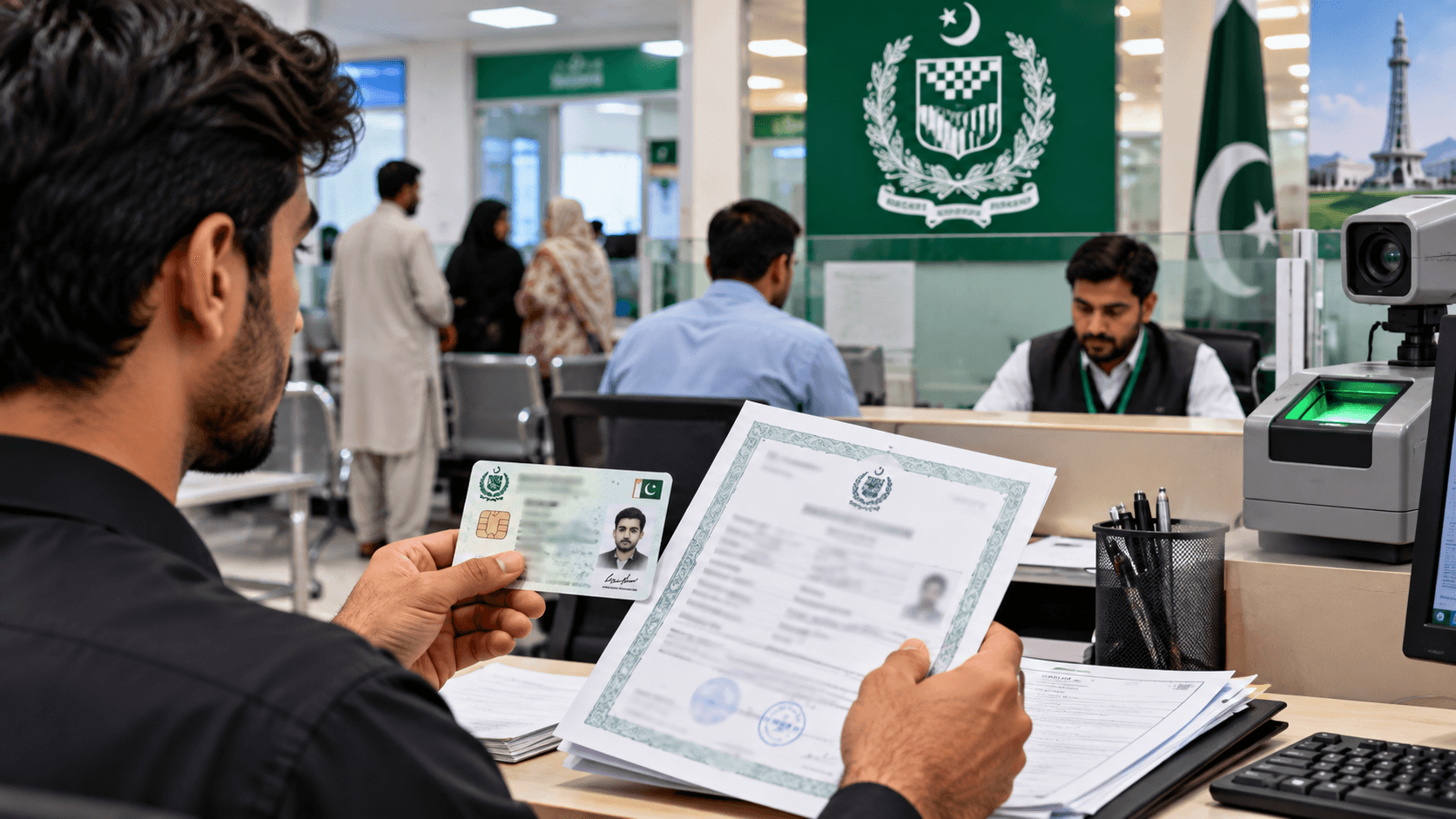

How to Open a Business Bank Account as a Sole Proprietor in Pakistan
Business bank account in Pakistan guide for sole proprietors: learn 7 key steps, NTN requirements, documents, verification and account opening process.

By News Desk · Verified Pakistan News Desk
Published · Updated · 8 min read

Running a business in Pakistan becomes much easier when your personal and business money are kept separate. If you work as a freelancer, shop owner, online seller, consultant, service provider or small trader, opening a business bank account as a sole proprietor can help you manage payments in a more organised way.
The process isn't as complicated as many new business owners expect. However, banks need to verify your identity, business activity and source of income before opening the account.
This guide explains how to open a business bank account as a sole proprietor in Pakistan, the documents you may need, how NTN registration works and what to check before submitting your application.
What Is a Sole Proprietor in Pakistan?
A sole proprietor is an individual who owns and operates a business personally rather than through a separate company structure.
For example, suppose Ahmed operates a graphic design agency under the name "Ahmed Creative Studio." If he runs the business himself without incorporating a company or forming a partnership, he may operate it as a sole proprietorship.
This structure is common among freelancers, consultants, small retailers, online sellers, agencies and home-based businesses because it is relatively straightforward.
A sole proprietorship shouldn't be confused with a private limited company. A company has a separate legal structure and incorporation requirements, while a sole proprietorship is closely tied to its individual owner.
7 Key Steps to Open a Business Bank Account as a Sole Proprietor
The exact account-opening procedure depends on the bank you choose, but most applicants will go through similar steps.
1. Decide on Your Business Name and Activity
Before approaching a bank, clearly identify what your business does.
Banks normally collect information about a customer's profession, business activity and source of income or funds as part of their customer due diligence process.
Your business information should therefore be consistent across your banking and tax records.
For example, if you operate a digital marketing agency, avoid using completely different descriptions of your business activity on different documents unless there's a genuine reason.
2. Get Registered With FBR Where Applicable
Tax registration can make the process easier, particularly when you're opening an account specifically for business use.
According to the Federal Board of Revenue (FBR), individuals become registered for income tax after e-enrollment through the Iris system. For an individual, the 13-digit CNIC is used as the NTN or registration number.
When registering an individual who earns business income, FBR asks for information including the business name, business address and principal business activity.
FBR's registration guidance also lists supporting information or documents that may apply to people with business income, including evidence relating to business premises.
3. Prepare Your CNIC and Business Documents
Your valid CNIC is one of the most important documents in the account-opening process.
Depending on the bank, nature of your business and customer profile, you may also be asked for documents or information such as:
- Valid CNIC
- NTN or evidence of tax registration, where applicable
- Business name and address
- Proof of business or professional activity
- Proof of source of income or funds
- Business letterhead or supporting business documents, where applicable
- Proof of business premises, where required
- Mobile number and email address
- Additional documents requested under the bank's KYC requirements
Don't assume every bank will ask for exactly the same paperwork. Banks may request additional evidence depending on the type of business and their internal compliance checks.
4. Choose the Right Type of Business Account
Don't select an account simply because the bank branch is close to your home.
Compare the features that actually matter to your business.
Look at online banking, mobile banking, cheque book availability, debit card availability, transaction charges, minimum or average balance requirements, cash deposit facilities and other applicable fees.
Freelancers and online businesses may also want to ask about receiving payments from overseas, foreign remittances and the documentation required for international transactions.
A shop owner handling cash every day may have completely different banking needs from a freelancer receiving payments electronically.
5. Submit the Account Opening Application
Once you've selected a bank, complete its account-opening form and submit the required documentation.
You'll normally have to provide personal and business information. The bank will also carry out identity and customer verification under applicable Know Your Customer (KYC) and customer due diligence requirements.
The State Bank of Pakistan's consolidated onboarding framework requires regulated entities to collect specified customer information and documentation while establishing banking relationships.
You may therefore be asked about your occupation, source of income, expected account activity and nature of business.
Answer these questions accurately. Providing unclear or inconsistent information can result in the bank asking for additional documents.
6. Complete Verification
The bank will verify the information submitted with your application.
Depending on the onboarding method and bank requirements, this can involve identity verification and other checks. Digital onboarding may also involve a live photograph and verification against identity information.
Banks can request additional documents when necessary to establish the customer's identity, profession, source of funds or business activity.
This is why keeping invoices, business records, tax documents and proof of business activity organised can be useful.
7. Activate and Start Using the Account
Once the bank approves your application, you'll receive your account details.
Depending on the product selected, you may also receive access to internet banking, mobile banking, a cheque book or a debit card.
After activation, try to use the business account consistently for business-related transactions.
For example, customer payments can be received into the business account while supplier payments, subscriptions and other business expenses can be paid from the same account.
That makes record-keeping much easier.
Is an NTN Mandatory for a Sole Proprietor Bank Account?
This question causes a lot of confusion.
State Bank guidance has previously clarified that banks should obtain an NTN for sole proprietors where applicable. However, SBP also stated that the absence of an NTN should not itself become a reason to refuse banking services where a bank account is required before an NTN can be obtained.
In practice, your bank may ask for NTN or tax-related documentation depending on your situation and the account being opened.
If you already have an NTN, take the relevant details with you when applying.
If you aren't registered with FBR yet, check the latest requirement directly with your chosen bank rather than assuming your application will automatically be rejected.
What Does FBR Require for Individual Business Registration?
FBR's current guidance says an individual registering for income tax should have information including a CNIC or NICOP/passport number, mobile number, active email address and residential address.
For someone earning business income, information about the business name, business address and principal business activity is also required.
FBR further explains that online registration for an individual may require scanned supporting documents, including evidence relating to the business premises where applicable.
Getting your tax profile organised before opening or expanding a business can save you from paperwork problems later.
How Long Does Opening a Business Bank Account Take?
There isn't one guaranteed processing time for every sole proprietor account.
The time can depend on the bank, account type, verification process and whether your documents are complete.
A straightforward application with clear documentation may move faster than an application requiring additional verification.
Before leaving the branch or completing an online application, ask whether anything else is required from you. This simple step can prevent unnecessary delays.
Common Reasons an Application May Be Delayed
Incomplete paperwork is one of the easiest problems to avoid.
Differences between the business name, address or activity mentioned on various documents can lead to additional questions.
A bank may also require more information if the source of funds or expected transaction pattern isn't clear.
Before applying, check that your CNIC is valid and your contact information is current. Keep supporting documents for your business activity ready as well.
Why Use a Separate Business Account?
Separating personal and business transactions can make day-to-day financial management far cleaner.
You'll have a clearer record of money received from customers and expenses paid for the business. This can also make bookkeeping and tax record preparation easier.
It gives you a better picture of whether the business is actually making money instead of mixing business revenue with household spending.
For a growing business, proper banking records can also become useful when dealing with suppliers, financial institutions and other organisations.
Final Thoughts
Learning how to open a business bank account as a sole proprietor in Pakistan is an important step toward managing a small business professionally.
Start by organising your CNIC, tax information, business details and evidence of your source of income or business activity. Then compare suitable accounts and confirm the latest document requirements directly with your selected bank.
Requirements can vary according to the bank, account type and customer's circumstances, so always check the latest checklist before submitting an application.
Once the account is active, keeping business transactions separate from personal spending will give you cleaner financial records and make your business finances easier to manage.
Official Sources
State Bank of Pakistan — Consolidated Customer Onboarding Framework: https://www.sbp.org.pk/circulars/bprd-circular-no-01-of-2025
State Bank of Pakistan — NTN Requirements for Sole Proprietors: https://www.sbp.org.pk/circulars/bprd-circular-letter-no-35-of-2016
Federal Board of Revenue — Income Tax Registration: https://www.fbr.gov.pk/categ/income-tax-status/51147/30846/71148
Federal Board of Revenue — Registration Requirements: https://www.fbr.gov.pk/categ/income-tax/51148/30846/71150
FBR Iris Portal: https://iris.fbr.gov.pk/
Last Updated: September 28, 2026
What happens next for national
We will keep this page updated as the story develops rather than publishing a near-duplicate at a new address. Follow National for related coverage.
Get the Verified Brief
One email each morning with the stories we checked overnight.
Spotted an error? Read our corrections policy and tell the newsroom.