
Dutch Business Delegation Visits SIFC to Explore Pakistan Investment
A Dutch business delegation met Pakistan's SIFC on October 19, 2026, to discuss investment opportunities and special economic zones. No deal was announced.

By News Desk · Verified Pakistan News Desk
Published · 8 min read
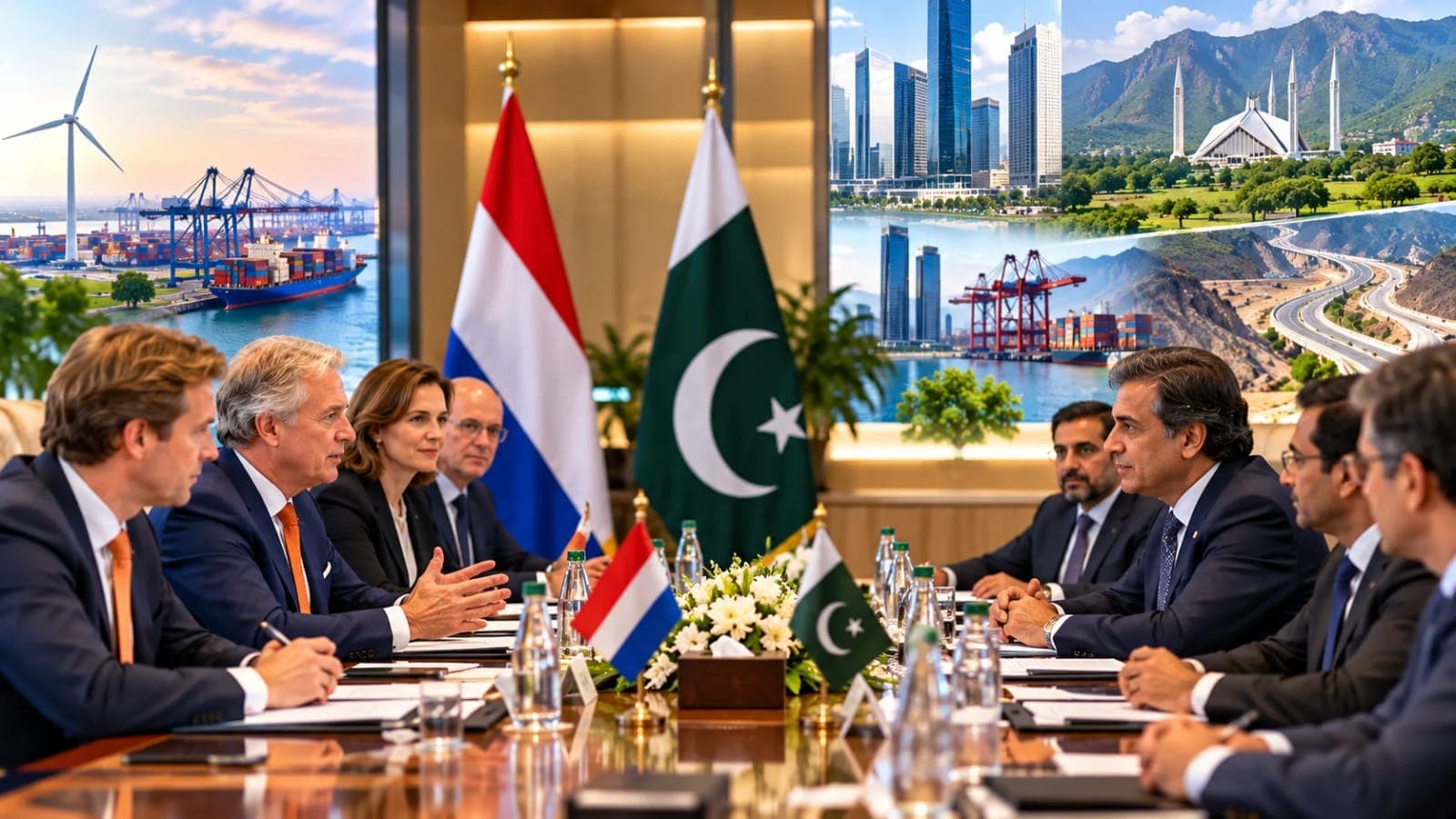
A Dutch business delegation led by Netherlands Ambassador Robert-Jan Siegert visited Pakistan's Special Investment Facilitation Council on October 19, 2026. During the meeting, the delegation heard about investment opportunities and the council's one-window facilitation services. It was also briefed on prospects in special economic zones, including Karachi Industrial Park and Bin Qasim Industrial Park, according to Radio Pakistan.
The visit shows business interest and government outreach. It does not establish that a Dutch company has signed a contract, committed capital or begun construction. Those would be separate developments requiring specific announcements. For now, the story is about an investment discussion and the places Pakistan presented to prospective partners.
What happened at the SIFC meeting?
Radio Pakistan reported that the ambassador led the delegation to SIFC. Dr Jahanzeb, secretary of the council's apex committee, briefed visitors on the one-window services and available investment opportunities. The delegation was informed about prospects in two named industrial parks in Karachi's wider industrial area.
The report does not list the companies represented, the size of the delegation or the projects under consideration. Nor does it say a memorandum was signed. The absence of those details matters because the phrase “business delegation” can otherwise be mistaken for an investment deal already concluded.
What is one-window facilitation?
In general, a one-window approach aims to help investors navigate government processes through a coordinated channel. At the meeting, it was presented as a service available through SIFC. Whether a particular investor benefits depends on the actual rules, authorities involved and approvals required for its project.
The October 19 account does not promise automatic permission for any company. It does not mean every clearance has been granted or every regulatory step has disappeared. Investors still need to examine the legal, commercial and technical requirements for the project they propose.
Why were special economic zones discussed?
The briefing highlighted Karachi Industrial Park and Bin Qasim Industrial Park as investment prospects within special economic zones. An industrial park can offer a location for manufacturing or related activity, but a company's choice depends on infrastructure, logistics, workforce, utilities, land terms and access to markets.
The report identifies the parks but does not state that the Dutch delegation selected a site. It also gives no land allotment, factory plan, production target or jobs forecast. Any article claiming such outcomes would be going beyond the available announcement.
For potential investors, the useful next step is detailed due diligence: what plots and services are available, what approvals are needed, and what costs and obligations apply? For public readers, the relevant next step is an official statement naming a concrete project, if one emerges.
Karachi Industrial Park and Bin Qasim Industrial Park
Both parks were mentioned to the visiting delegation. Their appearance in a briefing tells readers where Pakistan wants to draw attention. It is not evidence that their conditions are identical or that investment will be split between them.
An actual project announcement should identify its location clearly. It should also distinguish an expression of interest from a formal commitment. Until that point, the two names are prospects raised in a conversation, not confirmed sites for a Dutch venture.
The difference between interest and investment
Business visits often begin with introductions, questions and site information. A company may later conduct studies, negotiate terms or decide not to proceed. A signed investment agreement is one milestone; financing, permits, construction and operation are further milestones.
That sequence can take time. It is why claims about future jobs and export earnings should be tied to a named project and an implementation plan. The SIFC briefing may be useful, but the October 19 report provides no value or deadline for Dutch investment.
Readers should watch the verbs in future coverage. “Visited” and “explored” describe the present evidence. “Committed” requires a documented pledge. “Invested” suggests capital has actually been deployed. Using the right verb keeps an encouraging diplomatic event from being oversold.
Where this fits in SIFC's activity
A separate October 18 Radio Pakistan report described SIFC's progress across industry, energy and other sectors during the year. It said the council had facilitated approval of seven new cement plants with expected investment of about $700 million and assisted with approval of a 435-kilometre White Oil Pipeline. It also mentioned clearing pending approvals for a private airline project and work related to vaccine policy, drug testing and mineral value addition.
These are reported facilitation or approval steps. The $700 million figure is described as expected investment, not completed spending. The Dutch delegation's October 19 visit is a separate event; the earlier figures must not be presented as Dutch investment or as a result of this meeting.
SIFC's broader work helps explain why it meets foreign delegations. The council positions itself as a coordinator for potential investors and projects. The quality of that service can be tested later through documented approvals and projects that actually move forward.
Keeping the numbers separate
The seven cement plant approvals, expected $700 million investment and pipeline approval were included in the October 18 progress account. The October 19 Dutch visit account offered no monetary figure. Combining the two into a headline about a $700 million Dutch commitment would be false.
This is a common reporting trap when related business stories appear close together. Each number needs a subject, date and status. An expected amount attached to one group of projects cannot be transferred to another delegation merely because both appear in SIFC coverage.
The Netherlands-Pakistan business opportunity
The presence of the Dutch ambassador and business visitors creates a channel for companies to ask questions and for Pakistani officials to present opportunities. The actual sectors each company is considering were not listed in the short report, so it would be speculative to identify a specific Dutch factory, agricultural venture or logistics project.
Future announcements could show whether the conversation moves into a formal proposal. A useful public record would name the investors, the sector, the proposed location, financing and approvals. It would also say whether jobs and exports are projections or already measured results.
Foreign investment can bring capital and expertise, but the public benefit depends on project design and implementation. A meeting alone is an early step. This article therefore treats the delegation's interest seriously without assigning it economic results that have not yet occurred.
What companies may need to examine
Before choosing an industrial site, a prospective investor normally examines land availability, power, water, transport, supplier access and the ability to move goods. It will also consider the governing rules and any incentives. These are general due-diligence questions, not details confirmed about the delegation's private discussions.
SIFC's one-window presentation may make the administrative path easier to understand. Even so, businesses must know which authority can approve which part of a project and how long each step takes. Clear, public procedures would help both foreign and local investors compare opportunities fairly.
For Pakistani firms, a foreign delegation may open conversations about supply chains or partnerships. No specific opportunity to apply as a supplier was announced in this report. Companies should wait for a named project or formal call rather than assume there is an immediate tender.
What to watch next
The first useful follow-up would be a joint readout naming the firms and sectors involved. A site visit, formal expression of interest or memorandum could show that discussion is progressing. A signed investment agreement would need its own details, and an operating facility would be a later outcome still.
Readers can also check whether the industrial parks publish updated information about available sites and services. If a project is announced, its local effects should be assessed against actual employment, environmental obligations and production, rather than a headline figure alone.
The October 19 report does not provide a timetable for any of this. That is a limitation of the current evidence, not proof that the meeting will or will not lead to investment.
Frequently asked questions
Who led the Dutch delegation?
Netherlands Ambassador Robert-Jan Siegert led the business delegation to SIFC, according to Radio Pakistan's October 19 report.
Which Pakistani official briefed the visitors?
Dr Jahanzeb, secretary of the SIFC apex committee, briefed the delegation about one-window facilitation and investment opportunities.
Which industrial parks were mentioned?
The visitors were informed about prospects in Karachi Industrial Park and Bin Qasim Industrial Park. The report does not say a company chose either location.
Was a Dutch investment deal announced?
No deal, financial commitment or signed memorandum is stated in the October 19 report. The verified development is a visit and briefing.
Is the $700 million cement figure from this delegation?
No. The separate October 18 SIFC update attributed about $700 million in expected investment to approvals for seven new cement plants. It did not describe that amount as Dutch investment.
Conclusion
The Dutch delegation's SIFC visit placed Pakistan's investment services and two industrial parks before potential partners. It may be the start of further commercial talks, but no specific Dutch project or amount has been announced. The next meaningful evidence will be a named proposal, agreement or implemented investment, with clear terms that readers can verify.
What happens next for business
We will keep this page updated as the story develops rather than publishing a near-duplicate at a new address. Follow Business for related coverage.
Get the Verified Brief
One email each morning with the stories we checked overnight.
Spotted an error? Read our corrections policy and tell the newsroom.