Flour Prices Surge Across Pakistan as Faisalabad Sees Rs. 800 Jump
Flour prices in Pakistan rise sharply, with a Rs. 800 jump in Faisalabad and a 20kg bag reaching Rs. 3,540 in Karachi.

By News Desk · Verified Pakistan News Desk
Published · 10 min read
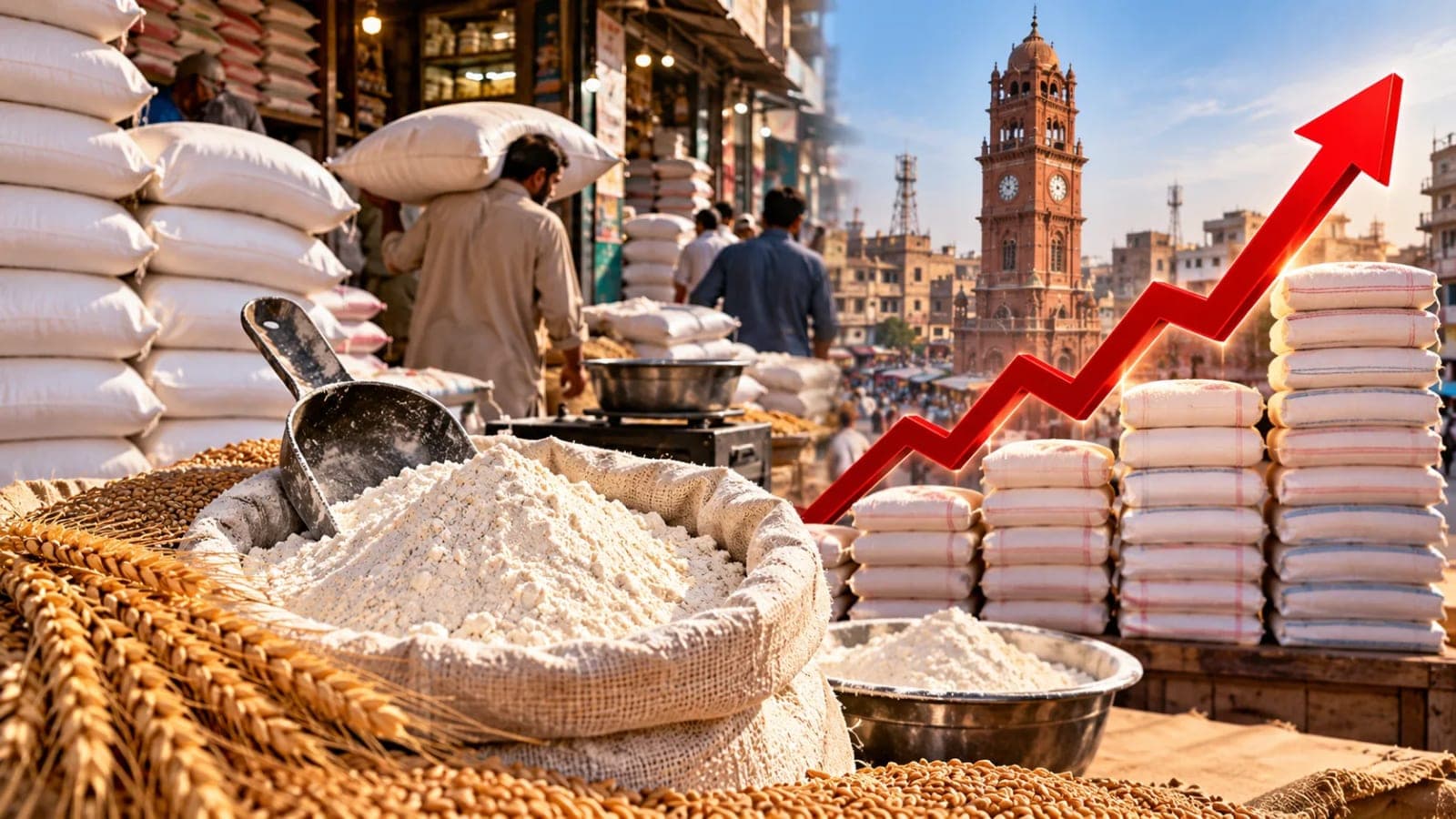
Wheat flour prices have increased sharply across several Pakistani cities, with Faisalabad recording a reported Rs. 800 rise in the price of a 20-kilogram bag, while Karachi has emerged as the most expensive city in the latest quoted market rates.
According to figures attributed to the Pakistan Bureau of Statistics (PBS), the price of a 20kg flour bag in Faisalabad increased from Rs. 2,200 to Rs. 3,000, representing a substantial rise for consumers.
Karachi recorded a price of Rs. 3,540 per bag, followed by Hyderabad at Rs. 3,480 and Khuzdar at Rs. 3,400.
The latest figures, reported on October 16 and 17, 2026, show significant differences in flour prices between cities, placing additional pressure on household budgets.
Separately, the PBS weekly price survey for the week ended October 15 recorded a national average of Rs. 2,946.72 for a 20kg bag, up 3.36 percent from the previous week.
These two sets of figures describe different measures: quoted city-level market prices and surveyed national averages.
Flour Prices in Pakistan: What Has Changed?
The latest market reporting indicates that flour has become more expensive in several major cities.
The steepest quoted increase occurred in Faisalabad, where a 20kg bag reportedly became Rs. 800 more expensive.
Other cities also recorded significant increases, although the size of the change varied.
Khuzdar experienced a Rs. 400 increase, while Larkana recorded a Rs. 300 rise.
Hyderabad saw an increase of Rs. 280, and Quetta recorded a Rs. 190 rise.
Karachi, already among the more expensive markets, saw a further increase of Rs. 140.
These changes highlight the uneven impact of rising food prices across different regions.
Karachi Records Highest Quoted Flour Price
Karachi recorded the highest quoted price among the cities covered in the latest report.
A 20kg bag was priced at Rs. 3,540 following a reported increase of Rs. 140.
This makes the quoted price equivalent to Rs. 177 per kilogram.
For households purchasing multiple bags each month, even a relatively small increase can raise the total grocery bill.
Karachi's position as the most expensive city in this comparison does not necessarily mean every retailer charges the same price.
Actual prices may vary depending on brand, flour quality, packaging and the market where a purchase is made.
Consumers should therefore treat the reported rate as a market indicator rather than a guaranteed price at every shop.
Faisalabad Sees Rs. 800 Increase
Faisalabad recorded the largest quoted price increase in the latest city-level reporting.
The price of a 20kg flour bag reportedly rose by Rs. 800 to Rs. 3,000.
That represents an increase of approximately 36.4 percent from the previously quoted Rs. 2,200 level.
The size of the increase is particularly important because flour is a basic food item used by households across income groups.
However, the reported city-level price should not be confused with the weekly city average published in the PBS statistical tables.
The difference between a market quotation and a survey average can arise from differences in observation methods, timing and the prices selected for comparison.
The exact methodology should be checked before making claims about a uniform increase across every retailer in Faisalabad.
Flour Prices in Major Pakistani Cities
The following prices were reported for 20kg flour bags in the latest city-level coverage.
| City | Reported Price | Reported Increase |
|---|---|---|
| Karachi | Rs. 3,540 | Rs. 140 |
| Hyderabad | Rs. 3,480 | Rs. 280 |
| Khuzdar | Rs. 3,400 | Rs. 400 |
| Islamabad | Rs. 3,373 | Not specified |
| Rawalpindi | Rs. 3,333 | No change |
| Peshawar | Rs. 3,300 | Not specified |
| Quetta | Rs. 3,220 | Rs. 190 |
| Larkana | Rs. 3,200 | Rs. 300 |
| Sukkur | Rs. 3,200 | Rs. 140 |
| Bannu | Rs. 3,200 | Not specified |
| Sialkot | Rs. 3,133 | No change |
| Faisalabad | Rs. 3,000 | Rs. 800 |
| Gujranwala | Rs. 3,000 | No change |
| Bahawalpur | Rs. 3,000 | Rs. 40 |
| Sargodha | Rs. 2,933 | Rs. 67 |
| Multan | Rs. 2,933 | Rs. 66 |
| Lahore | Rs. 2,300 | No change |
The figures reflect reported market quotations and should not be interpreted as fixed government retail prices.
Lahore Remains Among the Cheaper Cities
Lahore recorded a quoted flour price of Rs. 2,300 per 20kg bag in the latest comparison.
That was the lowest price among the cities listed in the report.
The difference between Lahore and Karachi reached Rs. 1,240 per bag.
This is a substantial gap for the same reported package weight.
However, prices can differ because of flour quality, brand, local market conditions and the method used to collect quotations.
The PBS weekly average for Lahore is also a separate measure from the quoted Rs. 2,300 market price.
Consumers should use the most relevant local information when comparing retail offers.
National Average Rises to Rs. 2,946.72
Separate PBS weekly data provides a broader view of flour inflation.
For the week ended October 15, 2026, the average price of a 20kg flour bag across the surveyed cities was reported at Rs. 2,946.72.
This represented an increase of Rs. 95.68 from the previous week's average of Rs. 2,851.04.
The weekly rise was approximately 3.36 percent.
Compared with the beginning of October, the average price was approximately Rs. 249 higher.
The national average is useful for measuring price trends, but it does not mean consumers in every city pay the same amount.
Local differences remain substantial.
Flour Becomes More Expensive Than Last Year
The latest weekly figures also indicate a considerable year-on-year increase.
The reported national average for a 20kg bag was approximately 35.13 percent higher than the comparable period in October 2025.
In rupee terms, the difference was around Rs. 766 per bag.
This illustrates how repeated price increases can accumulate over time.
Even when an individual weekly increase appears relatively small, the combined effect can become significant for families.
Year-on-year comparisons are particularly useful because they show changes over a longer period rather than focusing on a single week's movement.
Why Flour Prices Matter for Pakistani Households
Wheat flour is a staple food item in Pakistan.
It is used to prepare roti, chapati, paratha and other foods consumed regularly by millions of households.
Unlike discretionary purchases, flour is difficult for families to remove entirely from their budgets.
As a result, price increases can affect both low-income and middle-income households.
Families may respond by reducing spending on other groceries or household needs.
The impact is particularly serious for people whose incomes have not increased at the same pace as essential food prices.
How Much More Could Families Pay?
The financial effect depends on how much flour a household purchases.
A family buying two 20kg bags per month would pay Rs. 6,000 at a price of Rs. 3,000 per bag.
At Rs. 2,200 per bag, the same quantity would cost Rs. 4,400.
That creates a difference of Rs. 1,600 per month.
This is an illustrative calculation based on the reported Faisalabad price change, not an estimate of the average family's actual consumption.
Different households buy different quantities and may purchase loose flour rather than packaged 20kg bags.
Nevertheless, the calculation shows why a sharp price increase can have a noticeable effect on household spending.
What Is Causing the Price Increase?
Several factors can influence wheat flour prices.
These include wheat procurement costs, availability of grain, transportation expenses, milling costs and distribution arrangements.
Changes in demand, storage conditions and market expectations can also affect prices.
However, the latest PBS figures do not independently establish which factor caused the reported October increase.
It would therefore be premature to attribute the rise entirely to wheat shortages, hoarding or government policy without supporting evidence.
A proper explanation requires information from wheat markets, millers, relevant authorities and supply-chain data.
Regional Differences Need Attention
The latest figures show that flour prices are not moving uniformly across Pakistan.
Karachi and Hyderabad have relatively high quoted rates, while Lahore remains considerably cheaper in the same comparison.
Differences may reflect local supply arrangements, transportation costs and market conditions.
Provincial policies and wheat procurement practices may also influence the wider market.
However, the contribution of each factor cannot be determined from retail price figures alone.
Authorities would need to examine supply and distribution data to explain the differences accurately.
Could Government Intervention Reduce Prices?
Governments can respond to food inflation through several policy measures.
These may include monitoring market prices, addressing supply disruptions and providing targeted support to vulnerable households.
Authorities may also investigate complaints involving illegal overcharging or other violations of applicable regulations.
However, any intervention must consider how wheat and flour move through the supply chain.
Measures that create uncertainty for suppliers can sometimes produce unintended consequences.
Effective policy depends on reliable data and coordination between relevant institutions.
What Consumers Can Do
Consumers can compare prices at different authorised retailers before purchasing flour.
They should check package weight, quality and product information rather than comparing prices alone.
Where official price controls apply, suspected overcharging can be reported through the relevant local government channels.
Families should also avoid panic buying, which can create unnecessary pressure on local supplies.
Retailers and wholesalers should provide accurate price information and comply with applicable laws.
Reliable consumer information is especially important when prices are changing rapidly.
What Happens Next?
The next PBS weekly price report will provide an updated picture of flour prices across surveyed cities.
It will help establish whether the national average continues to increase or begins to stabilise.
Future market reports may also show whether the sharp quoted rise in Faisalabad persists.
For policymakers, the key questions concern supply availability, affordability and the differences between regional markets.
Consumers will be watching whether flour prices ease before household budgets come under further pressure.
Frequently Asked Questions
1. What is the highest reported flour price in Pakistan?
Karachi recorded the highest quoted price in the latest report, at Rs. 3,540 for a 20kg bag.
2. Which city recorded the Rs. 800 flour price increase?
Faisalabad recorded a reported Rs. 800 increase, taking the quoted price of a 20kg bag to Rs. 3,000.
3. What is the flour price in Lahore?
The latest city-level report quoted Rs. 2,300 for a 20kg bag in Lahore. Actual retail prices may vary.
4. What is the national average price of flour?
The PBS weekly survey for October 15, 2026, reported a national average of approximately Rs. 2,946.72 per 20kg bag.
5. Why are flour prices increasing?
Prices can be influenced by wheat costs, supply, transportation and distribution, but the latest statistical release does not establish one confirmed cause.
Conclusion
Flour prices have risen across several Pakistani cities, with Faisalabad recording the largest quoted increase and Karachi reporting the highest quoted 20kg bag price.
The latest PBS weekly average also confirms broader upward pressure on flour prices.
For consumers, the main concern is the rising cost of a staple food that forms an essential part of household spending.
Further official data will be needed to determine whether prices continue climbing and what measures may help stabilise the market.
Last Updated: October 17, 2026.
What happens next for business
We will keep this page updated as the story develops rather than publishing a near-duplicate at a new address. Follow Business for related coverage.
Get the Verified Brief
One email each morning with the stories we checked overnight.
Spotted an error? Read our corrections policy and tell the newsroom.