
How to Get an Apostille for Pakistani Educational Documents - 7 Key Steps
Get an apostille for Pakistani educational documents in 7 easy steps. Learn about HEC and IBCC attestation, MOFA fees, online registration, and requirements.

By News Desk · Verified Pakistan News Desk
Published · 7 min read
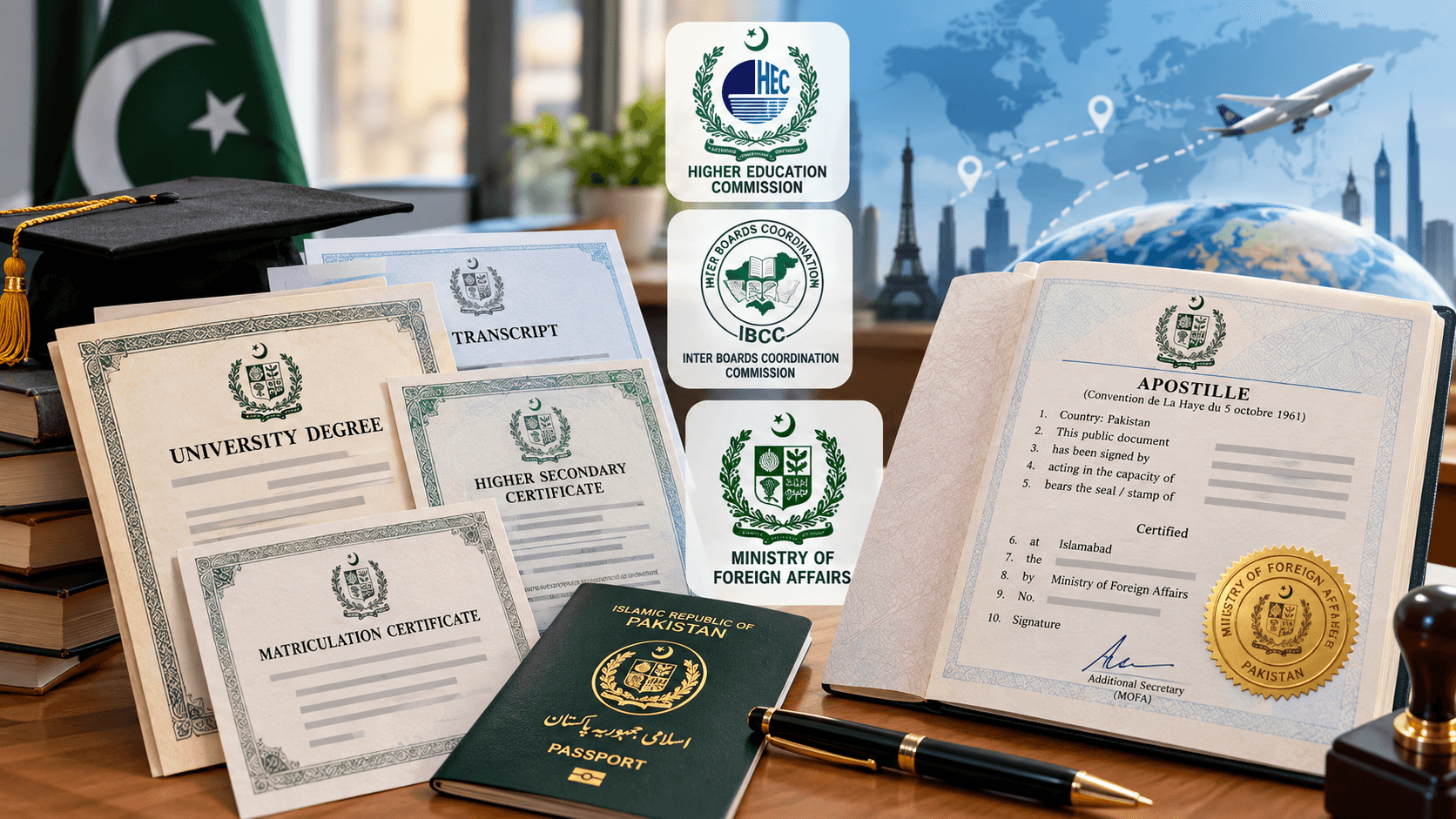
Getting an Apostille for Pakistani Educational Documents is an important step for students and professionals planning to study, work, or settle abroad. Whether you're applying to a foreign university or preparing documents for an overseas employer, proper authentication can save you from unnecessary delays.
The process may look complicated at first, especially when several government departments are involved. However, once you understand the requirements, getting your educational certificates apostilled becomes much easier.
Here's a complete guide to the application process, required documents, official fees, and common mistakes to avoid in 2026.
What Is an Apostille for Pakistani Educational Documents?
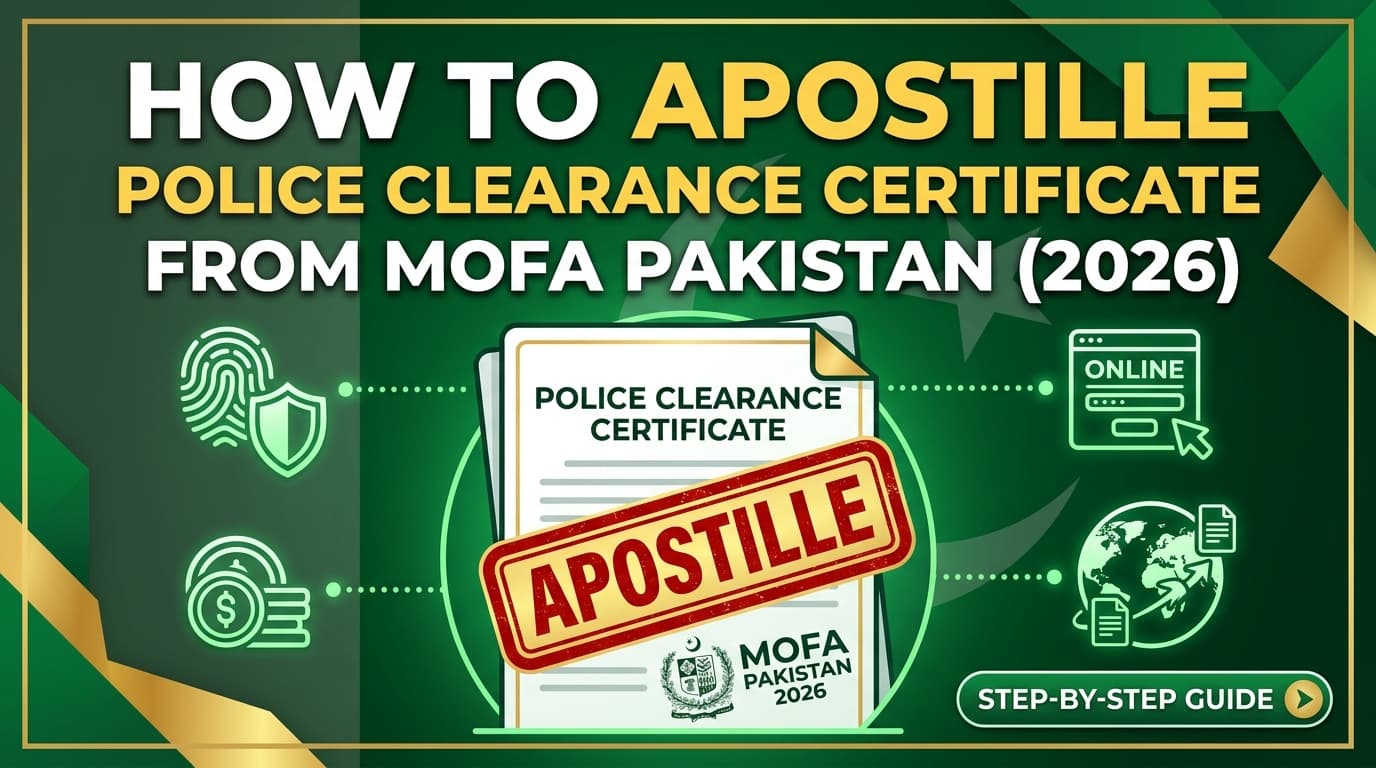
An apostille is an official certificate that confirms the authenticity of a public document's signature, seal, or stamp. It allows the document to be presented in countries where the Hague Apostille Convention applies.
Pakistan became a party to the convention on March 9, 2023. The Ministry of Foreign Affairs (MOFA) is responsible for issuing apostille certificates for eligible Pakistani documents.
An apostille simplifies international document authentication by replacing the traditional chain of diplomatic legalization between participating countries.
However, it doesn't guarantee admission to a university, professional licensing, or acceptance by every foreign institution. The receiving organization may have additional requirements.
Which Educational Documents Can Be Apostilled in Pakistan?
Pakistan's Ministry of Foreign Affairs provides apostille services for several categories of educational documents.
These include:
- Matriculation and intermediate certificates.
- Bachelor's, master's, MPhil, and doctoral degrees.
- University transcripts and mark sheets.
- Technical and vocational training certificates.
- Educational equivalence certificates.
- School leaving and bonafide certificates.
- ACCA, ICAP, and ICMAP certificates.
Different documents require verification from different authorities before they can be submitted to MOFA.
For example, university degrees generally require Higher Education Commission (HEC) attestation, while matriculation and intermediate certificates require Inter Boards Coordination Commission (IBCC) attestation.
How to Get an Apostille for Pakistani Educational Documents in 7 Steps
Step 1: Check the Requirements of Your Destination Country
Before starting, confirm whether the country where you intend to use your educational documents accepts apostilles issued by Pakistan.
You should also contact the university, employer, immigration authority, or professional licensing body requesting your documents.
Ask whether they require your original degree, academic transcript, certified copies, or an official translation.
This simple step can prevent you from spending money on documents that aren't required.
Step 2: Get Your Educational Documents Attested by HEC
If you're applying for an apostille for a university degree, HEC attestation is generally required before MOFA can process it.
Visit the official HEC website and follow its degree attestation procedure.
You may need to provide your original degree, academic transcript, identity documents, and other supporting records requested by HEC.
Make sure your name, father's name, degree title, and academic details match your official records.
Any discrepancy may require correction before your documents can be verified.
Once HEC has authenticated your degree, you can proceed with the MOFA apostille application.
Step 3: Obtain IBCC Attestation for School Certificates
If you need an apostille for your matriculation or intermediate certificates, you'll generally need IBCC attestation.
IBCC verifies educational certificates issued by recognized Pakistani examination boards.
Applicants can use the official IBCC application system and select an available submission method, such as an appointment or courier service.
Prepare your original certificates, identity documents, and any additional records required for verification.
Remember that HEC and IBCC serve different purposes. A university degree normally requires HEC attestation, while SSC and HSSC certificates require IBCC attestation.
Step 4: Register on the MOFA Apostille Portal
After completing the necessary educational verification, visit Pakistan's official apostille portal:
https://apostille.mofa.gov.pk/
Create an account and enter your personal information.
You'll need to upload both sides of your CNIC and create a new application for the documents you want apostilled.
Enter the requested document details and upload the relevant supporting files.
Review everything carefully before submitting your application.
Since July 27, 2026, MOFA has required prior online registration for apostille applications. Applicants must complete the online process before visiting the ministry or its designated liaison offices.
Step 5: Wait for Approval and Book Your Appointment
After submitting your online application, monitor your registered email address for updates from MOFA.
You'll receive information about approval and further processing.
Follow the portal's instructions to arrange your appointment and prepare for document submission.
MOFA advises applicants to visit on their scheduled appointment date and time. Arriving on a different date may prevent your application from being processed.
Keep your application details, original educational documents, and identity documents ready before visiting.
Step 6: Pay the Official Apostille Fee
The official MOFA apostille fee for an educational document is Rs. 3,000 per document.
For example, if you need apostilles for both your degree and transcript, the MOFA fee would be Rs. 6,000, provided each is processed as a separate educational document.
HEC attestation, IBCC verification, courier services, and translation may involve additional charges.
Follow the official portal or MOFA office instructions for generating and paying your fee challan.
Keep your payment receipt safe, as you may need it when submitting or collecting your documents.
Step 7: Submit Your Documents and Collect the Apostille
On your scheduled appointment date, visit the designated MOFA office with your original documents and required supporting paperwork.
Officials will review your application and check the documents before processing your request.
Once the verification and approval process is complete, your eligible documents will receive an apostille certificate.
Follow the collection instructions provided by MOFA.
Before leaving, check that the certificate contains the correct document details and that your original educational records have been returned.
How Long Does the Apostille Process Take?
Processing time depends on several factors, including the number of documents, the completion of HEC or IBCC verification, appointment availability, and MOFA's workload.
Applicants who already have properly attested educational documents may be able to complete the remaining process sooner.
However, you shouldn't assume that an apostille will be issued on the same day.
If you're preparing for a university admission deadline, overseas employment, or a visa application, start the process well in advance.
Common Mistakes to Avoid During the Apostille Process
Many applicants experience unnecessary delays because they overlook basic requirements.
One common mistake is submitting a university degree without completing HEC attestation.
Another is attempting to apostille matriculation or intermediate certificates without the required IBCC verification.
Incorrect personal information, missing supporting documents, and incomplete online applications can also cause problems.
Always check your destination country's requirements before applying. An apostille may not be the correct legalization method for every country or institution.
Finally, use official government websites rather than relying entirely on unofficial agents or outdated social media instructions.
Final Thoughts
Getting an Apostille for Pakistani Educational Documents doesn't have to be stressful.
The key is to complete the required HEC or IBCC attestation first, register through the official MOFA portal, and follow the appointment and payment instructions carefully.
Before submitting your application, confirm what your receiving institution needs and make sure every document is accurate.
With proper preparation, you can avoid unnecessary expenses, reduce processing delays, and have your educational documents ready for use abroad.
Official Sources and Fact-Checking References
1. Pakistan Ministry of Foreign Affairs — Apostille Portal: https://apostille.mofa.gov.pk/ 2. MOFA — Apostille Fees: https://apostille.mofa.gov.pk/fee-structure 3. MOFA — Educational Document Requirements: https://apostille.mofa.gov.pk/sops 4. MOFA — Consular Services and Online Registration: https://mofa.gov.pk/consular-service-attestation-of-documents 5. Higher Education Commission Pakistan: https://www.hec.gov.pk/ 6. Inter Boards Coordination Commission: https://ibcc.edu.pk/attestation/submission-modes/
Information updated: September 2026. Fees, appointment procedures, and document requirements may change. Always confirm the latest instructions through the official government portals before applying.
What happens next for global
We will keep this page updated as the story develops rather than publishing a near-duplicate at a new address. Follow Global for related coverage.
Get the Verified Brief
One email each morning with the stories we checked overnight.
Spotted an error? Read our corrections policy and tell the newsroom.