
How to Start a Home-Based Frozen Food Business in Lahore
Start a home-based frozen food business in Lahore with this practical guide covering products, pricing, packaging, PFA licensing, marketing and delivery.

By News Desk · Verified Pakistan News Desk
Published · Updated · 7 min read
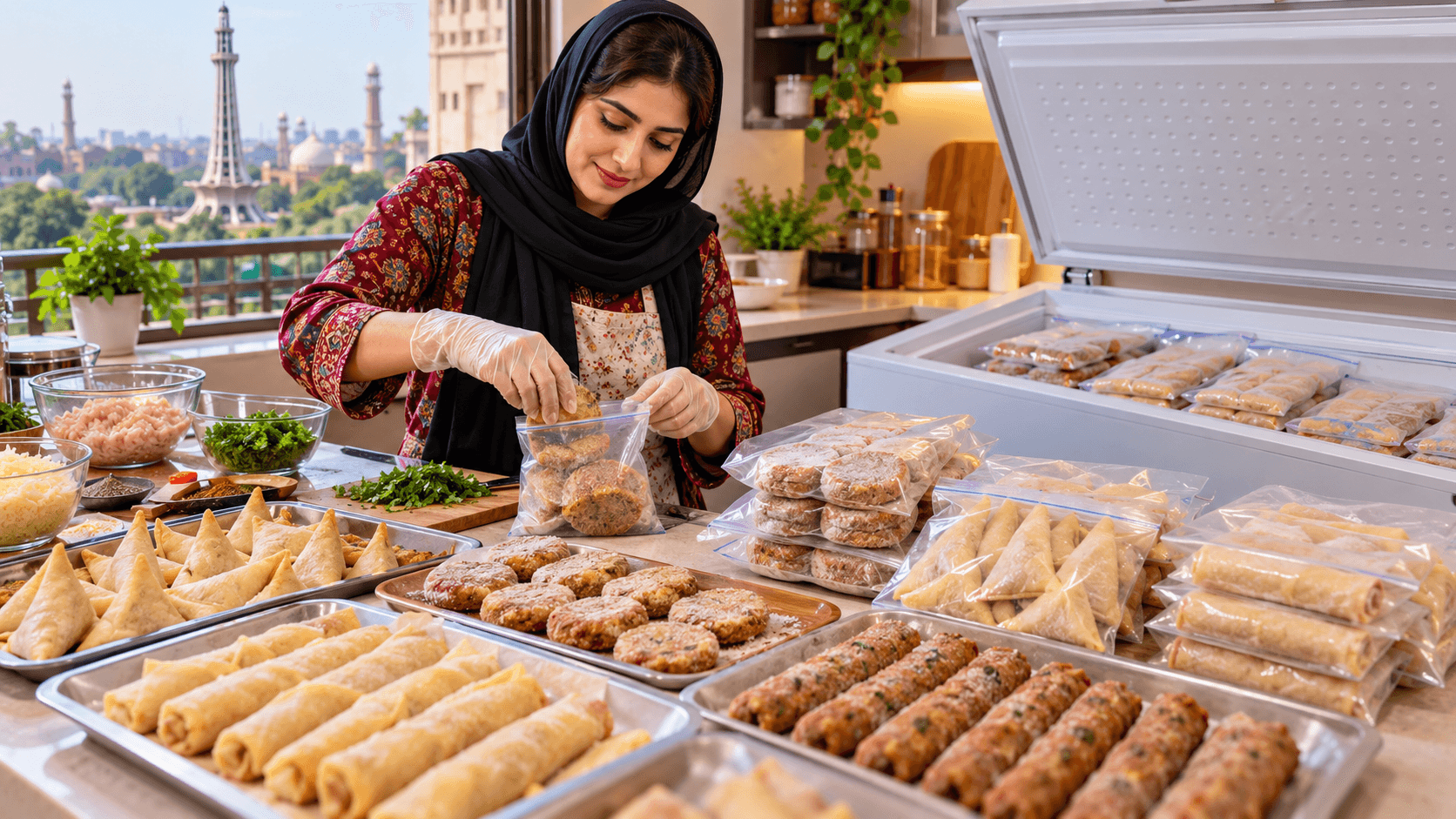
Starting a home-based frozen food business in Lahore can be a practical way to turn cooking skills into regular income without renting an expensive shop from day one.
The idea is fairly simple. Prepare food in batches, freeze it properly, pack it neatly and sell it to customers who want convenient meals at home. The harder part isn't making a good samosa or kebab. It's keeping the taste consistent, calculating costs properly and convincing customers to order again.
Here's how you can build the business step by step.
1. Choose a Small Frozen Food Menu
One mistake new sellers often make is launching with a huge menu.
You don't need 20 products on your first day. Start with four or five items that are easy to prepare, freeze and reproduce consistently.
For Lahore, you could consider products such as:
- Chicken samosas
- Chicken spring rolls
- Shami kebabs
- Chicken cheese parathas
- Frozen plain parathas
- Seekh kebabs
- Chicken nuggets
- Chapli kebabs
- Frozen cutlets
- Stuffed bread rolls
Start with the items you already make well.
For example, if friends and relatives regularly praise your homemade shami kebabs, that could become your first signature product. Once customers begin ordering repeatedly, add more items.
2. Calculate the Real Cost of Every Pack
Don't set prices simply by checking what another Instagram seller charges.
Calculate your own costs first.
Suppose you're preparing a pack of 12 chicken samosas. Your calculation should include chicken, vegetables, wrappers, spices, cooking ingredients, packaging and other direct expenses.
Don't forget smaller expenses.
Electricity used by the freezer, gas, labels, delivery packaging and food wastage can slowly eat into your profit.
Let's say a pack costs you Rs. 420 to produce after considering all relevant expenses. Selling it for Rs. 450 obviously leaves very little room for profit.
Keep a simple spreadsheet or notebook for every product. Update your costing whenever ingredient prices change.
3. Set Up a Clean Home-Based Frozen Food Business Kitchen
Your kitchen doesn't have to look like a large factory, but cleanliness shouldn't be negotiable.
Keep raw meat separate from ready-to-eat ingredients. Clean preparation surfaces before and after use, and use clean utensils and storage containers.
Your freezer is particularly important.
Don't rely on a tiny freezer already overflowing with household food. As orders increase, a dedicated freezer can make inventory management much easier.
Label prepared batches with useful details such as the product name and preparation date. A basic batch-number system can also help you trace a problem if a customer ever complains about a particular pack.
4. Check Punjab Food Authority Requirements
A home food seller shouldn't assume that operating from home automatically removes food-business regulatory requirements.
The Punjab Food Authority (PFA) provides licensing services for food businesses. According to its official licensing guidance, applicants can apply through the authority's system and are asked for an applicant photograph, front and back images of the CNIC, and a business image. The authority also states that verification may be conducted as part of the licensing process.
PFA says the applicable licensing fee depends on the scale and nature of the food business, while a business license is valid for one year.
Requirements can vary according to the nature of your operation, so check your exact business category directly with PFA instead of relying on social-media advice.
Official source: Punjab Food Authority – Apply for License
If you're selling packaged products, also check whether your individual products and labels fall under PFA's registration requirements. PFA states that food products manufactured, processed, stored, packaged or sold in Punjab are subject to its product-registration framework.
Official source: Punjab Food Authority – Product Registration
5. Decide Your Pack Sizes
Customers like simple choices.
Instead of asking people how many individual samosas or kebabs they want every time, create standard packs.
For example:
Chicken Samosas: 12-piece and 24-piece packs Shami Kebabs: 6-piece and 12-piece packs Spring Rolls: 12-piece and 24-piece packs Parathas: 5-piece and 10-piece packs
Standard sizes make production, pricing and inventory easier.
They also make your WhatsApp menu look more professional.
6. Invest in Simple but Good Packaging
Customers see the packaging before tasting the food.
You don't need expensive custom boxes at the beginning. Good-quality food-grade packaging with a neat label can be enough.
Your label can include your brand name, product name, quantity or weight, storage instructions, cooking instructions and contact information, subject to applicable labeling requirements.
For example, don't make customers message you every time asking whether a kebab should be thawed before frying. Put clear preparation instructions on the pack.
Small details make a home business feel much more established.
7. Register Your Business for Tax Where Applicable
As the business becomes established, keep proper sales and expense records and understand your tax-registration obligations.
The Federal Board of Revenue says individuals can register through its Iris system. For an individual taxpayer, the CNIC serves as the registration number/NTN after enrollment. FBR also asks for business-related information where a person has business income.
Keep records from the beginning rather than waiting until the business becomes difficult to track.
Official source: FBR – Income Tax Registration
For questions about sales tax or your particular business structure, getting advice from a qualified Pakistani tax professional can prevent costly assumptions.
8. Start Selling in Your Own Area First
You don't need to target the whole of Lahore immediately.
In fact, doing so may create delivery problems.
If you're based around Johar Town, for example, begin by targeting customers in Johar Town and nearby areas where delivery is manageable.
WhatsApp can be particularly useful at the beginning. Create a clean digital menu containing product photos, prices, pack sizes and ordering instructions.
Instagram and Facebook can then help you reach new customers.
Post real pictures of your products rather than filling the page with generic stock images. Show packaging, preparation, customer orders and new menu additions.
Word of mouth can be even more valuable.
Ten customers who genuinely like your food and reorder every month may be worth more than thousands of followers who never purchase anything.
9. Build Around Repeat Orders
The real test of a frozen food business isn't the first order.
It's the second one.
A customer might try your chicken rolls because they saw an attractive Instagram post. They'll order again only if the food tastes good, the quantity feels fair and the delivery experience is reliable.
Consistency matters enormously.
If your shami kebabs taste excellent this week but completely different next week, customers notice.
Use written recipes and measured ingredients instead of cooking entirely by guesswork. As the business grows, standardized recipes make it easier to maintain the same taste across larger batches.
How Much Money Do You Need to Start?
There isn't one fixed amount.
Someone who already owns a suitable freezer, utensils and basic kitchen equipment can start much more cheaply than someone building a dedicated setup.
Instead of spending heavily on branding at the beginning, prioritize essentials: ingredients, safe food preparation, suitable freezer capacity, food-grade packaging, labels and dependable delivery arrangements.
Start with small batches.
If 20 packs sell consistently, increase production to 30 or 40. There's little benefit in filling a freezer with hundreds of packs before you've proved that customers actually want them.
Final Thoughts
A home-based frozen food business in Lahore doesn't need to begin with a commercial kitchen, dozens of products and a huge advertising budget.
Start small and get the basics right.
Choose a few products you can make consistently, calculate your costs carefully, maintain strong hygiene standards, check applicable PFA requirements and use simple packaging that gives customers confidence.
Most importantly, listen to repeat customers.
If people keep coming back for the same samosas, kebabs or parathas, you've found something worth growing. That's when a small home kitchen can gradually turn into a serious frozen-food brand.
What happens next for startup
We will keep this page updated as the story develops rather than publishing a near-duplicate at a new address. Follow Startup for related coverage.
Get the Verified Brief
One email each morning with the stories we checked overnight.
Spotted an error? Read our corrections policy and tell the newsroom.