
Hunter's Moon October 2026 in Pakistan: Date, Time and Best Viewing Guide
Hunter's Moon October 2026 peaks on October 26 at 9:11 AM in Pakistan. Discover the best viewing nights, moonrise tips and photography guide.

By News Desk · Verified Pakistan News Desk
Published · 17 min read
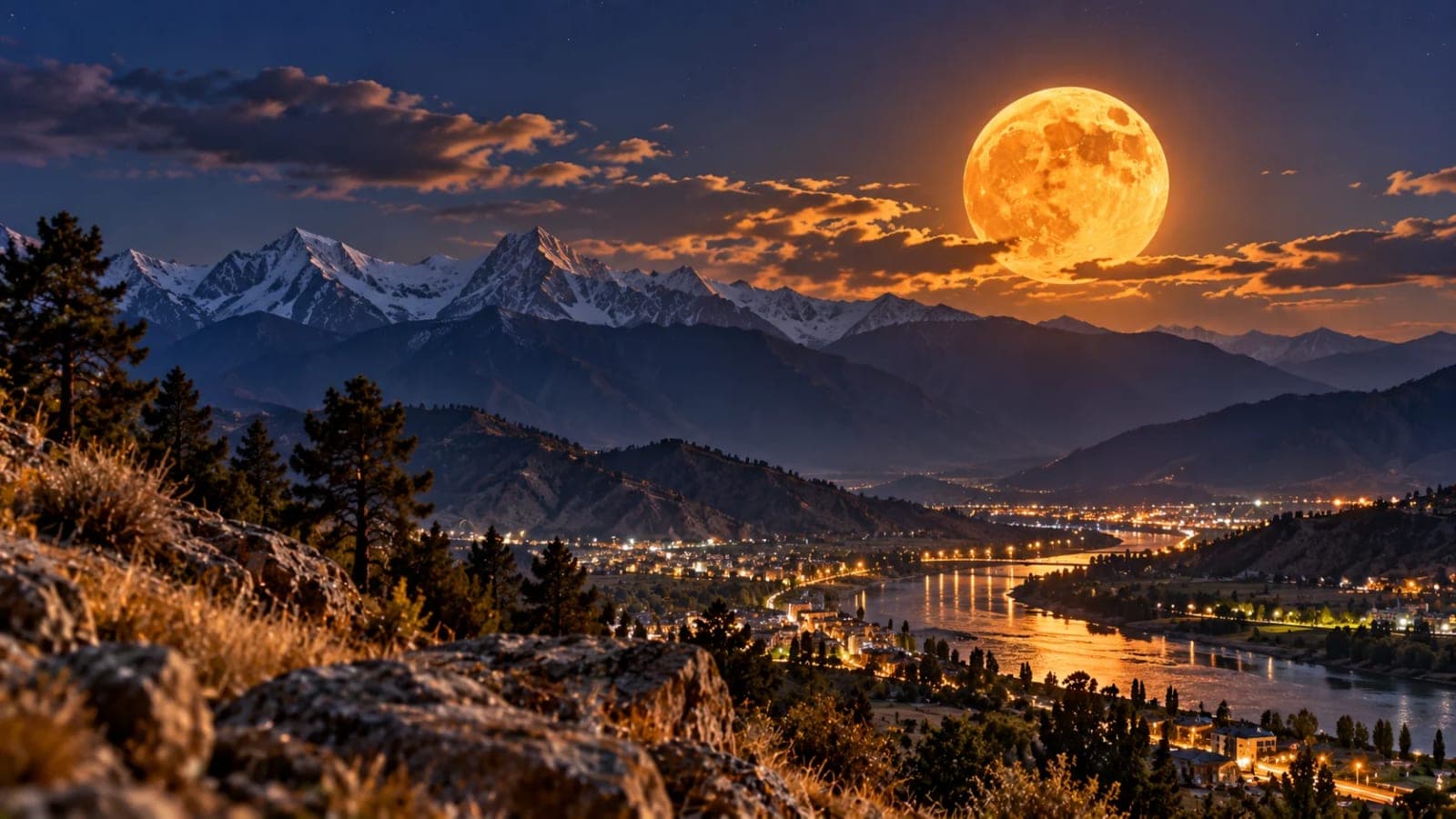
Skywatchers across Pakistan will have an opportunity to observe October's Hunter's Moon later this month, with the full moon reaching its peak on Monday, October 26, 2026.
The astronomical full moon occurs at approximately 9:11 a.m. Pakistan Standard Time, when the Moon is positioned opposite the Sun as viewed from Earth.
Although the precise moment occurs during the morning in Pakistan, the Moon will appear almost completely illuminated on the surrounding evenings.
This makes October 25 and 26 particularly attractive dates for people hoping to enjoy the view.
The Hunter's Moon is one of the traditional names associated with the full moon that follows the Harvest Moon.
Its name reflects seasonal customs in parts of North America and Europe, where autumn hunting and food preparation were historically associated with the approach of winter.
For modern observers, the event offers a chance to appreciate the Moon's changing appearance, explore basic astronomy and photograph the night sky.
No telescope or specialist equipment is required.
However, choosing the right viewing location and understanding the Moon's rising time can make the experience considerably more enjoyable.
When Is the Hunter's Moon October 2026?
The Hunter's Moon October 2026 reaches its exact full phase on Monday, October 26.
According to astronomical calculations, the full moon occurs at approximately 04:11–04:12 Coordinated Universal Time.
Pakistan is five hours ahead of UTC.
That places the event at approximately 9:11–9:12 a.m. Pakistan Standard Time.
The one-minute difference between published calculations reflects rounding and the astronomical references used.
Hunter's Moon 2026 Date and Time
| Event | Date and time |
|---|---|
| Full Moon | Monday, October 26, 2026 |
| Pakistan Standard Time | Approximately 9:11–9:12 AM |
| Coordinated Universal Time | Approximately 04:11–04:12 UTC |
| Recommended viewing evenings | October 25 and 26 |
| Other nearly full viewing night | October 27 |
| Equipment required | None |
The timing of the exact full phase is the same instant worldwide.
Only the local clock time changes according to the observer's time zone.
Can the Hunter's Moon Be Seen in Pakistan?
Yes.
The October full moon can be observed from Pakistan wherever the Moon is above the horizon and weather conditions allow.
People in Islamabad, Lahore, Karachi, Peshawar, Quetta and other cities can look for it during the evenings around October 26.
The main challenges are likely to be local cloud cover, haze, buildings and other obstructions.
Will Everyone See It at the Same Time?
The exact full phase happens simultaneously around the world.
However, moonrise and moonset times vary depending on location.
For this reason, a person in Karachi may see the Moon rise at a different clock time from someone in Islamabad.
Observers should check their city's moonrise forecast rather than relying on a single nationwide time.
What Is the Best Time to Watch the Hunter's Moon in Pakistan?
For most casual observers, the most attractive viewing opportunity is around moonrise on October 25 or 26.
A full moon generally rises near sunset and remains visible for much of the night.
The exact relationship between sunset and moonrise varies with location and date.
On October 25, the Moon will already be extremely close to full illumination.
On October 26, it will remain visually impressive despite the exact full phase having occurred earlier in the morning.
Why Moonrise Is a Popular Viewing Time
The Moon can look especially dramatic when it is low above the horizon.
Buildings, trees, hills and other familiar objects provide a sense of scale.
Warm colours may also make the rising Moon appear different from its appearance high in the sky.
This creates opportunities for landscape photography and casual observation.
Should You Watch on October 25 or 26?
Both evenings are suitable.
The better choice depends on local weather, visibility and the Moon's position relative to the horizon.
October 25 may provide an attractive nearly full moonrise.
October 26 is the official full moon date and offers another opportunity to observe the bright lunar disk.
People unable to watch on either date can still enjoy a nearly full Moon on October 27.
Why Is It Called the Hunter's Moon?
The name Hunter's Moon comes from traditional seasonal naming systems.
It is commonly associated with the full moon following the Harvest Moon.
Historically, the period after the autumn harvest was an important time for preparing food supplies ahead of winter.
In some communities, hunters used the season to obtain food after crops had been gathered.
The bright Moon provided additional evening illumination.
Does the Name Have a Scientific Meaning?
No.
Hunter's Moon is a traditional name rather than a separate astronomical category.
The Moon does not become physically different because it is called the Hunter's Moon.
Its appearance is governed by the same orbital and lighting conditions that produce every other full moon.
The name reflects cultural history rather than a unique change in the Moon's physical properties.
What Is the Difference Between a Hunter's Moon and a Harvest Moon?
The Harvest Moon is the full moon closest to the September equinox.
The Hunter's Moon traditionally follows it.
In 2026, the September 26 full moon was the Harvest Moon.
The October 26 full moon is therefore known as the Hunter's Moon.
Why Does the Harvest Moon Change Dates?
The lunar cycle does not align exactly with the calendar year.
A full moon occurs approximately every 29.5 days.
Because the September equinox happens at a particular point in the solar year, the nearest full moon can fall in September or October.
This means the traditional names do not always correspond to the same calendar months.
The Hunter's Moon may occur in October or November depending on the year.
Why Does the Full Moon Look Round?
The Moon does not produce its own visible light.
Instead, it reflects sunlight.
As the Moon orbits Earth, we see different portions of its sunlit half.
These changing appearances are known as lunar phases.
During a full moon, the Moon is positioned approximately opposite the Sun in Earth's sky.
The side facing Earth appears almost completely illuminated.
Is the Moon Perfectly Full for an Entire Night?
No.
Astronomically, the exact full phase occurs at a particular instant.
However, the difference in illumination immediately before and after that moment is difficult to notice with the naked eye.
That is why the Moon can look full for more than one night.
For October 2026, observers can expect a nearly complete lunar disk across several evenings around October 26.
Why Can the Hunter's Moon Look Orange?
A rising Moon may appear yellow, orange or reddish when it is close to the horizon.
This effect is mainly caused by Earth's atmosphere.
Moonlight travelling through a longer atmospheric path experiences more scattering.
Shorter wavelengths of light are scattered more strongly, allowing warmer colours to become more prominent.
Dust, smoke and haze can also influence the appearance.
Will the Moon Be Orange Everywhere?
Not necessarily.
The colour depends on atmospheric conditions and viewing angle.
In a clear sky, the Moon may appear pale yellow near the horizon and become whiter as it rises.
In hazy conditions, it may look more orange or reddish.
These changes do not mean the Moon itself has changed colour.
They result from the way its light travels through the atmosphere.
Why Does the Moon Look Bigger Near the Horizon?
The Moon often seems unusually large when it appears beside buildings, trees or distant mountains.
This visual experience is known as the moon illusion.
The Moon's apparent size can seem different depending on surrounding visual references.
However, its angular diameter does not suddenly increase when it approaches the horizon.
Is the Moon Actually Growing Larger?
No.
The Moon does not expand when it rises.
Its distance from Earth changes gradually throughout its orbit, but that is separate from the familiar moon illusion.
A photograph taken with the same focal length can help demonstrate that the apparent enlargement near the horizon is largely perceptual.
Is the October 2026 Hunter's Moon a Supermoon?
The October 2026 Hunter's Moon is not generally classified as a supermoon in the published astronomy calendars consulted for this article.
A supermoon is an informal term used when a full moon occurs relatively close to the Moon's nearest point to Earth.
Different sources sometimes use slightly different thresholds.
That can lead to differences in which full moons are labelled supermoons.
Does a Supermoon Look Much Bigger?
A supermoon may appear somewhat larger and brighter than a full moon occurring farther from Earth.
However, the difference is often difficult to recognise without a direct comparison.
A full moon does not need to qualify as a supermoon to provide an impressive viewing experience.
The Hunter's Moon can still be visually striking, particularly near the horizon.
Where Are the Best Places to See the Hunter's Moon in Pakistan?
The most useful viewing location is somewhere with a clear view toward the eastern horizon.
Open spaces, elevated viewpoints and areas away from dense buildings can improve visibility.
For casual observation, an unobstructed view matters more than travelling to a famous destination.
Watching From Islamabad
People in Islamabad can choose safe open areas with a clear eastern view.
Hills and buildings may obstruct the Moon when it is low.
A slightly elevated location may help, provided access is permitted and conditions are safe.
Watching From Lahore
In Lahore, haze and urban lighting may affect the experience.
The Moon is bright enough to remain visible in many city environments, but atmospheric conditions can reduce clarity.
An open rooftop or other safe location may provide a useful view.
Watching From Karachi
Karachi observers can look for an unobstructed horizon and check local cloud conditions.
Coastal weather may influence visibility.
A clear sky is more important than a particular landmark.
Watching From Northern Pakistan
Mountain landscapes can provide dramatic scenery for lunar photography.
However, surrounding peaks may delay the Moon's first appearance above the visible horizon.
Weather can also change quickly in mountainous regions.
Visitors should prioritise safe access and avoid unnecessary nighttime travel.
Do You Need a Telescope to See the Hunter's Moon?
No.
The Moon is easily visible without optical equipment.
Its bright appearance makes it one of the simplest astronomical objects to observe.
Binoculars can reveal additional surface detail.
A small telescope may provide closer views of craters and other lunar features.
However, the full moon is not always the best phase for observing surface relief.
Why Craters Can Look Better at Other Phases
Craters and mountains become easier to distinguish when sunlight strikes the lunar surface at a low angle.
This creates shadows that reveal changes in elevation.
Near the full moon, sunlight falls more directly on the visible surface.
Many shadows become less pronounced.
Observers interested in detailed lunar geology may prefer the first-quarter or last-quarter phases.
How to Photograph the Hunter's Moon With a Smartphone
Modern smartphones can capture attractive photographs of the Moon, particularly when the composition includes a landscape.
However, the Moon is much brighter than the surrounding night sky.
Automatic camera exposure can therefore produce a white circle without visible detail.
Adjust the Exposure
If the camera supports manual exposure control, reduce exposure until the lunar surface is no longer excessively bright.
Some smartphones allow users to tap the Moon and adjust brightness.
The available controls vary between devices.
Keep the Phone Steady
Camera movement can blur night photographs.
A tripod or stable support can improve sharpness.
Using a timer can reduce movement caused by touching the shutter button.
Avoid Excessive Digital Zoom
Digital zoom can make the Moon appear larger on the screen without adding genuine optical detail.
The result may look soft or artificially sharpened.
If the phone has a dedicated telephoto camera, it may provide better results than relying entirely on digital enlargement.
How to Photograph the Hunter's Moon With a DSLR or Mirrorless Camera
A camera with manual exposure settings provides greater control.
A telephoto lens is useful for close-up photographs of the lunar disk.
A wider lens can capture the Moon alongside buildings, trees or mountains.
Use a Suitable Shutter Speed
Because the Moon is bright, extremely long exposures are generally unnecessary for a detailed lunar photograph.
A relatively fast shutter speed can help prevent motion blur.
The ideal setting depends on the camera, lens and lighting conditions.
Focus Carefully
Autofocus may struggle in low-light conditions.
Manual focus or magnified live view can help achieve sharper results.
Photographers should review test images rather than assuming the first exposure is correct.
Plan the Composition
A Moon photograph often becomes more interesting when the surrounding environment provides context.
A distant building, mountain ridge or distinctive landscape can create a strong composition.
Photographers should avoid unsafe locations or restricted areas when trying to capture a particular angle.
What Weather Conditions Are Best for Moon Watching?
Clear skies offer the best chance of seeing the Hunter's Moon.
Cloud cover can hide the Moon entirely or partially obscure it.
Thin clouds may create atmospheric effects, but they can also reduce sharpness.
Haze, dust and smoke can affect visibility near the horizon.
Does Light Pollution Matter?
Light pollution is a major problem for observing faint stars and galaxies.
However, the full moon is bright enough to be seen from most cities when skies are clear.
Travelling far from urban lights is therefore not essential for simply viewing the Hunter's Moon.
A darker location may improve the surrounding landscape and night-sky experience.
When Should You Check the Forecast?
Weather forecasts become more useful as the viewing date approaches.
Skywatchers should check local conditions on October 24, 25 and 26.
If one evening looks cloudy, another nearby date may provide a better opportunity.
What Are the Main Moon Phases in October 2026?
The Moon passes through several familiar phases during October.
These phases reflect changes in the portion of its illuminated surface visible from Earth.
| Lunar phase | Pakistan date | Approximate Pakistan time |
|---|---|---|
| Last Quarter | October 3 | 6:25 PM |
| New Moon | October 10 | 8:50 PM |
| First Quarter | October 18 | 9:12 PM |
| Full Moon | October 26 | 9:11–9:12 AM |
These times are based on published astronomical calculations converted to Pakistan Standard Time.
What Happens After the Full Moon?
After October 26, the Moon enters its waning gibbous phase.
The illuminated portion visible from Earth gradually decreases.
The Moon also tends to rise later each evening.
Eventually, it reaches the last-quarter phase and continues toward the next new moon.
Is the Hunter's Moon Connected to a Lunar Eclipse?
No lunar eclipse is associated with the October 26, 2026 Hunter's Moon.
A lunar eclipse occurs when Earth passes between the Sun and the Moon in a way that causes Earth's shadow to fall on the lunar surface.
Although every lunar eclipse happens during a full moon, most full moons do not produce eclipses.
This is because the Moon's orbit is tilted relative to Earth's orbit around the Sun.
Will the Hunter's Moon Turn Blood Red?
There is no scheduled total lunar eclipse associated with this full moon.
The Moon may appear orange or reddish near the horizon because of atmospheric effects.
That is different from the deep reddish appearance sometimes seen during a total lunar eclipse.
Readers should not confuse the two phenomena.
Does the Hunter's Moon Affect Human Behaviour?
Full moons have inspired stories and beliefs in many cultures.
Some people associate them with changes in sleep, mood or behaviour.
However, scientific evidence has not established that a full moon reliably causes major changes in human behaviour.
Individual experiences can be influenced by many factors.
Can the Full Moon Affect Sleep?
Some studies have explored possible relationships between lunar phases and sleep patterns.
The findings are not sufficiently consistent to support sweeping claims.
A bright Moon may affect the amount of light entering a bedroom, particularly where curtains are open.
However, that is different from claiming that lunar phases directly control human emotions or health.
What Is the Next Full Moon After October 2026?
The next full moon after the Hunter's Moon will occur on November 24, 2026.
It is traditionally known as the Beaver Moon.
The December full moon will follow on December 23 or 24, depending on the observer's time zone.
These names are cultural conventions rather than scientific classifications.
Why Do Full Moon Names Change?
Traditional names often reflect seasonal activities, wildlife or weather conditions.
Different cultures use different naming systems.
There is no single universal set of traditional full moon names.
Modern astronomy uses the same physical definitions of lunar phases regardless of the names applied to them.
How Can Families Enjoy the Hunter's Moon Safely?
Watching the Moon can be a simple educational activity.
Families can observe how the Moon changes position and appearance over several evenings.
Children can compare its colour near the horizon with its appearance later at night.
A basic lunar calendar can help explain the sequence of phases.
Simple Observation Activity
Observers can look at the Moon on October 25, 26 and 27.
They can record the approximate time, direction and visible shape.
Comparing observations can help demonstrate that the Moon's appearance changes gradually.
This activity requires no expensive equipment.
Safety Considerations
Choose a safe and accessible location.
Avoid standing near unprotected rooftop edges or travelling into remote areas without preparation.
If using a telescope, never point it toward the Sun.
Moon observation itself does not require special eye protection.
What Makes the Hunter's Moon Worth Watching?
The Hunter's Moon combines an accessible astronomical event with a long history of cultural traditions.
Its bright appearance makes it suitable for beginners.
It also provides an opportunity to learn about lunar phases, atmospheric colour and the relationship between Earth, the Moon and the Sun.
For photographers, the rising Moon can create memorable landscape compositions.
For families, it offers an easy way to explore astronomy together.
Most importantly, the event can be enjoyed without purchasing specialised equipment or travelling long distances.
Conclusion
The Hunter's Moon October 2026 will reach its full phase on Monday, October 26, at approximately 9:11–9:12 a.m. Pakistan Standard Time.
Although the exact moment occurs during daylight in Pakistan, skywatchers can enjoy a nearly full Moon on the evenings of October 25 and 26.
The best experience will depend on clear skies, a suitable viewing location and local moonrise conditions.
The Hunter's Moon is a traditional name for the full moon following the Harvest Moon, rather than a separate astronomical phenomenon.
It is not an eclipse, and its dramatic appearance near the horizon does not mean the Moon has suddenly grown larger.
For people across Pakistan, the event provides a simple opportunity to enjoy the night sky, practise photography and learn more about Earth's natural satellite.
Frequently Asked Questions
1. When is the Hunter's Moon in Pakistan in 2026?
The Hunter's Moon reaches its exact full phase on Monday, October 26, 2026, at approximately 9:11–9:12 a.m. Pakistan Standard Time.
2. What is the best night to see the Hunter's Moon?
October 25 and 26 are both excellent choices, weather permitting. The Moon will also appear nearly full on October 27.
3. Can the Hunter's Moon be seen without a telescope?
Yes. The Moon is easily visible with the naked eye when it is above the horizon and skies are clear.
4. Will the Hunter's Moon appear orange?
It may look yellow, orange or reddish when close to the horizon because of atmospheric scattering. Its appearance depends on local conditions.
5. Is the Hunter's Moon October 2026 a supermoon or lunar eclipse?
The October 2026 Hunter's Moon is not generally classified as a supermoon, and no lunar eclipse is associated with this full moon.
Editorial Note: Astronomical phase times are calculated in advance, but local visibility depends on weather, terrain and the observer's exact location. Moonrise times should be checked for the relevant city before viewing.
What happens next for global
We will keep this page updated as the story develops rather than publishing a near-duplicate at a new address. Follow Global for related coverage.
Get the Verified Brief
One email each morning with the stories we checked overnight.
Spotted an error? Read our corrections policy and tell the newsroom.