

UK Vaping vs Smoking 2026: Why E-Cigarette Users Now Outnumber Smokers
UK vaping vs smoking 2026 statistics reveal 5.4 million vapers and 4.8 million smokers in Great Britain. Explore health risks, age trends and new laws.

By News Desk · Verified Pakistan News Desk
Published · Updated · 14 min read
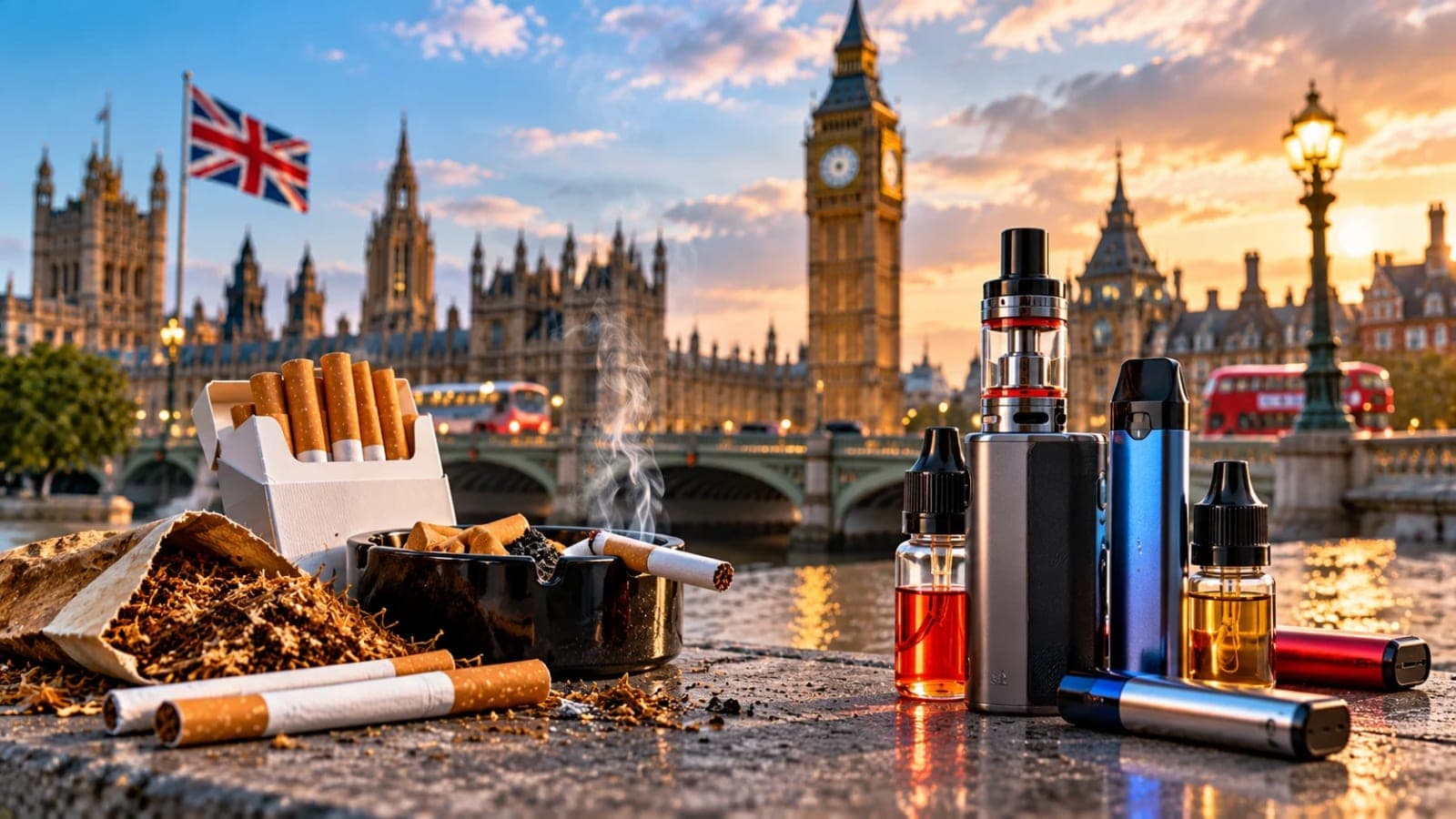
Vaping has become more common than cigarette smoking among adults in Great Britain for the second consecutive year, according to new figures released by the Office for National Statistics.
The findings, published on October 6, 2026, reveal a significant shift in how people use nicotine products.
An estimated 5.4 million adults aged 16 and over reported using e-cigarettes daily or occasionally in 2025. By comparison, approximately 4.8 million adults in the same survey reported smoking cigarettes.
The results also highlight a growing public health concern: around 1.1 million people who have never smoked cigarettes now use e-cigarettes.
That figure has increased from approximately 940,000 in 2024.
Meanwhile, traditional smoking continues its long-term decline. A separate UK-wide survey estimates that 9.8% of adults smoked cigarettes in 2025, the lowest proportion recorded in that statistical series.
The latest figures present two very different developments.
Fewer people are smoking tobacco, which is an important public health achievement. However, the growing popularity of vaping among people who have never smoked raises questions about nicotine dependence and long-term health effects.
UK Vaping vs Smoking 2026: What Do the Latest Figures Show?
The Office for National Statistics has reported that e-cigarette use remained more common than cigarette smoking in Great Britain during 2025.
The figures come from the Opinions and Lifestyle Survey, which covers adults aged 16 and over in England, Scotland and Wales.
Approximately 9.9% of respondents reported vaping daily or occasionally.
The equivalent proportion reporting cigarette smoking was 8.7%.
These percentages translate into around 5.4 million e-cigarette users and 4.8 million smokers.
The same pattern was observed in 2024, when vaping first overtook smoking in this survey.
Latest UK Vaping and Smoking Statistics
| Indicator | Latest figure | Coverage |
|---|---|---|
| Adults using e-cigarettes | 5.4 million | Great Britain, ages 16+ |
| E-cigarette use prevalence | 9.9% | Great Britain, ages 16+ |
| Current cigarette smokers | 4.8 million | Great Britain, ages 16+ |
| Smoking prevalence in the same survey | 8.7% | Great Britain, ages 16+ |
| UK-wide smoking prevalence | 9.8% | United Kingdom, ages 18+ |
| Never-smokers who vape | 1.1 million | Great Britain |
The distinction between these surveys is important.
The UK-wide smoking estimate comes from the Annual Population Survey, which covers a different population and uses a different methodology.
It should not be directly compared with the vaping estimate from the Opinions and Lifestyle Survey.
Why Has Vaping Overtaken Smoking in Great Britain?
Several factors may contribute to the changing pattern of nicotine use.
Traditional cigarette smoking has declined over many years following public health campaigns, restrictions on tobacco advertising, smoke-free policies and increased awareness of smoking-related diseases.
At the same time, e-cigarettes have become widely recognised as an alternative nicotine-delivery product.
Some adults use vaping products while attempting to stop smoking.
Others continue vaping after they have stopped using cigarettes.
A growing number of people who have never smoked also report using e-cigarettes.
Is Vaping Increasing Every Year?
The long-term trend shows increased e-cigarette use since 2020.
However, the latest annual figures do not show a large overall increase between 2024 and 2025.
The ONS estimates that approximately 10.0% of adults in Great Britain used e-cigarettes in 2024, compared with 9.9% in 2025.
Both years produced an estimated total of around 5.4 million users.
Therefore, the latest headline is mainly about vaping remaining ahead of smoking, rather than a dramatic new increase in the total number of vapers.
How Many People Who Never Smoked Are Now Vaping?
One of the most closely watched findings concerns adults who have never smoked cigarettes.
The ONS estimates that approximately 1.1 million never-smokers used e-cigarettes daily or occasionally in 2025.
That represents around 2.9% of adults in the relevant never-smoking group.
In 2024, the corresponding estimate was approximately 940,000, or 2.7%.
The figures suggest that vaping is attracting some people who were not previously cigarette smokers.
Why Is This a Public Health Concern?
Vaping is often discussed as a potential alternative for adults who already smoke.
That creates a different risk-benefit calculation from someone who has never used tobacco.
A smoker who completely switches away from combustible cigarettes may reduce exposure to many harmful chemicals produced by burning tobacco.
A person who has never smoked does not receive the same benefit from beginning to vape.
Instead, they may become exposed to nicotine and other substances that they previously avoided.
This is why public health authorities advise non-smokers not to start vaping.
Which Age Group Vapes the Most in the UK?
Adults aged 25 to 34 now have the highest reported prevalence of e-cigarette use in Great Britain.
Approximately 16.4% of people in this age group reported vaping daily or occasionally in 2025.
That represents an increase from 12.9% in 2024.
The age group has overtaken people aged 16 to 24, who previously had the highest vaping prevalence.
Why Has the Age Pattern Changed?
There are several possible explanations.
Some people who began vaping at younger ages may have continued the habit as they grew older.
Vaping may also have become more popular among adults in their late twenties and early thirties.
Both developments could contribute to the change.
The ONS data identifies the pattern but does not prove a single cause.
What About Young Adults?
The decline in vaping prevalence among some younger groups should not be interpreted as evidence that nicotine use is no longer a concern.
Public health authorities remain focused on preventing nicotine initiation among young people.
The latest figures also show that changes can occur differently across age groups.
Are Men or Women More Likely to Vape?
The ONS found relatively similar overall vaping rates among men and women.
Approximately 10.2% of men aged 16 and over reported e-cigarette use in 2025.
The equivalent figure for women was 9.6%.
However, some age-specific patterns differed.
Among women aged 25 to 34, vaping prevalence reached approximately 18.3%.
This was a particularly notable figure in the latest survey.
Why Gender Differences Matter
Understanding demographic patterns helps public health officials identify groups that may benefit from targeted information.
However, differences between survey groups do not necessarily explain why individuals begin or continue vaping.
Social circumstances, smoking history and personal preferences may all play a role.
Public health campaigns should avoid assuming that everyone in a particular demographic has the same reasons for using nicotine products.
How Much Has Cigarette Smoking Declined in the UK?
Traditional smoking has fallen substantially over the past decade.
According to the ONS Annual Population Survey, 20.2% of adults aged 18 and over smoked cigarettes in 2011.
By 2025, that figure had declined to 9.8%.
This represents a reduction of 10.4 percentage points.
The estimated number of adult smokers was approximately 4.9 million in 2025.
Why Is This Decline Important?
Cigarette smoking is a major preventable cause of disease.
It is associated with lung cancer, cardiovascular disease, chronic respiratory illness and several other serious health conditions.
Reducing smoking prevalence can therefore produce substantial long-term public health benefits.
The latest data suggests that the United Kingdom has continued making progress in reducing cigarette use.
However, millions of adults still smoke, and the health burden remains significant.
Which Age Group Has the Highest Smoking Rate?
Adults aged 45 to 54 had the highest cigarette smoking prevalence in the UK during 2025.
The ONS estimated that 12.4% of people in this age group smoked.
Younger adults showed a different pattern.
Among people aged 18 to 24, smoking prevalence fell from 25.7% in 2011 to 7.2% in 2025.
That represents a decline of 18.5 percentage points.
What Does the Youth Smoking Decline Suggest?
The figures indicate a major generational change in cigarette smoking.
However, a decline in cigarette use does not automatically mean that all nicotine consumption is falling at the same rate.
Vaping and smoking need to be measured separately.
Researchers also need to consider whether people are quitting nicotine entirely, switching products or using multiple products.
Is Vaping Safer Than Cigarette Smoking?
The UK's National Health Service states that vaping exposes users to fewer toxins than smoking cigarettes.
This is because cigarettes burn tobacco, producing smoke that contains numerous harmful chemicals.
E-cigarettes heat a liquid to create an aerosol rather than burning tobacco.
For an adult who already smokes, completely switching to vaping may reduce exposure to many toxic substances associated with cigarette smoke.
However, reduced harm does not mean vaping is harmless.
What Are the Health Risks of Vaping?
Many e-cigarettes contain nicotine, which is addictive.
Vaping aerosols can also contain substances that may irritate the respiratory system.
The long-term effects of sustained vaping remain an area of scientific investigation.
Product characteristics and patterns of use vary, making broad comparisons difficult.
Should Non-Smokers Start Vaping?
No.
The NHS advises people who do not smoke to avoid vaping.
People who have never smoked do not need an alternative to cigarette smoking.
Beginning to vape may introduce nicotine dependence and other avoidable exposures.
The same principle applies to young people who have not previously used tobacco.
Can Vaping Help Adults Quit Smoking?
Evidence indicates that nicotine-containing e-cigarettes can help some adults stop smoking when used as part of an appropriate quitting strategy.
For a smoker, the most important objective is to stop using combustible tobacco.
Completely replacing cigarettes is generally more beneficial than continuing to smoke.
However, vaping is not the only smoking cessation option.
Other approaches include behavioural support and approved nicotine replacement therapies.
Why Complete Switching Matters
A person who continues smoking while also vaping may remain exposed to the serious risks associated with cigarettes.
This is sometimes called dual use.
The health implications depend on the pattern and amount of cigarette smoking.
People seeking to quit should consider professional cessation support rather than assuming that simply adding vaping will remove smoking-related risks.
What Is Dual Use of Cigarettes and E-Cigarettes?
Dual use occurs when a person uses both cigarettes and vaping products.
According to the ONS, approximately 33.8% of current smokers in Great Britain also reported using e-cigarettes daily or occasionally in 2025.
Among former smokers, the corresponding figure was approximately 20.7%.
These findings show that the relationship between smoking and vaping is complex.
Not everyone who vapes has stopped smoking.
Does Dual Use Mean Someone Is Trying to Quit?
Not necessarily.
Some people may use e-cigarettes as part of a quit attempt.
Others may use them in situations where cigarette smoking is restricted.
The ONS figures do not establish the motivation of every dual user.
It is therefore inaccurate to describe all people who use both products as successfully transitioning away from tobacco.
What Are the UK's New Tobacco Laws?
The United Kingdom has been pursuing legislation intended to reduce tobacco use among future generations.
The Tobacco and Vapes Bill includes measures aimed at creating a smoke-free generation.
A central proposal would prevent the legal sale of tobacco to people born on or after January 1, 2009.
The policy is designed to progressively raise the age at which tobacco can legally be sold.
Is the Generational Tobacco Ban Already in Force?
The proposed restriction should not be described as fully implemented unless the relevant legislation has completed the required process and entered into force.
As of October 9, 2026, it is important to distinguish the government's legislative plans from provisions already legally effective.
The precise commencement dates depend on the final legislation and official implementation arrangements.
Why Does the Government Want These Restrictions?
The aim is to reduce tobacco initiation among younger generations.
Preventing people from starting smoking can help lower future rates of tobacco-related disease.
The government is also seeking to address concerns about vaping among children and young people.
What Does the UK Disposable Vape Ban Mean?
The UK introduced a ban on the sale and supply of single-use vapes in June 2025.
The measure addresses environmental concerns as well as the availability of disposable vaping products.
Single-use devices can contribute to electronic waste and battery disposal problems.
However, the ban does not mean all vaping products are prohibited.
Reusable devices remain subject to the applicable regulatory framework.
Has the Ban Eliminated Vaping?
No.
The latest ONS figures show that millions of adults continued to use e-cigarettes during 2025.
The data does not establish the full impact of the disposable vape ban because the measure took effect partway through the year.
A reliable assessment would require further evidence about purchasing patterns, product switching and enforcement.
What Can Pakistan Learn From the UK Vaping Trend?
Pakistan also faces public health challenges involving tobacco and nicotine products.
The UK experience demonstrates that a decline in cigarette smoking can occur alongside substantial use of alternative nicotine products.
This means policymakers should not measure progress solely by counting cigarette smokers.
They also need reliable information about vaping, nicotine dependence and use among people who have never smoked.
Why Accurate Surveys Matter
Reliable data helps distinguish between several groups.
These include adults who have completely stopped smoking, people who use both cigarettes and e-cigarettes, and never-smokers who begin vaping.
Each group presents different public health questions.
Pakistan-specific policy should be based on local evidence rather than assuming that British trends apply automatically.
What Happens Next for Smoking and Vaping in Britain?
Future ONS releases will help determine whether vaping remains more common than smoking.
Researchers will also be watching the number of never-smokers using e-cigarettes.
Changes among younger adults may provide important evidence about nicotine use patterns.
The implementation of new tobacco legislation and existing vape regulations will remain important policy developments.
What Should Health Authorities Monitor?
Important indicators include smoking prevalence, vaping prevalence, dual use and successful quitting.
Long-term health outcomes also require attention.
The challenge is to support adults who want to stop smoking while discouraging nicotine use among people who have never smoked.
Conclusion
The UK vaping vs smoking 2026 figures reveal a major change in nicotine consumption across Great Britain.
Approximately 5.4 million adults used e-cigarettes in 2025, compared with 4.8 million cigarette smokers in the same survey.
Vaping has therefore remained more common than smoking for a second consecutive year.
At the same time, UK-wide smoking prevalence has fallen to 9.8%, continuing a long-term public health improvement.
The growing number of never-smokers who vape presents a separate concern.
These developments demonstrate why vaping cannot be described as either entirely beneficial or entirely harmless.
For adult smokers, completely moving away from cigarettes may reduce exposure to harmful substances. For non-smokers, beginning to vape introduces unnecessary risks.
Future policy will need to balance smoking cessation, nicotine prevention and reliable scientific evidence.
Frequently Asked Questions
1. Is vaping more common than smoking in the UK in 2026?
The latest ONS data shows that vaping was more common than cigarette smoking in Great Britain during 2025, for the second consecutive year.
2. How many people vape in Great Britain?
Approximately 5.4 million adults aged 16 and over reported using e-cigarettes daily or occasionally in 2025.
3. How many people who never smoked now vape?
The ONS estimates that around 1.1 million adults who have never smoked cigarettes use e-cigarettes.
4. Is vaping completely safe?
No. Vaping is generally considered less harmful than smoking combustible cigarettes, but it is not risk-free, and its long-term health effects remain under investigation.
5. Which age group has the highest vaping rate?
Adults aged 25 to 34 had the highest vaping prevalence in Great Britain in 2025, at approximately 16.4%.
Health Disclaimer: This article provides general public health information. People seeking to quit smoking or manage nicotine dependence should consult qualified healthcare professionals or recognised smoking cessation services.
What happens next for global
We will keep this page updated as the story develops rather than publishing a near-duplicate at a new address. Follow Global for related coverage.
Get the Verified Brief
One email each morning with the stories we checked overnight.
Spotted an error? Read our corrections policy and tell the newsroom.