Mehfooz Dawa App Checks 92,000 Medicines for Pakistanis
The Mehfooz Dawa app lets you scan a medicine barcode and see in seconds whether it is genuine, what it should cost and when it expires.

By Suleman Mirza · Reporter
Published · Updated · 5 min read
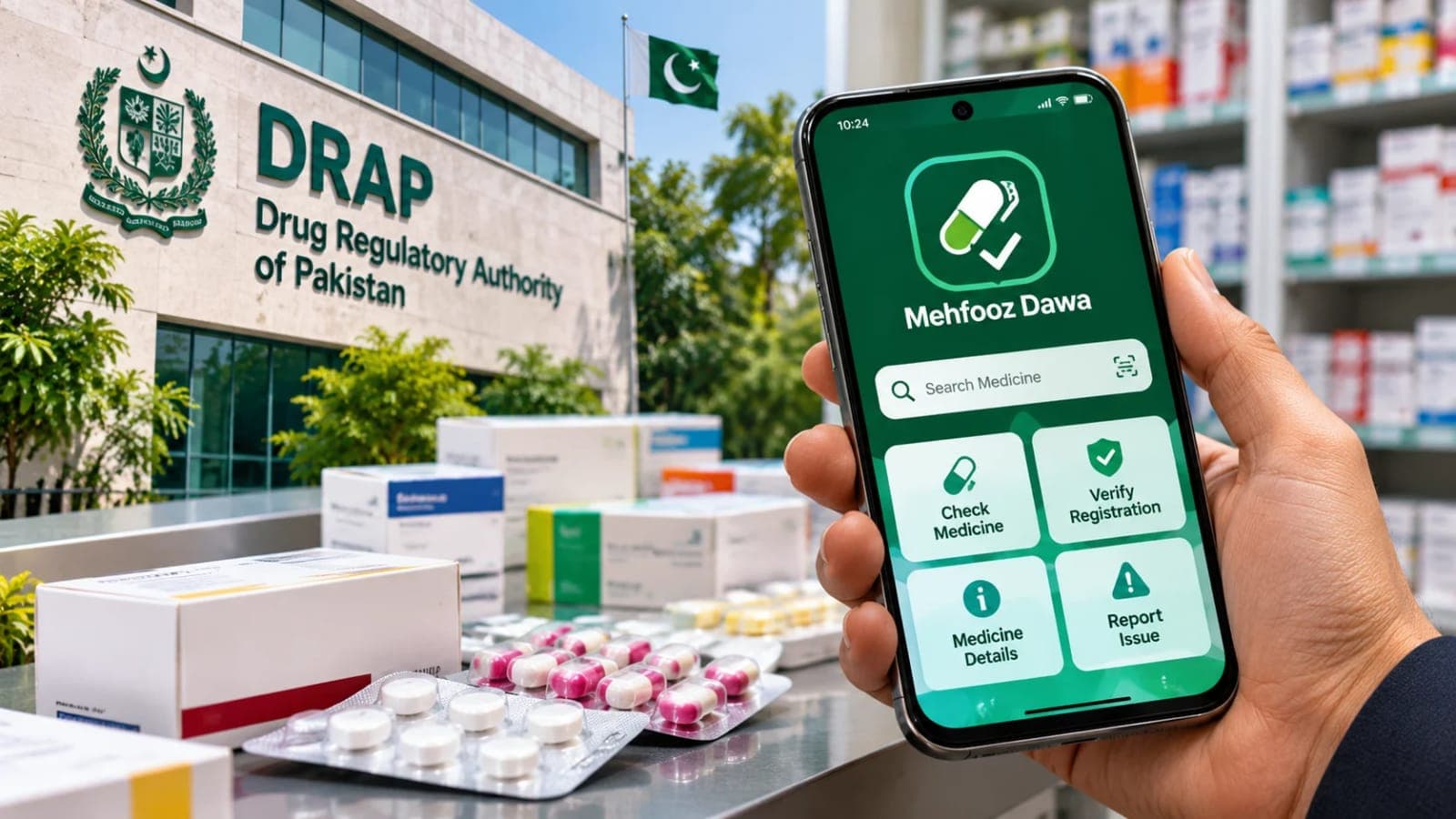
You pick up a strip of tablets from the pharmacy, pay for it, and walk home. On the way, a small doubt creeps in. Is this medicine real, or a fake copy? Until now, there was no simple way for an ordinary buyer to find out. The Mehfooz Dawa app changes that.
Launched by Prime Minister Shehbaz Sharif on 26 November 2026, it puts a medicine checker in your pocket.
The app was developed by the Ministry of National Health Services together with the Drug Regulatory Authority of Pakistan, known as DRAP. The Prime Minister called it a major milestone for public confidence in healthcare.
Health Minister Syed Mustafa Kamal said the aim was protecting innocent lives. A fake medicine is not just wasted money, it can decide whether a patient gets better or worse.
What the Mehfooz Dawa app does
The Mehfooz Dawa app is built around one simple idea. Every genuine medicine pack carries a barcode or a batch number, and the app checks that code against a database of registered medicines. That database holds details of around 92,000 medicines, with data shared by more than 700 pharmaceutical companies.
DRAP chief executive Dr Obaidullah Malik said putting it together had been an uphill task. It tackles three problems at once: counterfeit medicines, shortages, and quality compliance.
When you scan a pack, the app shows a green screen if the medicine is genuine and a red screen if it is counterfeit. The health minister pointed out that even people with limited literacy can read it at a glance. Green means go ahead. Red means stop and ask questions.
How to check your medicine in under a minute
Using the Mehfooz Dawa app takes less time than counting out change at the counter. Open it on your phone and point your camera at the barcode printed on the medicine pack. You can also type in the batch number. The app checks the code against the DRAP database and shows the result.
Do this before you leave the shop.
If the screen turns green, you can buy with confidence. If it turns red, do not take the medicine. Keep the pack and the receipt, and lodge a complaint through the app, so DRAP can follow up with the seller.
Price, expiry and complaints in one place
The Mehfooz Dawa app does three jobs, not one. The first is medicine verification. The second is complaints: if a medicine looks fake or its quality seems off, you can report it through the app and DRAP receives the complaint directly. The third is shortage reporting.
The scan also shows the registered price and expiry date, so overcharging can be spotted on the spot, and a pack past its expiry date shows up before you pay.
Medicine prices have risen sharply this year, so the price check matters most for families who buy the same medicine every month, where even a small overcharge adds up over a year. You can get the app on both the Android and Apple app stores.
Why this app exists
The launch carried a painful memory. At the ceremony, the Prime Minister recalled the deaths of around 100 heart patients at the Punjab Institute of Cardiology in 2010-11. The patients had been given the wrong medicine. Tests in London, Geneva and Paris later showed malaria medicines had been given to cardiac patients instead.
He said the lesson had to be turned into something practical. That history is why the government calls this a public safety tool.
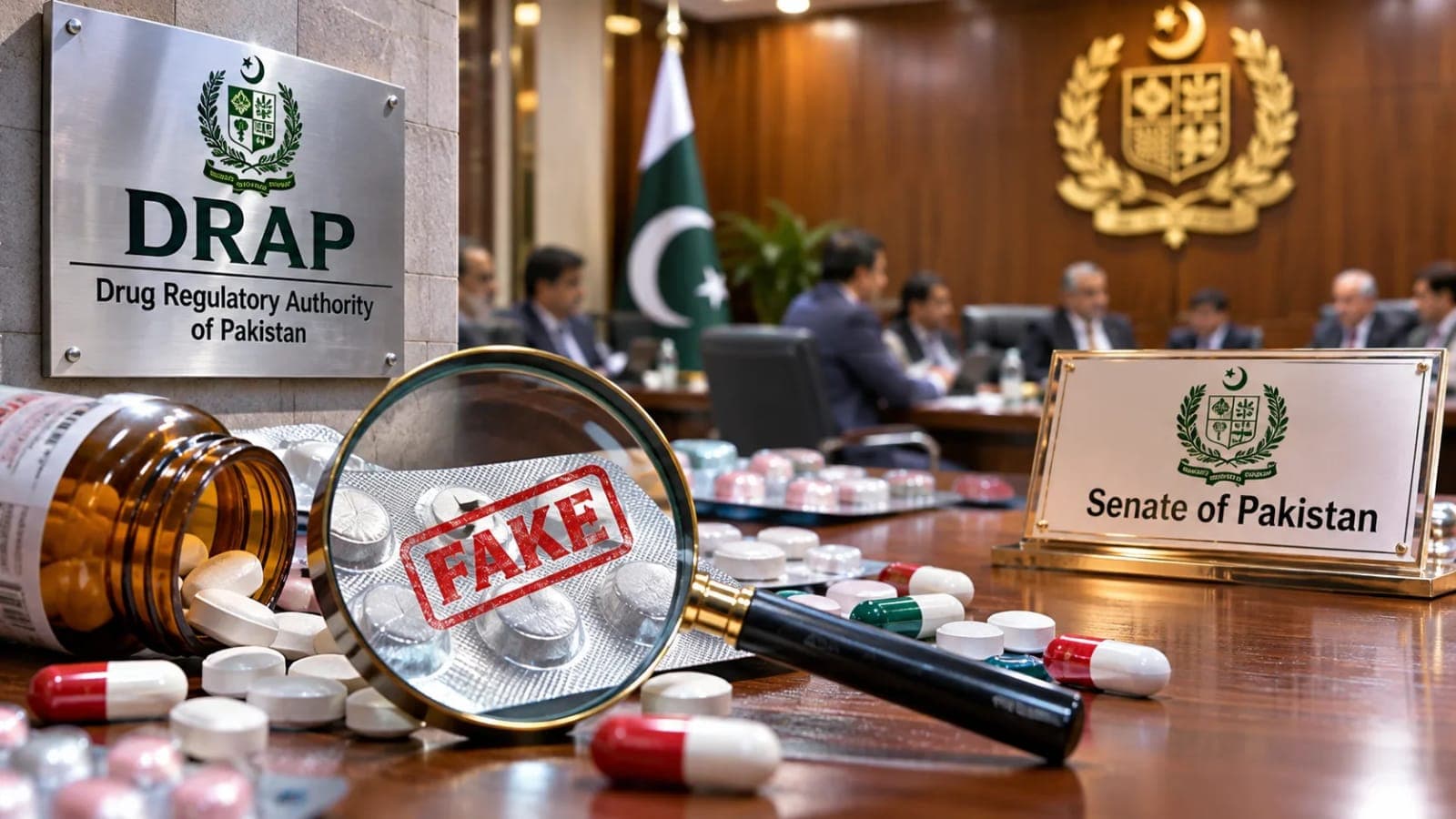
A weak copy of a heart medicine may feel no different at first, and weeks of treatment can be lost before anyone notices. Fake medicines have already drawn action from parliament, with a Senate panel summoning DRAP over the issue, and Punjab recently warned about fake flu vaccines reaching patients.
A long road to launch
The idea behind the app is not new. A barcode system for medicines was first proposed in 2015 and approved by the federal cabinet in 2017, but bureaucratic delays held it up for years. DRAP set 1 October 2026 as the cut-off date for the barcode system, and its track and trace system became operational on 9 October 2026.
The app is the public face of that system. The database is large, but it is not complete, and the system is still new. Some older packs may not carry the codes the app needs.
If a medicine does not appear in the app, that alone does not prove it is fake. Ask the pharmacist, keep the receipt, and report it through the app.
What to keep in mind
A green screen is a good sign, but it does not replace your doctor or pharmacist. Always buy from a licensed pharmacy, keep the receipt, and check the expiry date on the pack yourself too.
If a medicine makes you feel unwell in a way your doctor did not warn you about, seek medical advice. If you are buying medicine for an elderly parent or a child, scan their medicines for them with the Mehfooz Dawa app when you visit the pharmacy.
Frequently asked questions
What happens if the Mehfooz Dawa app shows a red screen? A red screen means the app could not confirm the medicine as genuine. Do not take it. Keep the pack and the receipt and lodge a complaint through the app, so DRAP can investigate the seller.
Can the Mehfooz Dawa app tell me the price of a medicine? Yes. When you scan a pack, the app shows the registered price alongside the expiry date, so you can check whether the shop is charging more than the official price.
What if my medicine is not found in the app? The database covers around 92,000 medicines, but it is still growing. A medicine that does not appear is not automatically fake. Ask the pharmacist and report it through the app.
What happens next for tech
We will keep this page updated as the story develops rather than publishing a near-duplicate at a new address. Follow Tech for related coverage.
Get the Verified Brief
One email each morning with the stories we checked overnight.
Spotted an error? Read our corrections policy and tell the newsroom.