
Pakistan Dairy Sector Could Generate Nearly Rs. 500 Billion in Annual Revenue
Pakistan’s dairy sector could generate nearly Rs. 500 billion in annual government revenue by bringing more of the informal milk market into the formal economy.

By News Desk · Verified Pakistan News Desk
Published · Updated · 6 min read
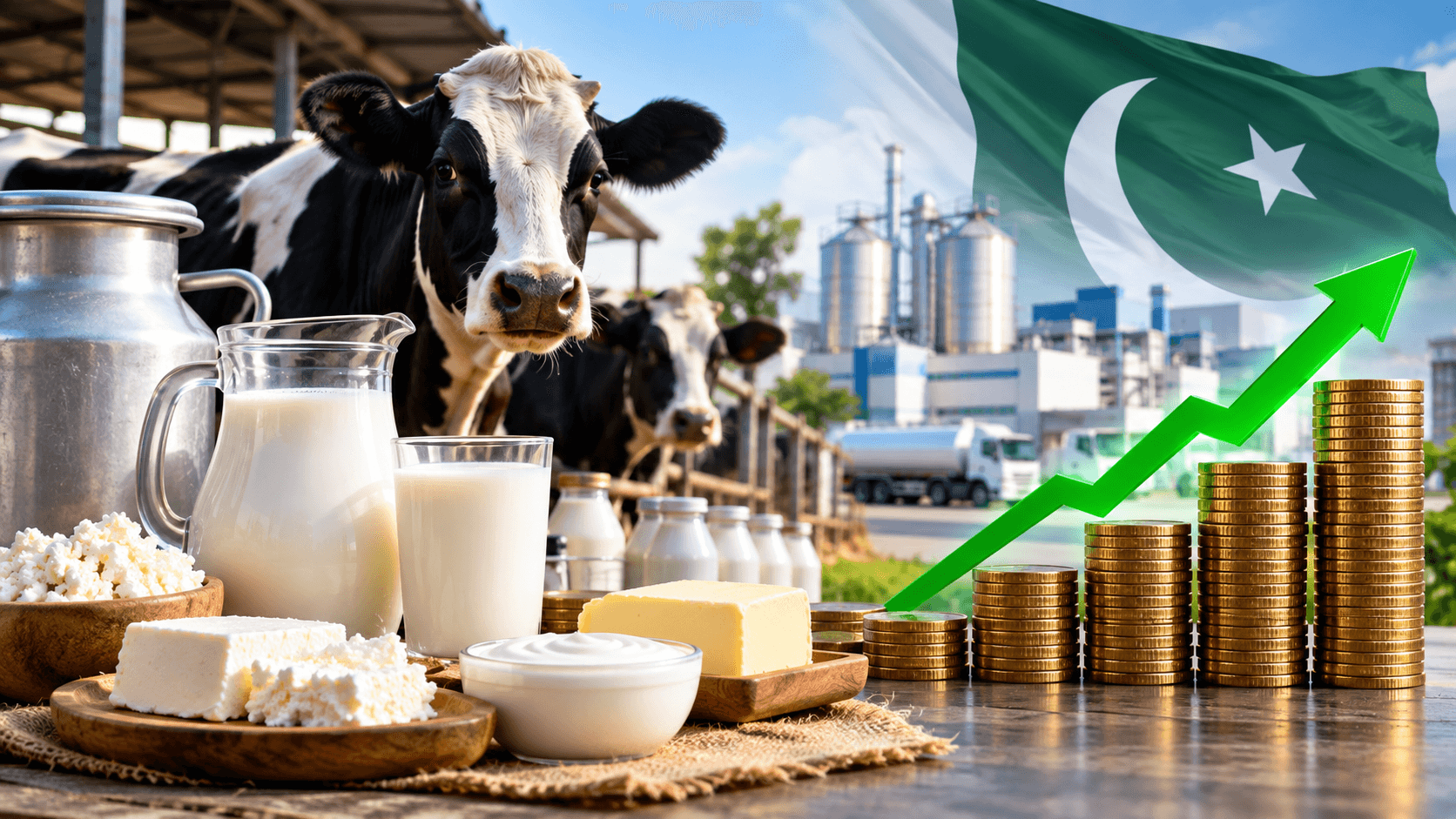
Pakistan’s dairy industry has the potential to generate nearly Rs. 500 billion in additional annual government revenue if a larger part of the informal milk market is brought into the documented economy.
The estimate was shared by Pakistan Dairy Association Chairman Usman Zaheer Ahmed during the Pakistan Agricultural Coalition’s Agri Connections Conference and Expo held at Lahore Expo Center on October 1 and 2, 2026.
Ahmed said that formalising and taxing even half of the informal dairy market at a minimum rate of 5% could potentially bring around Rs. 250 billion a year into government revenues. Bringing a much larger portion of the sector into the formal economy could push that potential close to Rs. 500 billion.
The figure highlights an unusual situation in Pakistan. The country is already one of the world’s major milk producers, yet much of the business surrounding milk production, collection and sale remains outside organised processing and documented supply chains.
Pakistan’s Dairy Industry Has Huge Economic Potential
Pakistan has a massive livestock and dairy base. Recent research published by the Pakistan Institute of Development Economics describes the country as the world’s fourth-largest milk producer, with estimated annual production of around 72 billion litres.
The same research estimates that more than 11 million farming families depend on the dairy sector for their livelihoods. Small farmers remain particularly important: roughly 95% of farmers have fewer than 10 animals, while smallholders collectively supply a large majority of the country’s milk.
This scale gives Pakistan an advantage that many countries would struggle to build from scratch.
However, producing large quantities of milk doesn’t automatically translate into high tax revenue, strong exports or greater farmer incomes. Milk needs reliable collection systems, quality testing, cold storage, modern processing and access to organised markets before the full economic value of production can be captured.
A significant informal market makes that transition harder.
Why Formalising the Dairy Market Matters
Bringing more dairy businesses into the formal economy could have benefits beyond tax collection.
A documented supply chain can make it easier to introduce milk-quality standards, trace products, attract investment and give farmers access to organised buyers. Better processing and storage can also create opportunities to turn raw milk into higher-value products such as cheese, butter, ghee and other dairy products.
The federal government has already acknowledged some of these challenges.
In April 2026, Federal Minister for National Food Security and Research Rana Tanveer Hussain called for greater formalisation, better livestock management and improvements in milk quality. He also highlighted the importance of cold storage, processing facilities and more efficient dairy supply systems.
There is an important balance to maintain, though. Formalisation needs to improve productivity and compliance without placing unnecessary pressure on small farmers or making basic dairy products unaffordable for consumers.
For that reason, taxation is only one part of the wider discussion.
Farmers Still Face Finance, Climate and Infrastructure Problems
Pakistan’s agricultural economy continues to face structural problems that could limit the dairy sector’s growth.
At the Lahore conference, State Bank of Pakistan Deputy Governor Salimullah highlighted agricultural risk, inadequate insurance, a shortage of accredited warehouses and limited access to finance as major barriers to agricultural lending.
Climate conditions add another layer of difficulty.
Federal Minister Rana Tanveer Hussain told participants that floods are becoming increasingly damaging for farmers, destroying crops and livestock. He also pointed to longer heat waves and growing pressure on Pakistan’s water resources.
These problems matter directly to dairy farmers. Healthy animals require reliable water, feed, veterinary care and protection from extreme weather. When any of these becomes expensive or difficult to obtain, milk productivity and farmers’ earnings can suffer.
Greater access to finance, insurance and modern farming practices could therefore be just as important as expanding the tax base.
Pakistan Could Turn Dairy Production Into an Export Opportunity
Pakistan’s huge milk output also creates an opportunity beyond the domestic market.
Research published by PIDE in 2026 found that the dairy industry remains underused in international markets despite Pakistan’s large production base. Traditional processing, limited mechanisation and low levels of value addition continue to restrict export growth.
The research suggests that Pakistan could focus more heavily on processed and higher-value products, including cheese, butter, ghee and specialised dairy products.
There is also considerable demand in nearby international markets, particularly across the Middle East and Asia.
The challenge is moving from simply producing large volumes of milk to building an industry capable of consistently meeting international standards.
That requires better farm productivity, modern processing plants, reliable cold-chain infrastructure, animal disease control, food-safety systems and clear regulations.
The Rs. 500 billion estimate should therefore be understood as an indication of the dairy sector’s potential rather than guaranteed government income. Turning that potential into actual revenue would depend on how successfully Pakistan can formalise the market while improving productivity, investment and conditions for millions of small dairy farmers.
FAQs
1. How much revenue could Pakistan’s dairy sector generate?
Pakistan Dairy Association Chairman Usman Zaheer Ahmed estimated that wider formalisation of the informal dairy market could potentially generate close to Rs. 500 billion in annual government revenue.
2. How could the dairy sector generate Rs. 500 billion?
The estimate is based on bringing informal dairy activity into the documented economy and applying taxation. Ahmed said formalising and taxing half of the informal sector at a minimum rate of 5% could potentially generate around Rs. 250 billion annually.
3. How much milk does Pakistan produce each year?
Recent 2026 research estimates Pakistan’s annual milk production at approximately 72 billion litres, placing the country among the world’s largest milk producers.
4. Why is Pakistan’s dairy sector still largely underutilised?
Major challenges include informal supply chains, limited modern processing, low mechanisation, financing difficulties, inadequate cold-chain infrastructure and limited production of higher-value dairy products.
5. Can Pakistan increase its dairy exports?
Pakistan has significant potential to expand dairy exports, but doing so would require improvements in milk quality, animal productivity, processing, disease control, cold-chain infrastructure and compliance with international food-safety standards.
What happens next for business
We will keep this page updated as the story develops rather than publishing a near-duplicate at a new address. Follow Business for related coverage.
Get the Verified Brief
One email each morning with the stories we checked overnight.
Spotted an error? Read our corrections policy and tell the newsroom.