

Petrol Price Pakistan Today: 5 Key Impacts of Rs12.90 Hike
Petrol price Pakistan today is Rs358.77/litre after a Rs12.90 hike. See the added tank cost, diesel rate, taxes, inflation risks and what comes next.

By News Desk · Verified Pakistan News Desk
Published · Updated · 4 min read
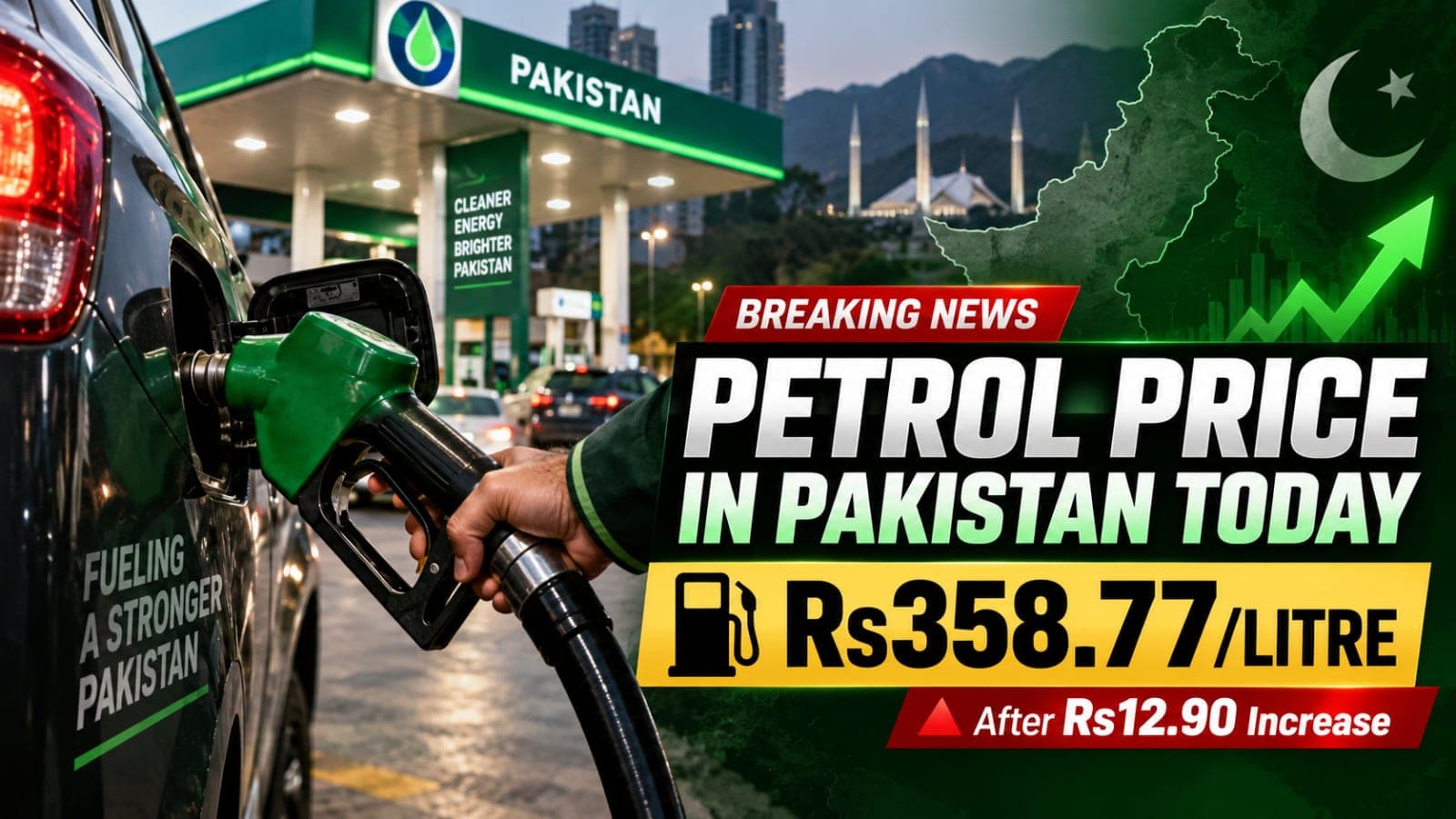
The petrol price Pakistan today stands at Rs358.77 per litre after the government raised the rate by Rs12.90, effective September 8, 2026. High-speed diesel has also gone up by Rs3.72 to Rs381.77 per litre.
Most people already know the new number. The more useful question now is what this increase means for daily spending, transport costs and household budgets.
A 50-Litre Tank Now Costs Rs645 More
The Rs12.90 increase looks smaller when seen per litre, but the impact is clearer at the pump. A driver filling 50 litres will now pay Rs17,938.50, compared with Rs17,293.50 at the previous rate of Rs345.87. That is an extra Rs645 on one fill-up.
For 40 litres, the added cost is Rs516. A 30-litre purchase costs Rs387 more, while 10 litres adds Rs129 to the bill. Someone using around 60 litres of petrol a month would spend about Rs774 extra because of this increase alone. A household using 100 litres across two vehicles would pay roughly Rs1,290 more, provided the rate does not change again.
Diesel Matters Even If You Drive a Petrol Car
The petrol price increase Pakistan is getting most of the attention, but diesel can have a broader effect on everyday expenses. High-speed diesel is now Rs381.77 per litre, up from Rs378.05. Diesel powers much of the commercial transport used to move goods between cities, markets and shops. So, when diesel becomes expensive, the effect isn't limited to people who actually own diesel vehicles.
Higher fuel costs can add pressure to freight and distribution expenses. That doesn't mean every product will suddenly become expensive overnight, but businesses eventually have to absorb the additional cost or pass some of it on to customers.
Why Did Petrol Jump by Rs12.90?
The latest increase came during another volatile period in international oil markets. Business Recorder linked pressure on domestic petroleum prices to tensions connected with the US-Iran conflict and disruptions around the Strait of Hormuz.
International oil prices have also been climbing. Reuters reported that Brent crude ended September 4 at $96.28 a barrel after gaining 7.6% over the week as geopolitical tensions raised concerns about energy supplies.
Pakistan remains sensitive to such movements because changes in international petroleum costs eventually feed into domestic fuel pricing.
Interestingly, the latest revision wasn't accompanied by another increase in the main fixed levies. Business Recorder reported that the petroleum levy remained Rs80 per litre, while the Climate Support Levy stayed at Rs5 per litre. Dealer and oil marketing company margins were also largely unchanged.
So this particular jump appears to have come mainly from changes in the underlying fuel cost rather than a fresh headline increase in those fixed levies.
Daily Pricing Is Now Part of the Story
One of the biggest changes in petrol price September 2026 isn't simply the rate itself. It's how frequently that rate can now move.
Under the revised petroleum pricing mechanism, OGRA has started publishing daily petroleum prices, allowing changes in international markets to be passed on to consumers more quickly.
For consumers, this changes an old habit. A screenshot showing today's fuel rate may become outdated much faster than it did under the traditional fortnightly system. Motorists, delivery riders and transport operators may now have to check the latest notified rate more regularly when calculating expenses.
Could Transport Fares Rise Next?
A petrol or diesel increase doesn't automatically mean public transport fares will be revised. Still, repeated fuel increases can put pressure on ride-hailing drivers, rickshaw operators, delivery services and intercity transporters.
Where fares are flexible, some operators may try to recover part of their higher fuel bill through increased charges.
The pressure can be particularly noticeable for workers who travel long distances every day. Even without an official fare increase, spending a few hundred rupees more on petrol each month can eat further into household income.
What Should Consumers Watch Next?
The next important number isn't only Rs358.77. Consumers should also keep an eye on international crude oil prices, the rupee-dollar exchange rate and fresh OGRA price notifications.
The recent movement shows just how quickly the situation can change. Petrol had been reduced by Rs3.13 to Rs345.87 in the previous review before jumping by Rs12.90 to Rs358.77.
That's why the petrol price Pakistan today story is becoming about more than a single government announcement.
For households, tracking actual fuel consumption in litres may now make more sense than setting a fixed monthly petrol budget. Combining trips, cutting unnecessary journeys and keeping some room in the monthly budget for fuel fluctuations could also help.
The latest petrol rate is already public knowledge. The bigger story now is how long it stays there — and how much of this increase eventually finds its way into household spending, transport charges and the wider cost of living.
What happens next for business
We will keep this page updated as the story develops rather than publishing a near-duplicate at a new address. Follow Business for related coverage.
Get the Verified Brief
One email each morning with the stories we checked overnight.
Spotted an error? Read our corrections policy and tell the newsroom.