
Property Registry Fees and Stamp Duty in Punjab
Property registry fees in Punjab include stamp duty, taxes and PLRA charges. This guide gives a full cost breakdown with a worked example in rupees.

By Suleman Mirza · Reporter
Published · Updated · 8 min read
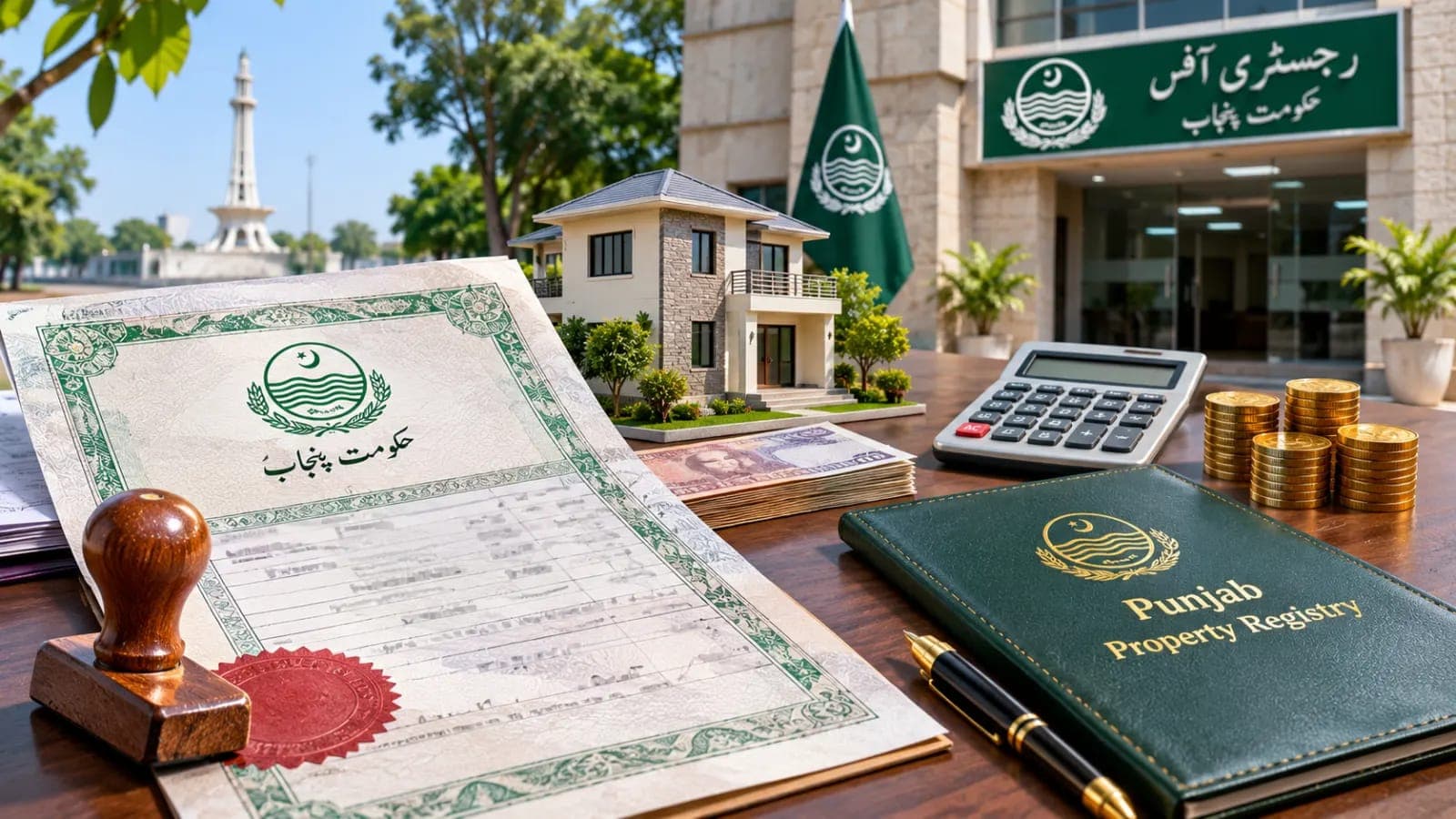
Property registry fees in Punjab are the charges you pay when a plot or a house changes hands on paper. The price you agree with the seller is only the start, because the government charges its own share before the registry is made in your name.
Many buyers are caught out by this. They save for the price of the plot, and then find they need another few hundred thousand rupees for stamp duty, tax and registration. This guide gives the full breakdown, so you can plan the real cost before you sign.
Who pays property registry fees
The buyer pays most of the property registry fees, and the seller pays a separate tax on the gain if the property is sold within a short period. In a normal sale, the buyer should budget for stamp duty, advance tax, the PLRA e-registration fee, and the town or committee fee where it applies.
If you are buying through a housing society, the society may also charge its own transfer fee. That is separate from the government charges, and it varies by society, so ask for it in writing before you pay the token money.
What property registry fees include
The main charge is stamp duty, which in Punjab is 1 percent of the property value. It was 3 percent before 2017, and it was cut to 1 percent when the capital value tax was folded into it. That change is why older guides still quote 3 percent, and why you should use the current 1 percent figure.
Capital value tax, or CVT, is no longer charged as a separate line in Punjab. It was merged into the stamp duty, so you do not add a separate CVT amount on top of the 1 percent. If a deed writer quotes CVT separately, ask them to show where it is charged, because it should not be a second charge.
The PLRA e-registration fee is 0.1 percent of the property value, with a minimum of Rs3,600. The e-registration system lets the registry be made online through the Punjab Land Records Authority, and the fee is part of that system. A small property can hit the minimum, so the fee is never less than Rs3,600.
Advance tax is charged under section 236K of the Income Tax Ordinance, and it is paid by the buyer. The rate is 1.5 percent for a filer, 4.5 percent for a non-filer, and 5.5 percent for a late filer on higher value properties. This is the largest single charge for many buyers, and it is also the charge where filer status matters most.
DC rates and FBR valuation rates
Two values are used to work out the tax, and the higher one usually wins. The DC rate is the rate fixed by the deputy commissioner for the area, and it is used for stamp duty. The FBR valuation rate is the rate fixed by the Federal Board of Revenue, and it is used for advance tax.
If the DC rate is higher than the FBR rate, the higher figure is used. If the FBR rate is higher, that figure is used. The declared sale price is also checked against both, and the tax is not worked out on a low declared price if the official rates are higher.
This is why two plots of the same size in different areas can carry very different property registry fees. A plot in a posh area has a higher DC rate, so the stamp duty is higher, even if the buyer paid a similar price for the plot itself.
PLRA e-registration steps
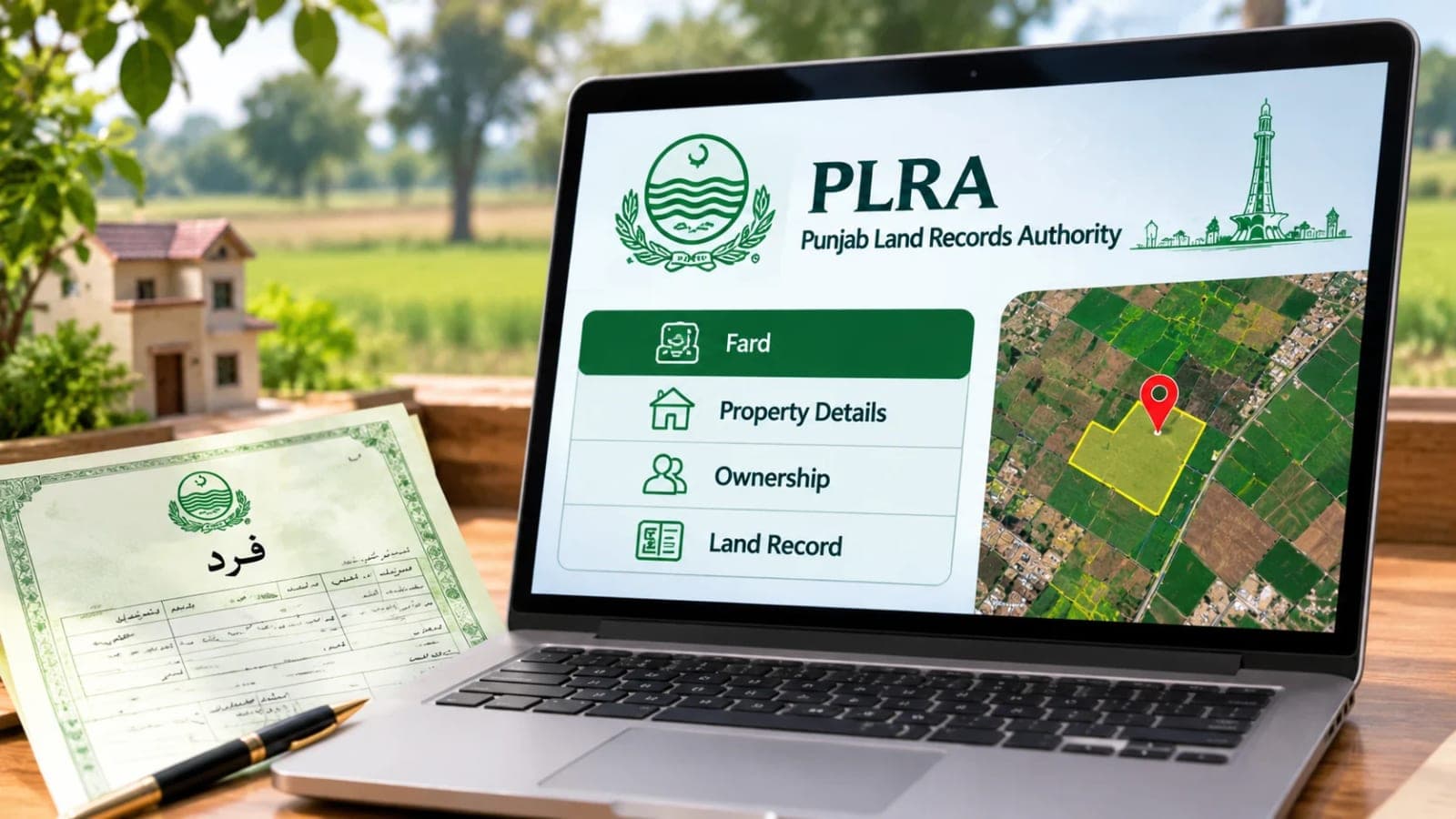
The PLRA e-registration system is the online route for making a registry in Punjab. You start by getting the fard for the property, so the ownership, the area and the khasra numbers are clear. Check that fard first, using our guide to online fard check in Punjab.
You then prepare the registry deed, pay the stamp duty and the advance tax through the bank, and submit the case on the e-registration portal. The PLRA office checks the documents, the seller and the buyer appear for biometric verification, and the registry is then recorded.
Keep the paid challans, the fard and the registry deed together, because the mutation of the property in your name follows the registry. If you are buying a plot that already has a green certificate, read our guide to the green property certificate in Punjab before you pay, so you know what that paper proves.
Worked example on a Rs10,000,000 property
Take a house in Punjab with a value of Rs10,000,000, and assume the buyer is a filer and the DC rate and the FBR rate both sit at Rs10,000,000. Stamp duty at 1 percent is Rs100,000. The PLRA e-registration fee at 0.1 percent is Rs10,000, which is above the minimum of Rs3,600, so the full Rs10,000 applies.
Advance tax at 1.5 percent for a filer is Rs150,000. Add the three together, and the property registry fees and taxes come to Rs260,000. The town or committee fee, where it applies, is charged on top of that, and it is usually a small amount, so the buyer should budget about Rs260,000 to Rs275,000 in government charges for this property.
If the same buyer were a non-filer, the advance tax at 4.5 percent would be Rs450,000, and the total would rise to Rs560,000. That difference of Rs300,000 is why filer status is worth sorting out before you buy, and why a non-filer should get the filer rate in writing from a tax adviser.
If the property were worth Rs50,000,000, the same rates would give stamp duty of Rs500,000, e-registration of Rs50,000, and advance tax of Rs750,000 for a filer, for a total of Rs1,300,000. The maths is the same, and the total rises in direct proportion to the value.
Common problems with property registry fees
The most common problem is a declared price that is lower than the DC rate. The office will not accept the low price, and the buyer will have to pay on the DC rate, which can mean a sudden extra bill at the counter. Agree the price with the seller after checking the DC rate, not before.
A second problem is a fard that does not match the registry. The area, the owner name and the khasra number must agree, and a small mismatch can stop the registry. A third problem is buying a property with an unpaid tax or a court case on it, so check the record before you pay the token.
A fourth problem is paying an agent in cash for the tax. Pay the stamp duty and the advance tax through the bank, keep the challans, and do not hand cash to anyone who promises to pay the tax for you. If you are claiming a share in family land, read our guide to inheritance share in Punjab before you start the transfer.
Frequently asked questions
What are the property registry fees in Punjab?
Property registry fees in Punjab include stamp duty at 1 percent, advance tax at 1.5 percent for a filer, the PLRA e-registration fee at 0.1 percent with a minimum of Rs3,600, and a town or committee fee where it applies.
How much stamp duty do I pay on a property in Punjab?
Stamp duty is 1 percent of the property value, worked out on the DC rate. On a property worth Rs10,000,000, the stamp duty is Rs100,000.
Is capital value tax still charged in Punjab?
No, capital value tax is no longer charged as a separate line in Punjab. It was folded into the stamp duty, so the 1 percent stamp duty covers it.
How do I register a property through PLRA e-registration?
Get the fard, prepare the registry deed, pay the stamp duty and advance tax through the bank, submit the case on the PLRA e-registration portal, and appear with the seller for biometric verification at the PLRA office.
Do I pay more if I am a non-filer?
Yes. Advance tax is 1.5 percent for a filer, 4.5 percent for a non-filer, and 5.5 percent for a late filer on higher value properties. On a Rs10,000,000 property, that is the difference between Rs150,000 and Rs450,000.
Sources checked on 28 November 2026. Punjab Land Records Authority, plra.gop.pk, for e-registration and the fard used in the registry process. Property Dealer, propertydealer.pk, 2026, for the current Punjab transfer charges, stamp duty at 1 percent, PLRA e-registration at 0.1 percent with a minimum of Rs3,600, and advance tax rates for filers and non-filers.
What happens next for punjab
We will keep this page updated as the story develops rather than publishing a near-duplicate at a new address. Follow Punjab for related coverage.
Get the Verified Brief
One email each morning with the stories we checked overnight.
Spotted an error? Read our corrections policy and tell the newsroom.