
Strait of Hormuz: Tankers on Fire as IRGC Seizes US Drones
The Strait of Hormuz is burning again: tankers have caught fire after hitting mines, the IRGC says it seized two US drones, and oil prices have jumped back above $100.

By News Desk · Verified Pakistan News Desk
Published · 5 min read
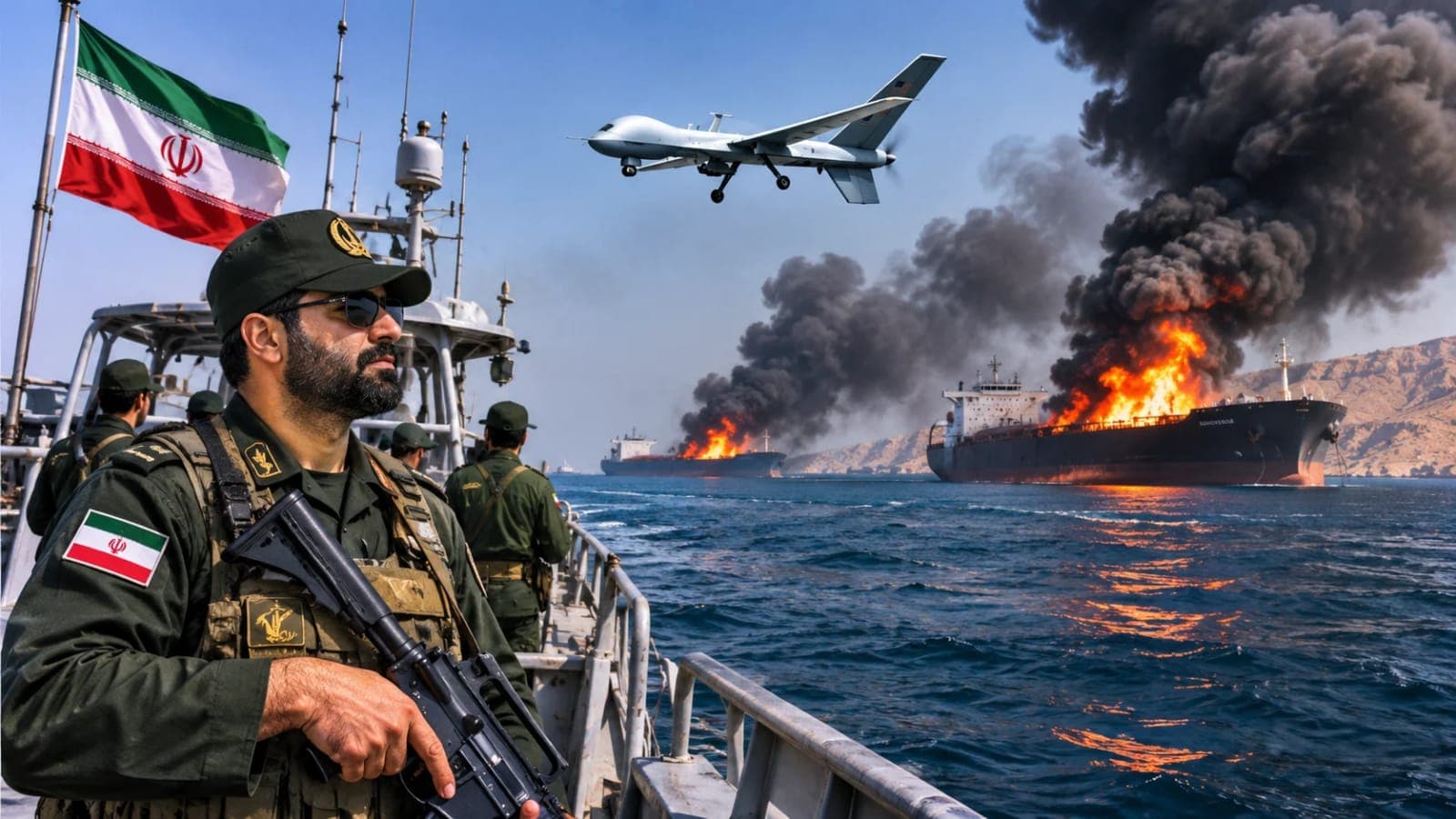
The Strait of Hormuz is burning again. Tankers have caught fire in the world's most important oil waterway, Iran's Revolutionary Guard says it has seized two American drones, and oil prices have jumped back above $100 a barrel. The incidents, reported overnight on November 4 and 5, are the latest in a series of attacks that have made the strait the most dangerous shipping lane in the world.
The Strait of Hormuz is the narrow passage between Iran and Oman through which about a fifth of the world's oil passes. When tankers catch fire there, the whole world notices, because any disruption to the strait pushes up the price of petrol, diesel and everything that moves by road, sea and air.
Strait of Hormuz: What the IRGC Claims
Iran's Islamic Revolutionary Guard Corps, known as the IRGC, said overnight on November 4 and 5 that two large oil tankers and a tugboat caught fire in the Strait of Hormuz after striking naval mines on what it called an unauthorised route. The IRGC said its electronic warfare unit had seized two US LUCAS drones intact.
The IRGC also claims that 11 tankers have caught fire in the strait in the nine days to November 2. These are IRGC claims, not independently verified facts. Reuters and other outlets have noted that the claims could not be independently confirmed, and the details of the incidents remain unclear.
A tanker was also hit by two unidentified projectiles 50 nautical miles north of Qatar, according to the United Kingdom Maritime Trade Operations, known as UKMTO, which tracks shipping incidents. The identity of the tanker and the source of the projectiles have not been confirmed.
Strait of Hormuz: Tanker Attacks This Week
Attacks on tankers in the Gulf have continued at a pace close to record levels, with at least five vessels reporting incidents since Sunday, according to UKMTO. Three vessels caught fire at the Strait of Hormuz after allegedly trying to pass the key maritime pathway using an unauthorised route, according to media reports.
The fresh attacks have renewed concerns over global oil supplies, and they are the main reason oil prices have rebounded sharply this week. Brent crude, which had crashed below $95 on Wednesday, climbed back above $100 on Friday, while West Texas Intermediate rose to about $92 a barrel.
Shipping flows through the Strait of Hormuz are still below 60 percent of normal capacity, according to market assessments reported by Reuters. That means less than three-fifths of the usual volume of oil is moving through the strait, and every new incident makes shippers more cautious about sending their vessels through.
Why the Strait Matters for Oil
The Strait of Hormuz matters because there is no easy alternative. About a fifth of the world's seaborne oil passes through it, and most of the oil from Saudi Arabia, Iraq, the United Arab Emirates, Kuwait and Qatar has no other way out. Pipelines that bypass the strait exist, but they cannot carry anything like the full volume.
When the strait is threatened, oil traders add a risk premium to the price. That is what happened this week: the tanker attacks pushed Brent up by nearly $4 a barrel on Thursday alone, and the price kept rising on Friday. Goldman Sachs has raised its oil price forecasts, citing increasing risks to global supplies, and it now expects Brent to reach $105 a barrel in December, up from $90 earlier.
The Eurasia Group has warned that if the conflict widens, Brent crude could rise to between $110 and $125 a barrel. That would push petrol and diesel prices up around the world, including in Pakistan, where the government has just cut fuel prices after the crash earlier in the week.
What Is Verified and What Is Not
It is important to separate what is verified from what is only claimed. The tanker fires and the UKMTO incident reports are confirmed by shipping monitors and market reports. The IRGC's claims about mines, the unauthorised route and the seized drones come from the IRGC itself and have not been independently verified.
The United States has not confirmed that any of its drones were seized, and no independent footage or evidence of the seized drones has been published. Readers should treat the IRGC's account as one side's claim, not as established fact, until independent sources confirm it.
What is certain is that the strait is now the centre of the conflict between the United States, Israel and Iran, and that the tanker attacks are shaping both the war and the oil market. As long as vessels keep catching fire there, oil prices will stay volatile and the risk of a wider conflict will stay high.
Strait of Hormuz: Frequently Asked Questions
What happened in the Strait of Hormuz? Tankers caught fire after hitting mines, according to the IRGC, and the IRGC says it seized two US drones. At least five vessels have reported incidents since Sunday, according to UKMTO.
Are the IRGC's claims verified? No. The claims about mines, the unauthorised route and the seized drones come from the IRGC and have not been independently verified. The tanker fires themselves are confirmed by shipping monitors.
Why does the Strait of Hormuz matter? About a fifth of the world's seaborne oil passes through it. Any disruption pushes up oil prices around the world.
How have oil prices reacted? Brent crude crashed to $94.62 on Wednesday, then rebounded above $100 on Friday as the tanker attacks renewed supply fears. WTI rose to about $92 a barrel.
How much oil is moving through the strait now? Shipping flows are below 60 percent of normal capacity, according to market assessments reported by Reuters.
What happens next for global
We will keep this page updated as the story develops rather than publishing a near-duplicate at a new address. Follow Global for related coverage.
Get the Verified Brief
One email each morning with the stories we checked overnight.
Spotted an error? Read our corrections policy and tell the newsroom.