
Abdul El-Sayed Wins Michigan Senate Seat, Becomes First Muslim US Senator
Abdul El-Sayed has won Michigan's US Senate seat, defeating Republican Mike Rogers to become the first Muslim senator in American history.

By News Desk · Verified Pakistan News Desk
Published · Updated · 6 min read
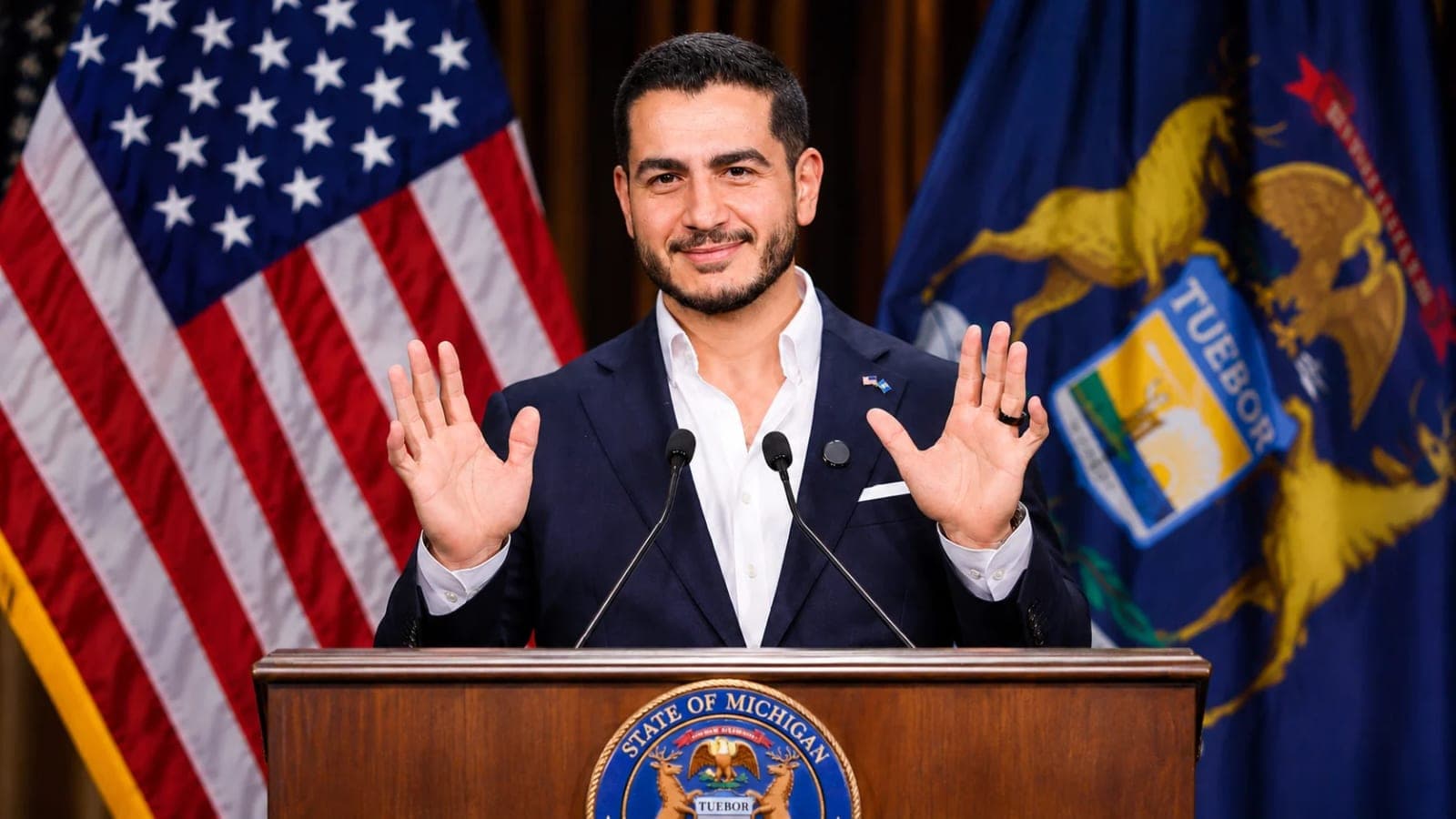
Abdul El-Sayed has won the United States Senate seat from Michigan, defeating Republican Mike Rogers in the 2026 midterm elections to become the first Muslim senator in American history.
The Associated Press called the race in the early hours of Wednesday, November 4, with El-Sayed leading Rogers by about five percentage points. Projections from Fox News and Decision Desk HQ also declared him the winner, capping one of the most expensive and closely watched Senate contests of the cycle.
Abdul El-Sayed: Michigan Senate election results
Abdul El-Sayed, a Democrat, secured about 51.8 percent of the vote against Rogers' 46.2 percent with roughly three-quarters of ballots counted, according to Decision Desk HQ. The AP's tally showed him crossing 2.27 million votes with about 84 percent of precincts reporting.
The seat was left open by the retirement of two-term Democratic Senator Gary Peters, who decided not to seek re-election. No Republican has won a Senate race in Michigan since 1994, but the open seat turned this year's contest into a national battleground and a focal point in the fight for control of the chamber.
El-Sayed declared victory before supporters in Detroit in the early hours of Wednesday morning, taking aim at both Rogers and former President Donald Trump in his victory speech.
Who is Abdul El-Sayed?
Abdul El-Sayed is 42, a physician and former public health official of Egyptian descent. He served as health director of Wayne County, Michigan, where he built a national reputation during the COVID-19 pandemic.
He studied medicine at the University of Michigan and Columbia University, then earned a doctorate at Oxford University as a Rhodes Scholar. Before entering electoral politics, he was known as a public health advocate and commentator.
El-Sayed first ran for office in 2018, losing Michigan's Democratic gubernatorial primary by more than 20 percentage points. Eight years later, he narrowly defeated Congresswoman Haley Stevens in an expensive and bruising Democratic Senate primary on August 4, 2026.
His wife, Sarah Jukaku, stood beside him on stage in Detroit as he celebrated the historic win. With the victory, he also becomes the first Democratic doctor in the Senate since 1969.
A brutal and expensive campaign
The Michigan Senate race was among the most negative and costly of the 2026 midterms. More than 385 million dollars was spent on advertising by both parties, according to AdImpact, while Al Jazeera reported well over 100 million dollars in ad spending since the August primary alone.
Rogers, 63, is a former seven-term Republican congressman and ex-FBI agent who entered the race with strong backing from Trump and national Republicans. His campaign worked to paint El-Sayed as a radical, seizing on the Democrat's progressive platform.
The Democratic primary had left its own scars. El-Sayed's narrow win over the moderate Haley Stevens alienated parts of the party establishment, and in a stunning last-minute twist, Stevens endorsed Rogers just two days before the general election. He won anyway, defying predictions that a progressive could not carry the purple battleground state.
Why the victory matters
The result is historic on its face: no Muslim has ever served in the United States Senate. El-Sayed's election breaks a barrier in a chamber that has seen little religious diversity across its history.
It is also a breakthrough for the Democratic Party's progressive wing. El-Sayed campaigned openly on left-wing priorities and won a swing state, challenging the long-held belief in Washington that Democrats must run moderates to win battlegrounds.
The win came amid a massive Democratic wave. Projections showed Democrats taking control of the US Senate, with this victory adding to wins in states including Maine, South Carolina, Ohio and Iowa, in what analysts called the party's biggest night since 2008. Republicans had held a 53-47 Senate majority going into the midterms, with Democrats needing a net gain of four seats.
What Abdul El-Sayed campaigned on
A doctor by training, El-Sayed made health care the centerpiece of his campaign. He rallied voters on the promise of universal health care, a cause he has championed since his days as a public health official.
He also focused on lowering costs for working families and reducing corporate influence in politics, themes that resonate deeply in a manufacturing state where household budgets dominate political debate.
Supporters credit his plain-spoken style and his record leading one of the country's largest local health departments for carrying him through both a divisive primary and a bruising general election.
What happens next
Abdul El-Sayed will take office in January 2027, when the new Congress is seated. He will serve a six-year term representing Michigan in the Senate.
His arrival gives Democrats another reliable progressive vote in a chamber they are projected to control, and his national profile is already rising. For Michigan, the result keeps in Democratic hands a Senate seat that Republicans had targeted as a top pickup opportunity.
For the country, the image of Abdul El-Sayed taking the oath of office will mark a first in the more than two-century history of the United States Senate.
Frequently asked questions
Who won the Michigan Senate race in 2026? Democrat Abdul El-Sayed defeated Republican Mike Rogers to win Michigan's open US Senate seat in the November 3, 2026 midterm elections.
Is Abdul El-Sayed the first Muslim US senator? Yes. He is the first Muslim ever elected to the United States Senate.
Who did Abdul El-Sayed defeat? He defeated Republican Mike Rogers, a former seven-term congressman and ex-FBI agent, in the general election, after narrowly beating Congresswoman Haley Stevens in the Democratic primary.
What is Abdul El-Sayed's background? He is 42, a physician and former Wayne County health director of Egyptian descent. He studied medicine at the University of Michigan and Columbia, earned a doctorate at Oxford as a Rhodes Scholar, and is married to Sarah Jukaku.
When does he take office? He will be sworn in with the new Congress in January 2027 for a six-year Senate term.
Which Senate seat did he win? The seat vacated by retiring two-term Democratic Senator Gary Peters of Michigan.
What happens next for global
We will keep this page updated as the story develops rather than publishing a near-duplicate at a new address. Follow Global for related coverage.
Get the Verified Brief
One email each morning with the stories we checked overnight.
Spotted an error? Read our corrections policy and tell the newsroom.