
Terrorist Attacks in Pakistan Drop 66% in Five Weeks, PICSS Report Says
Terrorist attacks Pakistan fell by about 66 percent over five weeks, from 61 attacks in late September to 21 in mid-October, according to a new PICSS report.

By News Desk · Verified Pakistan News Desk
Published · 4 min read
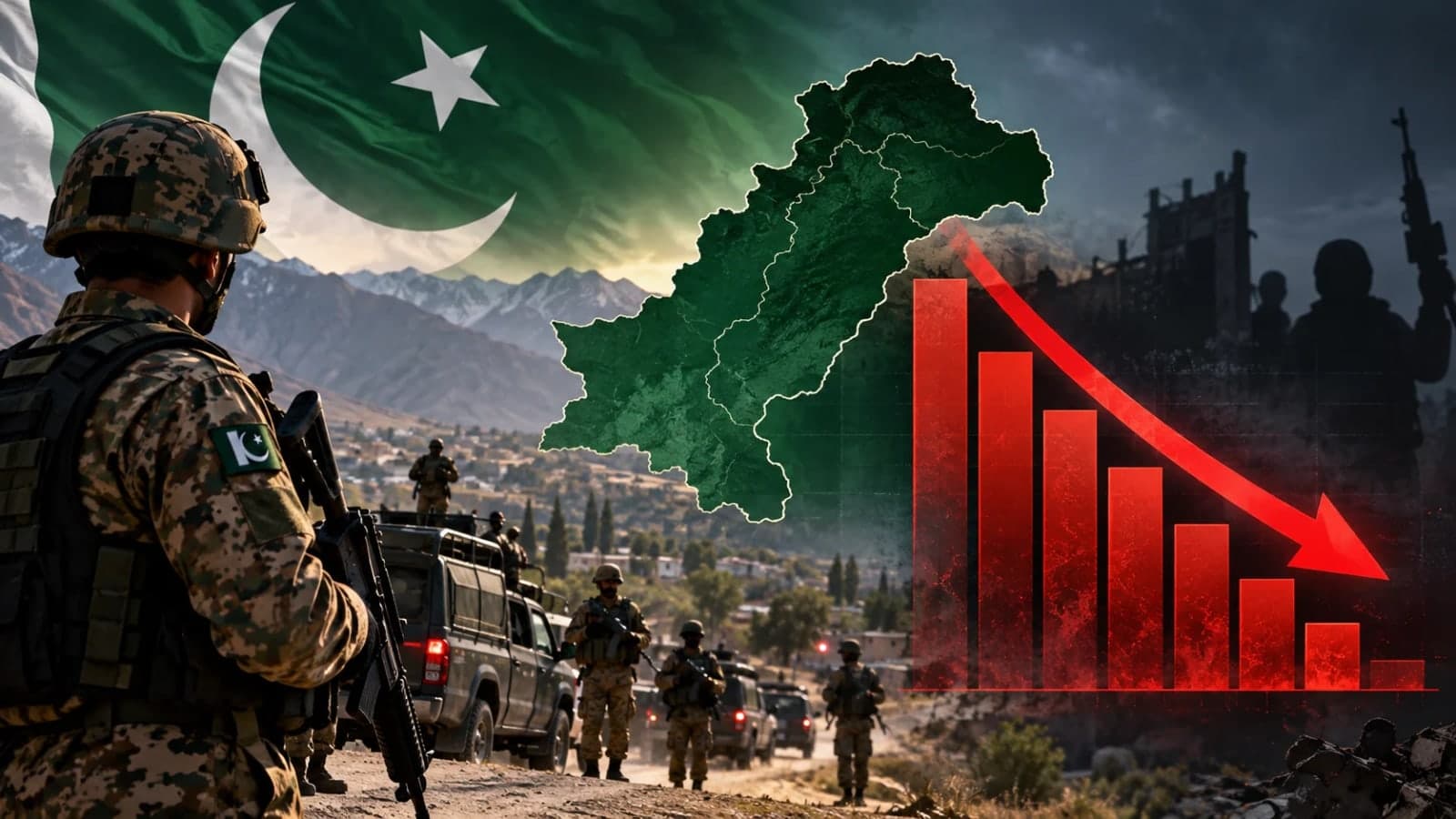
Terrorist attacks Pakistan have fallen sharply over the past five weeks, according to a new report that points to successful security operations in Khyber Pakhtunkhwa and Balochistan. The report, by the Pakistan Institute for Conflict and Security Studies, known as PICSS, says attacks dropped by approximately 66 percent over a five-week period. The number of attacks fell from 61 recorded between 18 and 24 September to 21 recorded between 16 and 22 October.
That figure needs careful reading. Fewer attacks does not automatically mean fewer deaths or less fear, and the report shows a more mixed picture.
Terrorist attacks Pakistan: what the report says
PICSS recorded a clear downward trend in attack frequency. The five-week comparison is the most dramatic: 61 attacks in the week of 18 to 24 September, compared with 21 attacks in the week of 16 to 22 October. That is a fall of about two-thirds, which is why the 66 percent figure has attracted so much attention.
The week-on-week picture is also positive, though less dramatic. Militant attacks across the country decreased by 38 percent during 16 to 22 October, compared with the preceding week. The number of people injured in such attacks dropped from 20 in the preceding week to 11 during the same period, a fall of 45 percent.
Security forces also reported operational success during that week. According to PICSS, forces conducted 10 operations during which 33 militants were killed. Those operations form part of ongoing efforts to disrupt armed networks and prevent further attacks against civilians and security personnel.
A more mixed picture underneath
The terrorist attacks Pakistan decline has not produced an equally sharp reduction in deaths. During 16 to 22 October, militant violence killed 22 people, compared with 23 the previous week. That is almost unchanged, even though the number of attacks fell sharply. Injuries did fall, from 20 to 11, but the death toll shows that fewer attacks can still be deadly.
More troublingly, abductions rose from 24 to 41 during the same week, with almost all reported in Balochistan. Balochistan accounted for 12 of the week's 21 attacks, yet its death toll increased even as attack frequency declined. Khyber Pakhtunkhwa displayed a similar divergence between incident numbers and fatalities.
These contrasting indicators make it difficult to declare the situation stable. If deaths stay almost the same and abductions rise, the threat may have changed form rather than disappeared. A five-week trend needs to be sustained before it can be called a lasting improvement.
What changed in the militant landscape
Behind the figures, the militant landscape is also changing, according to the PICSS report. The report examined the impact of a leadership dispute within Fitna al-Hindustan, a term used by Pakistani authorities for Baloch militant groups, and changes in the propaganda strategy of Fitna al-Khawarij, a term used for the Tehreek-i-Taliban Pakistan and allied groups.
A leadership dispute can weaken a group by dividing its command or fighters, and propaganda changes can signal a shift in recruitment. Neither alone explains the fall in attacks.
The report also assesses Pakistan's relations with Afghanistan, relevant because cross-border sanctuaries have long been a central counterterrorism issue.
Why operations matter, and their limits
Security operations are central to this terrorist attacks Pakistan story. The killing of 33 militants in 10 operations during one week shows a high tempo of activity. Such operations can disrupt networks, remove experienced fighters, and seize weapons and explosives. They can also deter other fighters, at least for a time.
Operations alone, however, rarely end militancy. Groups can recruit new fighters and exploit gaps in security, so sustained pressure and action against financing and support networks are also needed.
FAQs
How much have terrorist attacks Pakistan fallen?
Terrorist attacks Pakistan fell by about 66 percent over five weeks, from 61 attacks between 18 and 24 September to 21 attacks between 16 and 22 October, according to PICSS.
Did deaths fall by the same amount?
No. Deaths were almost unchanged, at 22 during 16 to 22 October compared with 23 the previous week, even though attacks fell by 38 percent week on week. Injuries fell from 20 to 11.
What about abductions?
Abductions rose from 24 to 41 during the same week, with almost all reported in Balochistan, which accounted for 12 of the week's 21 attacks.
The PICSS report gives Pakistan a rare piece of good news on security, but it also gives a warning. Attack numbers are down, operations are having an effect, and the trend over five weeks is clear. The challenge now is to turn a statistical decline into a lasting sense of safety, by keeping pressure on militant networks while also addressing the deaths and abductions that have not yet fallen.
What happens next for national
We will keep this page updated as the story develops rather than publishing a near-duplicate at a new address. Follow National for related coverage.
Get the Verified Brief
One email each morning with the stories we checked overnight.
Spotted an error? Read our corrections policy and tell the newsroom.