
Travel Costs Pakistan Drop 7.9% in Four Months, Mobility Index Says
Travel costs Pakistan fell 7.9% between May and September 2026, with average cost per kilometre down to Rs 9.65 from Rs 10.48, the Mobility Index shows.

By News Desk · Verified Pakistan News Desk
Published · Updated · 5 min read
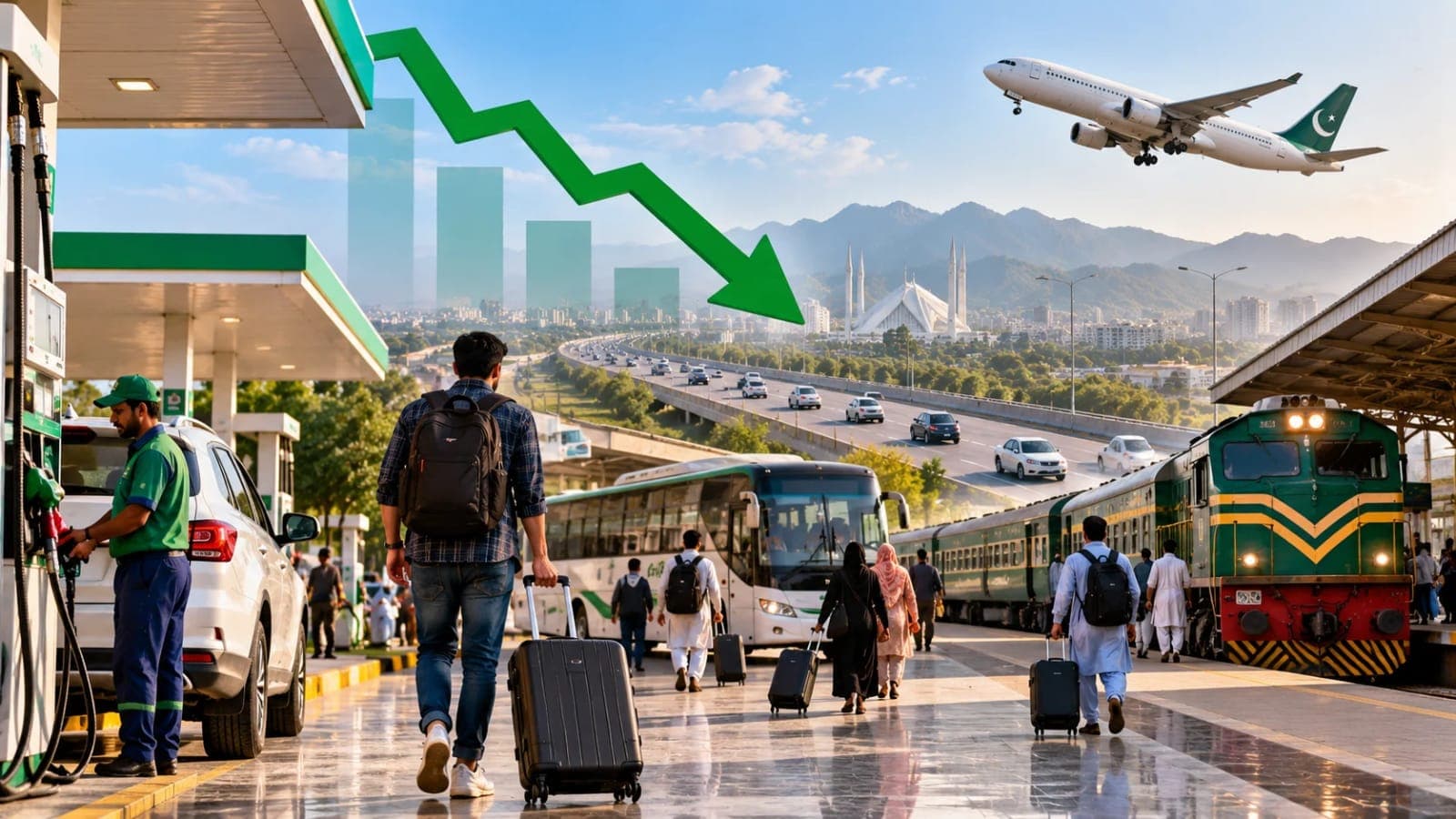
According to the Mobility Index reported by Dawn on 26 October 2026, travel costs Pakistan fell by 7.9 percent between May and September 2026. The index, compiled by Pakistan and Counting with BusCaro, tracks how much it costs to move around the country.
In May 2026, the index stood at 100. By September 2026, it had fallen to 92.1. That change gives the reported 7.9 percent fall in travel costs Pakistan. It does not mean every journey became cheaper by exactly that amount.
The average cost per kilometre fell from Rs 10.48 in May to Rs 9.65 in September. For a 20 kilometre daily commute, that change alone is worth about Rs 16.60 a day. Over a working month, the saving adds up.
What travel costs Pakistan figures show
Petrol is the main reason for the fall. The average petrol price used in the index was Rs 405.19 per litre in May. By September, it averaged Rs 374.61 per litre, a drop of 7.5 percent.
Fuel prices affect private vehicles first in travel costs Pakistan, because most of the index is built around them. When petrol gets cheaper, running a bike, a car or a rickshaw also gets cheaper. Public transport fares, which are often fixed or subsidised, move more slowly.
A Honda CD70, the most common motorcycle in Pakistan, saw its fuel cost per kilometre fall from Rs 7.37 to Rs 6.81. That is small per kilometre, but motorcycles cover millions of kilometres every day across the country.
Cars show a larger cash saving per kilometre. Car fuel cost fell from Rs 26.80 per kilometre to Rs 24.78. For families using a car for school runs and office trips, that difference is easier to notice.
Private rickshaws also became cheaper to run. Their fuel cost per kilometre fell from Rs 12.66 to Rs 11.71. Fuel is a rickshaw driver's biggest daily expense after maintenance, so this change matters directly.
Eight ways of travelling, one index
The Mobility Index covers eight modes of travel. These are an own bike run on petrol, a private rickshaw, an own car run on petrol, public transport charged per seat, ride-share charged per seat, and ride-hailing by bike, rickshaw and car.
That mix matters for travel costs Pakistan, because not every mode moves in the same way. A fall in petrol prices helps private vehicles most. It does not automatically cut a bus fare or a ride-hailing fare by the same percentage.
The report does not give a specific figure for how much ride-hailing fares fell. Readers should be careful about claims that put an exact number on ride-hailing savings from this index alone.
Why public transport looks different
Public transport follows a different pattern in this period. Punjab's four Bus Rapid Transit services were free from early April until 12 June. As a result, May recorded zero fares for those services in the index.
That free period makes the public transport trend in travel costs Pakistan harder to read from May alone. A zero fare in May is not a normal price, and it did not continue all summer. Anyone comparing May with September for buses needs to keep that special period in mind.
The reporting also gives context about how the index is weighted. Public transport accounts for less than 0.5 percent of the index's vehicle-based weight, according to the same reporting. Private motorcycles, cars and rickshaws account for 98.7 percent.
The same reporting cites an expert point that only about 22 people per 1,000 can afford a car.
For most commuters, the benefit comes through motorcycles and rickshaws. Those vehicles carry far more people day to day, especially in smaller cities and on shorter urban trips.
What the fall means for commuters
For a motorcycle rider, the saving is steady. A rider covering 30 kilometres a day would save about Rs 16.80 a day on fuel at the new CD70 rate compared with May. That is roughly Rs 500 over a month of daily riding.
For a car user, the saving in travel costs Pakistan is larger in cash terms. The same 30 kilometres a day would save about Rs 60.60 a day on fuel. That adds up to about Rs 1,800 over a month, before maintenance and parking are counted.
What the index does not prove
The index does not prove that travel has become affordable for everyone. It measures average cost per kilometre, not household income, not total travel spending, and not access to transport in rural areas.
It also does not prove that prices will keep falling. Petrol prices can rise again, and a four month fall can reverse quickly. The September figure is a snapshot, not a forecast.
For now, the clearest takeaway is narrow and verifiable. Average cost per kilometre fell, petrol fell, and private bike, car and rickshaw fuel costs fell. Those facts explain most of the drop reported in travel costs Pakistan data.
FAQs
How much did costs fall between May and September 2026?
travel costs Pakistan fell by 7.9 percent, with the Mobility Index dropping from 100 in May to 92.1 in September 2026.
What is the average cost per kilometre now?
It is Rs 9.65 per kilometre in September 2026, down from Rs 10.48 per kilometre in May 2026.
Why did costs fall?
Petrol prices fell over the same period, from an average of Rs 405.19 per litre in May to Rs 374.61 per litre in September, a drop of 7.5 percent.
Did public transport fares fall by the same amount?
Not necessarily. Punjab's four BRT services were free from early April until 12 June, so May recorded zero fares for them, and public transport has a very small weight in this index.
Does this mean ride-hailing fares fell by a set amount?
No specific ride-hailing figure was given in the reporting, so no exact ride-hailing saving should be claimed from this index alone.
What happens next for travel
We will keep this page updated as the story develops rather than publishing a near-duplicate at a new address. Follow Travel for related coverage.
Get the Verified Brief
One email each morning with the stories we checked overnight.
Spotted an error? Read our corrections policy and tell the newsroom.