UK Universities Restrict Pakistani Students Over Tougher Visa Rules in 2026
UK universities restrict Pakistani students in 2026 as tougher visa rules trigger admission withdrawals. Learn what the new restrictions mean.

By News Desk · Verified Pakistan News Desk
Published · 16 min read
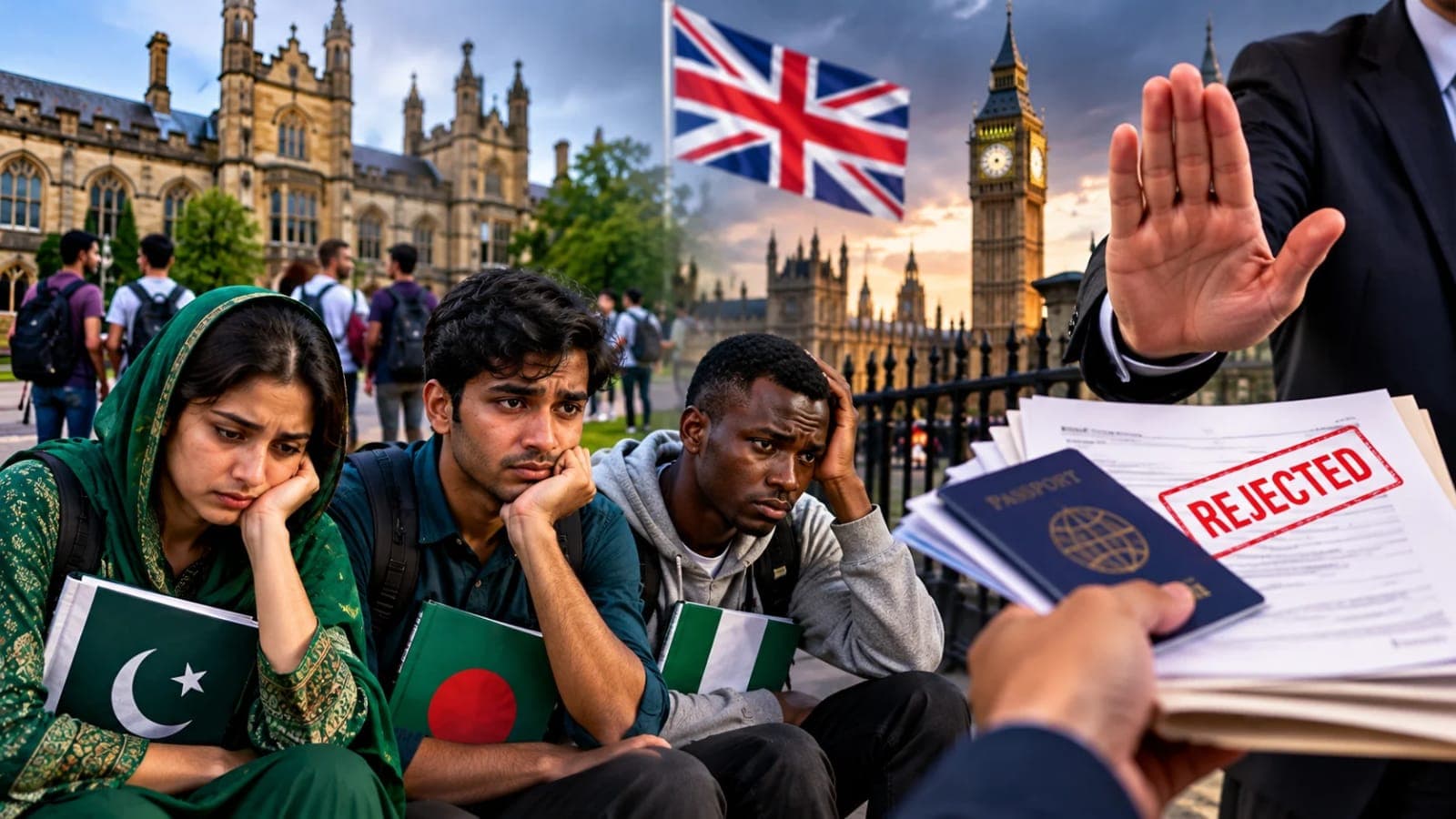
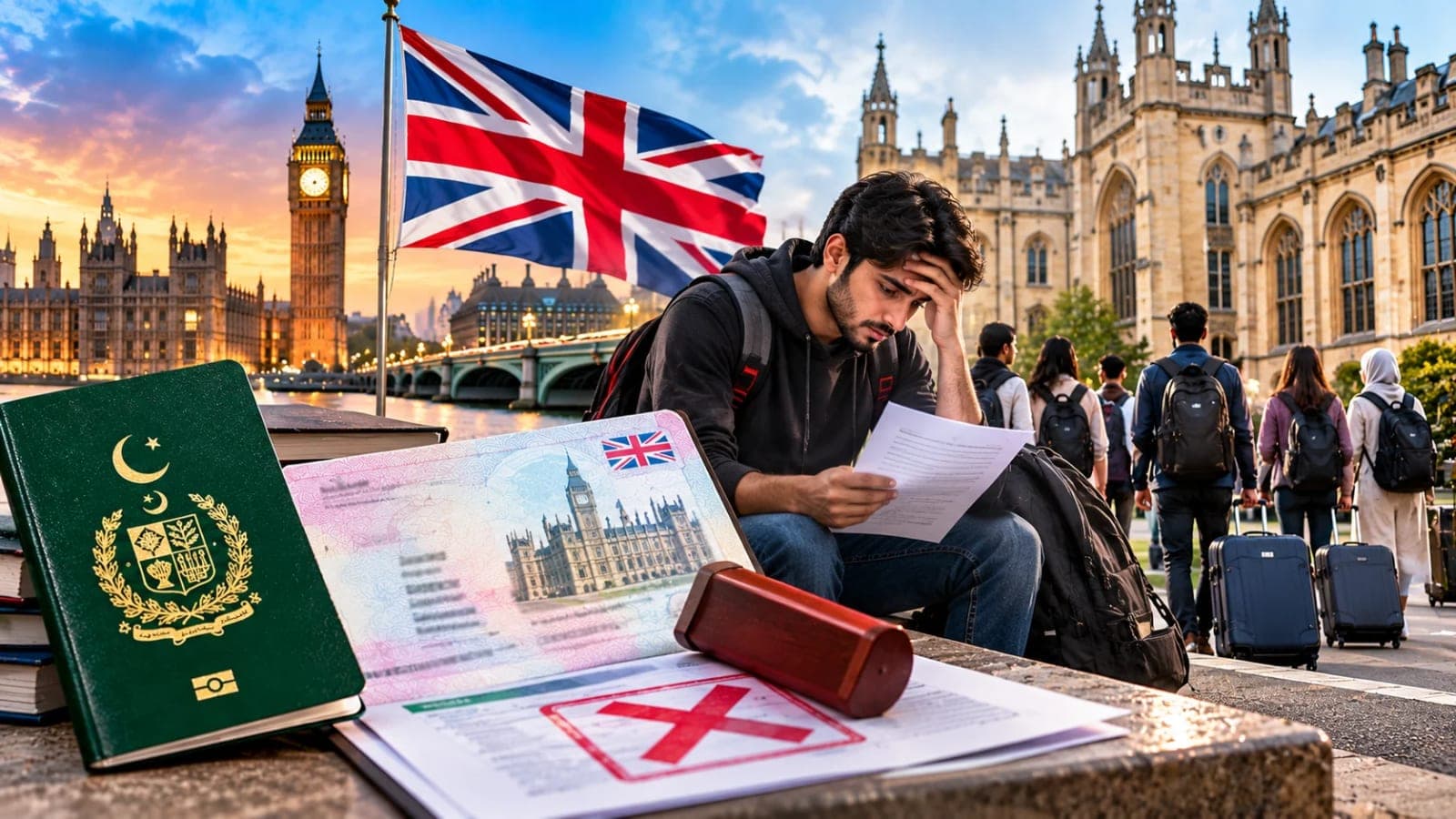
UK universities are withdrawing admission offers and restricting international student recruitment from Pakistan, Bangladesh and Nigeria as tougher immigration rules increase pressure on educational institutions to maintain low student visa refusal rates.
The development has raised concerns among students planning to pursue higher education in Britain, particularly those who have already received admission offers or paid university deposits.
According to a Financial Times investigation published in October 2026, several British universities have suspended recruitment from countries considered higher-risk under the UK's tightened student visa compliance system. Approximately 15 universities were reported to have stopped recruiting students from Pakistan during 2026.
The restrictions follow changes introduced by the UK Home Office in June 2026, which reduced the permitted student visa refusal rate for sponsoring institutions from 10% to below 5%.
However, the restrictions do not represent a nationwide ban on Pakistani students. Universities remain responsible for their individual recruitment policies, and eligible Pakistani applicants can still apply to institutions accepting international students.
Why UK Universities Are Restricting Pakistani Students
The growing restrictions are linked to the British government's efforts to strengthen immigration controls and prevent misuse of the international student visa system.
Universities wishing to recruit international students must obtain and maintain a sponsorship licence from UK Visas and Immigration (UKVI).
This licence allows institutions to issue a Confirmation of Acceptance for Studies (CAS), an essential document for most international students applying for a UK Student visa.
The Home Office regularly assesses whether universities are meeting their responsibilities as licensed sponsors.
Under the revised framework, institutions face stricter standards for visa refusals, student enrolment and course completion.
If a university repeatedly fails to meet these requirements, it may face restrictions on recruiting international students or potentially lose its sponsorship licence.
For universities that depend heavily on tuition fees from overseas students, losing sponsorship privileges could create serious financial difficulties.
Consequently, some institutions have become more cautious about admitting applicants from countries where visa applications face increased scrutiny.
Why Pakistan, Bangladesh and Nigeria Are Affected
Pakistan, Bangladesh and Nigeria are important markets for British universities because thousands of students from these countries seek higher education opportunities in the United Kingdom.
However, recent immigration data indicates a sharp increase in withdrawn student visa applications involving these nationalities.
The Financial Times reported that universities are concerned about unpredictable visa decisions and the possibility that rejected applications could push their institutional refusal rates beyond the permitted threshold.
These concerns have encouraged some universities to suspend recruitment from particular countries rather than risk losing their ability to sponsor international students altogether.
The restrictions are institutional decisions, not evidence that every applicant from these countries fails to meet UK immigration requirements.
UK Student Visa Withdrawals Increase Sharply in 2026
One of the most significant developments is the increase in withdrawn student visa applications during the first half of 2026.
According to Financial Times analysis of Home Office data, the overall withdrawal rate reached 10.5% between January and June 2026.
During the corresponding period in 2025, the withdrawal rate stood at 2.3%.
The figures suggest that withdrawals have become considerably more common as universities respond to stricter immigration compliance requirements.
Pakistan recorded the highest withdrawal rate among the major countries highlighted in the report.
| Country | January–June 2025 | January–June 2026 |
|---|---|---|
| Pakistan | 3.0% | 40.9% |
| Bangladesh | 7.1% | 23.5% |
| Nigeria | 4.5% | 22.7% |
| India | 1.2% | 5.2% |
The figures show a particularly dramatic increase for Pakistani applicants.
In the first half of 2025, approximately 3% of Pakistani student visa applications were withdrawn. During the same period in 2026, that proportion increased to 40.9%.
Bangladesh experienced an increase from 7.1% to 23.5%, while Nigeria's withdrawal rate rose from 4.5% to 22.7%.
India also recorded an increase, although its withdrawal rate remained substantially lower.
Does a 40.9% Withdrawal Rate Mean Pakistani Visas Were Rejected?
No. Visa withdrawals and visa refusals are different outcomes.
A withdrawn application is one that does not proceed to a final decision. A visa refusal occurs when the Home Office formally rejects an application.
This distinction is important because the reported 40.9% figure does not mean that 40.9% of Pakistani applicants were refused UK student visas.
Instead, it indicates that a substantial proportion of applications were withdrawn before a final decision.
The available reporting does not establish that every withdrawal was initiated by a university. Applicants can also withdraw applications for other reasons.
Nevertheless, the increase reflects significant uncertainty surrounding international student recruitment.
New UK Student Visa Rules Introduced in June 2026
The British government introduced stricter sponsorship requirements on June 1, 2026.
These changes affect universities and other educational institutions holding licences to sponsor international students.
Previously, institutions were required to maintain a visa refusal rate below 10%.
Under the revised rules, that threshold has been reduced to below 5%.
The government has also increased the minimum student enrolment rate from 90% to 95%.
The course completion requirement remains at least 85% during the current transitional period and is scheduled to increase to 90% for relevant assessments from June 2027.
UK University Sponsorship Requirements
| Requirement | Previous Standard | New Standard |
|---|---|---|
| Visa refusal rate | Below 10% | Below 5% |
| Student enrolment rate | At least 90% | At least 95% |
| Course completion rate | At least 85% | At least 85% until June 2027 |
| Completion rate from June 2027 | 85% | At least 90% |
The changes are part of the Home Office's Basic Compliance Assessment system, which evaluates whether institutions are fulfilling their sponsorship responsibilities.
Universities must undergo these assessments regularly to retain permission to recruit international students.
Why Universities Are Withdrawing Admission Offers
Withdrawing an admission offer can have serious consequences for a prospective student, especially when the student has already made financial arrangements.
However, universities now face a strong incentive to identify applications they believe may result in visa refusals.
Under official Home Office guidance, a CAS withdrawn before the linked visa application receives a decision is excluded from the university's visa refusal rate calculation.
This means that withdrawing sponsorship before a final decision can prevent a potential refusal from affecting the institution's compliance figures.
As a result, universities may become reluctant to continue sponsoring applicants whose visa prospects they consider uncertain.
The situation has raised questions about whether qualified international students are being denied educational opportunities because institutions are trying to protect their sponsorship status.
How Admission Offer Withdrawals Affect Students
Students can experience several difficulties when an admission offer is unexpectedly withdrawn.
Some applicants may have already paid tuition deposits, completed medical examinations or arranged accommodation.
Others may have resigned from employment or delayed admission to universities in their home countries.
An unexpected withdrawal can therefore disrupt academic plans and create financial losses.
Refund eligibility depends on the university's published policies, the student's contractual arrangements and the circumstances surrounding the withdrawal.
Students should not assume that every payment will automatically be refunded.
Approximately 15 Universities Reportedly Stop Recruitment From Pakistan
The Financial Times investigation indicates that approximately 15 British universities have suspended recruitment from Pakistan during 2026.
This development suggests that the impact extends beyond isolated admissions decisions.
However, the report does not establish that all British universities have stopped accepting Pakistani students.
It also does not provide a complete, independently verified public list of the institutions currently maintaining restrictions.
Recruitment policies can differ according to the university, course, applicant nationality and admission period.
Some universities may suspend recruitment temporarily, while others may continue accepting applications with additional screening requirements.
Are All UK Universities Closed to Pakistani Students?
No. Pakistani students remain eligible to apply to British universities that are accepting applications from Pakistan and hold the necessary sponsorship permissions.
Students should contact their chosen institution directly before submitting applications or paying deposits.
Information shared by educational consultants or social media pages may not reflect the latest university policy.
Official confirmation from the admissions department is particularly important for students applying for upcoming intakes.
UK Introduces Red, Amber and Green Compliance Ratings
Another important change is the introduction of a Red-Amber-Green rating system for student sponsors.
The framework allows UKVI to assess universities against key immigration compliance indicators.
Institutions meeting the required standards can receive favourable ratings, while those approaching or breaching thresholds may face additional scrutiny.
Green Rating
A green rating generally indicates that a university is performing comfortably within the relevant compliance standards.
Such institutions are considered to present a lower compliance risk under the assessment framework.
Amber Rating
An amber rating indicates that an institution is approaching a compliance threshold and may require closer monitoring.
Universities receiving this rating may be expected to improve their recruitment or compliance procedures.
Red Rating
A red rating indicates failure against an applicable compliance standard.
This can result in enforcement measures, potentially including restrictions or sponsorship licence revocation.
However, a red rating does not automatically mean that a university immediately loses its licence. The framework includes transitional arrangements, discretionary assessments and procedures for responding to compliance findings.
What Happens if a University Loses Its Student Sponsorship Licence?
Losing a student sponsorship licence can have major consequences for both an educational institution and its international students.
A university without the necessary sponsorship permission cannot continue issuing CAS documents under the affected student sponsorship arrangements.
This may prevent it from recruiting new students who require sponsorship.
Existing sponsored students may also face immigration complications, depending on their individual circumstances and any applicable arrangements.
A real example occurred in August 2026 when the Home Office announced the revocation of Bloomsbury Institute's student sponsorship licence.
The government said the institution had failed its Basic Compliance Assessment.
Although that assessment was conducted under the earlier requirements, the case demonstrates that sponsorship enforcement can have practical consequences for educational providers.
Students affected by a licence revocation may need to seek alternative sponsorship, obtain another form of immigration permission where eligible or leave the UK, depending on their circumstances and official instructions.
How the Restrictions Could Affect Pakistani Students in 2026
For Pakistani students, the latest developments could make the UK university admissions process more complicated.
Applicants may face increased scrutiny even when they satisfy academic requirements.
Universities could request additional information about educational qualifications, financial arrangements, immigration history and study intentions.
Some institutions may also conduct credibility interviews before issuing sponsorship documents.
These measures can increase the time required to process applications.
Students Applying for Undergraduate Degrees
Pakistani students applying for bachelor's programmes should confirm whether their chosen institution currently accepts applications from Pakistan.
They should also verify the university's English language requirements, academic entry criteria and sponsorship arrangements.
Students Applying for Master's Degrees
Master's applicants may face additional questions about their previous qualifications, intended course and career objectives.
Applicants should be prepared to explain why they selected a particular programme and how it relates to their academic or professional background.
Students Applying for PhD Programmes
Doctoral applicants should confirm that their university can sponsor the intended research programme.
They should also verify any additional requirements associated with their research field, including whether Academic Technology Approval Scheme clearance is necessary.
The latest recruitment restrictions do not establish that all undergraduate, master's and doctoral applicants face identical requirements.
Can Pakistani Students Still Get a UK Student Visa?
Pakistani nationals can still apply for UK Student visas in 2026.
The new university recruitment restrictions do not amount to a complete ban on Pakistani applicants.
Students must satisfy the applicable immigration requirements and obtain sponsorship from an approved educational institution.
Basic UK Student Visa Requirements
Applicants generally need to demonstrate that they have:
- An offer from an eligible licensed student sponsor and a valid CAS.
- Sufficient funds to meet applicable tuition and living-cost requirements.
- The required level of English language ability.
- A valid passport and supporting documents.
- Parental consent where required because of age.
- Tuberculosis test results where applicable.
- Any additional clearance required for their course or circumstances.
Meeting these requirements does not guarantee visa approval.
Each application is assessed according to the immigration rules and the applicant's individual circumstances.
Students should therefore ensure that their documents are genuine, complete and consistent.
What Pakistani Students Should Do Before Paying University Fees
The latest developments make it particularly important for applicants to verify university policies before making financial commitments.
Students should avoid assuming that receiving a conditional offer guarantees admission or sponsorship.
A university may still require additional checks before issuing a CAS.
Confirm Admissions Are Open for Pakistan
Students should contact the international admissions office and ask whether applications from Pakistan are currently being accepted.
The response should ideally be obtained in writing.
Verify the University's Sponsorship Status
Applicants should confirm that the institution appears on the official UK register of licensed student sponsors.
They should also check whether the institution is authorised to sponsor their intended course.
Understand Deposit Refund Conditions
Before paying tuition deposits, applicants should read the university's refund policy.
Particular attention should be given to what happens if sponsorship is withdrawn or a visa application is refused.
Prepare Accurate Financial Documents
Financial evidence should meet the applicable UK immigration requirements.
Applicants should avoid submitting altered bank statements or relying on unverified documentation.
Avoid Non-Refundable Travel Arrangements
Students should consider postponing non-refundable travel and accommodation payments until their sponsorship and visa position is sufficiently clear.
Why UK Universities Depend on International Students
International students represent an important source of revenue for British universities.
Overseas tuition fees are generally higher than those paid by domestic students, although exact amounts vary by institution and course.
Revenue from international enrolment helps universities support teaching, research, facilities and other operations.
Consequently, restrictions affecting major recruitment markets can create financial pressure.
The Financial Times reported warnings from university leaders that falling international recruitment could contribute to job losses and course closures.
Institutions may face a difficult choice between continuing to recruit international applicants and protecting their sponsorship licences.
For some universities, the risk of breaching immigration compliance requirements may outweigh the immediate financial benefits of admitting additional overseas students.
UK Government Defends Tougher Immigration Controls
The British government maintains that stronger compliance requirements are necessary to protect the integrity of the student visa system.
Officials have argued that educational institutions should recruit genuine students and ensure that international applicants comply with immigration conditions.
The Home Office has also expressed concerns about individuals using student routes for purposes unrelated to education.
In a parliamentary response issued in May 2026, the government confirmed that the tougher Basic Compliance Assessment requirements would proceed despite concerns about changing visa refusal rates.
Officials said the reforms were intended to improve university recruitment practices.
The government has also maintained that legitimate international students remain welcome in the United Kingdom.
However, universities and education sector representatives have warned that stricter rules could discourage genuine applicants and weaken Britain's international education sector.
Could the Restrictions Damage the UK's Reputation for Education?
The United Kingdom has long been a popular destination for international students because of its established universities, internationally recognised qualifications and research opportunities.
Pakistani students frequently consider British universities for postgraduate education, professional development and international career opportunities.
However, uncertainty surrounding admissions and sponsorship can influence where students choose to study.
Applicants who experience withdrawn offers or prolonged delays may consider alternatives in other countries.
This could affect future recruitment from important international markets.
Universities also face reputational risks if prospective students believe admission decisions are becoming unpredictable.
The long-term impact will depend on how consistently immigration rules are applied and whether universities can maintain international recruitment while meeting the revised standards.
What Could Happen to UK University Admissions in 2027?
The current restrictions may continue to influence admissions policies during upcoming recruitment cycles.
Universities will need to monitor their visa refusal rates closely and assess whether their international recruitment strategies remain compliant.
Some institutions may introduce stronger document verification procedures rather than suspending recruitment from entire countries.
Others may maintain temporary restrictions until they have greater confidence in visa outcomes.
A further change is scheduled for June 2027, when the minimum course completion requirement will increase to 90% for applicable assessments.
This will place additional emphasis on student retention and academic progress.
For Pakistani students, the most important development will be whether institutions resume recruitment and how the Home Office handles future visa applications.
No confirmed timetable has been established for all universities to lift country-specific restrictions.
Conclusion
The decision by some UK universities to restrict recruitment from Pakistan, Bangladesh and Nigeria reflects growing pressure created by tougher student visa sponsorship rules.
The reduction in the permitted institutional visa refusal rate from 10% to below 5% has encouraged universities to reassess international admissions and withdraw sponsorship in cases they consider risky.
Pakistan has been particularly affected, with the reported study visa application withdrawal rate increasing to 40.9% during the first half of 2026.
However, these withdrawals should not be confused with visa refusals, and the restrictions do not represent a nationwide ban on Pakistani students.
Pakistani applicants can still pursue higher education in Britain through universities that remain open to recruitment from Pakistan.
Students should verify admissions policies, confirm sponsorship arrangements and carefully review financial commitments before proceeding with their applications.
Frequently Asked Questions
1. Has the UK banned Pakistani students from universities in 2026?
No. The UK has not imposed a nationwide ban on Pakistani students. Some universities have independently restricted recruitment because of stricter student sponsorship requirements.
2. Why are UK universities withdrawing Pakistani students' admission offers?
Universities are concerned that visa refusals could push their institutional refusal rates beyond the permitted limit, potentially leading to sponsorship restrictions or licence revocation.
3. What is the new UK student visa refusal limit for universities?
From June 1, 2026, the institutional visa refusal rate must remain below 5% under the applicable Basic Compliance Assessment requirements. This is a university compliance threshold, not a guarantee of approval for individual applicants.
4. Can Pakistani students apply for UK universities in 2027?
Yes, provided the chosen university is accepting applications from Pakistan and holds the required sponsorship permission. Future university-specific policies should be checked before applying.
5. What should students do if their UK university withdraws an admission offer?
Students should request a written explanation, check their deposit refund conditions and ask whether deferral or alternative admission arrangements are available. If a visa application is already underway, they should also seek guidance on how the withdrawal affects their immigration position.
What happens next for education
We will keep this page updated as the story develops rather than publishing a near-duplicate at a new address. Follow Education for related coverage.
Get the Verified Brief
One email each morning with the stories we checked overnight.
Spotted an error? Read our corrections policy and tell the newsroom.