KP Emergency 2026: President Zardari Imposes Governor's Rule, PTI Government Suspended
KP Emergency 2026: President Zardari imposes governor's rule, suspends the PTI-led government and transfers provincial powers to Governor Kundi.

By News Desk · Verified Pakistan News Desk
Published · 13 min read
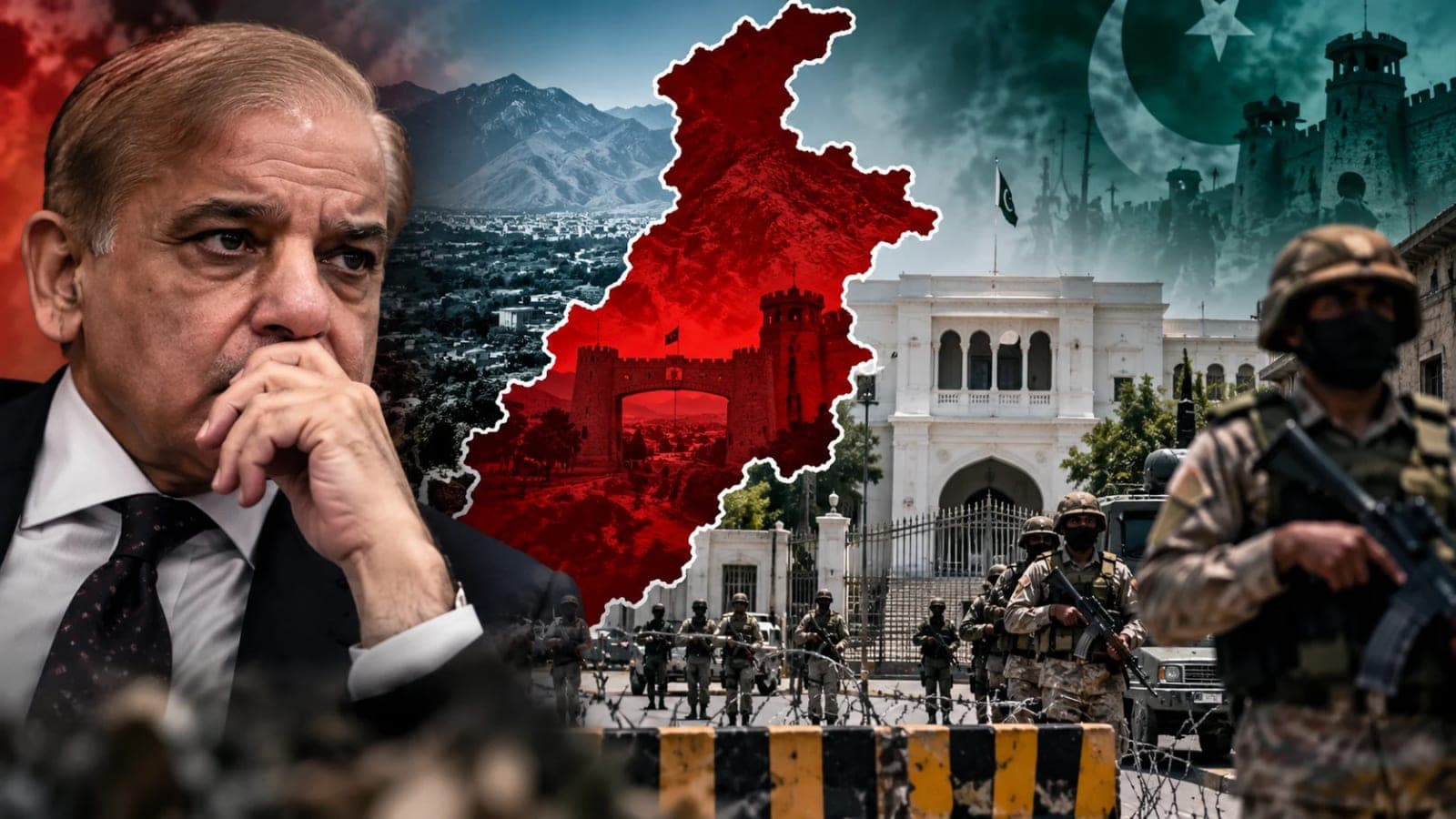
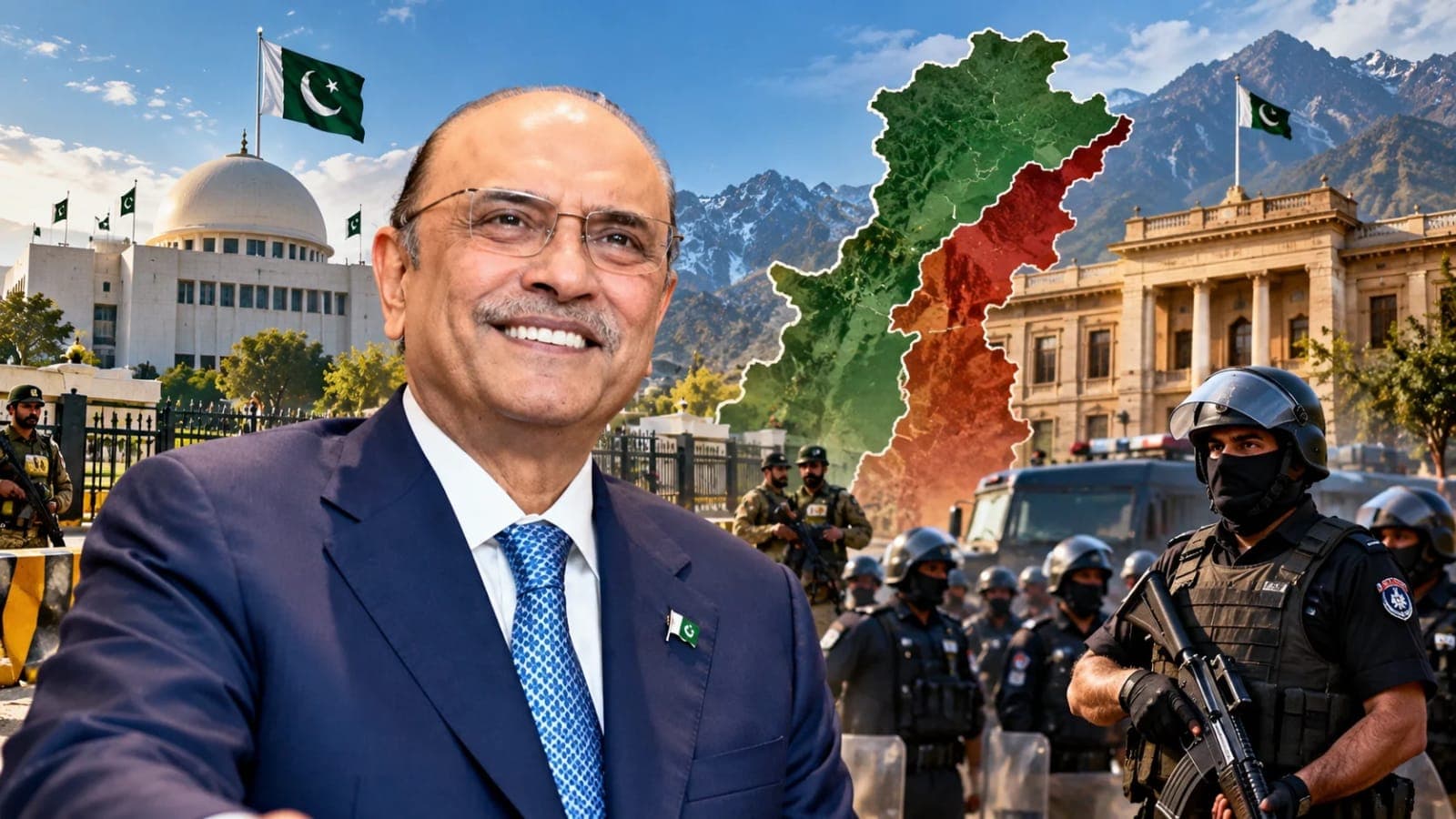
ISLAMABAD, October 12, 2026: Pakistan has entered a new period of political uncertainty after President Asif Ali Zardari approved the imposition of emergency and governor's rule in Khyber Pakhtunkhwa (KP), bringing the province's Pakistan Tehreek-e-Insaf (PTI)-led government to an end.
The decision, announced on Sunday, October 11, followed recommendations from the federal cabinet and Prime Minister Shehbaz Sharif. Federal authorities cited the worsening security situation, increasing militant violence and disagreements with the provincial leadership over counterterrorism operations.
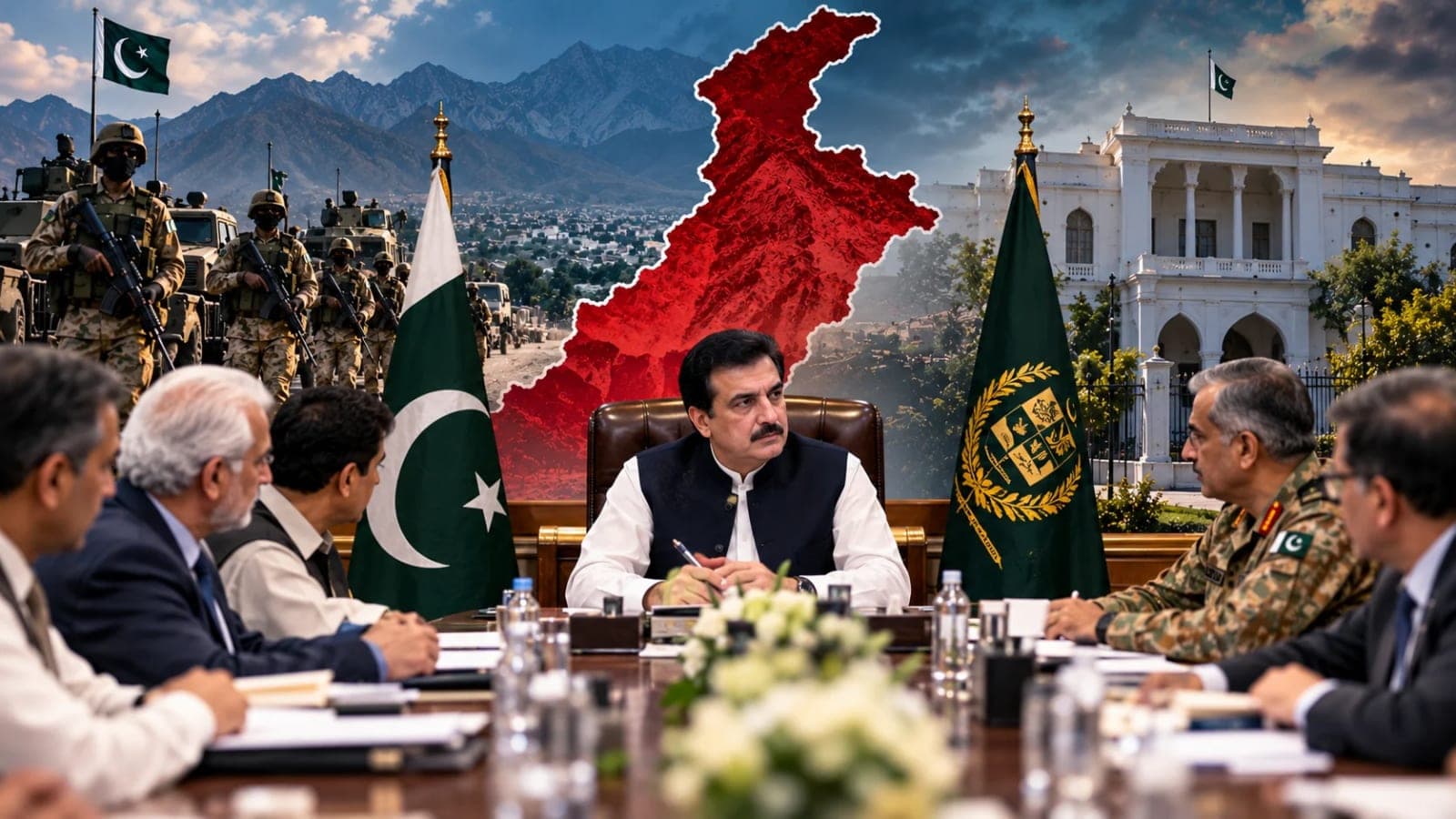
Under the new arrangement, Governor Faisal Karim Kundi has assumed responsibility for running provincial affairs, supported by an 11-member advisory council.
The development has sparked strong opposition from PTI, raised constitutional questions and increased tensions between the federal government and supporters of former Prime Minister Imran Khan.
What Happened During the KP Emergency 2026?
The KP Emergency 2026 was formally introduced after the federal cabinet recommended constitutional intervention in Khyber Pakhtunkhwa.
President Zardari subsequently approved the recommendations under Articles 232 and 234 of Pakistan's Constitution.
The announcement marked a major change in provincial administration. The elected PTI-led government headed by Chief Minister Sohail Afridi ceased exercising its executive authority, while the governor was assigned responsibility for provincial governance.
Federal Law Minister Azam Nazeer Tarar confirmed the decision during a news conference in Islamabad.
According to the government's explanation, the arrangement is intended to restore administrative coordination, strengthen security operations and improve the provincial response to militant activity.
However, PTI has challenged the political and constitutional justification for the decision.
Key Developments at a Glance
- President Asif Ali Zardari approved emergency and governor's rule on October 11.
- The federal government invoked Articles 232 and 234.
- The PTI-led provincial administration lost its executive powers.
- Governor Faisal Karim Kundi assumed responsibility for provincial affairs.
- An 11-member advisory council was established.
- The federal government authorised army deployment in aid of civil power under Article 245.
- PTI and opposition representatives condemned the intervention.
These developments have made Khyber Pakhtunkhwa the centre of one of Pakistan's most significant federal-provincial political disputes in recent years.
Why Did the Federal Government Impose Emergency in KP?
The federal government's stated justification centres on the security situation in Khyber Pakhtunkhwa.
The province shares a long border with Afghanistan and has experienced repeated militant attacks, particularly in districts affected by longstanding security challenges.
Federal ministers accused the provincial administration of failing to cooperate adequately with national counterterrorism efforts.
A statement from the Prime Minister's Office described the provincial government's approach as deliberate disengagement from the fight against terrorism.
Federal officials argued that the lack of coordination had made an already difficult security environment more challenging.
Interior Minister Mohsin Naqvi also referred to unsuccessful efforts to bring the provincial government into closer cooperation with federal security policy.
PTI Disputes the Government's Explanation
PTI rejects the allegation that its provincial government neglected counterterrorism responsibilities.
Party representatives argue that the province has suffered heavily from terrorism and that its administration had repeatedly raised concerns about security resources, operational strategy and the protection of civilians.
The disagreement is not limited to whether militant violence is increasing. It also concerns who should control security decisions and how counterterrorism operations should be conducted.
These competing positions are central to the political dispute surrounding the emergency.
What Happened to Chief Minister Sohail Afridi?
Sohail Afridi was leading the PTI provincial government before the federal intervention.
Under the emergency arrangement announced by the government, the executive powers previously exercised by the chief minister and provincial cabinet were transferred to the governor.
Afridi had already opposed the possibility of governor's rule during public appearances ahead of the announcement.
He argued that the federal government should respect the provincial mandate and resolve disagreements through political and constitutional channels.
Was Sohail Afridi Arrested?
Reports concerning Afridi's detention emerged shortly after the emergency announcement.
KP Information Minister Shafi Jan claimed that the chief minister had been taken into custody. Reuters separately reported that restrictions had been placed on Afridi's movements, citing an aide.
However, a restriction on movement is not necessarily the same as a formally confirmed arrest.
As of the reporting reviewed for this article, independent official confirmation of a formal arrest was not established.
For that reason, claims that Afridi was arrested should be treated cautiously until further information becomes available.
Governor Faisal Karim Kundi Takes Charge of KP Affairs
Following the presidential approval, Governor Faisal Karim Kundi became the central administrative authority in Khyber Pakhtunkhwa.
Under the new arrangement, powers previously exercised by the chief minister and provincial cabinet have been assigned to the governor.
The federal government has also established an advisory council to support the administration.
Kundi chaired the council's first meeting on October 11, during which members discussed their responsibilities and the province's administrative priorities.
The governor's immediate challenges include maintaining public services, coordinating security measures and ensuring that provincial institutions continue functioning.
What Happens to Government Departments?
Government departments are expected to continue their routine functions under the revised administrative structure.
However, decisions previously requiring approval from the chief minister or provincial cabinet may now fall within the governor's authority or the arrangements established under the emergency proclamations.
The practical effects will depend on official notifications, departmental instructions and the constitutional limits applicable to the emergency.
For ordinary citizens, the most immediate concerns include access to public services, schools, hospitals, transport and government offices.
Who Are the Members of the 11-Member KP Advisory Council?
The federal government has appointed an 11-member advisory council to assist Governor Faisal Karim Kundi.
According to the official announcement, the council includes individuals assigned responsibility for important provincial departments.
| Member | Assigned Portfolio |
|---|---|
| Kifayatullah Khan | Home |
| Tariq Mahmood Pasha | Finance |
| Amir Javed | Law |
| Dr Syed Amir Abdullah | Education |
| Lt Gen (Retd) Nigar Johar Khan | Health |
| Dr Sarfaraz Ali Shah | Mines and Minerals |
| Dr Muhammad Irshad | Industries and Commerce |
| Asif Rafiq Afridi | Communication and Works |
| Maulana Muhammad Tayyab Qureshi | Religious Affairs |
| Osman Saifullah Khan | Energy |
| Samar Haroon Bilour | Information |
The council is expected to support the governor in managing provincial administration and service delivery.
Its establishment also reflects the federal government's decision to replace the previous cabinet-based administrative structure with an appointed advisory arrangement.
Pakistan Army Deployment in KP Under Article 245
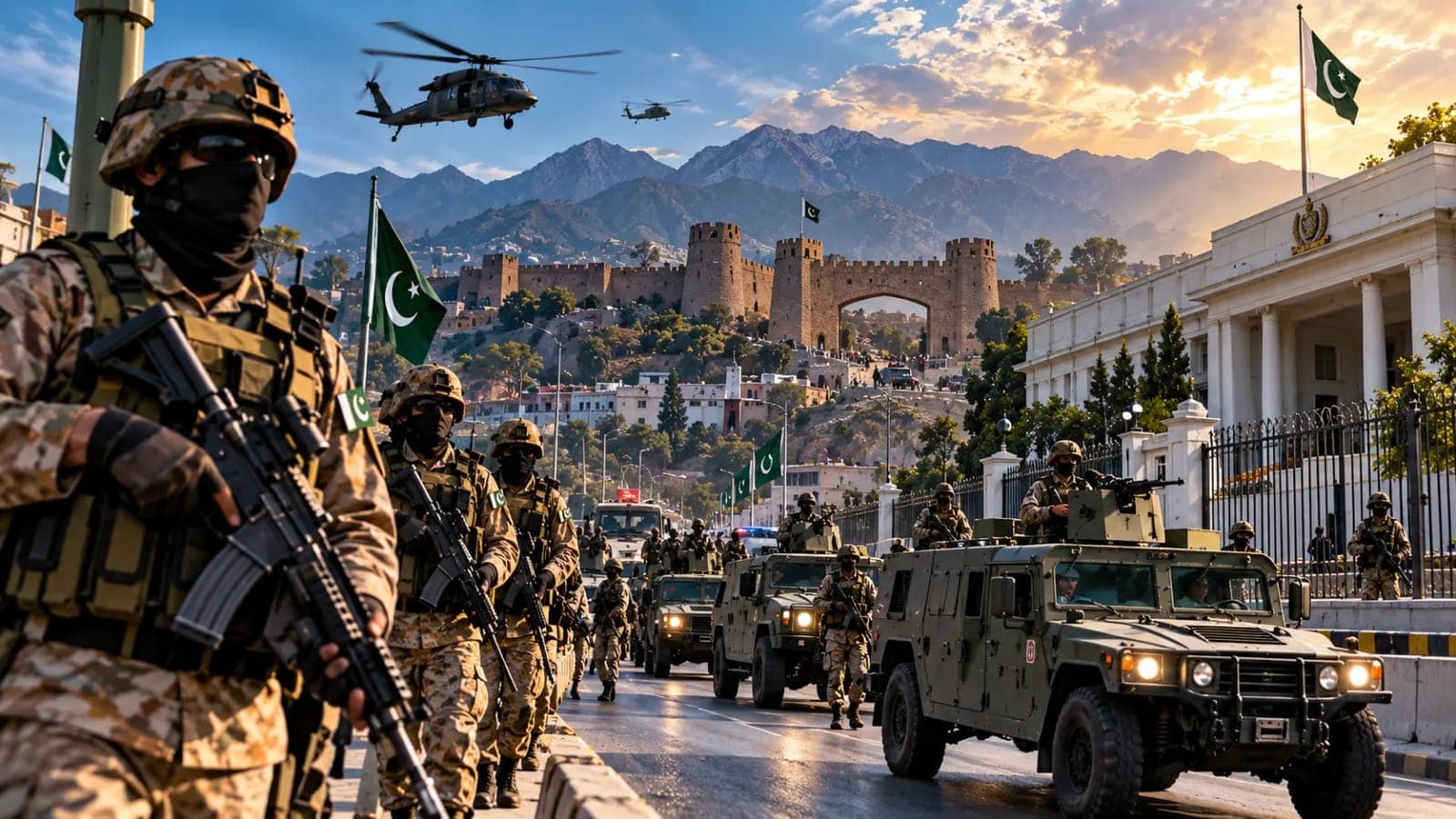
Another major development following the emergency was the federal government's authorisation of Pakistan Army deployment in Khyber Pakhtunkhwa.
The Interior Ministry issued an order under Article 245 of the Constitution, allowing military personnel and assets to assist civil authorities.
According to the notification, the deployment is intended to protect citizens, property and government installations.
The number of troops and resources required will be determined through coordination involving Governor Kundi and the relevant military authorities.
What Does Army Deployment Mean for Residents?
Military deployment in aid of civil power does not automatically mean that every district will face identical security restrictions.
The actual situation may differ between Peshawar, the merged districts and other parts of Khyber Pakhtunkhwa.
Residents should follow verified instructions from district administrations and relevant authorities regarding road access, public gatherings and movement restrictions.
The deployment authorisation remains linked to the duration of the emergency proclamation.
Schools and Universities Closed Amid KP Security Concerns
The emergency has also affected educational activities in parts of Khyber Pakhtunkhwa.
Authorities announced the closure of educational institutions in Peshawar on Monday, October 12, because of the security situation.
The decision covers government and private schools, colleges and universities in the district.
Dera Ismail Khan authorities also announced closures, with examinations scheduled for October 12 cancelled.
The announcements followed security reviews by provincial and district authorities.
Will Schools Remain Closed After October 12?
The reported closure decisions concern October 12.
Any extension would require further announcements from the relevant district administration or education authorities.
Students and parents should avoid assuming that the closures automatically apply to every district or continue throughout the week.
Schools, colleges and universities may issue separate instructions concerning examinations and academic schedules.
What Does Article 232 of Pakistan's Constitution Mean?
Article 232 provides a constitutional framework for proclaiming an emergency under specified circumstances.
The provision deals with situations involving threats to national security, war, external aggression or internal disturbances beyond the capacity of provincial authorities to control.
Its application carries constitutional requirements and parliamentary oversight considerations.
In the KP case, the federal government invoked Article 232 alongside Article 234.
The constitutional significance of the decision is therefore broader than a routine administrative reshuffle.
An emergency proclamation can affect the balance of powers between federal and provincial institutions, depending on its wording and the applicable constitutional provisions.
What Is Article 234 and How Does Governor's Rule Work?
Article 234 addresses circumstances in which the constitutional machinery of a province cannot function in accordance with the Constitution.
It allows the president, subject to the constitutional framework, to assume certain provincial functions or direct the governor to exercise them on the president's behalf.
The provision also permits arrangements involving the exercise of provincial legislative powers by Parliament.
However, governor's rule does not mean that every constitutional institution disappears or that all legal safeguards cease to apply.
The precise consequences depend on the proclamation and the Constitution.
How Long Can Governor's Rule Continue?
Federal Law Minister Azam Nazeer Tarar said the initial arrangement was expected to remain in place for six months.
Any continuation must be considered within the relevant constitutional procedures and requirements.
Political statements about duration should therefore be distinguished from the legal mechanisms governing the proclamation.
PTI Rejects KP Emergency and Governor's Rule
Pakistan Tehreek-e-Insaf has strongly rejected the federal government's decision.
The party describes the intervention as an attack on the electoral mandate received by its provincial government.
PTI representatives maintain that political differences and disagreements over security policy should be resolved through dialogue rather than the removal of an elected administration's executive authority.
The party has also questioned why the federal government chose emergency measures in Khyber Pakhtunkhwa while other provinces continue to face serious security challenges.
PTI spokesperson Zulfikar Bukhari criticised the decision and warned that it could increase political instability.
These statements represent PTI's position and are disputed by federal officials, who maintain that the intervention was necessary for security and governance.
Opposition Alliance Plans Legal Challenge
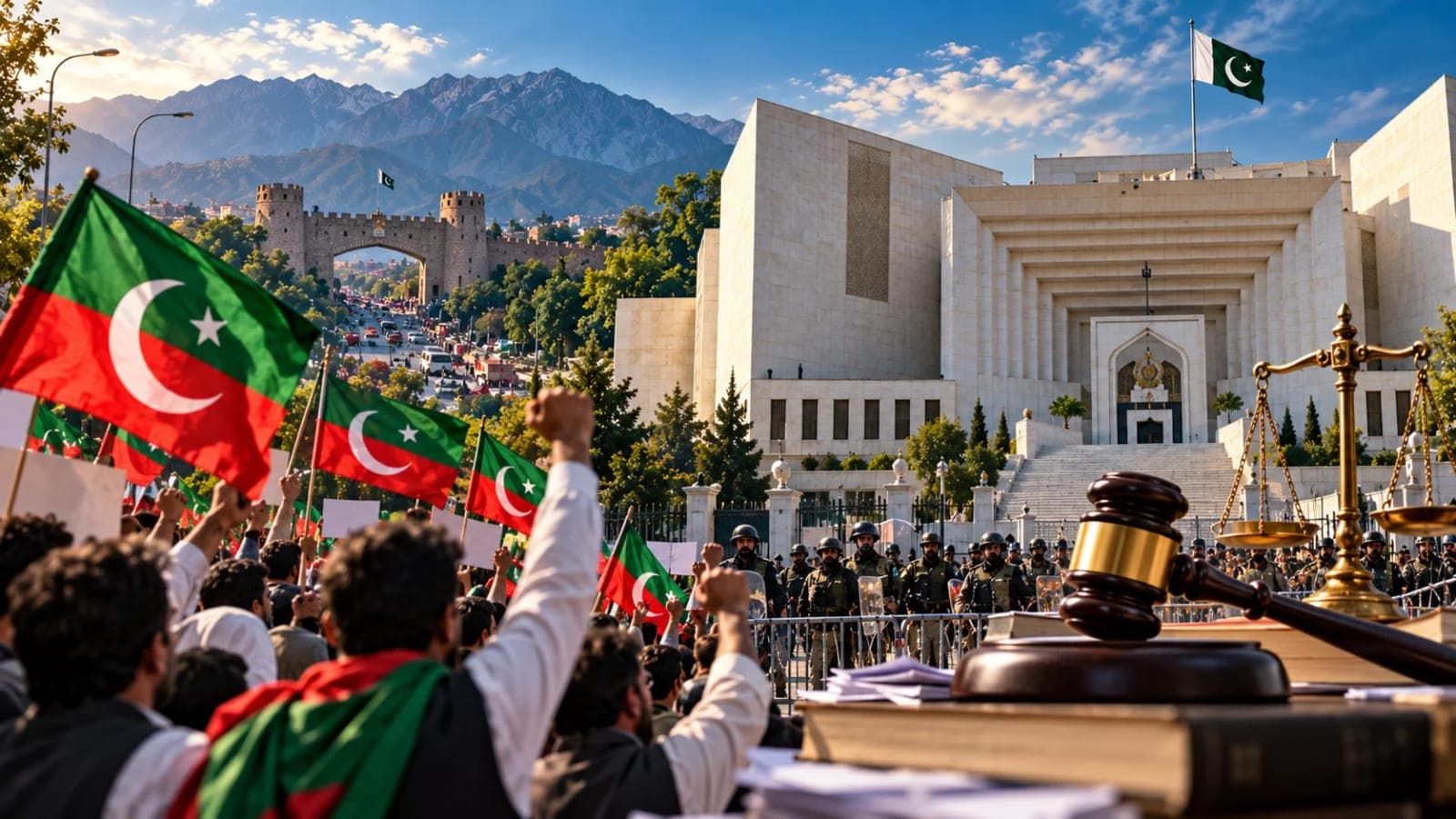
The opposition alliance Tehreek Tahafuz Ayeen-i-Pakistan has also condemned the emergency and governor's rule.
Its representatives have indicated that they intend to challenge the decision through courts, parliamentary forums and public political activity.
The dispute may therefore move beyond protests and statements into formal constitutional proceedings.
How Is Imran Khan Connected to the KP Political Crisis?
Former Prime Minister Imran Khan remains a central figure in the political developments surrounding the emergency.
PTI supporters had been preparing a protest march towards Islamabad to demand his release from prison.
Sohail Afridi was associated with the mobilisation, which had already increased tensions between the federal and provincial governments.
The federal government maintains that its decision was driven by counterterrorism concerns.
PTI, however, argues that the emergency is politically motivated and connected to efforts to prevent its protest movement.
Both claims have become part of the wider national debate.
The timing of the emergency, shortly before the planned mobilisation, has intensified scrutiny of the government's decision.
How Could the KP Emergency Affect Ordinary Citizens?
The political consequences are significant, but residents may be more concerned about how the situation affects everyday life.
Public Transport and Road Access
Security deployments, checkpoints and temporary road restrictions can disrupt travel.
Residents should check district-level announcements before making long-distance journeys or travelling through sensitive areas.
Education and Examinations
Closures in Peshawar and Dera Ismail Khan have already affected educational activities.
Students should rely on official notifications for examination rescheduling.
Healthcare Services
Hospitals and emergency healthcare facilities remain essential during periods of political and security uncertainty.
The advisory council's health portfolio will be an important part of maintaining service delivery.
Business and Economic Activity
Uncertainty may affect local commerce, transport operations and business confidence.
However, any claims about province-wide economic losses would require reliable data rather than assumptions.
Government Services
Changes in administrative leadership may alter approval procedures and departmental coordination.
Citizens should follow updated official instructions where relevant.
What Happens Next in Khyber Pakhtunkhwa?
Several developments will determine how the situation evolves.
First, the federal government will need to implement the emergency administration while maintaining essential public services.
Second, Governor Kundi and the advisory council will face scrutiny over their handling of security, education, healthcare and provincial finances.
Third, opposition parties may pursue legal and parliamentary challenges to the proclamations.
Finally, the federal government and PTI remain divided over counterterrorism policy and the political future of the province.
Further official notifications, court proceedings and parliamentary discussions will be important in determining the next phase.
At this stage, there is no reliable basis for declaring how the dispute will ultimately be resolved.
Frequently Asked Questions
1. Has emergency been imposed in Khyber Pakhtunkhwa?
Yes. President Asif Ali Zardari approved emergency and governor's rule in Khyber Pakhtunkhwa on October 11, 2026, following recommendations from the federal government.
2. Who is running Khyber Pakhtunkhwa after governor's rule?
Governor Faisal Karim Kundi is exercising the provincial executive responsibilities assigned under the emergency arrangement, supported by an 11-member advisory council.
3. Has Sohail Afridi been arrested?
A provincial minister reported that Afridi had been taken into custody, while Reuters reported restrictions on his movements. A formal arrest was not independently confirmed in the reporting reviewed for this article.
4. Why was the Pakistan Army deployed in KP?
The federal government authorised military deployment under Article 245 to assist civil authorities in protecting citizens, property and government installations during the emergency.
5. Are schools and universities closed in KP on October 12?
Authorities announced closures in Peshawar and Dera Ismail Khan for October 12, 2026. Students in other districts should check their local administration's official notifications.
Conclusion
The KP Emergency 2026 represents a major change in the political and administrative structure of Khyber Pakhtunkhwa.
President Asif Ali Zardari's approval of emergency and governor's rule has transferred provincial executive authority away from the PTI-led administration and placed Governor Faisal Karim Kundi at the centre of governance.
The federal government maintains that the decision was necessary to address security challenges and improve counterterrorism coordination. PTI and opposition representatives dispute that justification and argue that the intervention undermines the province's democratic mandate.
With army deployment authorised, an advisory council established and legal challenges being considered, the situation remains politically sensitive.
For residents, the immediate priorities are public safety, uninterrupted essential services and accurate information about local restrictions.
The coming days will be important in determining how the emergency administration functions and how Pakistan's institutions respond to the constitutional dispute.
Last Updated: October 12, 2026.
Editorial Note: This report reflects information available at the time of writing. Developing claims, including those concerning Sohail Afridi's detention, should be checked against subsequent official statements and independent reporting.
What happens next for national
We will keep this page updated as the story develops rather than publishing a near-duplicate at a new address. Follow National for related coverage.
Get the Verified Brief
One email each morning with the stories we checked overnight.
Spotted an error? Read our corrections policy and tell the newsroom.