
US Expands Visa Screening Rules for Foreign Applicants From October 2026
The United States has expanded visa screening from October 1, 2026, adding online presence checks for more foreign applicants, including I, TN and TD visa categories.

By News Desk · Verified Pakistan News Desk
Published · Updated · 5 min read
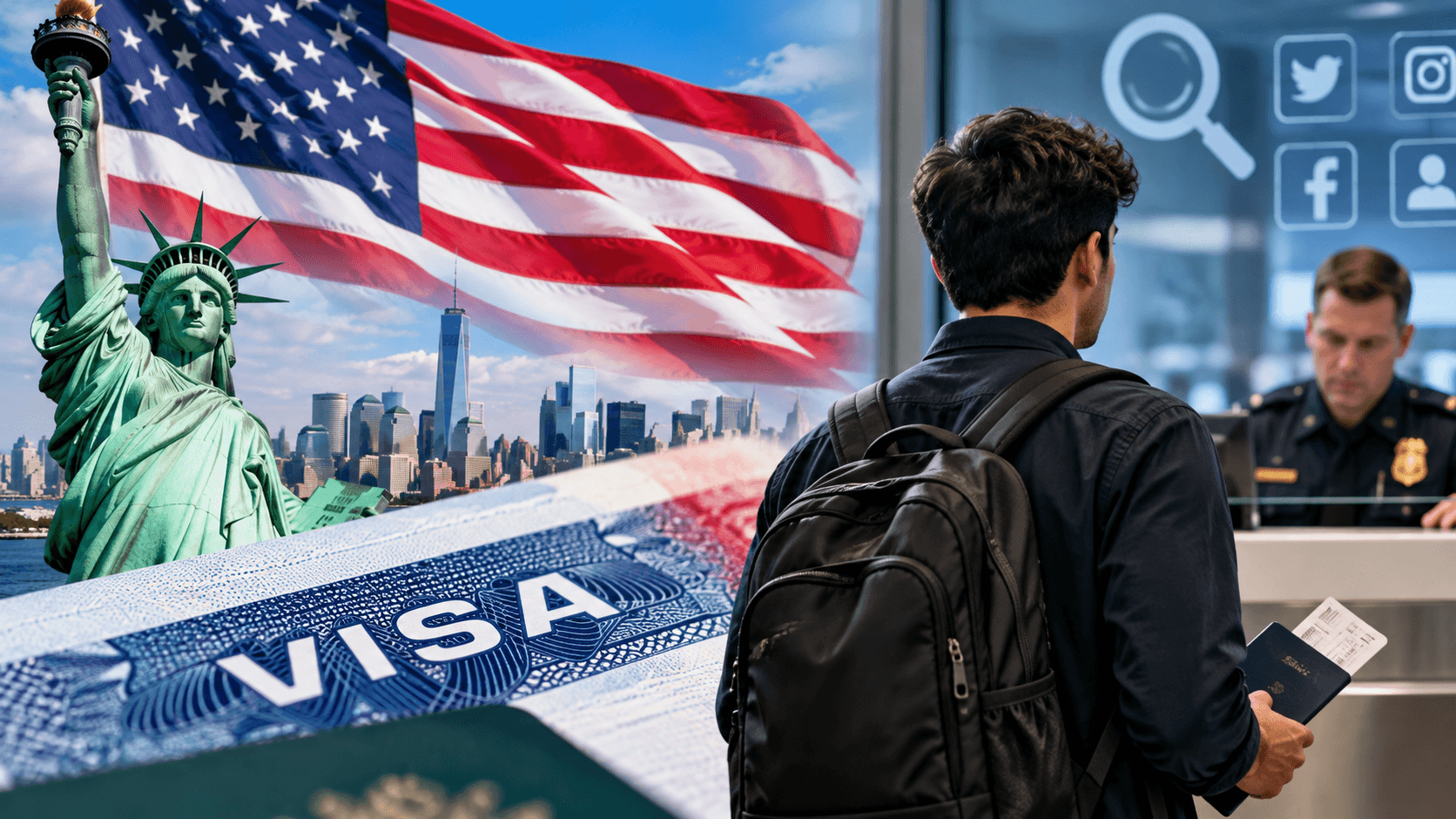
The United States has expanded visa screening from October 1, 2026, adding online presence checks for more foreign applicants, including I, TN and TD visa categories.
The latest change is part of a broader screening process used by the U.S. Department of State when reviewing people who want to enter the country. Under the expanded rules, applicants in several visa categories may have their online presence examined as part of the visa decision.
For people planning to travel, work, study or carry out professional activities in the United States, the change makes it even more important to provide accurate and consistent information throughout the application process.
New US Visa Screening Rules Took Effect on October 1
The U.S. Department of State announced in September 2026 that it was expanding online presence reviews to three additional nonimmigrant visa classifications from October 1.
The newly added categories are I visas for representatives of foreign media, TN visas for qualifying Canadian and Mexican professionals under the United States-Mexico-Canada Agreement, and TD visas for eligible dependants of TN visa holders.
Applicants covered by the latest expansion have been instructed by the State Department to change the privacy settings of their social media profiles to “public” or “open” to support the vetting process.
This does not mean online screening began in October 2026. The United States was already carrying out online presence reviews for a number of visa classifications before the latest expansion.
Which US Visa Categories Face Online Presence Reviews?
Online screening currently extends well beyond the three categories added in October.
According to the State Department, categories covered by its expanded vetting include F-1 and M-1 students, certain F-2 and M-2 dependants, J-1 and J-2 exchange visitors, H-1B workers, certain H-4 dependants, H-3 trainees and several diplomatic, fiancé, religious worker and other classifications.
The list also includes A-3, certain C-3, G-5, K, Q, R, S, T and U classifications.
The exact requirements can differ depending on the visa being requested. Applicants should therefore check the instructions that apply to their own category rather than assuming that the rules are identical for every traveller.
The State Department says it uses available information during screening to determine whether an applicant qualifies for the requested visa and whether there are national security or public safety concerns.
What Social Media Screening Means for Visa Applicants
Online presence review can make information available on social media another relevant part of the visa screening process.
Applicants in affected categories should make sure the information provided in their visa application is truthful and complete. Details about employment, education, travel purpose and other relevant circumstances should accurately reflect the applicant’s situation.
The expanded screening should not be interpreted as an automatic visa refusal simply because an applicant uses social media. A visa application is assessed according to the requirements and circumstances applicable to that particular case.
However, inaccurate information, fraud, visa violations or other issues affecting eligibility can create serious problems during the immigration process.
Applicants should also avoid relying solely on unofficial social media posts or agents when checking visa requirements. Rules can change, and the official U.S. Department of State website remains an important source for current visa information.
What Pakistani Applicants Should Know
Pakistani nationals applying for affected U.S. visa categories can also be subject to the applicable screening requirements.
The change does not mean that all U.S. visas for Pakistani citizens have been suspended or that every Pakistani applicant will face the same procedure. The impact depends on the visa classification and the applicant’s individual circumstances.
For example, Pakistan continues to have listed reciprocity arrangements for a range of U.S. visa classifications, including F-1, J-1, H-1B and several other categories.
Anyone preparing a new application should check the latest instructions for the specific visa before attending an interview or submitting supporting information. Applicants should also ensure that forms, documents and statements are accurate and consistent.
The broader direction is clear: online presence is playing a larger role in U.S. visa vetting. For applicants affected by the new rules, careful preparation now involves not only completing forms and collecting documents but also following the online-presence requirements announced for their visa category.
Frequently Asked Questions
1. When did the latest US visa screening rules take effect?
The latest expansion took effect on October 1, 2026. It extended online presence reviews to additional nonimmigrant visa classifications.
2. Which visa categories were added in October 2026?
The newly added classifications are I visas for foreign media representatives, TN visas for eligible Canadian and Mexican professionals, and TD visas for qualifying dependants of TN visa holders.
3. Do applicants need to make their social media accounts public?
The U.S. Department of State has instructed applicants in the newly covered I, TN and TD classifications to set their social media profiles to “public” or “open” to facilitate vetting.
4. Are students also subject to US online presence screening?
Yes. Online presence reviews were already being applied to F and M student visa applicants and J exchange visitor applicants before the October 2026 expansion.
5. Do the new rules apply to Pakistani visa applicants?
The screening requirements are based primarily on the relevant visa classification and other applicable immigration rules. Pakistani applicants seeking a visa in a covered category should therefore check the latest official instructions for that category.
What happens next for global
We will keep this page updated as the story develops rather than publishing a near-duplicate at a new address. Follow Global for related coverage.
Get the Verified Brief
One email each morning with the stories we checked overnight.
Spotted an error? Read our corrections policy and tell the newsroom.