
Mecca Defence Pact Committee Meets in Riyadh Today as Yemen Crisis Escalates
Mecca defence pact committee meets in Riyadh today. The Riyadh meeting is the first major test of its pledge that an attack on one member is an attack on all.

By News Desk · Verified Pakistan News Desk
Published · Updated · 9 min read
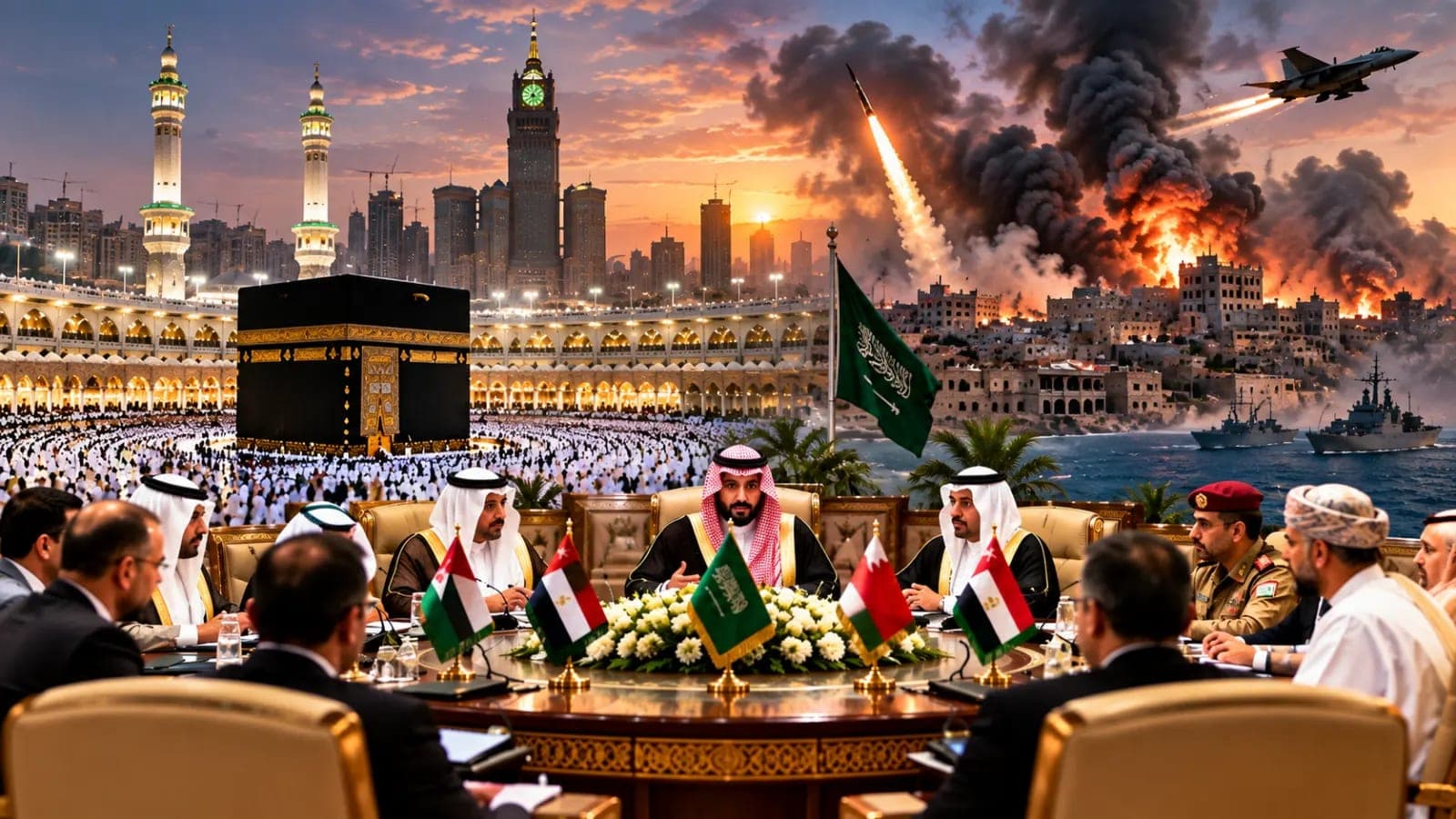
The Mecca defence pact is facing its first real test. On Monday, October 5, 2026, the alliance's strategic political and defence committee is meeting in Riyadh, bringing together senior officials from Turkiye, Saudi Arabia and Pakistan at a moment when missile and drone attacks are shaking the region.
The Turkish foreign ministry announced the meeting on Sunday. According to the statement, Turkish Foreign Minister Hakan Fidan, Defence Minister Yasar Guler and chief of the general staff General Selcuk Bayraktaroglu will attend, alongside officials from Pakistan and Saudi Arabia. The Riyadh meeting is the first major test of its pledge that an attack on one member is an attack on all.
The timing is no coincidence. Yemen's Saudi-backed government announced on Sunday that it had begun a major military operation against the Iran-backed Houthis, aimed at seizing the territory under their control. As the region watches that operation unfold, the three allies are sitting down to decide how their new pact should respond to the crisis around them.
Mecca Defence Pact: Who Is Meeting in Riyadh and Why
The Turkish statement was brief but significant. "The meeting will address recent developments in the region and the stage reached in the Alliance's institutionalisation efforts," it said, according to Reuters. In plain terms, the committee will review what is happening on the ground and how far the alliance has come in building its own structures.
The attendance list tells its own story. Sending the foreign minister, the defence minister and the top general together is not a routine diplomatic courtesy. It signals that Ankara is treating this committee as the working heart of the pact, where political decisions and military coordination are meant to happen side by side.
The alliance itself is barely two months old. Pakistan, Saudi Arabia and Turkiye signed the Makkah trilateral agreement on August 7, 2026, a deal that provides for collective security and defence cooperation among the three states. Later named the Makkah Defence Alliance, it stipulates that an armed attack on any one of the three countries will be regarded as an attack on all of them, in the same spirit as the collective defence clauses of other major alliances.
Getting three Muslim-majority countries with very different military strengths into one binding pact was always ambitious. Pakistan brings battle-tested armed forces and nuclear capability. Turkiye brings a NATO-standard military and a growing defence industry. Saudi Arabia brings regional weight and resources. Monday's meeting will show whether that combination can move from paper to practice.
Why the Meeting Was Called: Houthi Attacks and the Yemen Operation
The spark for this emergency session is Yemen. The Houthis have carried out repeated missile and drone attacks against Saudi Arabia since announcing a naval blockade on the Kingdom in July. The group has targeted Saudi-linked vessels operating in the Red Sea, Saudi airports, energy facilities and other strategic infrastructure, with the Kingdom's air defence systems intercepting many of the projectiles, AFP reported.
On October 2, Pakistan's Foreign Minister Ishaq Dar said an emergency meeting under the Makkah agreement would be held the following week to review the latest situation in Saudi Arabia, adding that the Kingdom had faced 17 to 18 attacks. "We are bound to defend Saudi Arabia," Dar said, adding that the UN Charter also allows such alliances to take action, Geo reported.
Then on Sunday, October 4, the leader of Yemen's Saudi-backed government announced the beginning of a major military operation against the Houthis. The stated aim is to seize the territory under Houthi control, a dramatic escalation that raises the stakes for everyone in the region, including the alliance members now meeting in Riyadh.
For the pact, this is the scenario it was designed for. Saudi Arabia is under repeated attack, and the treaty's central promise is collective defence. The question the committee must answer is what that promise means in practice: intelligence sharing, diplomatic coordination, air defence support, or something more direct. Whatever comes out of Riyadh will set the precedent for how the alliance behaves under pressure.
Iran's Proposal: Political Engagement With the Houthis
Adding another layer to the talks, Pakistan's foreign minister said on Friday that Iran had suggested engaging Yemen's Houthis politically after the attacks, an idea the Mecca defence pact committee would discuss at the Riyadh meeting this week, Reuters reported.
It is a delicate proposition. Iran is widely seen as the Houthis' main backer, while Saudi Arabia has been the target of their attacks. A political track would mean talking to a group that is currently being bombed, and any such move would need the agreement of Riyadh most of all. But the very fact that the suggestion is on the committee's agenda shows that the allies are weighing more than one path.
This is where Pakistan's role becomes interesting. Islamabad has long tried to keep a working relationship with both Saudi Arabia and Iran, two neighbours who rarely see eye to eye. If the committee takes up Iran's suggestion seriously, Pakistan could find itself in the middle of a diplomacy that suits its traditional balancing act. If it rejects the idea, Pakistan will have to stand firmly with Riyadh, as Dar's words already suggest.
Analysts will also be watching how Turkiye positions itself. Ankara has its own complex ties with both the Gulf and Iran, and Fidan is known as a careful diplomat. The presence of the Turkish top general alongside him hints that the meeting will weigh military options as well as political ones, not just choose between them.
What the Mecca Defence Pact Means for Pakistan
For Pakistan, this alliance is about much more than Yemen. It formalises a security relationship with Saudi Arabia that goes back decades. Tens of thousands of Pakistani troops and advisers have served in the Kingdom over the years, and millions of Pakistani workers in Saudi Arabia send home remittances that keep Pakistan's economy afloat. "We are bound to defend Saudi Arabia" is not just rhetoric for Islamabad; it is a commitment with deep roots.
The pact also gives Pakistan a seat at a table where the region's biggest security decisions are being made. After years of being treated mainly as a source of manpower for Gulf militaries, Pakistan is now a formal co-signer of a collective defence treaty, alongside a NATO member and the Arab world's most powerful state. That changes how the world reads Pakistan's regional role.
There are risks too. Getting drawn into a Yemen confrontation could strain Pakistan's careful relationship with Iran, with whom it shares a long border and a complex history. Islamabad will be walking a fine line in Riyadh: showing loyalty to Saudi Arabia without closing the door on Tehran. The committee's discussion of Iran's political engagement proposal will be an early sign of how that balancing act is going.
There is also the question of cost. Collective defence commitments are easy to sign and expensive to keep. Pakistan's military is already stretched between its eastern and western borders, and its economy remains fragile. Committing resources to a Gulf conflict, even in a supporting role, will require hard choices at home.
For now, the message from Islamabad is clear. Pakistan intends to honour the pact, and Monday's meeting is where that intention gets its first practical test. What comes out of Riyadh will shape not just the Yemen crisis, but the future of an alliance that could redefine security politics across the Muslim world.
Sources: Reuters via The Business Standard (https://www.tbsnews.net/world/turkey-says-mecca-pact-committee-meet-riyadh-5-october-1562691), Geo News (https://www.geo.tv/latest/685001-turkiye-says-makkah-pact-committee-to-meet-in-riyadh-on-october-5)
FAQs
What is the Mecca defence pact?
The Mecca defence pact, formally the Makkah trilateral agreement, is a collective security treaty signed by Pakistan, Saudi Arabia and Turkiye on August 7, 2026. It provides for defence cooperation among the three states and stipulates that an armed attack on any one member will be regarded as an attack on all of them. It is also referred to as the Makkah Defence Alliance.
Why is the pact's committee meeting in Riyadh on October 5, 2026?
The strategic political and defence committee was convened to address recent regional developments, especially the Houthi attacks on Saudi Arabia, and to review the alliance's institutionalisation. The meeting comes a day after Yemen's Saudi-backed government announced a major military operation against the Iran-backed Houthis. Turkish ministers Hakan Fidan and Yasar Guler, plus the Turkish chief of general staff, are attending with Pakistani and Saudi officials.
What did Pakistan's foreign minister say about the pact?
On October 2, Foreign Minister Ishaq Dar said an emergency meeting would be held under the Makkah agreement to review the situation in Saudi Arabia, which he said had faced 17 to 18 attacks. He stated clearly that "we are bound to defend Saudi Arabia" and added that the UN Charter allows such alliances to take action. He also said Iran's suggestion of political engagement with the Houthis would be discussed by the committee.
What is Iran's proposal regarding the Houthis?
According to Pakistan's foreign minister, Iran suggested engaging Yemen's Houthis politically after their attacks, and this idea will be discussed by the Mecca defence pact committee in Riyadh. It is a sensitive proposal because Iran is seen as the Houthis' main backer while Saudi Arabia is their main target. The committee's response will show whether the alliance favours diplomacy, military coordination, or both.
What does the Mecca defence pact mean for Pakistan?
For Pakistan, the pact formalises its long-standing security relationship with Saudi Arabia and gives it a seat at the table where major regional security decisions are made. It comes with risks too, including potential strain in Pakistan-Iran relations and the cost of honouring collective defence commitments. The Riyadh meeting will be the first real test of how Pakistan balances loyalty to the alliance with its other regional interests.
What happens next for global
We will keep this page updated as the story develops rather than publishing a near-duplicate at a new address. Follow Global for related coverage.
Get the Verified Brief
One email each morning with the stories we checked overnight.
Spotted an error? Read our corrections policy and tell the newsroom.