
Electricity Tariff Rises by Rs2.37 for November 2026 Bills
Electricity tariff will rise by Rs2.37 per unit in November bills after NEPRA approved a fuel cost adjustment. Here is what households and factories will pay.

By News Desk · Verified Pakistan News Desk
Published · Updated · 9 min read
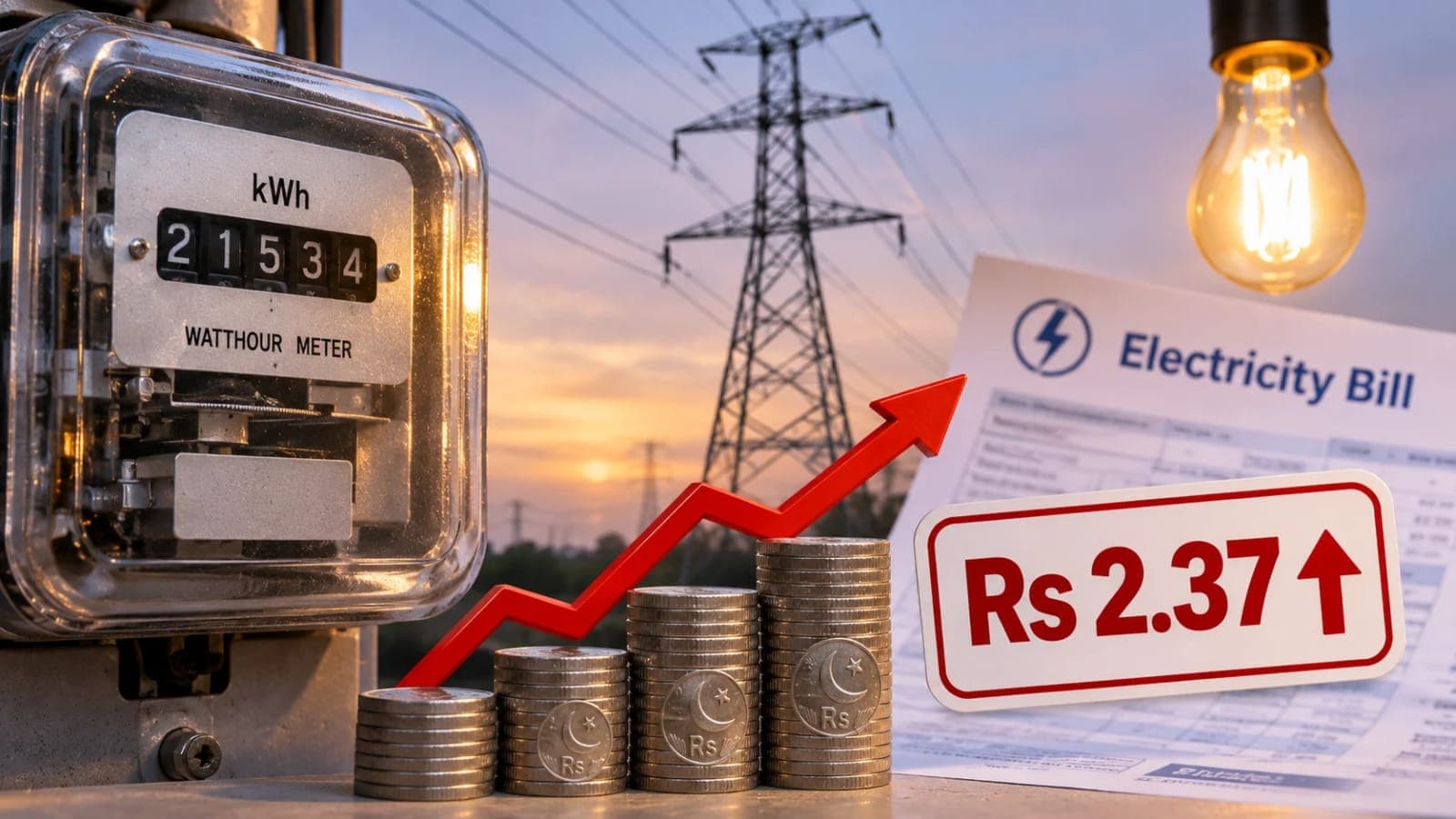
The electricity tariff will rise for households across Pakistan in November, after the National Electric Power Regulatory Authority, NEPRA, approved an additional charge of Rs2.37 per unit on electricity bills. The charge is a fuel cost adjustment, known as FCA, and it will appear in the bills for November 2026. NEPRA issued the notification on Nov 6, 2026. The adjustment will allow the power sector to recover about Rs25 billion from consumers, and it relates to the fuel cost of electricity generated in September 2026.
A fuel cost adjustment is a routine part of how electricity bills are worked out in Pakistan. The cost of the fuel used to generate electricity changes from month to month, and the FCA passes that change on to consumers in a later bill. When fuel becomes more expensive, the FCA is positive and bills go up. When fuel becomes cheaper, the FCA can be negative and bills come down. In this case, the fuel used to generate electricity in September 2026 cost more than the reference price built into the tariff, so NEPRA has approved an additional charge of Rs2.37 per unit.
The electricity tariff itself has not changed. The base rate stays the same, and the FCA is added on top of it for this billing month. The electricity tariff increase is therefore not a change in the base tariff itself, but an extra line on the bill that reflects what the fuel actually cost in that month.
The Central Power Purchasing Agency, CPPA, had asked NEPRA to approve a higher adjustment of Rs2.56 per unit. NEPRA approved Rs2.3673 per unit instead, which is slightly less than the amount the CPPA had sought.
The difference may look small, but across millions of consumers it adds up to a large sum. NEPRA holds a public hearing before deciding an FCA, and it checks the CPPA claim against the actual fuel costs reported by the power plants. NEPRA checks every claim before it allows an electricity tariff adjustment to be charged. The approved figure of Rs2.3673 per unit is the amount that will be charged on bills, and it is the figure consumers should look for on the FCA line.
Electricity tariff: how the Rs2.37 charge will appear on bills
The charge applies to all consumers, including K-Electric consumers in Karachi. That is an important detail, because K-Electric serves the largest city in the country and its consumers sometimes fall under different rules. In this case, there is no difference. Households, shops and offices supplied by any distribution company will see the same Rs2.37 per unit adjustment on their November bills. The only consumers who will not pay it are those in the exempt categories.
The size of the extra amount depends on how much electricity a household used. A household that used 300 units in September will see Rs710.19 on the FCA line of its bill, before sales tax is added. A household that used 200 units will see about Rs474 extra.
The more units a household uses, the larger the extra amount will be, because the charge is applied to every unit. A small household that uses very little electricity will pay only a small extra amount, while a large household running air conditioners and several appliances will pay more. The charge is calculated on the units consumed, so there is no fixed amount that every household pays.
If a power company has already issued November bills before the notification, it can recover the adjustment in the following billing month. That means some consumers may see the Rs2.37 per unit charge on their December bill instead of their November bill. Either way, the amount will be collected. Consumers should check the FCA line on their bill to see whether the charge has been included, and to confirm that the rate shown is Rs2.3673 per unit.
Who is exempt from the new charge
Not every consumer has to pay the adjustment. Lifeline consumers are exempt, and so are electric vehicle charging stations and customers on prepaid tariffs. Lifeline consumers are the poorest households, who use very little electricity and pay the lowest rates, and the exemption is meant to protect them from an extra charge they cannot afford.
The exemption means the electricity tariff adjustment will not touch the bills of the poorest households. Electric vehicle charging stations are exempt as part of the effort to encourage the use of electric vehicles, and prepaid customers are exempt because of the way their billing works. Everyone else, including domestic, commercial and industrial consumers on regular billing, will pay the charge.
Electricity tariff: factories and the Rs25.30 incremental rate
Separately from the FCA, NEPRA has raised the rate for the special incremental consumption package for industrial and agricultural consumers. The rate has gone up from Rs22.98 per unit to Rs25.30 per unit, an increase of Rs2.32 per unit, or about 10.1 percent. The new rate takes effect from the November 2026 billing month. The decision was not unanimous. The four members of NEPRA were split two against two, and the matter was decided by the casting vote of NEPRA Chairman Waseem Mukhtar, despite dissent from two members.
It is important to understand what this rate is. The Rs25.30 rate is not the standard electricity tariff for all factories. It applies only to eligible incremental consumption under the Roshan Economy Power Package. That package was announced by Prime Minister Shehbaz Sharif in October 2025, and it runs from Nov 2025 to Oct 2028. Under the package, only the extra units a factory or farm uses above its usage in the same period last year get the discounted rate.
Units up to last year's level are charged at the normal tariff. The electricity tariff for a factory's ordinary consumption has therefore not changed to Rs25.30. The Rs25.30 rate applies only to the extra units above the baseline, and only for consumers who qualify under the package.
The Rs25.30 rate is also provisional. It will remain in place pending a technical assessment of two review periods, Dec 2025 to May 2026 and June to Nov 2026. The assessment will look at how much extra electricity was actually consumed under the package and whether the discounted rate is working as intended. The rate could be revised after the assessment, so industrial consumers should treat Rs25.30 as the current provisional rate rather than a final figure.
Why the industrial rate was decided by a casting vote
The split vote shows that the industrial rate was a difficult decision. Two members of NEPRA disagreed with the increase, and the chairman had to use his casting vote to settle the matter. A casting vote is used when a body is evenly divided, and the chairman's vote decides the outcome. The disagreement reflects the tension at the heart of the package. On one side, the power sector needs to recover its costs, and a discounted rate for extra consumption means less revenue per unit.
On the other side, the package is meant to encourage factories to use more electricity and produce more, which can help the economy and, in time, spread the fixed costs of the power system over more units.
The electricity tariff debate for industry is therefore about more than the price of a unit. It is about whether cheaper power for extra production will bring in enough new demand to make the system healthier.
For households, the message is simpler. The November bill will carry an extra Rs2.37 per unit for the fuel used in September, and the amount will depend on how many units were used. For households, the electricity tariff increase is a single extra line on the bill, and its size depends entirely on how many units were used. For factories, the message is more complicated. The incremental rate is now Rs25.30 per unit, up from Rs22.98, but it applies only to extra consumption above last year's level, and it is provisional. The two decisions were announced together, but they affect different groups of consumers in different ways.
Households should check the FCA line on their November bill, and industrial consumers should check whether their extra units qualify for the package rate and how the new Rs25.30 figure changes their bill.
What is the new electricity tariff increase?
The electricity tariff will carry an extra Rs2.37 per unit in November 2026 bills. NEPRA approved the fuel cost adjustment on Nov 6, 2026, to recover about Rs25 billion for the fuel cost of electricity generated in September 2026.
Who has to pay the Rs2.37 fuel cost adjustment?
All consumers have to pay it, including K-Electric consumers in Karachi. The charge is applied to every unit used, so a household that used 300 units will see Rs710.19 on the FCA line before sales tax, and a household that used 200 units will see about Rs474 extra.
Who is exempt from the charge?
Lifeline consumers are exempt, along with electric vehicle charging stations and customers on prepaid tariffs. All other domestic, commercial and industrial consumers on regular billing will pay the adjustment.
What does the new electricity tariff rate mean for factories?
The Rs25.30 rate applies only to eligible incremental consumption under the Roshan Economy Power Package. It is not the standard tariff for all factories. Only extra units above last year's usage get the discounted rate, and the Rs25.30 figure is provisional pending a technical assessment.
When will the extra amount appear on my bill?
It should appear in the November 2026 bill. If your power company has already issued November bills, it can recover the adjustment in the following billing month, so some consumers may see it on the December bill instead. The electricity tariff adjustment is the same Rs2.3673 per unit whether it appears in November or December.
What happens next for electricity
We will keep this page updated as the story develops rather than publishing a near-duplicate at a new address. Follow Electricity for related coverage.
Get the Verified Brief
One email each morning with the stories we checked overnight.
Spotted an error? Read our corrections policy and tell the newsroom.