
12 Provinces Plan: Pakistan May Redraw Map After Referendum
12 provinces could replace the current four under a proposal under discussion in Islamabad, with a nationwide referendum planned before any 28th Amendment.

By News Desk · Verified Pakistan News Desk
Published · Updated · 6 min read
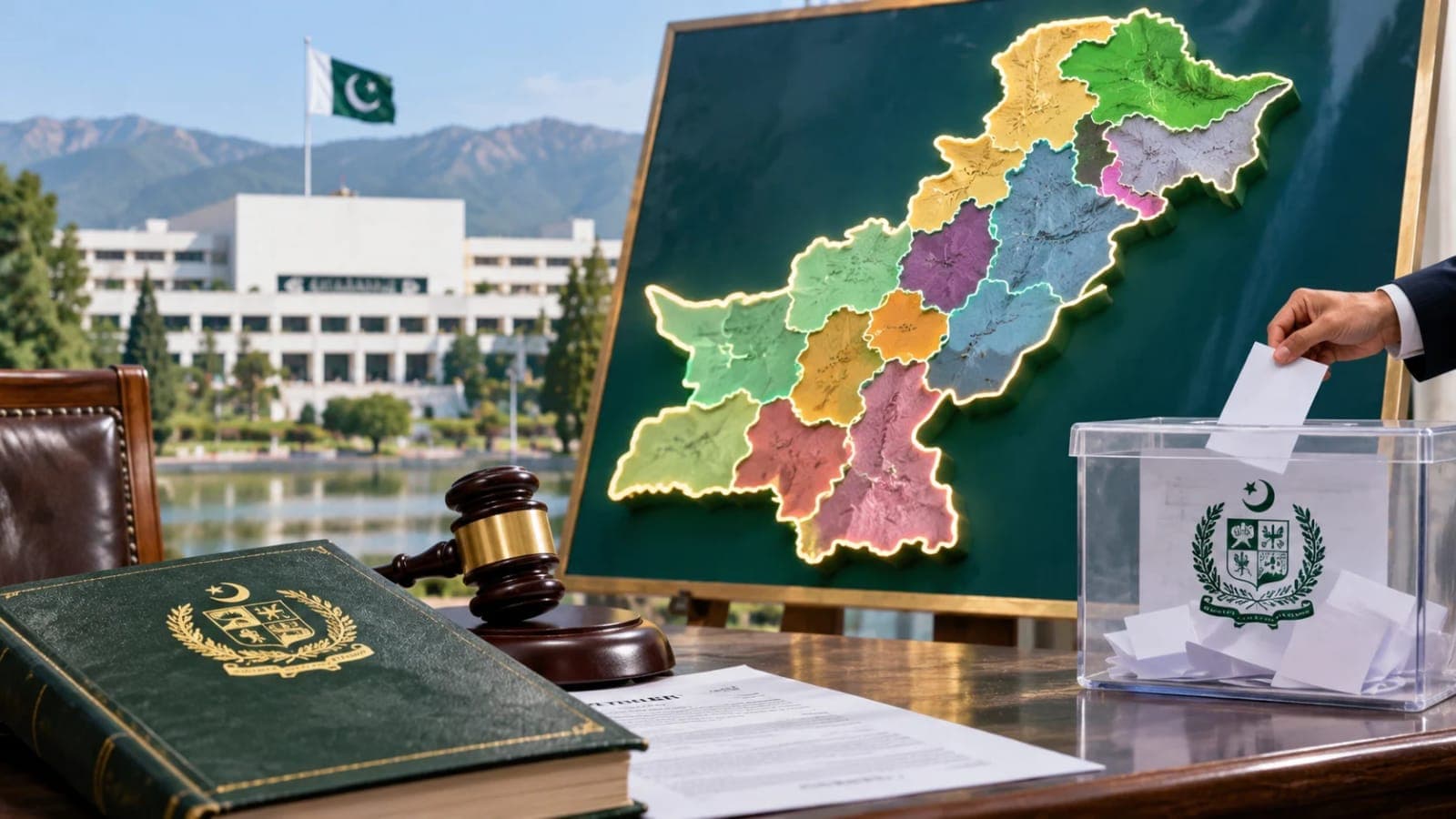
The 12 provinces proposal is back at the centre of debate in Islamabad. A plan under discussion could redraw Pakistan's administrative map. It would take the number of provinces from four to 12. The proposal includes a nationwide referendum before any 28th Constitutional Amendment. No final decision has been taken, and no boundaries have been fixed. But the idea is now being talked about at the highest level.
Under the proposed arrangement, Punjab could be divided into four provinces. Khyber Pakhtunkhwa and Balochistan would be divided into three each. Sindh would be split into two. The 12 provinces proposal would change the map of the country more than any reform in decades. The move is said to be part of an effort to improve governance and strengthen administrative efficiency. It would also distribute development more equitably across the country.
The plan is still at the consideration stage. Sources familiar with the proposal say a constitutional amendment could be taken up in the first half of 2027. Preparatory steps could begin in the first quarter of 2027. A nationwide referendum would come first, before the amendment process begins, to gauge public opinion and establish a popular mandate.
12 Provinces: Why the Proposal Is Being Discussed
The case for more provinces rests on size and population. According to the 2023 census, Punjab is home to nearly 128 million of the country's 241.5 million people. One province holds more than half the population. Supporters of the plan say that is too much for one government to manage. They argue that smaller provinces would bring government closer to the people.
Balochistan shows the other side of the problem. It covers roughly 44 percent of Pakistan's land but recorded fewer than 15 million residents in the 2023 census. The province is vast, and many of its districts are far from the capital. Supporters say that splitting large provinces would make it easier to deliver services, build roads and spread development funds.
The 12 provinces idea is not new. Calls for new provinces have been made for years, often by groups that feel their region has been ignored. What is new is the talk of a referendum first, and a 28th Amendment after it. The referendum would ask the public to back the change before Parliament takes it up.
12 Provinces: Referendum Before the Amendment
A key part of the proposal is the order of events. The nationwide referendum would come first. Only after that would the government move towards a 28th Constitutional Amendment. The referendum is meant to give the plan a popular mandate. No one could then say the change was forced through without public support.
The prime minister's Adviser on Political Affairs, Rana Sanaullah, has said any referendum would need Parliament's approval. He has also said that Parliament alone would decide whether provinces are created. That means the referendum, if it happens, would still need the backing of the elected house. Only then could it lead to new provinces.
The 12 provinces timeline is still loose. Preparatory work and consultations could begin in the first quarter of 2027. The amendment itself could be taken up in the first half of 2027. But none of this has been scheduled. No official constitutional amendment bill has been introduced, and no nationwide referendum has been approved.
12 Provinces: The Constitutional Hurdle
The biggest legal hurdle is Article 239(4) of the Constitution. Under that article, an amendment changing the boundaries of an existing province cannot proceed without approval. The approval must come from at least two-thirds of the total membership of the affected provincial assembly. That is a high bar. It means no province can be split without the support of its own elected assembly.
The rule gives each province a veto over its own division. Under the 12 provinces proposal, a plan to split Punjab into four would need the Punjab Assembly to agree. The vote would need a two-thirds majority. The same would apply in Sindh, Khyber Pakhtunkhwa and Balochistan. Without those votes, the amendment cannot move forward, whatever the federal government wants.
12 Provinces: Political Reactions and the Government's Position
The proposal is already showing signs of becoming politically contentious. The Pakistan Peoples Party, which runs Sindh, has traditionally defended provincial autonomy under the 18th Amendment. The party is expected to closely scrutinise any plan that could alter Sindh's existing boundaries. Other parties, including JUI-F, have also expressed reservations historically about creating new provinces and changing provincial boundaries.
The government's own position is mixed. Planning Minister Ahsan Iqbal said on October 30, 2026 that the government was not drafting a 28th Amendment. The amendment would have created new provinces. He argued for stronger local governments instead. Yet on September 4, 2026, the same minister had called for a national debate on administrative reforms. He proposed creating between 12 and 15 provinces, saying the existing provincial structure had become increasingly centralised.
The two statements show that the debate is still open. The proposal under discussion is not approved policy. It is an idea that has support in some quarters and faces resistance in others. Until a bill is tabled and the assemblies vote, the 12 provinces plan remains a proposal, not a decision.
12 Provinces: Frequently Asked Questions
What is the 12 provinces proposal?
It is a proposal under consideration to redraw Pakistan's map from four provinces to 12. Punjab would split into four, Khyber Pakhtunkhwa and Balochistan into three each, and Sindh into two.
Will there be a referendum on 12 provinces?
A nationwide referendum is envisaged before any 28th Constitutional Amendment. It would gauge public opinion and establish a popular mandate. No referendum has been approved yet.
When could the 12 provinces plan become law?
Preparatory steps could begin in the first quarter of 2027. The amendment could be taken up in the first half of 2027. No dates have been fixed.
Can a province be split without its assembly's approval?
No. Under Article 239(4) of the Constitution, changing a province's boundaries needs approval. The approval must come from at least two-thirds of the total membership of the affected provincial assembly.
Has the government approved the 12 provinces plan?
No. Planning Minister Ahsan Iqbal said on October 30, 2026 that the government was not drafting a 28th Amendment. It would have created new provinces. No bill has been introduced and no boundaries have been finalised.
What happens next for national
We will keep this page updated as the story develops rather than publishing a near-duplicate at a new address. Follow National for related coverage.
Get the Verified Brief
One email each morning with the stories we checked overnight.
Spotted an error? Read our corrections policy and tell the newsroom.