
LNG Tanker Attack Puts Pakistan Hormuz Deal to the Test
LNG tanker attack on a Pakistan-bound ship near the Strait of Hormuz has raised questions about gas supplies, as the country already faces winter rationing and power cuts.

By News Desk · Verified Pakistan News Desk
Published · Updated · 6 min read
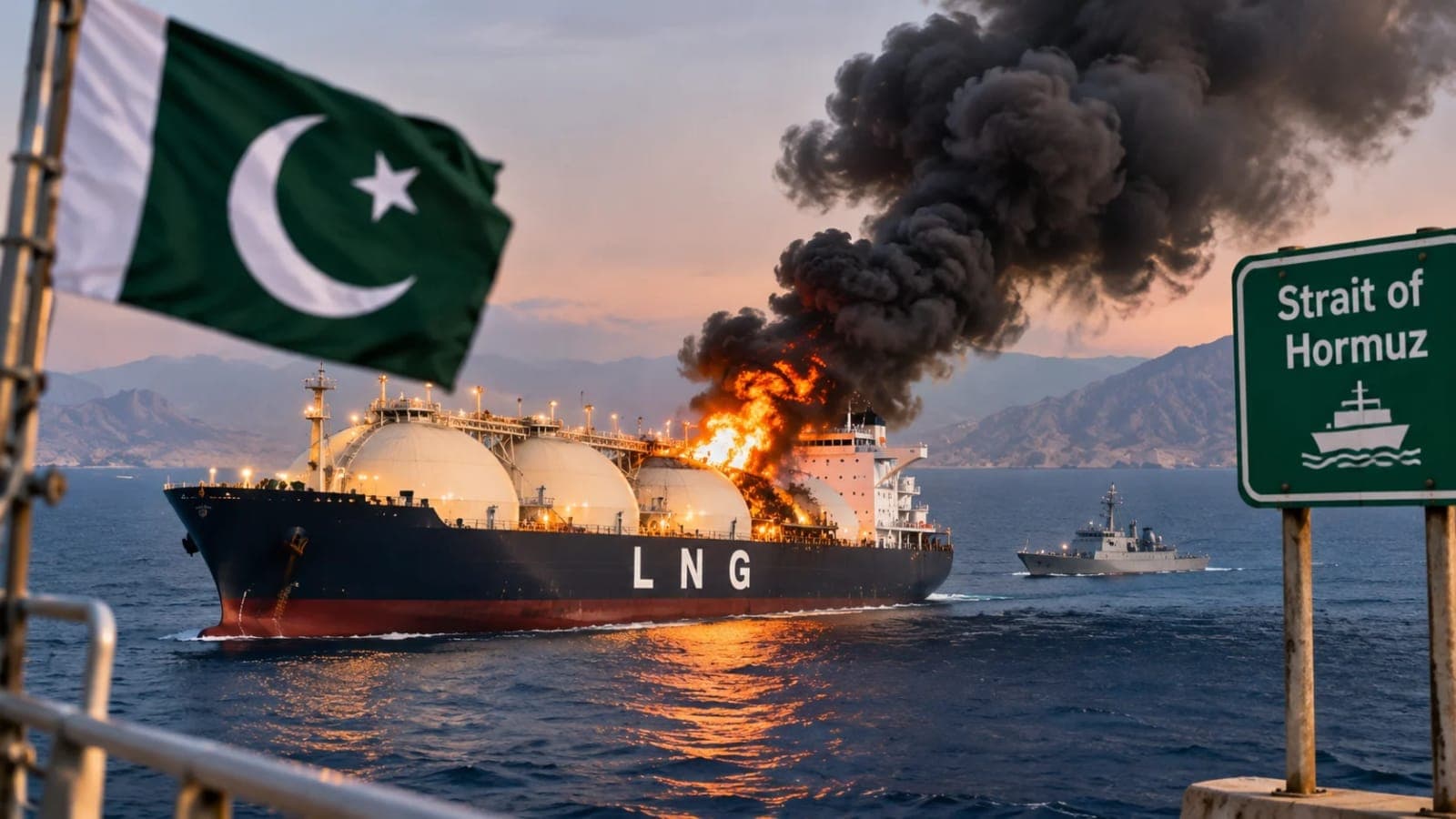
The LNG tanker attack on the Al Mayeda has put Pakistan's gas supplies under fresh strain. It has raised hard questions about the safety of the sea route that carries most of the country's imported gas. The ship was carrying liquefied natural gas from Qatar to Pakistan. It was hit by projectiles near the Strait of Hormuz on October 30, 2026. The attack came at a time when Pakistan was already rationing gas at home and facing power cuts at night.
The Al Mayeda was on its way from Qatar to Pakistan when the LNG tanker attack took place. The vessel is owned by Qatar Gas Transport Co, also known as Nakilat. It was hit before it entered the Strait of Hormuz. The strait is the narrow sea passage that carries a large share of the world's oil and gas. The Qatari foreign ministry condemned the attack soon after it was reported.
Pakistan's Petroleum Minister Ali Pervaiz Malik told reporters that a Pakistan-bound LNG cargo ship was attacked. The attack took place before the ship entered the Strait of Hormuz. Pakistan's Foreign Ministry spokesperson said on Friday that the vessel was hit by projectiles. The two statements confirm that the LNG tanker attack struck a Pakistan-bound cargo. The attack was not an accident at sea.
LNG Tanker Attack: What Happened Near Hormuz
The attack has stirred debate in Islamabad. The debate is about whether the diplomatic efforts with Iran have failed. Those efforts were meant to secure safe passage through the Strait of Hormuz. Pakistan had sought an assurance from Tehran that its ships could pass safely through the strait. The question now is whether that assurance still holds after a ship carrying gas for Pakistan was hit.
The Strait of Hormuz is one of the most important sea routes in the world. Tankers carrying oil and gas from the Gulf pass through it every day. Any attack near the strait raises the risk for every ship that uses the route. For Pakistan, the risk is direct, because so much of its imported gas comes through this passage.
LNG Tanker Attack: Why the March Assurance Matters
Islamabad won a diplomatic assurance from Tehran in March 2026 on safe passage through the strait. The latest incident is likely the first case of a Pakistan-bound tanker being attacked near Hormuz. It is the first such case since that assurance was given. That fact is what makes the LNG tanker attack so important. It is not only about one ship. It is about whether the deal that was meant to protect Pakistan's ships is still working.
Since the start of the US-Israel war with Iran in February 2026, Pakistan has received 18 LNG cargoes. At least 11 of those cargoes came from Qatar, according to local media reports. The figures show how heavily Pakistan relies on Qatar for its gas imports. They also show why any threat to the Qatar route is a threat to Pakistan's energy supply.
LNG Tanker Attack: Gas Shortage Already Hurting Pakistan
Reduced LNG deliveries due to the war have already disrupted daily life and business in Pakistan. The country has faced gas rationing and nighttime power cuts for months. The LNG tanker attack adds to a problem that was already serious. It comes just as winter demand for gas is rising.
In August 2026, LNG shortages and a delayed shipment cut electricity generation by about 3,600 megawatts. That is roughly 18 percent of the usual level of generation. The shortfall led to nighttime power cuts across Pakistan. Homes went dark, and businesses had to stop work early. The cuts showed how quickly a gas shortage can turn into a power crisis.
By September 2026, household gas rationing was limited to about nine hours a day. Businesses reported that electricity outages had disrupted production and delayed export orders. Factories that depend on steady power lost working hours. Exporters who missed deadlines faced losses. The damage was not only to comfort at home. It reached into the economy.
The winter gas schedule now gives households gas for eight hours a day in three windows. Gas will flow from 6:30 to 9 in the morning. The other windows are 12 to 2:30 in the afternoon, and 6 to 9 in the evening. The schedule runs under a winter load management plan covering November 2026 to February 2027. The cause is the LNG shortage and rising winter demand. The plan is a response to a supply problem, not a solution to it.
LNG Tanker Attack: The Case for New Supply Routes
The LNG tanker attack highlights an urgent need to diversify gas suppliers and supply routes. Pakistan cannot keep depending on one route for most of its imported gas. If the Strait of Hormuz becomes unsafe, the country needs other ways to bring in gas. That could mean new suppliers, new routes, or both. The debate in Islamabad is now about how fast that change can happen.
Diversifying supply is not quick or cheap. New contracts take time to negotiate. New routes need ships, terminals and pipelines. But the cost of doing nothing is also high. Every power cut and every gas shortage costs the economy. The LNG tanker attack on the Al Mayeda is a reminder that the risk is real. It can strike at any time.
For now, the government has not said how it will respond to the attack. The Petroleum Minister has confirmed what happened. The Foreign Ministry has said the ship was hit by projectiles. What comes next will depend on talks with Qatar, with Iran, and with other suppliers. Pakistan needs gas, and it needs a safe way to bring it home.
LNG Tanker Attack: Frequently Asked Questions
What happened in the LNG tanker attack?
The Al Mayeda was carrying gas from Qatar to Pakistan. The Pakistan-bound LNG tanker was hit by projectiles near the Strait of Hormuz on October 30, 2026. The attack took place before it entered the strait.
Who owns the ship that was attacked?
The Al Mayeda is owned by Qatar Gas Transport Co, also known as Nakilat. The Qatari foreign ministry condemned the attack.
How does the LNG tanker attack affect gas supply in Pakistan?
Pakistan already faces gas rationing and power cuts because of reduced LNG deliveries. The attack adds to the risk on the route that carries most of the country's imported gas.
What was the March assurance from Iran?
Islamabad won a diplomatic assurance from Tehran in March 2026 on safe passage through the Strait of Hormuz. This is likely the first attack on a Pakistan-bound tanker near Hormuz since that assurance.
How long will gas rationing last in Pakistan?
The winter gas schedule gives households gas for eight hours a day in three windows. It runs under a load management plan covering November 2026 to February 2027.
What happens next for business
We will keep this page updated as the story develops rather than publishing a near-duplicate at a new address. Follow Business for related coverage.
Get the Verified Brief
One email each morning with the stories we checked overnight.
Spotted an error? Read our corrections policy and tell the newsroom.