
Hajj 2027 Second Installment Deadline: What Pakistani Pilgrims Need to Know
Government Hajj scheme applicants have until October 20 to pay their second installment. A medical certificate is also compulsory before payment.

By News Desk · Verified Pakistan News Desk
Published · 9 min read
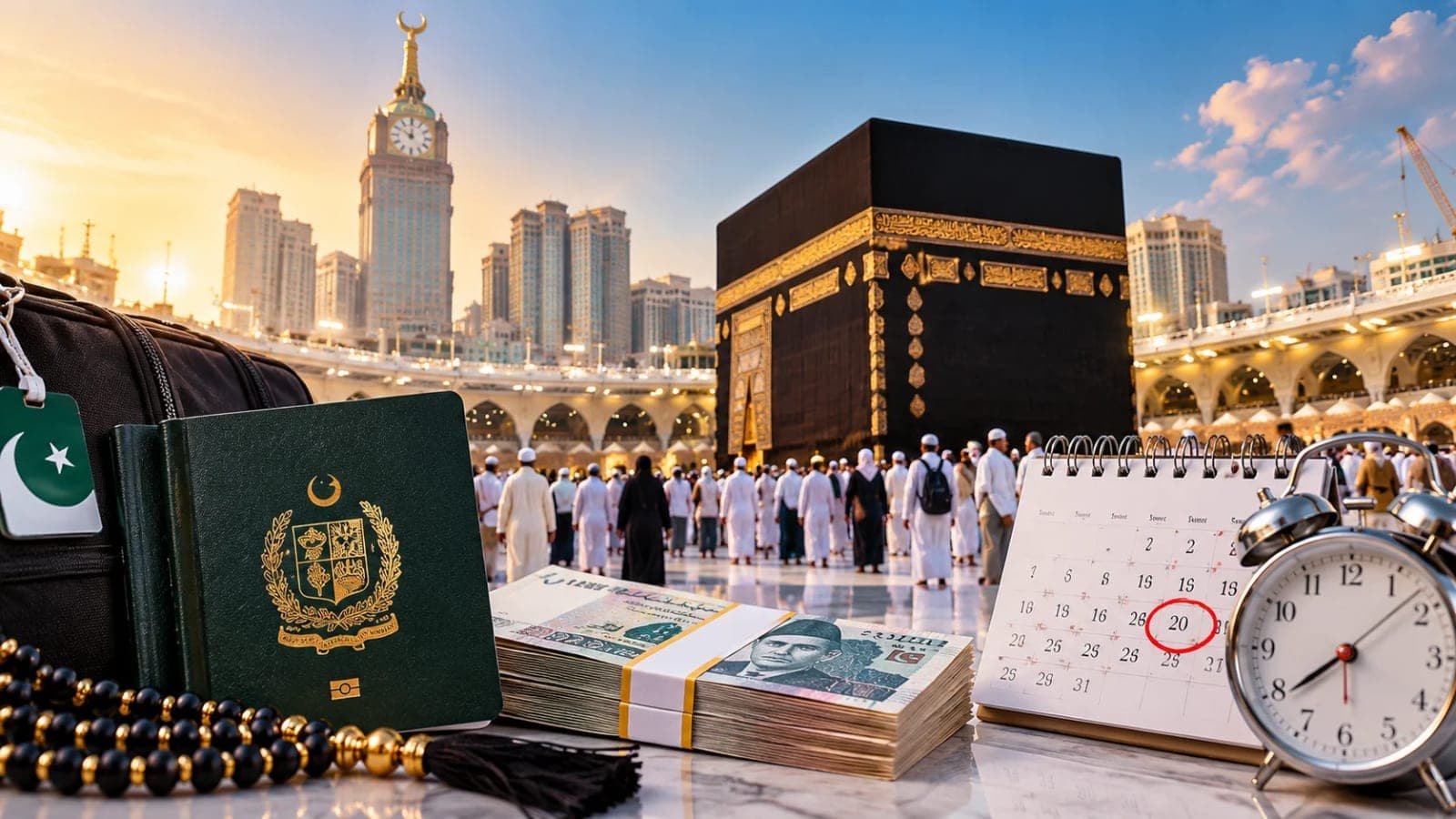
Pakistanis enrolled in the government Hajj scheme have until Tuesday, October 20, 2026, to pay the second installment of their Hajj 2027 dues, according to the Ministry of Religious Affairs and Interfaith Harmony. The ministry's published schedule says the payment window opened on October 5 and closes on October 20. Radio Pakistan reported on October 19 that the ministry's spokesperson had urged intending pilgrims to pay before the deadline.
The date matters to people who have already begun the government scheme's application and payment process. It should not be mistaken for a fresh opening of Hajj registration, a deadline for every private Hajj package, or a statement that all remaining costs have been settled. Applicants need to check the instructions that apply to their own booking and payment record.
Another requirement deserves attention before anyone makes a last-minute trip to a bank: the ministry says a medical certificate is compulsory before the second installment under the government Hajj scheme for 2027. Applicants who have not completed that step should check their official account and the ministry's current guidance promptly.
What is the confirmed payment deadline?
The Ministry of Religious Affairs lists October 5 to October 20, 2026, as the period for the second installment of the government Hajj scheme. On October 19, its spokesperson repeated that the following day was the last date for payment. The two notices align on the closing date.
For an applicant, a deadline is more than a date on a calendar. The important practical question is whether a payment is accepted and reflected against the correct application in time. People should use the payment method and reference specified in their official instructions, retain the receipt, and check their recorded status through the authorized channels. An unverified social media message is a poor substitute for a transaction record.
Does the deadline cover private Hajj packages?
The October 20 notice specifically concerns the government scheme's second installment. Private scheme arrangements can involve different operators, contracts and payment instructions. A person using a private operator should check the documents and official information for that arrangement instead of applying the government scheme deadline automatically.
The distinction is easy to miss because both groups are preparing for the same pilgrimage year. Yet a headline about Hajj dues can refer to a particular scheme, installment or applicant group. Reading the scope of the announcement is essential before deciding what action to take.
Why the medical certificate matters now
On October 8, the ministry listed a notice stating that a medical certificate is compulsory before the second installment for the government Hajj scheme 2027. That requirement changes the last-minute checklist. Someone who has the money ready but has not dealt with the certificate should check the official procedure without delay.
The ministry has also listed information about the Hajj medical fitness certificate in the Pak Hajj App. Applicants should review the current official instructions for the form, submission method and status. This article does not assume that every applicant has the same medical circumstances or that merely possessing a paper certificate completes every administrative step.
A practical check before paying
Open the official application record and confirm the applicant's identity and scheme. Look for the medical certificate status or any pending instruction. Then check the installment amount displayed for that individual application and the authorized payment route. Finally, keep proof that the payment was completed and, where possible, confirm that the Hajj record reflects it.
Those steps may sound routine, but they address different problems. A bank receipt shows that a transaction occurred; the application status shows how the scheme has recorded it. If the two do not match, an applicant has a clearer basis for seeking help while records are still at hand.
Where applicants should get updates
The ministry's Hajj information pages carry notices for government scheme participants, including the installment window and the medical certificate requirement. Its spokesperson has advised intending pilgrims to use the Pak Hajj App for current updates and information.
Applicants can also check the instructions issued with their own application. Information about grouping, hardship requests, refunds and other processes appears separately in ministry updates. A general news item cannot replace the individual status shown in a person's official record.
Avoid relying on an image of a bank slip, a forwarded audio message or a cropped notice when a payment deadline is close. Such material can omit the year, scheme or conditions. Even a genuine announcement may have been superseded. Start with the ministry's current notice and verify personal details through the authorized channel.
What if the app or payment record is unclear?
Do not guess an account number or send money to an intermediary who promises to fix the application. Compare the information against the ministry's official notice, the application record and the authorized bank instructions. If a transaction has already been made but is not showing correctly, retain its reference and seek assistance through official support or the bank used for payment.
The published deadline is October 20. This report does not claim an extension or a grace period. If the ministry announces a change, applicants should rely on the new official notice rather than an earlier article or post.
Understanding the second installment
The phrase second installment describes a stage in a payment schedule, not a universal fee for all pilgrims. An applicant's amount and balance may depend on the official package and their recorded selections. It would be misleading to quote a single figure without confirming the relevant package and the latest personalized demand.
Applicants should therefore match three pieces of information: the scheme named in their application, the installment currently due and the reference through which it will be credited. The aim is to make the correct payment for the correct person. A hurried transfer based on somebody else's screenshot could create a difficult reconciliation problem.
The October 20 date should also be read in its proper time frame. It is an October 2026 administrative deadline for Hajj 2027, not the date of the pilgrimage itself. News about Hajj often crosses calendar years, so keeping both years in view helps avoid confusion.
What families and groups should check
Some applicants plan to travel with relatives or as part of a group. Each person's application and payment status should be checked individually. One family member's successful payment does not by itself establish that everyone else's installment has been recorded. Grouping instructions, where applicable, are another administrative matter and do not erase individual payment obligations.
Families can make a simple list of each applicant's official reference, certificate status, due amount, payment receipt and recorded status. They should store sensitive personal details privately. A shared checklist is useful; posting identity documents or payment references on a public page is not.
If a relative is assisting an older pilgrim, it is sensible to review the ministry's instructions together and verify that the name and reference on the payment match the intended applicant. The person helping should also make sure the pilgrim knows where the receipts and official messages are kept.
What the announcement does not establish
The ministry's second installment notice gives a payment window and deadline. It does not, on its own, confirm that every applicant has met medical, documentation and other scheme requirements. Nor does the October 19 report specify a new payment amount, an extension, a penalty or an automatic cancellation rule. Those details should not be inferred from a short deadline announcement.
It is also premature to treat a payment receipt as final confirmation of travel arrangements. Hajj preparations have several administrative stages. Applicants should continue following the ministry's subsequent notices and their official application status after making the installment.
A short checklist for October 19 and 20
First, confirm that the applicant is in the government Hajj scheme 2027 and that the second installment is pending. Second, check the ministry's medical certificate notice and the applicant's completion status. Third, verify the amount and authorized payment route from official instructions. Fourth, pay within the announced window and retain the receipt. Fifth, check that the application record reflects the payment, and seek official help if there is a mismatch.
This checklist cannot settle an individual eligibility question, but it helps prevent avoidable confusion at the deadline. The safest course is to use the applicant's actual record and the latest ministry guidance, particularly if an earlier notice and a newer status screen appear to differ.
Frequently asked questions
When is the Hajj 2027 second installment due?
The ministry lists October 20, 2026, as the last day for the second installment under the government Hajj scheme. Its spokesperson repeated the deadline on October 19. Applicants should check the latest official announcement in case the ministry subsequently changes it.
Who does the October 20 announcement apply to?
It refers to intending pilgrims paying the second installment under Pakistan's government Hajj scheme for 2027. It should not automatically be applied to private Hajj arrangements or to people at a different stage of the process.
Is a medical certificate required before payment?
The Ministry of Religious Affairs has published a notice saying a medical certificate is compulsory before the second installment for the government scheme 2027. Applicants should consult the ministry's instructions and check their own recorded status.
Where can pilgrims check fresh information?
The ministry's official Hajj notices and the Pak Hajj App are the principal places to check. The ministry's spokesperson specifically recommended the app for updates. Individual payment and application details should also be checked through the authorized channels given to applicants.
Has the government announced an extension?
The sources reviewed on October 19 state that October 20 is the last day. They do not establish an extension. Applicants should not plan around an unconfirmed extra period; if a new official notice appears, follow its updated terms.
Conclusion
The immediate message is clear: the government Hajj scheme 2027 second installment is due by October 20, 2026, under the ministry's published schedule. The medical certificate requirement is part of the same practical preparation. Applicants should verify their own amount and status, use authorized payment instructions, keep their receipts and watch for fresh ministry updates. A few careful checks now are more useful than relying on a forwarded deadline message later.
What happens next for national
We will keep this page updated as the story develops rather than publishing a near-duplicate at a new address. Follow National for related coverage.
Get the Verified Brief
One email each morning with the stories we checked overnight.
Spotted an error? Read our corrections policy and tell the newsroom.