FIA Recovers Over Rs. 615 Million in Crackdown on Illegal Visa Agents
FIA arrests 190 suspected illegal visa agents and reports recovering Rs. 615.55 million in a four-month Islamabad and Rawalpindi crackdown.

By News Desk · Verified Pakistan News Desk
Published · 11 min read
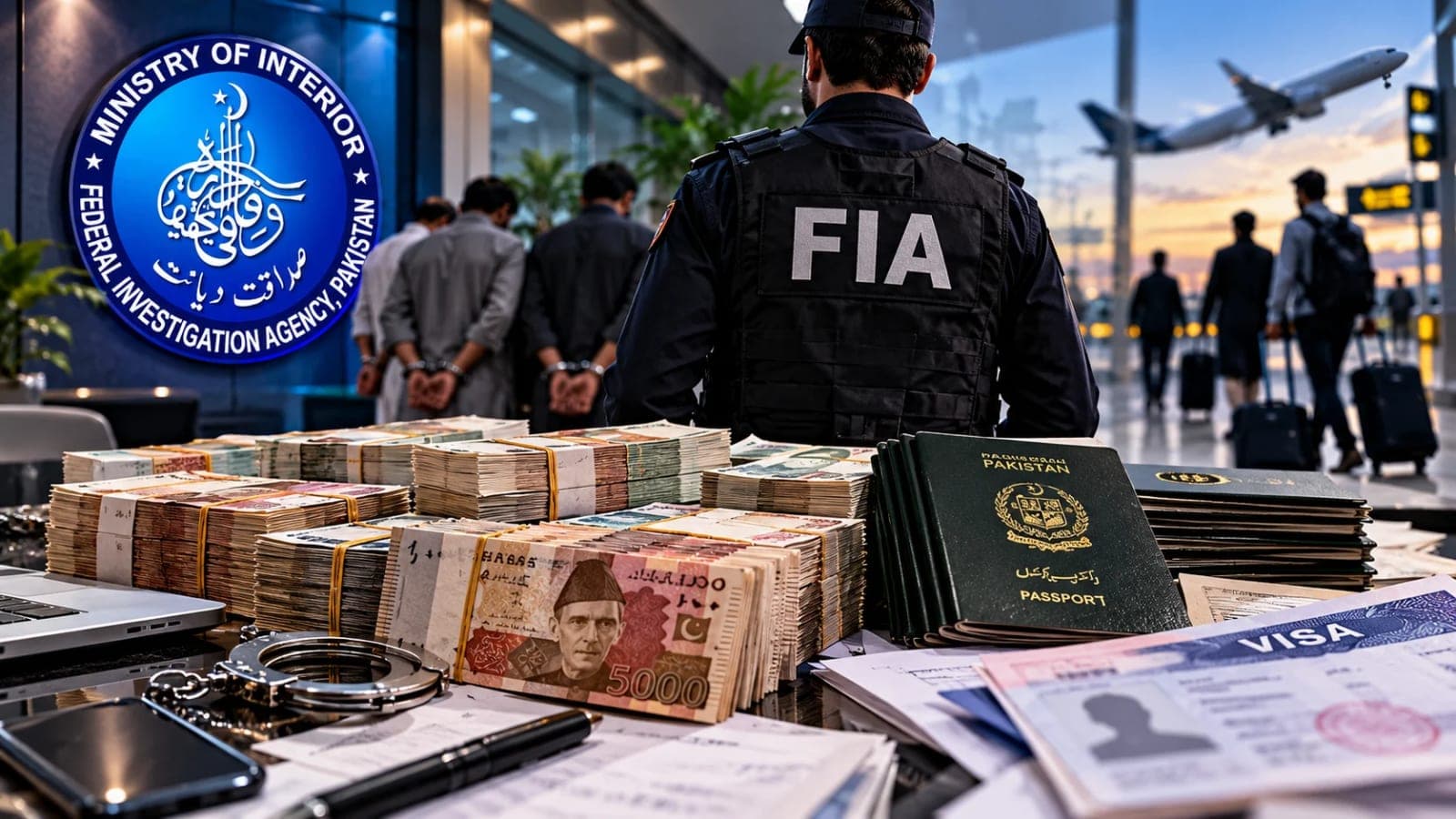
The Federal Investigation Agency (FIA) has reported recovering Rs. 615.55 million and arresting 190 suspected illegal visa agents during a four-month crackdown on visa fraud and human smuggling in Islamabad and Rawalpindi.
According to official figures reported on October 17, 2026, the operations were conducted by the Anti-Human Trafficking Circles (AHTCs) operating under the FIA Islamabad Zone.
The agency registered 1,543 cases during the period, reflecting the scale of its enforcement activity against individuals suspected of exploiting people seeking overseas employment and travel opportunities.
The FIA says it will continue targeting illegal agents and human smugglers who allegedly deceive citizens through false promises of visas, employment and foreign travel.
Authorities have also advised people to verify the credentials of visa agents before making payments.
FIA Visa Fraud Crackdown: Key Figures
The FIA Islamabad Zone reported three major results from the four-month operation: arrests, financial recoveries and the registration of cases.
The agency arrested 190 suspected illegal visa agents.
It also reported recovering Rs. 615.55 million.
A total of 1,543 cases were registered by the two Anti-Human Trafficking Circles.
These figures relate to the Islamabad and Rawalpindi operations included in the agency's report.
They should not be interpreted as nationwide totals for every FIA zone.
The reported recoveries also should not be confused with money that has necessarily been returned to victims.
The available information does not establish how much of the recovered amount has already been disbursed to affected citizens.
Islamabad Anti-Human Trafficking Circle Reports 120 Arrests
The Anti-Human Trafficking Circle in Islamabad accounted for the larger share of the reported arrests and financial recoveries.
According to the FIA's figures, the Islamabad circle arrested 120 suspected illegal agents.
It reported recovering Rs. 411.05 million.
The circle also registered 875 cases during the four-month period.
These figures suggest substantial investigative activity in the federal capital.
However, the number of registered cases should not be treated as the number of convictions.
An investigation can involve allegations that have not yet been established in court.
The legal status of individual suspects will depend on the evidence and subsequent proceedings.
Rawalpindi Circle Arrests 70 Suspected Agents
The FIA's Anti-Human Trafficking Circle in Rawalpindi also reported significant enforcement activity.
Officials said the Rawalpindi circle arrested 70 suspected agents and recovered Rs. 204.5 million.
A total of 668 cases were registered.
The Rawalpindi figures account for approximately one-third of the arrests reported across the two circles.
They also represent a substantial share of the combined financial recovery.
Together, the Islamabad and Rawalpindi results produce the overall figures of 190 arrests, 1,543 registered cases and Rs. 615.55 million recovered.
Breakdown of FIA's Four-Month Operation
The figures reported by the FIA provide a clearer picture of the scale of the operation.
| FIA Circle | Arrests | Reported Recovery | Registered Cases |
|---|---|---|---|
| Islamabad | 120 | Rs. 411.05 million | 875 |
| Rawalpindi | 70 | Rs. 204.50 million | 668 |
| Total | 190 | Rs. 615.55 million | 1,543 |
The figures indicate that Islamabad accounted for a larger proportion of the recoveries and arrests.
However, they do not establish how many victims were involved or the total financial losses alleged across all cases.
Further official information would be required to determine those figures.
Why Illegal Visa Agents Target Overseas Job Seekers
Overseas employment is an important aspiration for many Pakistani workers.
People seeking better incomes may consider opportunities in Gulf countries, Europe and other international destinations.
Applying for jobs and visas can involve unfamiliar procedures, documentation requirements and financial commitments.
Fraudulent intermediaries may exploit this uncertainty by promising guaranteed visas or employment.
Some may demand substantial advance payments while providing little verifiable information about the employer or the application process.
Others may misrepresent their authority to arrange immigration documents.
The FIA's crackdown is intended to address suspected activities that exploit these vulnerabilities.
Common Warning Signs of Visa Fraud
Visa fraud can take several forms, but certain warning signs deserve particular attention.
An agent may promise a guaranteed visa without explaining the official eligibility requirements.
A person may be asked to pay large sums into a personal bank account rather than through an authorised payment channel.
Some intermediaries refuse to provide written contracts, receipts or verifiable business credentials.
Others pressure applicants to make immediate payments by claiming that an opportunity will disappear within hours.
Job offers that contain unrealistic salaries or unclear employment conditions should also be treated cautiously.
No single warning sign proves that an offer is fraudulent.
However, applicants should independently verify claims before transferring money or handing over original documents.
How to Verify an Overseas Employment Agent
Pakistan has an official regulatory framework for overseas employment promoters.
People seeking foreign jobs should verify whether an intermediary is properly licensed and authorised for the services being offered.
The Bureau of Emigration and Overseas Employment maintains information about licensed overseas employment promoters.
Applicants can use official government resources to check relevant details.
They should also verify the overseas employer, job offer and applicable visa category.
A legitimate recruitment arrangement should clearly explain the nature of the work, compensation and required documentation.
Citizens should be cautious when an intermediary refuses to provide verifiable information.
Visa Agents and Human Smuggling Are Not the Same Thing
Visa fraud and human smuggling are related enforcement concerns, but they are not identical activities.
Visa fraud may involve false promises, forged documents or deceptive financial transactions.
Human smuggling generally concerns arrangements for unlawful entry into another country, often involving payments to facilitators.
Human trafficking is a separate legal concept that involves exploitation and other specific elements.
The applicable offences depend on the facts of each case.
It would therefore be inaccurate to describe every arrested visa agent as a convicted human smuggler.
The FIA's investigation and subsequent legal proceedings must establish the relevant allegations.
Why Advance Payments Create Financial Risks
Many fraudulent visa arrangements involve requests for money before a promised service is delivered.
Applicants may be told that payments are required for job confirmation, embassy appointments, documentation or urgent processing.
Some legitimate immigration and recruitment processes do involve official fees.
The important distinction is whether the payment is authorised, documented and connected to a genuine service.
Applicants should obtain written information explaining what a payment covers.
They should also retain receipts and avoid transferring funds to accounts that cannot be linked to an authorised organisation.
Where possible, official fees should be paid through the payment methods specified by the relevant authority.
What the Rs. 615.55 Million Recovery Means
The FIA's reported recovery of Rs. 615.55 million is a major figure in the four-month operation.
It indicates that investigators have identified or recovered substantial funds associated with their enforcement activity.
However, the public reporting does not provide a complete breakdown of the recovery.
It does not specify the proportion consisting of cash, bank transfers or other financial assets.
It also does not establish how much money has been returned to individual complainants.
These distinctions are important because financial recovery during an investigation and compensation paid to victims are different outcomes.
Affected citizens should seek information through official channels concerning the status of their individual complaints.
Why the Number of Registered Cases Matters
The registration of 1,543 cases demonstrates the volume of matters handled by the two FIA circles.
However, registered cases do not necessarily correspond to 1,543 separate criminal networks.
Some cases may involve multiple suspects, while others may relate to separate complaints against the same individual.
The available reporting does not provide a complete breakdown.
Likewise, the number of arrests does not establish how many people will ultimately be convicted.
The next stages of the legal process may include further investigation, prosecution and judicial decisions.
Public reporting should preserve the distinction between allegations and proven offences.
FIA Advises Citizens to Verify Agent Credentials
The FIA has urged citizens to verify the credentials of visa agents before making payments.
This advice is particularly important for people applying for overseas employment through intermediaries.
Applicants should confirm that the agent is legally authorised to provide the relevant service.
They should also examine the job offer and verify the employer's identity through independent sources.
Promises of guaranteed immigration outcomes should be treated with caution.
Visa decisions are generally made by the competent authorities of the destination country, not by private agents.
No intermediary can legitimately guarantee an approval that depends on a government decision.
What to Do If You Suspect a Visa Scam
People who believe they have been targeted by visa fraud should preserve all available evidence.
This may include payment receipts, bank transaction records, messages, emails, advertisements and copies of documents provided by the agent.
Applicants should avoid deleting communications, even when they contain embarrassing or misleading statements.
A clear record can help investigators understand what was promised and what payments were made.
Victims can report suspected illegal activities to the FIA through its official complaint channels.
If a bank transfer is involved, contacting the financial institution promptly may also be appropriate.
The possibility of recovering funds depends on the circumstances and should not be guaranteed.
Why Overseas Employment Fraud Has Wider Consequences
Fraudulent recruitment practices can cause financial and emotional harm to individuals and families.
Applicants may borrow money, sell assets or use savings to pay for promised opportunities.
When those opportunities do not materialise, the resulting losses can be difficult to recover.
Fraud can also undermine trust in legitimate recruitment businesses.
Workers may become less confident about using authorised channels.
Effective enforcement therefore protects both potential migrants and the reputation of lawful overseas employment services.
Separate NCCIA Operation Reported in Rawalpindi
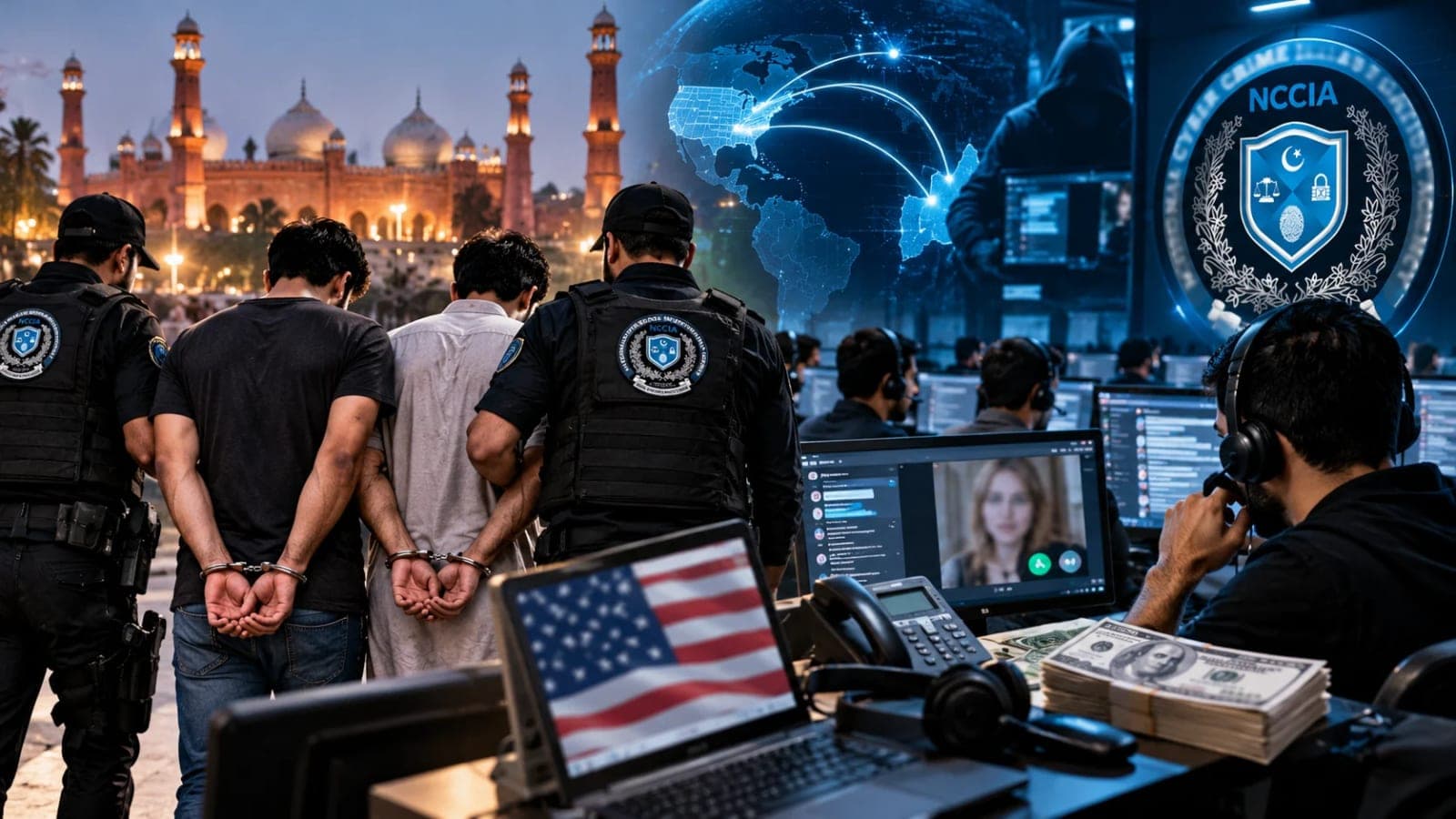
The October 17 reporting also described a separate operation by the National Cyber Crime Investigation Agency in Rawalpindi.
According to officials, NCCIA personnel raided a location in a private housing society and arrested three suspects, including a woman.
The suspects were accused of impersonating bank representatives and foreign law enforcement officials to deceive people.
Investigators reportedly seized mobile phones and registered a case under applicable provisions of the Prevention of Electronic Crimes Act and Pakistan Penal Code.
This was a separate cyber fraud investigation.
Its arrests and alleged activities should not be added to the FIA's four-month visa-agent crackdown figures.
What Happens Next?
The FIA has said it will continue action against illegal visa agents and human smugglers.
Further operations may lead to additional investigations, arrests or financial recoveries.
However, the agency has not announced a specific new target for arrests or recoveries in the available report.
The outcomes of individual cases will depend on evidence and legal proceedings.
Authorities may also need to strengthen public awareness so citizens can distinguish authorised recruitment services from fraudulent offers.
For applicants, verifying credentials before payment remains one of the most practical protective measures.
Frequently Asked Questions
1. How much money did FIA recover from illegal visa agents?
The FIA Islamabad Zone reported recovering Rs. 615.55 million during a four-month crackdown.
2. How many suspected agents were arrested?
The agency reported 190 arrests across its Islamabad and Rawalpindi Anti-Human Trafficking Circles.
3. How many cases did FIA register?
A total of 1,543 cases were registered, including 875 in Islamabad and 668 in Rawalpindi.
4. How can Pakistanis check whether a visa agent is legitimate?
Applicants should verify relevant licences and credentials through official government channels, including the Bureau of Emigration and Overseas Employment for overseas employment promoters.
5. Has the recovered money been returned to victims?
The available reporting does not specify how much of the recovered amount has been returned to individual complainants.
Conclusion
The FIA's four-month crackdown in Islamabad and Rawalpindi has resulted in 190 reported arrests, 1,543 registered cases and financial recoveries totalling Rs. 615.55 million.
The operation highlights the continuing risks associated with illegal visa agents and deceptive overseas employment offers.
While the reported enforcement results are significant, individual allegations must still be assessed through the legal process.
For people planning to work or travel abroad, verifying agent credentials, checking official requirements and retaining payment records remain essential precautions.
Last Updated: October 17, 2026.
What happens next for national
We will keep this page updated as the story develops rather than publishing a near-duplicate at a new address. Follow National for related coverage.
Get the Verified Brief
One email each morning with the stories we checked overnight.
Spotted an error? Read our corrections policy and tell the newsroom.