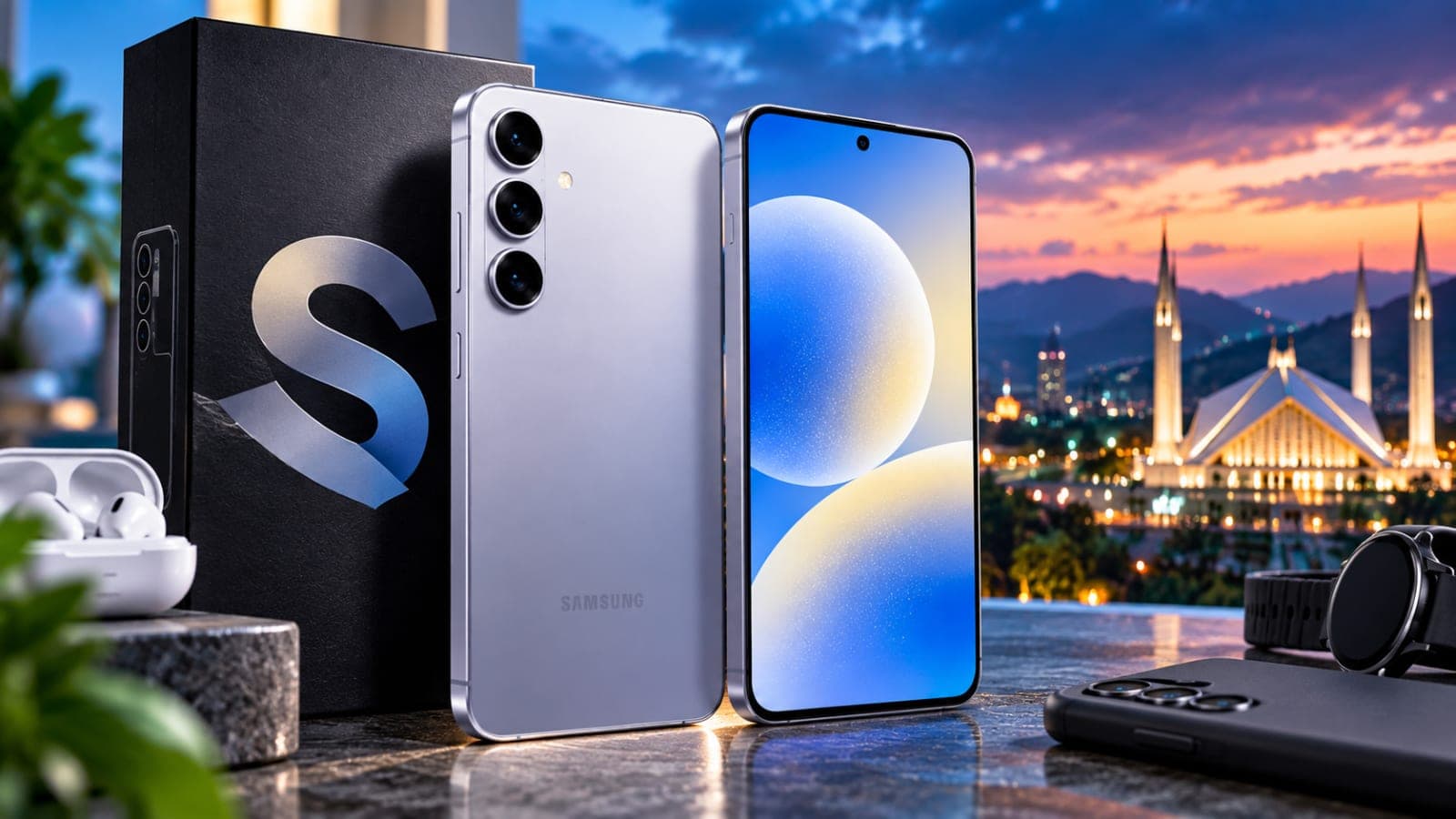

How AI Is Transforming Smartphones in 2026: A Buyer's Guide
In 2026, the smartest question you can ask before buying a phone is not how many megapixels it has, but how well it thinks.

By News Desk · Verified Pakistan News Desk
Published · Updated · 8 min read
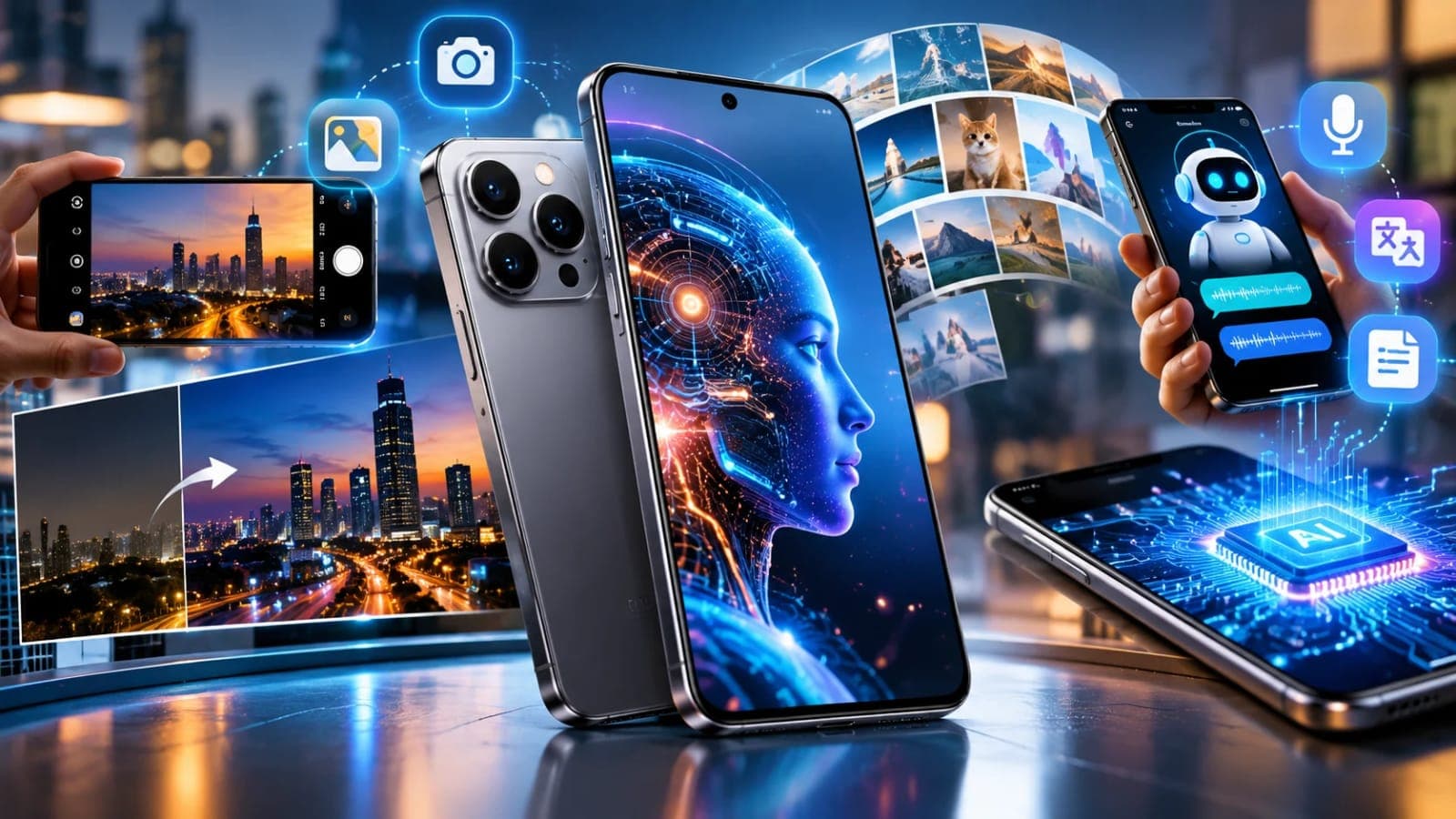
For nearly a decade, smartphone launches followed the same tired script: a slightly bigger battery, a slightly sharper camera, a slightly faster chip. In 2026, that script has been torn up. The phone in your pocket is being rebuilt around one idea — that it should understand you, not just obey you. In 2026, the smartest question you can ask before buying a phone is not how many megapixels it has, but how well it thinks. And this month, one company even taught phones to read a dog's mood. Welcome to the AI smartphone era. Here is what it actually means, what is genuinely useful, and what you should check before spending your money.
What "AI Phone" Actually Means in 2026
Every brand now stamps "AI" on its boxes, but the label hides a wide range of reality. At the hardware level, an AI phone carries a dedicated neural processing unit — an NPU — a chip designed specifically to run machine-learning models quickly and efficiently. Without it, so-called AI features are just apps talking to distant servers. With it, the phone can do remarkable things on its own.
The features that matter most in 2026 fall into a few clear groups. Generative assistants can summarise long articles, draft messages, and transcribe meetings in seconds. AI cameras do far more than take pictures: they erase photobombers, sharpen blurry faces, and merge multiple exposures into one clean shot. Live translation now handles spoken conversations in real time, in dozens of languages. And visual search — popularised by Circle to Search, where you simply circle anything on your screen to look it up — has turned every app into a search engine.
A flagship might run all of these on-device, while a budget phone offers one or two, powered partly by the cloud. Both are "AI phones" on paper — only one behaves like it.
Two Launches That Show Where This Is Going
If you want proof that AI is no longer reserved for expensive flagships, look at Samsung's Galaxy A08, launched this October. This is a budget phone — yet it ships with an enhanced Circle to Search that lets you circle or tap anything on screen, a "Find the Look" feature that can identify a complete outfit (or the music playing nearby), and multiple AI agents that work across Samsung, Google, and third-party apps through Gemini or Perplexity, triggered by voice or a long press of the power button. It also carries an IP64 dust-and-splash rating, Samsung Knox hardware security, and a promise of six generations of OS upgrades with six years of security updates — support that keeps the phone useful long after cheaper rivals are abandoned.
Then there is the stranger, more surprising direction. On October 2, 2026, a Silicon Valley company called Traini announced a partnership with TECNO to build pet-emotion translation directly into TECNO smartphones. Using the phone's microphone, camera, and on-device AI, the system analyses a pet's vocalisations, facial expressions, posture, and behaviour — and explains in plain language what the animal might be feeling: excited, anxious, lonely, alert, or demanding attention. It sounds like science fiction, but it is a shipping product feature, and it reveals something important. Phone AI is no longer only about productivity and photography. It is expanding into companionship, interpretation, and entirely new categories of everyday life.
On-Device AI vs Cloud AI: Why It Matters for Your Privacy
Here is the distinction most marketing conveniently skips. Some AI runs on-device, meaning your data never leaves the phone. The model lives on the NPU, works without an internet connection, responds instantly, and keeps your photos, messages, and voice recordings in your own hands. Other AI runs in the cloud: your request travels to a company's servers, gets processed there, and the answer travels back. Cloud models are usually more powerful, but the trade-off is real — your data is out there.
For buyers, this matters twice over. First, privacy. A feature that transcribes your private meetings on-device is fundamentally different from one that uploads the audio to a server. Hardware-backed security like Samsung Knox protects what stays on your phone — but it cannot protect data you have already sent away. Second, practicality. In Pakistan, where mobile data can be patchy outside the big cities and packages are not unlimited, features that work offline are worth far more than ones that stall without a signal.
So when a salesperson tells you a phone is "AI-powered," ask the follow-up: which features work without the internet, and which ones quietly upload? The honest brands will tell you. The vague ones are telling you something too.
A Buyer's Checklist: Separating Useful AI from Marketing Hype
Not every AI feature deserves your money. Here is how to sort the genuinely useful from the noise when you are shopping.
Start with language. An assistant is only as good as the languages you speak. Check whether voice typing, transcription, and live translation handle Urdu — and test them in a store if you can. A feature that only shines in English is half a feature for many Pakistani users.
Next, look at the update promise, not just the launch features. AI capabilities grow through software updates, so a phone with six years of security updates will keep gaining features for years, while a phone abandoned after two will feel old fast.
Then, be honest about your own habits. If you take hundreds of photos, AI camera tools — object removal, night enhancement, best-face selection — will delight you daily. If you travel or deal with foreign clients, live translation is gold. But an AI wallpaper generator you will use twice is not worth paying extra for.
Finally, check the silicon and the battery. A proper NPU means AI runs fast without draining the battery; weak chips push everything to the cloud and eat your data. And AI is hungry — a phone with a big battery and efficient chip will serve you better than a thinner phone with a cleverer marketing campaign.
The AI phone era is real, and it is only accelerating. Buy for the intelligence you will actually use — and you will feel the difference every single day.
FAQs
What exactly is an AI smartphone?
An AI smartphone is a phone with dedicated AI hardware — usually a neural processing unit, or NPU — plus built-in software features like generative assistants, AI photo editing, live translation, and visual search. What separates it from a regular phone is that it can understand context and perform intelligent tasks, not just run apps. In 2026, the term covers everything from budget models like the Galaxy A08 to premium flagships.
Do AI features on phones need an internet connection?
It depends on the feature. On-device AI — like basic photo editing, offline translation, and voice typing — works without the internet because the processing happens on the phone's own chip. Cloud-based AI, such as advanced chatbots and some generative features, needs a connection since your request is processed on remote servers. When buying, it is worth checking which features work offline, especially if you travel through areas with weak signals.
Is the Samsung Galaxy A08 a good AI phone for budget buyers?
For its price segment, yes. It offers enhanced Circle to Search, outfit and music identification, and AI agents powered by Gemini and Perplexity that work across multiple apps. It also includes an IP64 rating, Samsung Knox security, and an unusually long promise of six OS upgrades and six years of security updates. Just note that it is a 4G-only phone, so buyers wanting 5G should look elsewhere.
Can a phone really understand what my pet is feeling?
A partnership between Traini and TECNO, announced in October 2026, brings native pet-emotion translation to TECNO smartphones. It uses the phone's microphone and camera with AI to analyse vocalisations, facial expressions, posture, and behaviour, then describes the pet's likely emotional state in plain language. It is an interpretation aid based on behavioural signals, not mind-reading — but it is a genuine, shipping feature rather than a concept.
Which AI features should I prioritise when buying a phone in Pakistan?
Prioritise features you will use daily: AI camera tools if you take lots of photos, live translation if you deal with other languages, and reliable on-device voice typing. Check that the assistant supports Urdu, confirm how many years of software updates the phone will receive, and make sure key features work offline. Ignore one-time gimmicks and focus on intelligence that saves you time every day.
What happens next for tech
We will keep this page updated as the story develops rather than publishing a near-duplicate at a new address. Follow Tech for related coverage.
Get the Verified Brief
One email each morning with the stories we checked overnight.
Spotted an error? Read our corrections policy and tell the newsroom.