
Pakistan's IT Exports Boom 2026: Chasing the $25 Billion Dream
Pakistan's IT exports are growing ~20% a year toward a $25B target. Pakistan is selling brains, not boxes and the world is buying.

By News Desk · Verified Pakistan News Desk
Published · Updated · 7 min read
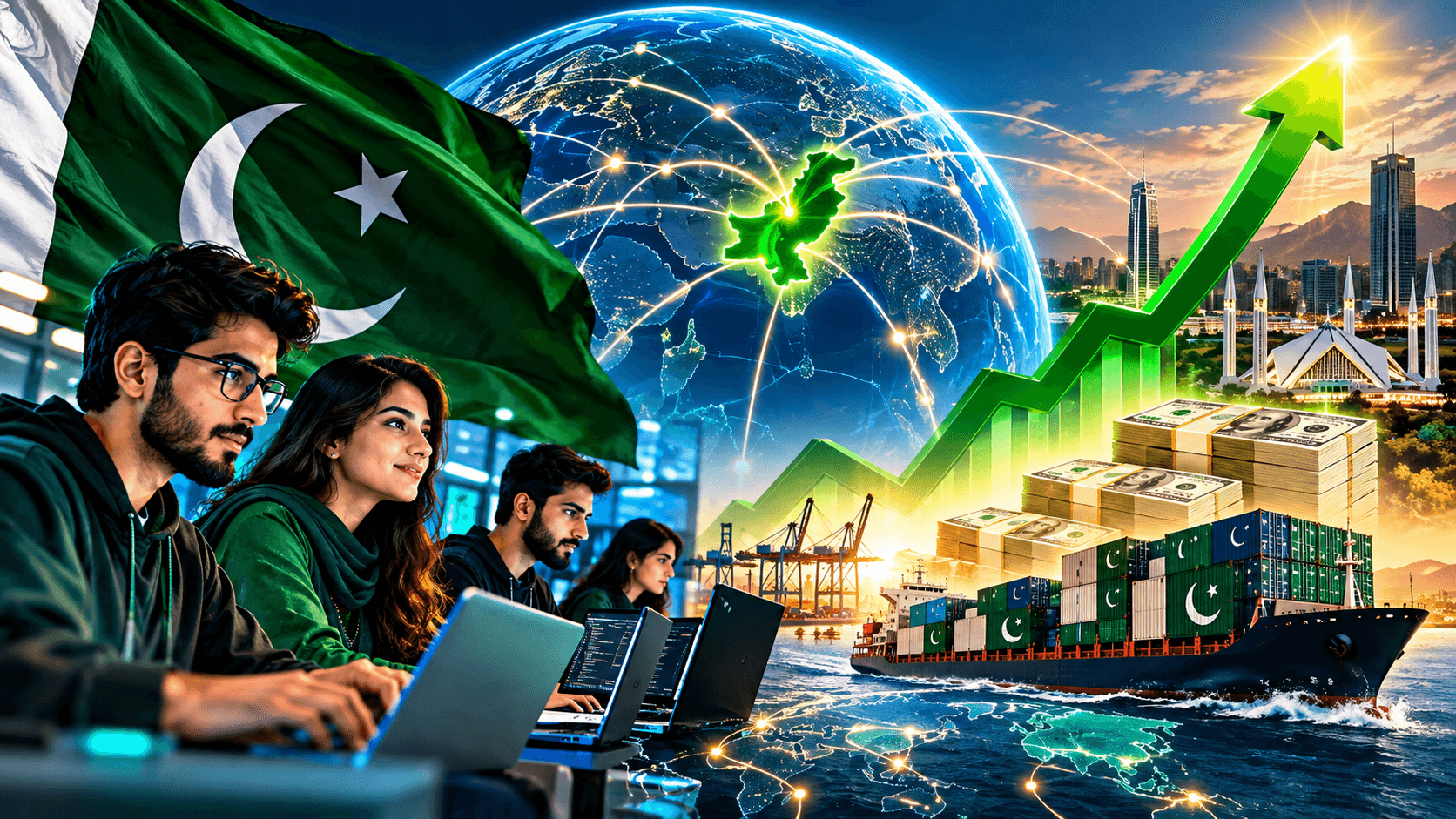
There is a quiet revolution underway in Pakistan's economy, and it doesn't look like the revolutions of the past. There are no smoking chimneys, no sprawling factory floors, no fleets of cargo ships queuing at Karachi's ports. Instead, it is happening in bedrooms converted into home offices, in co-working spaces across Lahore and Islamabad, and on laptops that glow late into the night.
Pakistan is selling brains, not boxes and the world is buying. Federal IT Minister Shaza Fatima Khawaja says the country's IT exports are growing at roughly 20 percent a year, and the government is chasing an ambitious $25 billion target set by the Prime Minister. The latest official numbers suggest this ambition is not just wishful thinking.
The Numbers Behind the Boom
According to research by Arif Habib Limited based on State Bank of Pakistan data, Pakistan's technology exports reached $394 million in August 2026, up 17 percent compared to the same month last year. That followed an even stronger July, when tech exports touched $417 million. For two months running, the country has been exporting close to half a billion dollars' worth of digital services every single month.
To put that in perspective, technology now accounts for 45 percent of Pakistan's total services exports. Total services exports stood at $872 million in August 2026, which means nearly every second dollar earned from services abroad came from tech. A decade ago, software and IT services were a footnote in Pakistan's export story, overshadowed by textiles and agriculture. Today, they are one of the main characters.
A growth rate of around 20 percent a year might not sound dramatic in a single quarter, but it compounds fast. At that pace, exports roughly double every three and a half years. The $25 billion target is still a long way off, current monthly figures annualize to somewhere under $5 billion, but the trajectory is pointing firmly upward, and in economics, trajectory matters.
"Exports Without Shipping Containers"
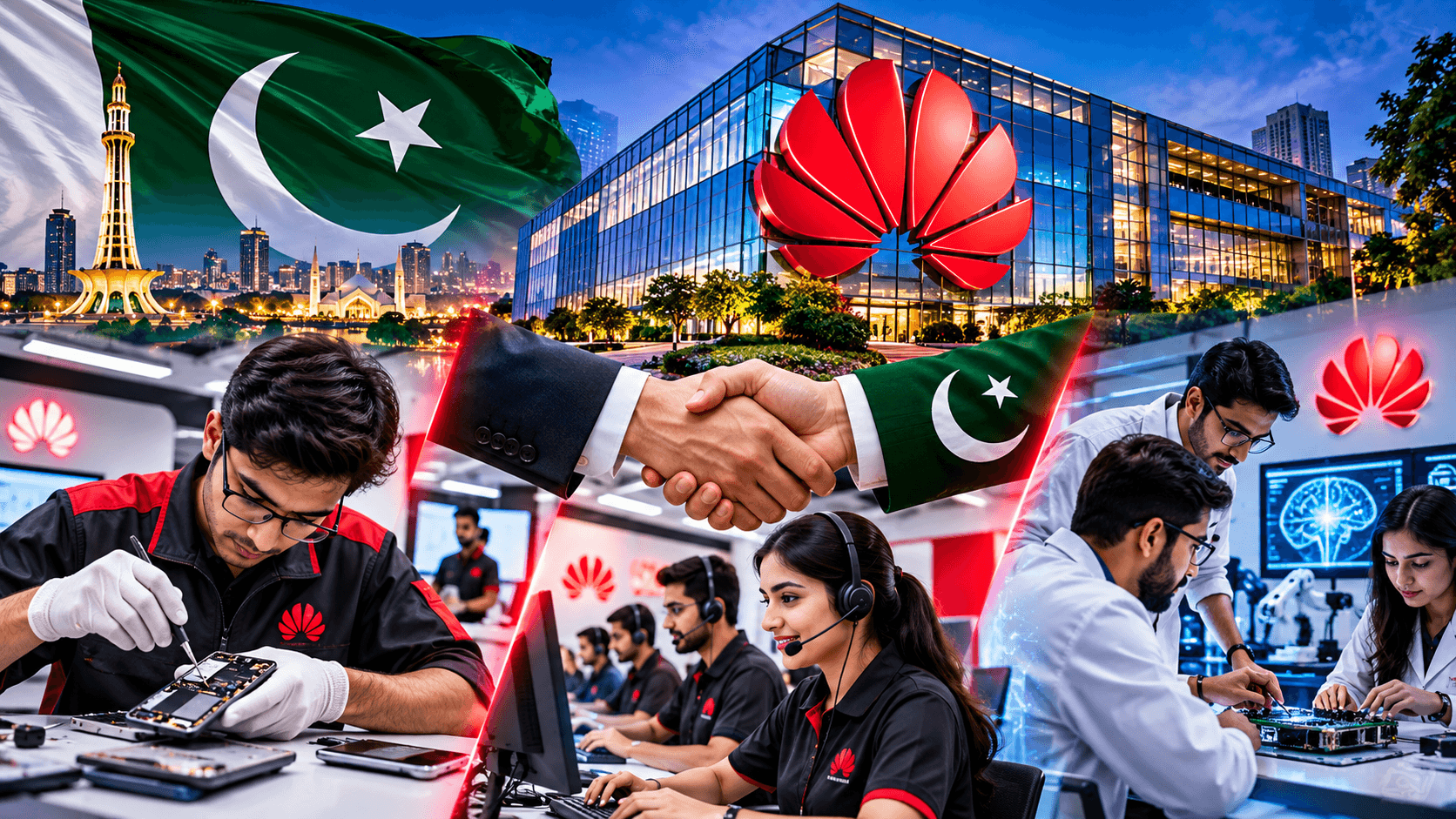
Speaking during a visit to Huawei's Global Service Centre (GSC) in Islamabad, the IT minister summed up the transformation in a single phrase: "exports without shipping containers." It is a neat way of describing what is happening. Pakistanis are delivering high-value digital services to international clients from their homes and offices, and nothing physical ever crosses a border.
This is a fundamentally different kind of export. A textile shipment needs raw cotton, factory labor, port clearance, freight costs, and weeks of transit time. A software contract needs a laptop, a stable internet connection, and skill. The margins are better, the logistics are simpler, and the work can be done from anywhere which is why freelancers in small towns are suddenly part of the global economy.
The minister's visit to the Huawei GSC was symbolic of this shift. Global technology companies are not just selling equipment in Pakistan anymore; they are building service hubs, training centers, and partnerships here. When a company like Huawei sets up a Global Service Centre in Islamabad, it signals that Pakistan is being taken seriously as a place where serious digital work gets done.
Pakistani developers and freelancers are already embedded in the daily workflows of startups and enterprises across the United States, Europe, and the Gulf. From mobile apps and e-commerce platforms to customer support operations and back-office automation, the range of services keeps widening. Each new contract is a small proof point: quality work delivered on time, at a price global clients find hard to resist.
A Young Country Betting on Skills
Pakistan's biggest asset in this race is not infrastructure or capital, it is people. Around 68 percent of the population is under the age of 30, making Pakistan one of the youngest countries on earth. That is either a demographic dividend or a demographic time bomb, depending entirely on whether those young people get skills the world will pay for.
The government knows this, and so do the big tech firms. Huawei has committed to training 300,000 young Pakistanis in ICT skills, a massive undertaking that could reshape the talent pipeline. During the same Islamabad visit, the minister urged students to explore artificial intelligence, cybersecurity, cloud computing, software development, and data science. the fields where global demand is strongest and paychecks are highest.
The Huawei Summer ICT Training Programme, whose graduates recently received their certifications, offers a glimpse of the model: short, intensive, industry-linked training that ends with a credential employers recognize. Multiply that by hundreds of thousands of students, and you start to see how a country goes from exporting raw talent to exporting finished digital products.
The Road to $25 Billion
None of this means the $25 billion target will be easy. Going from roughly $5 billion a year to $25 billion requires more than talent and ambition. it requires policy that stays consistent, internet infrastructure that doesn't buckle, payment systems that let freelancers actually receive their earnings, and tax treatment that encourages companies to scale rather than stay small.
There are reasons for cautious optimism. Pakistan's IT sector has grown through political turbulence, currency swings, and connectivity hiccups before. The freelancing community, hundreds of thousands strong, has proven remarkably resilient, finding clients on global platforms even when conditions at home were far from ideal. If the basics get fixed, the ceiling is genuinely high.
What is changing is the conversation itself. Pakistan is no longer asking whether it can compete in the digital economy; it is asking how fast it can scale. Earnings from IT work also flow back into the local economy, new laptops, better internet connections, training courses, creating a virtuous cycle where today's income funds tomorrow's skills. With exports growing around 20 percent a year, a young population hungry for opportunity, and global firms investing in local talent, the boom of 2026 may be remembered as the year Pakistan's tech story truly began. The containers were never the point. The code was.
FAQs
How much are Pakistan's IT exports in 2026?
Pakistan's technology exports hit $394 million in August 2026, up 17 percent year-on-year, following $417 million in July 2026, according to Arif Habib Limited research based on State Bank of Pakistan data. At current monthly levels, annual exports are running at under $5 billion. Technology now makes up 45 percent of the country's total services exports.
What is Pakistan's IT export target?
The government has set a target of $25 billion in IT exports, announced by the Prime Minister and reiterated by Federal IT Minister Shaza Fatima Khawaja. It is an ambitious goal roughly five times current levels. The minister points to the sector's roughly 20 percent annual growth rate as evidence the target is achievable over time.
Why are Pakistan's IT exports growing so fast?
A young, tech-savvy workforce is the biggest driver around 68 percent of Pakistanis are under 30. Global demand for affordable software development, freelancing, and digital services keeps rising, and Pakistani professionals compete well on cost and skill. Government support, training programs like Huawei's ICT initiative, and the shift to remote work have all accelerated the trend.
Which tech fields should Pakistani students focus on?
The IT minister has specifically urged students to explore artificial intelligence, cybersecurity, cloud computing, software development, and data science. These are the fields with the strongest global demand and the highest earning potential. Certified, industry-linked training such as the Huawei Summer ICT Training Programme can help students enter these fields faster.
How do IT exports benefit Pakistan's economy?
IT exports bring in foreign exchange without the costs of physical goods no raw materials, shipping, or port logistics, which is why the minister calls them "exports without shipping containers." They create high-paying jobs, especially for young people, and diversify the economy beyond textiles and agriculture. Every dollar earned strengthens the country's services trade balance.
What happens next for tech
We will keep this page updated as the story develops rather than publishing a near-duplicate at a new address. Follow Tech for related coverage.
Get the Verified Brief
One email each morning with the stories we checked overnight.
Spotted an error? Read our corrections policy and tell the newsroom.