
Huawei US Conviction: Guilty on 10 of 12 Counts in Iran Case
A US jury found Huawei guilty on 10 of 12 counts in the Huawei US conviction case. Here is what the verdict means for Pakistan's telecom networks and 5G plans.

By Suleman Mirza · Reporter
Published · Updated · 5 min read
The Huawei US conviction is now official. A federal jury in Brooklyn found the Chinese telecom giant and three of its subsidiaries guilty on 10 of 12 criminal counts, closing a case that began in 2018. For Pakistan, the verdict matters for a simple reason. Huawei equipment sits at the heart of the mobile networks most of us use every day, and the company is a central partner in the country's 5G plans. Here is what the jury decided and what it does and does not change for Pakistan.
What the Huawei US conviction verdict actually says
The verdict came after a 12 week trial in the Eastern District of New York. Huawei Technologies and three subsidiaries were found guilty of conspiracy to steal trade secrets, wire fraud and bank fraud, money laundering conspiracy, and violating US sanctions on Iran. The subsidiaries are Huawei Device Co. Ltd., Futurewei Technologies Inc. and Huawei Device USA Inc.
It acquitted Huawei on two counts: racketeering conspiracy, the charge that the company acted as a criminal enterprise, and conspiracy to obstruct justice. Huawei welcomed the racketeering acquittal in a statement after the verdict. Sentencing is set for 14 September 2027, and the companies face fines, forfeiture and restitution.
The two stories behind the case
The Huawei US conviction rests on two stories prosecutors tied together. The first is about Iran. Prosecutors said Huawei ran its business in Iran through a company called Skycom, described as a wholly owned subsidiary, while telling banks, journalists and the US government that Skycom was only a business partner and that Huawei had begun restricting its business in Iran in 2011.
The US Department of Justice said those statements were false. Huawei provided turnkey services for an internet backbone and wider access to mobile networks in Iran, and helped the Iranian government and an intelligence component called Zaeim monitor and censor users' internet access.
Then there are the banks. Prosecutors said Huawei misled HSBC, Standard Chartered and BNP Paribas about its Iranian business so it could keep access to US dollar clearing services and move billions of dollars through the global financial system.
Huawei's defence lawyer told the jury the banks knew about the Iran business and were competing for Huawei's work. The jury sided with the prosecution. Prosecutors called more than 60 witnesses during the trial, against 15 for the defence.
How the case started, and why it took eight years
The Huawei US conviction did not come out of nowhere. The case began in 2018, and it burst into public view that December when Meng Wanzhou, Huawei's chief financial officer and the daughter of founder Ren Zhengfei, was detained in Canada on a US warrant.
Meng had been secretly indicted for allegedly misleading an HSBC banker about Huawei's business in Iran. After nearly three years fighting extradition, she entered a 2021 deferred prosecution agreement acknowledging Huawei had illegally conducted business in Iran.
In 2019 the US government placed Huawei on a trade blacklist that restricted its access to US technology, citing national security concerns. Experts noted the case has not undermined Huawei's business overall. The company has diversified and emerged as a central player in China's push for artificial intelligence.
What it means for Pakistan's telecom networks and 5G
For Pakistan, the Huawei US conviction raises practical questions rather than immediate problems. Huawei has been Pakistan's dominant telecom partner since 2007, working with Jazz, Zong, Ufone and Telenor.
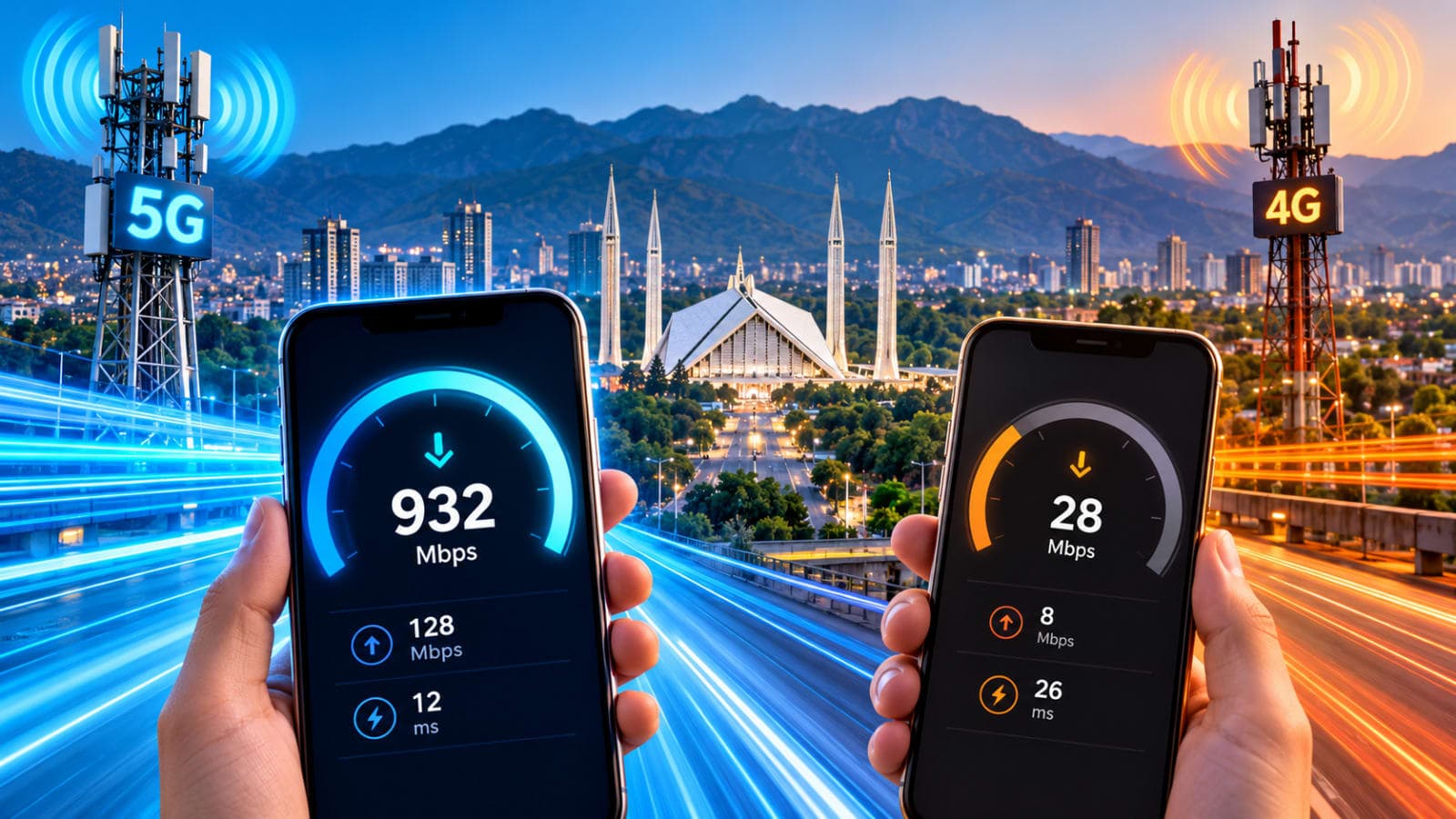
Its equipment powers large parts of the 4G networks people use daily, and it is supplying gear and support as operators prepare for 5G. Trials in Islamabad, Karachi and Lahore with the Pakistan Telecommunication Authority (PTA) have reached peak speeds above 1.8 Gbps, and commercial 5G is aimed for mid 2026.
Nothing in the Huawei US conviction changes Pakistani law or the rules under which operators buy equipment. The verdict is a US court decision about US sanctions and US banks. Pakistan has not announced any change to its own telecom policy, and no operator has said it will stop using Huawei equipment.
What it does change is the conversation. Pakistan is preparing to spend heavily on 5G, and the towers and core networks bought in the next few years will serve the country for a decade. The case reminds regulators and operators to weigh supply chain risk, vendor diversity and security audits. The Osiris Group deal for EDOTCO's 3,000 towers shows how much towers matter here, and the new data centre in Quetta points to a wider digital build out.
Ordinary users do not need to do anything. Your SIM, phone and mobile data will work the same way tomorrow, and a Huawei phone, a Huawei router, or a 5G handset such as the Redmi 17 at home will keep working exactly as before. What matters longer term is network investment, 5G arriving on schedule, and fair prices.
What happens next
The Huawei US conviction is not the final word. Sentencing comes first, on 14 September 2027, and until then the financial penalties remain unknown. Huawei can also be expected to appeal, as companies usually do after a conviction of this size. For Pakistan, the sensible response is simple: keep building networks, keep more than one supplier in the mix where possible, and let regulators do their job on security.
Frequently asked questions
Does the Huawei US conviction affect my mobile service in Pakistan? No. The verdict is a US court decision about US sanctions and US banks. It does not change Pakistani telecom rules, and no operator here has announced any change because of it.
Will Huawei phones stop working in Pakistan? No. The verdict does not switch off phones or routers. Huawei devices sold in Pakistan keep working on local networks, and the 2019 US trade restrictions never stopped that.
When will Huawei be sentenced? Sentencing is scheduled for 14 September 2027, when US District Judge Ann M. Donnelly will decide on fines, forfeiture and restitution.
What happens next for tech
We will keep this page updated as the story develops rather than publishing a near-duplicate at a new address. Follow Tech for related coverage.
Get the Verified Brief
One email each morning with the stories we checked overnight.
Spotted an error? Read our corrections policy and tell the newsroom.