Section 144 Imposed in Karachi Until October 20, 2026: Gatherings and Protests Restricted
Section 144 in Karachi bans protests, rallies and gatherings of more than five people until October 20, 2026. Check dates, restrictions and public guidance.

By News Desk · Verified Pakistan News Desk
Published · Updated · 11 min read
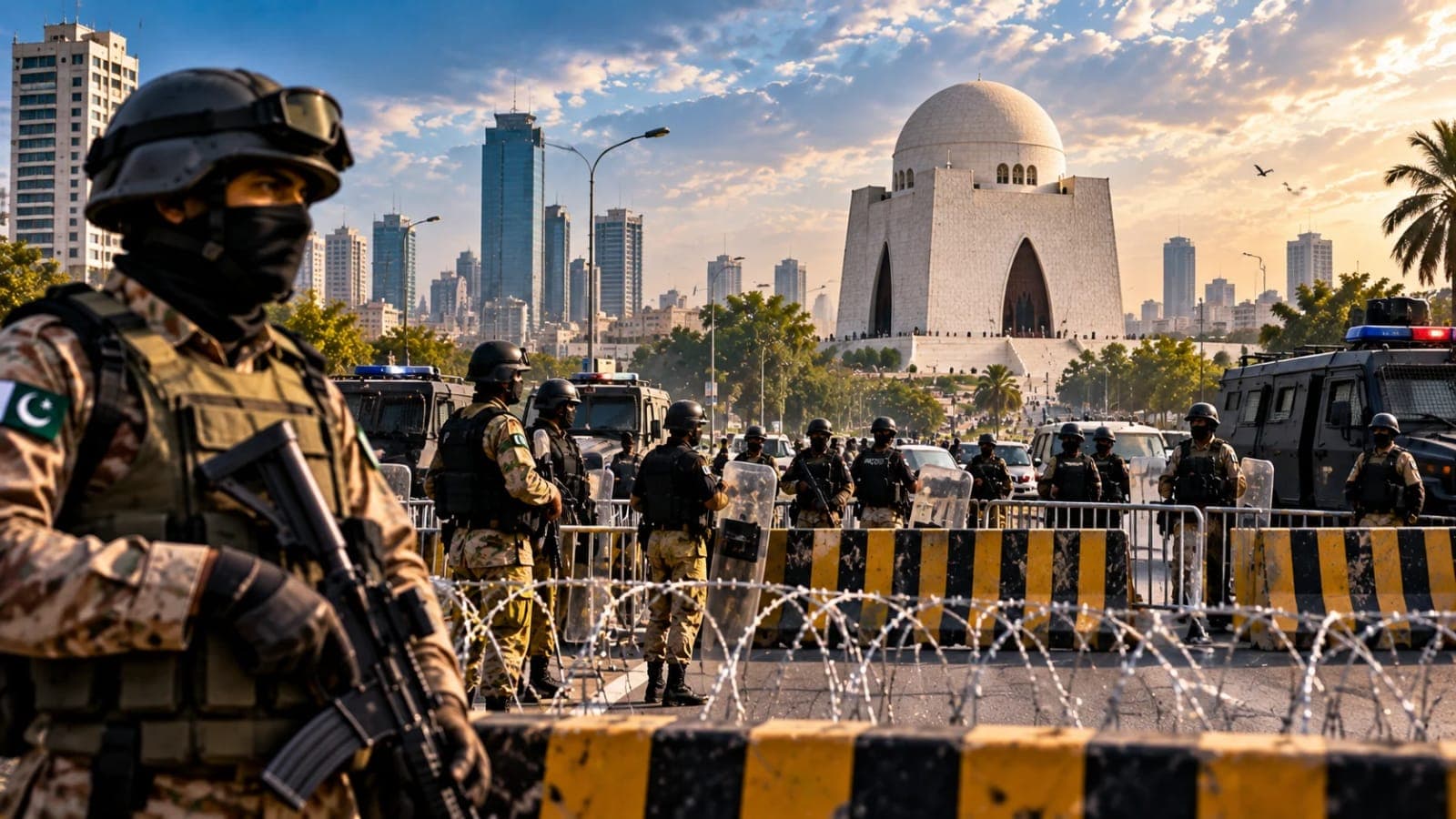
KARACHI, October 12, 2026: Authorities have imposed Section 144 across Karachi Division for ten days, restricting protests, rallies, processions, sit-ins and public gatherings involving more than five people from October 11 to October 20, 2026.
The order was issued by Karachi Commissioner Syed Hassan Naqvi following concerns raised by the Sindh Home Department and police authorities about traffic disruptions, road blockages and public safety.
According to the notification, demonstrations on major roads, intersections and roundabouts have caused severe congestion and created difficulties for residents, businesses and emergency services.
The administration says the restrictions are intended to maintain public order, protect citizens and ensure that essential services can continue operating without unnecessary disruption.
The decision comes during a period of heightened political and security concerns across Pakistan.
However, the notification should not be confused with a general curfew or a complete suspension of everyday movement throughout Karachi.
Section 144 in Karachi: What Has Been Announced?
The Karachi commissioner issued an order under Section 144 of the Code of Criminal Procedure, restricting specified public gatherings throughout Karachi Division.
The restrictions took effect on Sunday, October 11, and are scheduled to remain in force until Tuesday, October 20, 2026.
The notification covers the organisation, facilitation and participation in protests, demonstrations, rallies, processions, sit-ins and other public assemblies involving more than five people.
Authorities say the measure is preventive and is intended to reduce the risk of disturbances.
The order follows reports of demonstrations affecting major roads and junctions.
Key Details of the Karachi Section 144 Order
- The restrictions began on October 11, 2026.
- The announced end date is October 20, 2026.
- The order applies across Karachi Division.
- Protests, rallies, processions and sit-ins are restricted.
- Gatherings involving more than five people fall within the specified prohibition.
- The commissioner issued the order following security and traffic concerns.
- The notification does not establish a general citywide curfew.
Residents should check for any subsequent amendments or extensions issued by the administration.
Why Has Section 144 Been Imposed in Karachi?
The administration says protests and demonstrations have caused serious traffic congestion on major roads.
According to the notification, gatherings at junctions and roundabouts have disrupted ordinary movement and created security concerns.
Officials also cited the effect of road blockages on emergency services.
Access to hospitals was specifically identified as an important concern.
The administration warned that further demonstrations could obstruct public roads, interfere with commercial activity and create situations affecting public safety.
Section 144 was therefore imposed as a preventive measure for a defined period.
Why Are Road Blockages a Major Concern?
Karachi is Pakistan's largest city and a major commercial centre.
Its road network supports millions of daily journeys involving workers, students, businesses and public services.
When important roads are blocked, congestion can spread into surrounding areas.
Ambulances, fire services and other emergency vehicles may also face delays.
The commissioner cited these practical consequences when explaining the restrictions.
What Is Section 144 in Pakistan?
Section 144 is a provision of the Code of Criminal Procedure that allows authorised authorities to issue temporary preventive orders in specified circumstances.
It is commonly used when officials believe urgent measures are necessary to prevent danger, disturbances or threats to public order.
Orders under Section 144 may restrict particular activities within a defined area and period.
However, the precise restrictions depend on the wording of the notification.
The law should not be interpreted as automatically prohibiting every activity whenever Section 144 is invoked.
Is Section 144 the Same as a Curfew?
No.
Section 144 and a curfew are not identical.
A Section 144 order may prohibit specific gatherings or activities.
A curfew generally involves broader restrictions on movement during specified hours or within specified areas.
The Karachi notification concerns identified public gatherings and demonstrations.
It does not announce a general citywide curfew.
Which Activities Are Restricted Until October 20?
The notification identifies several types of public activity covered by the restrictions.
Political Rallies
Organising or participating in political rallies involving more than five people falls within the specified prohibition.
Protest Demonstrations
Public demonstrations involving more than five people are restricted during the notified period.
Sit-ins
Sit-ins and similar gatherings covered by the order are prohibited.
Processions
Public processions involving more than five participants are included in the restrictions.
Public Assemblies
Other assemblies involving more than five people may also fall within the notification.
The application of the order to a particular activity depends on its nature and the exact wording of the official notification.
Does Section 144 Ban All Gatherings of More Than Five People?
The order specifically identifies protests, demonstrations, sit-ins, rallies, processions and other public gatherings involving more than five people.
This does not necessarily mean that every ordinary group of six people in every private or commercial setting is automatically committing an offence.
The nature of the activity and the wording of the notification matter.
Residents should avoid both extremes: assuming that all gatherings are unrestricted or assuming that every routine activity involving several people is prohibited.
Anyone planning a public event should obtain clarification from the relevant authorities where necessary.
Does Section 144 Apply Across All Karachi Districts?
The notification applies within the territorial limits of Karachi Division.
This includes the city's administrative districts, rather than only a particular road or protest location.
Karachi Division includes districts such as South, East, West, Central, Korangi, Malir and Keamari.
The order's geographical scope is therefore broader than a single neighbourhood.
However, the presence of a division-wide order does not mean that every road has been closed or that identical enforcement arrangements are in place everywhere.
Specific traffic diversions and security arrangements may vary by location.
Are Schools, Colleges and Universities Closed in Karachi?
The Section 144 notification does not itself announce a general closure of schools, colleges or universities.
Educational institutions should not be described as closed merely because public gathering restrictions have been imposed.
Any school or university closure would require a separate announcement from the relevant authorities or institution.
Students and parents should follow official education department notices and institutional communications.
Will Examinations Continue?
The notification does not automatically cancel examinations.
Universities, boards and colleges remain responsible for communicating changes to examination schedules.
Students should avoid relying on unverified social media claims about cancellations.
Will Karachi Markets and Shopping Malls Remain Open?
The notification does not establish a general closure of markets, shopping malls or commercial centres.
Ordinary business activity is not automatically suspended by the announced restrictions.
However, local conditions may affect access to particular areas.
Traffic diversions or security measures could create temporary difficulties for businesses and customers.
Shopkeepers and visitors should follow any additional district-level instructions.
The absence of a general market closure in the notification should not be interpreted as a guarantee that every individual business will operate normally.
Can Residents Travel During Section 144?
The notification does not impose a general ban on ordinary travel.
Residents may continue necessary journeys subject to any separate lawful traffic or security restrictions.
However, road conditions can change during demonstrations or security operations.
People travelling to hospitals, airports, educational institutions or workplaces should check official traffic advisories.
What About Public Transport?
The Section 144 notification does not itself announce a complete shutdown of Karachi's public transport network.
Any route changes or service suspensions would need separate confirmation from transport operators or authorities.
Passengers should verify services before travelling through areas affected by road closures.
Why Did Authorities Mention Hospitals and Emergency Services?
One of the central concerns raised in the notification was the impact of road blockages on emergency movement.
Hospitals depend on reliable road access for patients, ambulances, medical staff and essential supplies.
When demonstrations block major roads, delays may affect people requiring urgent care.
The commissioner cited these concerns while explaining the need for preventive restrictions.
The administration also referred to the importance of maintaining public safety and uninterrupted access to essential services.
What Happens if Someone Violates Section 144?
Violating a lawful order issued by an authorised public official can result in legal consequences under applicable Pakistani law.
Enforcement may involve police action, depending on the circumstances and the legal provisions involved.
However, penalties should not be described as automatic or identical in every case.
The applicable offence, evidence and legal procedure matter.
People organising public gatherings should review the official notification and seek appropriate legal guidance if uncertain about its application.
Can Police Arrest People for Violating the Order?
Police may take action where an offence is established under the applicable law.
Whether an arrest is legally justified depends on the circumstances and relevant legal requirements.
It would be inaccurate to claim that every person present in a group of more than five people must automatically be arrested.
The precise facts and legal basis remain important.
How Could Section 144 Affect Karachi Businesses?
Public gathering restrictions can influence commercial activity, particularly in areas where protests have previously disrupted traffic.
Businesses depend on employees, customers and goods being able to move across the city.
The administration says its objective is to reduce disruptions and maintain normal commercial activity.
However, the actual economic effect of the order cannot be measured without reliable data.
Any claims about financial losses, sales declines or business closures should be supported by evidence.
Is Section 144 Connected to the KP Political Crisis?
The Karachi restrictions were announced during a period of heightened national political tensions, including the imposition of emergency and governor's rule in Khyber Pakhtunkhwa.
However, the Karachi commissioner's notification identifies traffic disruption, protests and law-and-order concerns as the reasons for the order.
The notification should not be presented as proof that the restrictions were issued exclusively because of the KP emergency.
Establishing a direct political connection would require additional verified evidence.
This distinction matters because developments occurring at the same time do not necessarily have the same immediate cause.
What Should Karachi Residents Do Until October 20?
Residents should follow official announcements from the Karachi commissioner, district administrations and police.
People planning public demonstrations or large gatherings should review the restrictions before proceeding.
Those travelling through busy commercial areas should check traffic conditions.
Students should rely on their educational institutions for schedule changes.
Businesses should monitor any relevant local instructions.
Most importantly, residents should avoid sharing unverified claims about curfews, complete city closures or transport shutdowns.
Could Section 144 Be Extended Beyond October 20?
The current notification specifies October 11 to October 20, 2026.
An extension would require further lawful administrative action.
Authorities may also amend or withdraw restrictions before the scheduled expiry if circumstances change.
At the time of this report, the announced period ends on October 20.
Residents should check subsequent notifications rather than assuming that the order will automatically continue.
Frequently Asked Questions
1. Is Section 144 currently imposed in Karachi?
Yes. The Karachi commissioner imposed Section 144 from October 11 to October 20, 2026, restricting specified public gatherings and demonstrations.
2. How many people can gather under the Karachi Section 144 order?
The notification prohibits specified protests, rallies, processions, sit-ins and public assemblies involving more than five people.
3. Are Karachi schools closed because of Section 144?
The notification does not announce a general school closure. Any educational shutdown would require a separate verified announcement.
4. Is there a curfew in Karachi until October 20?
The reported notification does not establish a general citywide curfew. It imposes restrictions on specified public gatherings and demonstrations.
5. When will Section 144 end in Karachi?
The announced restrictions are scheduled to end on October 20, 2026, unless authorities issue a further lawful notification.
Conclusion
The imposition of Section 144 in Karachi until October 20, 2026, introduces temporary restrictions on protests, rallies, processions, sit-ins and specified public gatherings involving more than five people.
Karachi Commissioner Syed Hassan Naqvi issued the order after authorities raised concerns about road blockages, traffic congestion and public safety.
The administration says the measure is intended to protect citizens, maintain order and ensure that emergency services can operate without disruption.
For residents, it is important to distinguish the gathering restrictions from a general curfew or citywide shutdown.
The notification does not automatically close schools, markets or public transport services.
Any additional restrictions must be confirmed through separate official announcements.
Karachi residents should continue monitoring verified information from local authorities until the notified period ends.
Last Updated: October 12, 2026.
Editorial Note: This report reflects the restrictions announced for October 11–20, 2026. Any subsequent amendment, extension or withdrawal should be verified against an updated official notification.
What happens next for national
We will keep this page updated as the story develops rather than publishing a near-duplicate at a new address. Follow National for related coverage.
Get the Verified Brief
One email each morning with the stories we checked overnight.
Spotted an error? Read our corrections policy and tell the newsroom.