
Lahore Smog: AQI Today, School Closures and Winter Timings
Lahore smog has pushed the city's air quality into the hazardous range again, with schools in Lahore and Gujranwala closed until November 9 and Multan recording an AQI of 492.

By News Desk · Verified Pakistan News Desk
Published · 7 min read
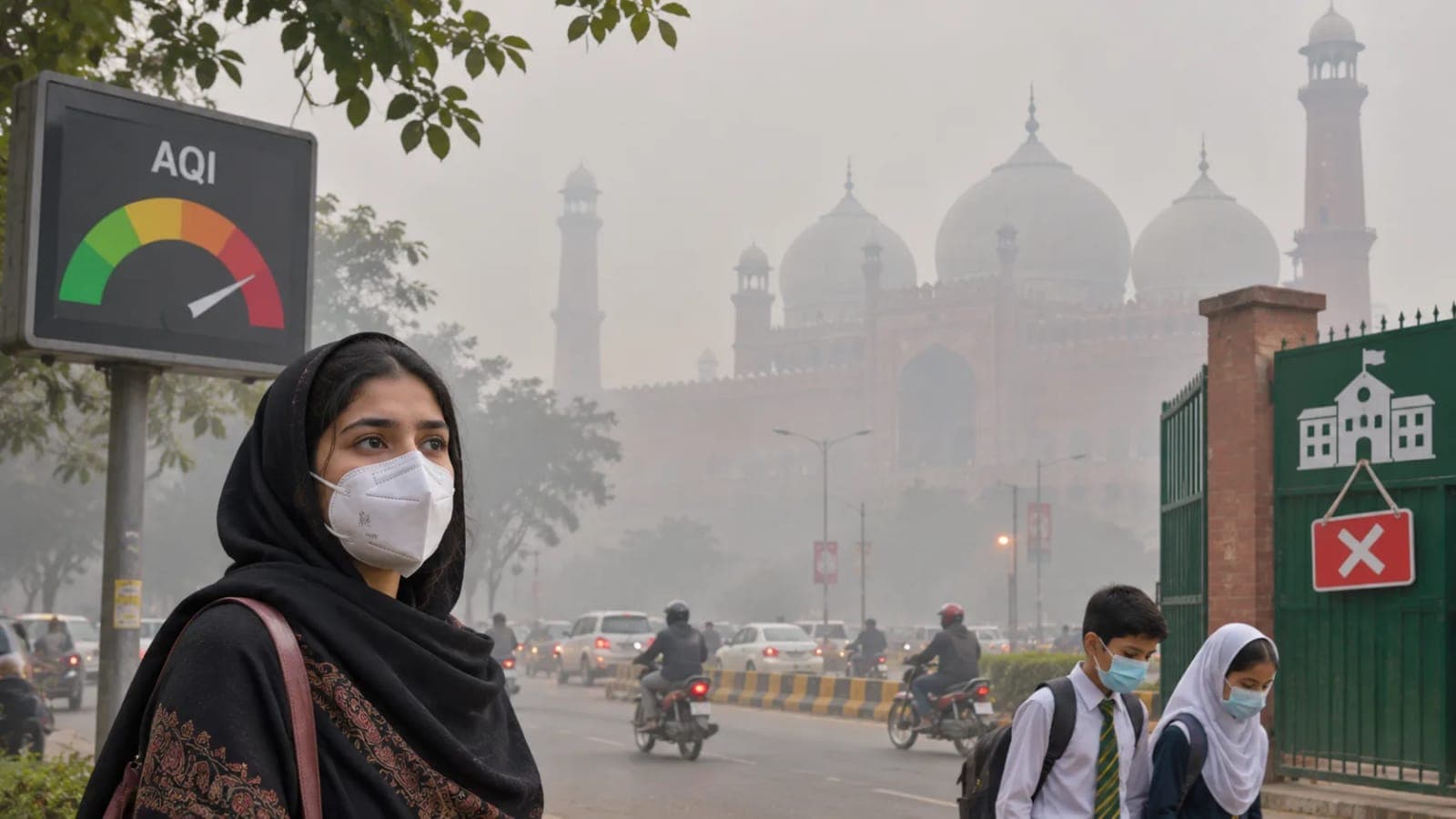
Lahore smog has pushed the city's air quality into the hazardous range again, with schools in Lahore and Gujranwala closed until November 9 and the whole of Punjab struggling under a thick layer of toxic haze. On Saturday, November 7, Multan became the most polluted city in Pakistan with an air quality index of 492, while Lahore recorded 273, and doctors are warning that the worst weeks of the smog season are still ahead.
The Lahore smog is a mix of fog and pollutants, caused by low-grade diesel fumes and smoke from seasonal agricultural burning as temperatures drop with the cooling air. For days, Lahore has been enveloped in smog, and air pollution in the city has at times soared to more than 80 times the level the World Health Organization considers safe.
Lahore Smog: Today's AQI Readings
The air quality index, known as AQI, measures how polluted the air is. Any reading above 300 is classed as hazardous. On Saturday, November 7, ARY News reported Multan at 492, Raiwind at 316, Rahim Yar Khan at 304, Faisalabad at 287 and Lahore at 273.
The Express Tribune reported even higher readings the same day: Lahore at 530, Multan at 719, Faisalabad at 371, Gujranwala between 600 and 660, Islamabad at 187 and Rawalpindi at 179. The figures vary because different networks use different stations and averaging periods, but every source agrees the air is dangerous.
On Friday, November 6, Lahore ranked as the world's third most polluted city with an AQI of 215, behind Kolkata at 242. Earlier in the week, Lahore recorded an AQI of 535 at 8am on November 2, with PM2.5 concentrations reaching 343 micrograms per cubic metre. In Allama Iqbal Town, monitors recorded 722 on November 4 and 902 on November 3. Lahore, Multan, Jhang and Gujranwala have all been listed among the world's most polluted cities this week.
Lahore Smog: Schools Closed Until November 9
Because of the Lahore smog, the Punjab School Education Department has closed all public and private educational institutions up to higher secondary level, 12th grade, in Lahore and Gujranwala districts from November 3 to November 9, 2026. The notification, dated November 2 and signed by Secretary Khalid Nazir Wattoo, covers schools, colleges, higher secondary institutions and private tuition centres.
The closure is a direct response to the deteriorating air quality index caused by smog. Chief Executive Officers of the District Education Authorities have been directed to ensure compliance. Parents should check with their child's school for online classes or homework during the closure.
This is not the first time smog has closed schools in Punjab. In November 2024, readings at some Lahore monitors exceeded 1,000 and the government shut schools and ordered lockdowns in several cities. The current closure is shorter, but the National Disaster Management Authority's seasonal outlook expects smog risk to rise from mid-November into December, when nights grow colder and temperature inversions grow stronger, so further closures cannot be ruled out.
Lahore Smog: Winter School Timings
Separately from the closure, the Punjab government has introduced revised winter timings for government schools. On October 14, the Punjab School Education Department issued a notification introducing winter timings for government schools across the province, effective from October 16, 2026, until March 31, 2027.
Under the revised schedule, single-shift government schools operate from 8:45am to 1:30pm from Monday to Thursday, with classes ending at 12:30pm on Fridays. The notification covers government schools only. Private schools in Lahore continue to operate on their regular schedules, typically beginning classes around 8am and concluding between 2pm and 3pm, despite the hazardous air pollution.
The difference comes from the way the notification was written. Last year, the Punjab Environmental Protection Agency directed all public and private schools to open no earlier than 8:45am. This year, the October 2026 notification does not explicitly extend the revised opening schedule to private schools, and it does not say whether private schools will subsequently be required to adopt the 8:45am opening time.
Lahore Smog: Why It Gets Worse in Winter
The Lahore smog gets worse in winter because of a temperature inversion. When temperatures fall, a layer of warmer air sits above colder air at ground level and traps smoke and dust close to the ground. On the morning of November 4, Lahore's wind speed was 0.3 metres per second, close to dead calm, with humidity at 86 percent and a temperature of 20 degrees Celsius. With no wind to clear the air, the pollution simply stays where it is.
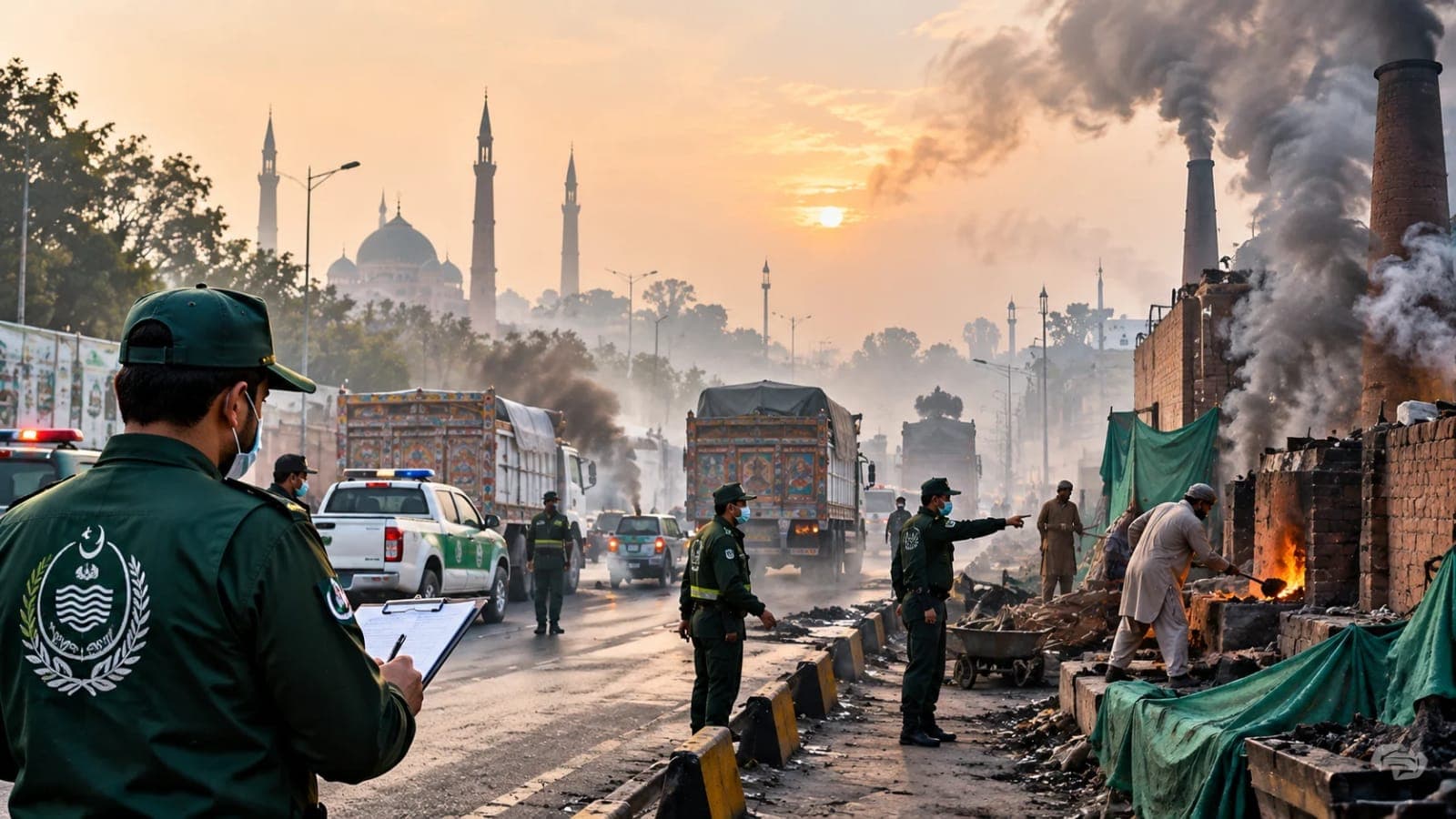
The sources of the pollution are well known: low-grade diesel fumes from vehicles, smoke from seasonal agricultural burning in Punjab, dust from construction and roads, and industrial emissions. The provincial government has responded with road washing trucks and mist guns, and a cleanliness campaign called Chamkta Lahore, but the immediate cause is the weather, and relief is not in the forecast.
If there is no rainfall during the next three days, Saturday, Sunday and Monday, the air quality indices are likely to deteriorate further, according to the Express Tribune. Rain washes pollutants out of the air, but the forecast for Lahore shows no rain, with sunny days and temperatures around 30 degrees.
Lahore Smog: How to Protect Yourself
Medical experts and the health department have issued guidelines for the worsening Lahore smog. People should wear masks regularly when they go outside, especially the N95 type that filters fine particles. Children and patients suffering from respiratory diseases, asthma, sore throats and eye irritation should not go outdoors unnecessarily.
Families should keep doors and windows closed during the morning and evening, when the smog is usually at its worst, to prevent polluted air from entering their homes. Schools have been told to halt outdoor activities when readings are high. People with asthma or heart conditions should keep their medicines with them and see a doctor if breathing becomes difficult.
Smoke sources can be reported through the Green Punjab app or the Environmental Protection Department helpline, 1373. The government says smog in November is noticeably lower than two years ago, crediting measures introduced since then, but residents are queuing at hospitals and the worst weeks are still ahead.
Lahore Smog: Frequently Asked Questions
What is the Lahore smog AQI today? On November 7, ARY News reported Lahore at 273 and Multan at 492, while the Express Tribune reported Lahore at 530 and Multan at 719. Figures vary by station, but all readings are in the unhealthy to hazardous range.
Are schools closed because of Lahore smog? Yes. All public and private educational institutions up to 12th grade in Lahore and Gujranwala districts are closed from November 3 to November 9, 2026, under a School Education Department notification dated November 2.
What are the winter school timings in Punjab? Government schools run from 8:45am to 1:30pm Monday to Thursday, and until 12:30pm on Fridays, from October 16, 2026, to March 31, 2027. Private schools continue their regular timings.
Why is Lahore smog worse in winter? A temperature inversion traps smoke and dust close to the ground, and still, damp autumn air seals the city under a lid of smog. Diesel fumes and crop burning add to it, and there is no rain in the forecast to clear the air.
How can I protect myself from Lahore smog? Wear a mask outdoors, keep doors and windows closed in the morning and evening, avoid outdoor exercise when readings are high, and keep children and respiratory patients indoors. Report smoke sources on the Green Punjab app or the EPD helpline 1373.
What happens next for punjab
We will keep this page updated as the story develops rather than publishing a near-duplicate at a new address. Follow Punjab for related coverage.
Get the Verified Brief
One email each morning with the stories we checked overnight.
Spotted an error? Read our corrections policy and tell the newsroom.