
Lahore Dinosaur Tree: 176-Year-Old Queen Sago Palm at Lawrence Garden
Lahore dinosaur tree is in full leaf at Lawrence Garden, a 176-year-old Queen Sago Palm from the ancient cycad lineage that predates the historic garden.

By News Desk · Verified Pakistan News Desk
Published · 5 min read
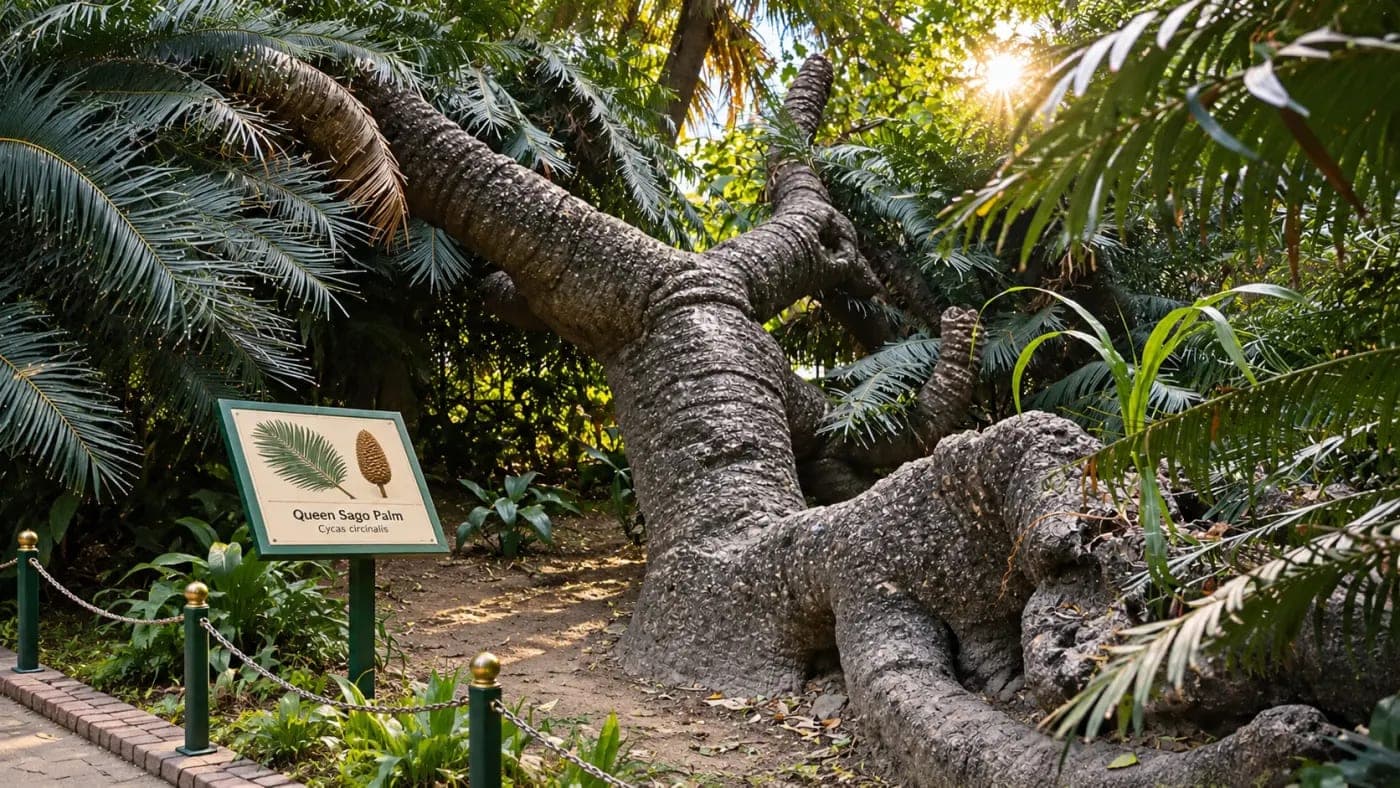
Lahore dinosaur tree is back in the news, and it is not a new planting. It is a 176-year-old Queen Sago Palm standing in full leaf at Lawrence Garden.
An officer of the Punjab Horticulture Authority (PHA) disclosed the tree's age on Sunday, and the story has since gone viral.
The tree is remarkable for two reasons. It is older than the garden around it, and it belongs to a plant lineage older than the dinosaurs.
Lahore Dinosaur Tree: Older Than the Garden Itself
The Queen Sago Palm predates Lawrence Garden, which was developed in the 1860s as a botanical garden and leisure ground.
The garden was modelled on London's Kew Gardens, and it was laid out in an era when Lahore was being reshaped as a colonial capital.
The tree predates that formal garden, a living link to an older Lahore.
Lawrence Garden is now regarded as one of Asia's largest botanical gardens, with around 150 varieties of trees, including 30 species of palms.
Its collection includes trees and plants introduced by the British from across the Indian Empire, as well as from Austria, Palestine, Syria and other parts of Europe.
A Lineage Older Than Dinosaurs
Queen Sago Palms are cycads, an ancient group of seed-bearing plants whose fossil record dates to the Permian period, about 280 million to 300 million years ago.
That means cycads were already ancient when the first dinosaurs appeared.
Cycads became particularly widespread during the Mesozoic Era, when dinosaurs dominated the Earth.
Their abundance during the Jurassic and Cretaceous periods has led to that era being described as the Age of Cycads, alongside the Age of Dinosaurs.
Plant-eating dinosaurs, including long-necked sauropods, are believed to have fed on the foliage, cones and nutrient-rich seeds of cycads, including sago palms.
Their structure has changed little over hundreds of millions of years, which is why cycads are commonly called living fossils.
The world's oldest potted plant, itself a cycad, has been at Kew since 1775.
Slow Growth, Long Life, and a Threatened Future
Cycads are known for their exceptionally slow growth and longevity, and the Lahore tree fits that pattern.
According to horticulture experts, sago palms require around four to five hours of sunlight daily and relatively little water once established.
Their slow-growing nature allows them to survive in a range of growing conditions, including relatively dry and poor soils.
But survival across geological time does not guarantee survival today. Their numbers have declined considerably in the wild.
About 60 per cent of assessed cycad species are now threatened with extinction in their natural habitats, according to the International Union for Conservation of Nature (IUCN) Red List of Threatened Species.
That makes the Lahore tree more than a curiosity. It is a specimen of a threatened variety, growing in a public garden where people can see it.
Commenting on the tree, the PHA spokesperson said the authority looks after the province's green cover and manages some of the world's oldest prehistoric trees.
"The fact that the Sago Palm in Lahore is not only prehistoric but also belongs to a threatened variety makes it especially significant," he said.
Why the Lahore Dinosaur Tree Went Viral
The story went viral because it compresses deep time into a single, visible object.
A visitor to Lawrence Garden can stand beside a plant whose relatives fed sauropods, survived the asteroid that ended the dinosaurs, and still grow in the same slow way today.
It also connects Lahore to a global story studied at Kew and tracked by the IUCN.
For Lahore, the tree is a reminder that the city's green heritage is not only about shade and beauty. It includes specimens of genuine scientific value.
The PHA's role matters here too. Keeping a 176-year-old tree healthy in a busy public garden requires steady care, watering, protection from damage, and space to grow.
The fact that the tree is in full leaf suggests that care is working, at least for now.
What to See at Lawrence Garden
Visitors looking for the Lahore dinosaur tree should head to Lawrence Garden, one of the city's best-known green spaces.
The garden holds around 150 tree varieties, so the Queen Sago Palm is part of a much larger collection, not a lone exhibit.
Its 30 palm species alone make the garden a destination for anyone interested in trees, and its history as a botanical garden modelled on Kew gives it a character few other Lahore parks share.
The tree's story also offers a simple lesson for younger visitors. Dinosaurs are often imagined through fossils and films, but their world included living plants.
Some of those plants are still alive, still growing slowly, and still standing in Lahore.
Frequently Asked Questions
What is the Lahore dinosaur tree?
The Lahore dinosaur tree is a 176-year-old Queen Sago Palm at Lawrence Garden, disclosed by a PHA officer. It belongs to the cycad lineage, older than the dinosaurs.
How old is the cycad lineage?
Cycads date to the Permian period, about 280 million to 300 million years ago. They were widespread in the Mesozoic Era, the age of dinosaurs, and are called living fossils.
Did dinosaurs eat cycads?
Yes, plant-eating dinosaurs, including long-necked sauropods, are believed to have fed on cycad foliage, cones and nutrient-rich seeds, including sago palms, during the Mesozoic Era.
Is the Lahore dinosaur tree a threatened variety?
The PHA spokesperson said the Lahore Sago Palm belongs to a threatened variety. About 60 per cent of assessed cycad species are threatened in the wild, according to the IUCN Red List.
Where can visitors see the Lahore dinosaur tree?
The tree stands in full leaf at Lawrence Garden in Lahore, a botanical garden developed in the 1860s and modelled on London's Kew Gardens, with around 150 tree varieties and 30 palm species.
What happens next for punjab
We will keep this page updated as the story develops rather than publishing a near-duplicate at a new address. Follow Punjab for related coverage.
Get the Verified Brief
One email each morning with the stories we checked overnight.
Spotted an error? Read our corrections policy and tell the newsroom.